Plot Explained Spoilers guaranteed!
Plot Explained

Browse by genre

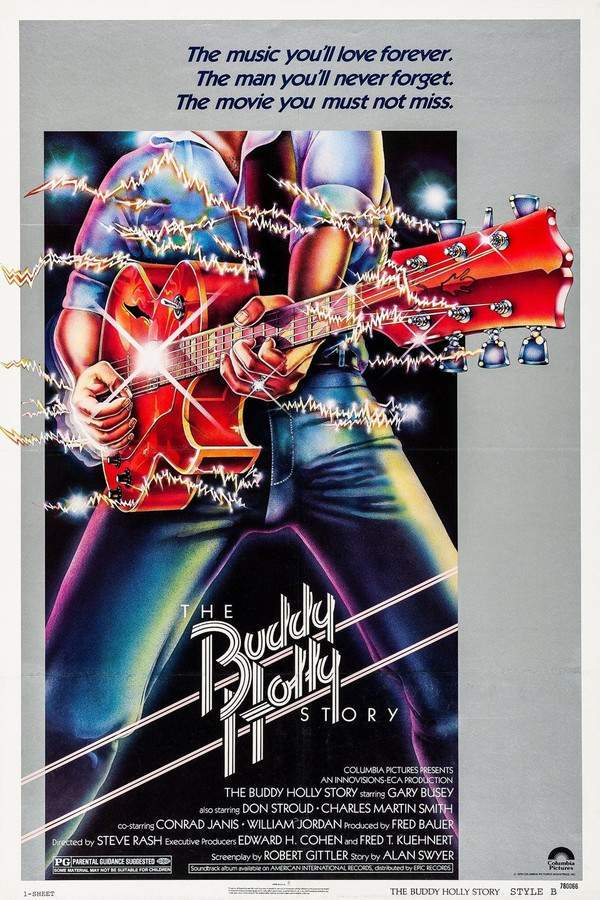
The Buddy Holly Story (1978) movie poster

Plot Summary

The Buddy Holly Story (1978) Plot Summary Explained

Release, runtime and language
1978 · 114 min · English
JustWatch #32,954 2
Directed by
Steve Rash
Starring
Charles Martin Smith, Gary Busey, William Jordan, Dick O'Neill, Don Stroud, Neva Patterson

This biography follows Buddy Holly (Gary Busey) as he challenges musical norms to develop his distinctive rock and roll style. His burgeoning fame is challenged by creative differences in Nashville and a misunderstanding at the Apollo Theater. Despite his struggles, Holly perseveres, but his promising career is tragically cut short, leaving an enduring musical legacy that continues to inspire.

On this page (6)
  1. 1 Where to watch
  2. 2 What happens: full plot
  3. 3 Plot questions answered
  4. 4 Movie threads
  5. 5 Movies like The Buddy Holly Story
  6. 6 Every angle

Where to watch

Where to Watch The Buddy Holly Story (1978)

Where can you watch The Buddy Holly Story? Stream, rent or buy it in the US, including on YouTube Free, Amazon Video and Apple TV Store: current JustWatch availability with up-to-date prices.

Streaming availability powered by JustWatch

Full plot summary · contains spoilers

What Happens in The Buddy Holly Story: Full Plot Summary

The whole story of The Buddy Holly Story (1978) explained, from the opening scene to the final frame: every key event, every twist and what it all adds up to. Read it as a quick recap before the sequel, to check a scene you missed, or to finally understand what really happened.

As the vibrant Texas landscape of 1956 bursts with the sounds of rock 'n' roll, Buddy Holly](/actor/charles-martin-smith) and his bandmates, Jesse Charles (drummer) and Ray Bob Simmons (bass player), known collectively as The Crickets, electrify a local roller rink with their dynamic performances. Their youthful energy, however, clashes with the expectations of the radio station's sponsor, who had envisioned a more traditional country music atmosphere. The station manager, Riley, excitedly informs them that the vice president of Coral Records is eager to sign them and take them to a recording studio in Nashville, Tennessee.

Upon reaching the studio, tension arises from creative differences with the producers, leading Holly to make a bold decision to leave, unwilling to compromise his artistic integrity. Unbeknownst to the band, Riley had secretly sent a demo tape of their roller rink performance to music executive Ross Turner in New York City. The tape is mistakenly released as a master copy, propelling them into unexpected stardom. With this newfound fame, Holly embraces the chance to pursue his passion for music full-time.

When The Crickets meet with Turner in the bustling metropolis, what begins as resistance transforms into a partnership that allows Holly to create music on his own terms. Additionally, Sol Gittler books them for a performance at the legendary Apollo Theater in Harlem, mistakenly believing them to be a black group. Surprised by the arrival of three white Texans, he is initially hesitant to let them perform due to fears of a negative audience reaction. However, Holly highlights that Gittler specifically requested their presence for a week along with a guaranteed payment of $1,000. Reluctantly, Gittler agrees, making history as The Crickets become the first white act to perform at the Apollo Theater.

Though they face initial apprehension, Holly's infectious music wins over the crowd, leading to their instant success. In the midst of this excitement, Holly meets Maria Elena Santiago, Turner's charming secretary, and an undeniable chemistry brews between them. However, their romance faces challenges when her strict aunt disapproves of their relationship. Undeterred by these obstacles and believing in the power of love, Holly manages to win her over, leading to their marriage.

As their exhilarating two-year journey begins to cool, Ray Bob and Jesse feel a growing desire to return to their Texas roots, yearning for the familiar rhythms of the landscapes they once called home. In contrast, Holly remains steadfast in his wish to capitalize on his burgeoning fame, resisting the nostalgic pull despite pleas from his partners to return to Lubbock under The Crickets' name. The emotional weight of their impending separation lingers heavily on Holly as he faces the daunting uncertainty of what lies ahead.

With the spotlight shining brighter than ever, Holly finds peace in songwriting, pouring his soul into the lyrics and melodies that flow from his heart. Yet, the pressure from his manager to hit the road at the height of their success compounds his insecurities. Amidst this turmoil, the news of Maria's pregnancy brings a bright spot, filling him with joy and responsibility, encouraging him to return to the touring circuit.

Little does Holly realize the unforeseen fate that awaits him. On February 2, 1959, just moments before he was set to perform in Clear Lake, Iowa, the strains of continuous touring weigh heavily on him. With their tour bus incapacitated and no alternative mode of transport available, Holly opts for a private flight to Moorhead, Minnesota, joined by fellow musicians Ritchie Valens and The Big Bopper. As The Crickets reflect on their past experiences, a wave of nostalgia washes over them, and they long to reunite with Holly at his next destination.

As the final notes of "Not Fade Away" resonate through the venue, Holly bids an emotional farewell to his appreciative audience, blissfully unaware that this would be his ultimate performance. A poignant reminder lingers in the air: "... and the rest is Rock 'n Roll."
Last updated: November 17, 2024 at 20:30

Was this helpful?

Plot questions answered

The Buddy Holly Story Plot Explained: Your Questions Answered

The questions people ask most about The Buddy Holly Story (1978): what happens in the confusing scenes, why the characters do what they do, the twists, hidden details and what the ending means. Each answer contains spoilers.

Q1

Why did Buddy Holly leave the recording studio in Nashville?

Buddy Holly left the Nashville studio because of creative differences with the producers. They wanted him to conform to a more traditional country music sound, but Holly refused to compromise his artistic integrity and chose to pursue his own rock 'n' roll vision instead of changing his style to match their expectations.

Foreshadowing: Earlier in the film, Holly's distinctive sound at the roller rink already clashed with the sponsor's traditional country expectations, establishing his commitment to his unique style.

  • nashville studio
  • creative differences
  • artistic integrity
  • producers
  • crickets
Q2

How did The Crickets get their big break with Coral Records?

The Crickets' breakthrough came through a mistake by station manager Riley, who secretly sent a demo tape of their roller rink performance to music executive Ross Turner in New York. The tape was mistakenly released as a master copy, which catapulted them into unexpected stardom and led to their recording contract.

  • demo tape
  • ross turner
  • coral records
  • crickets
  • breakthrough
Q3

Why was The Crickets' Apollo Theater performance historic?

The Crickets became the first white musical act to perform at the Apollo Theater in Harlem. Booker Sol Gittler originally mistook them for a black group and was hesitant to let them perform due to fears of a negative audience reaction, but Holly pointed out the guaranteed $1,000 payment, convincing Gittler to let them perform.

  • apollo theater
  • harlem
  • first white act
  • sol gittler
  • crickets
Q4

Why did Buddy Holly choose to fly instead of taking the tour bus?

On February 2, 1959, Buddy Holly chose to take a private flight from Clear Lake, Iowa to Moorhead, Minnesota because the band's tour bus had broken down. With no alternative transportation available and eager to reach their next destination, Holly opted for the plane ride alongside Ritchie Valens and The Big Bopper.

Foreshadowing: The film establishes that Holly was under intense pressure from his manager to keep touring at the height of their success, creating urgency to reach the next show.

  • plane crash
  • tour bus
  • clear lake
  • ritchie valens
  • big bopper
  • february 1959
Q5

Why did Ray Bob and Jesse want to leave The Crickets?

As their two-year rise in fame progressed, bandmates Ray Bob Simmons and Jesse Charles grew increasingly homesick for their Texas roots. They pleaded with Holly to return to Lubbock and resume their old lives, but Holly wanted to capitalize on his success and keep touring, leading to an emotional separation between the friends.

  • ray bob
  • jesse
  • texas
  • lubbock
  • crickets
  • band breakup
Q6

How did Buddy Holly meet and marry Maria Elena Santiago?

Buddy Holly met Maria Elena Santiago, Ross Turner's secretary, during his time in New York City. Though her strict aunt initially disapproved of their relationship, Holly was undeterred and eventually won her aunt over, leading to their marriage.

  • maria elena
  • marriage
  • ross turner
  • secretary
  • aunt
Q7

Why was the Apollo Theater reluctant to let The Crickets perform?

Booker Sol Gittler was reluctant because he had mistakenly booked The Crickets believing they were a black musical group. When three white Texans arrived, he feared the predominantly black audience would react negatively to an unfamiliar white act, potentially causing problems at his venue.

  • sol gittler
  • apollo theater
  • booking mistake
  • audience reaction
Q8

How did Maria Elena's pregnancy affect Buddy Holly's career decisions?

When Maria revealed she was pregnant, Holly experienced joy and felt a renewed sense of responsibility. This news motivated him to embrace the touring circuit even more strongly, as he wanted to provide for his growing family through his music career.

  • maria pregnancy
  • touring
  • family
  • responsibility
Q9

What was Buddy Holly's final performance song?

Buddy Holly's final performance was "Not Fade Away," which he performed to an appreciative audience in Clear Lake, Iowa on February 2, 1959. The movie ends with this poignant moment, followed by the line "...and the rest is Rock 'n Roll" as a tribute to his enduring legacy.

  • not fade away
  • clear lake
  • final performance
  • last song
Q10

Why was Buddy Holly under pressure to keep touring?

Buddy Holly faced constant pressure from his manager to keep touring at the height of their success. The relentless schedule, combined with his personal insecurities about fame and his desire to solidify his musical legacy, created mounting pressure that ultimately contributed to his decision to take the fateful flight.

Foreshadowing: The film establishes early on that Holly's manager was pushing for continuous touring to maximize their fame while it was at its peak.

  • manager
  • pressure
  • touring
  • fame
  • schedule

Movie threads

More Movies Like The Buddy Holly Story, by Mood & Story

Curated lists built around what makes The Buddy Holly Story tick: the same mood, the same kind of story or the same emotional payoff. Each list explains why these movies belong together.

Bittersweet biopics of doomed artists like The Buddy Holly Story

Celebrating brilliant careers that ended too soon, leaving a poignant legacy. If you were moved by the inspiring yet tragic story of Buddy Holly, explore more movies like it. These films follow real-life musicians, writers, and artists whose brilliant careers were cut short, blending the joy of creation with the weight of legacy.

  • tragic
  • inspiring
  • melancholic
  • nostalgic
  • triumphant
  • poignant
  • Tone: bittersweet, tragic
  • Pacing: steady
Why these movies?

The story pattern: The narrative follows a straightforward biographical arc, chronicling the subject's rapid rise to fame, their artistic struggles, and key personal milestones, building towards an unavoidable, historically known tragic ending that recontextualizes the entire story.

Why they belong together: These movies are grouped by their shared emotional structure: a hopeful and energetic celebration of talent that is shadowed by the audience's knowledge of the impending tragedy, resulting in a uniquely bittersweet and heavy viewing experience.

Energetic music dramas about rise and fall like The Buddy Holly Story

Stories of musical genius, explosive fame, and the steep price of success. Fans of The Buddy Holly Story who enjoy stories about musicians navigating fame will find similar movies here. These dramas capture the energy of live performance and the passion of artists, often involving band dynamics, creative conflicts, and the costs of a life in the spotlight.

  • energetic
  • nostalgic
  • dramatic
  • inspiring
  • hopeful
  • melancholic
  • Tone: energetic, dramatic
  • Pacing: steady, character driven
Why these movies?

The story pattern: The plot typically follows a musician or band's journey from obscurity to stardom, highlighting key performances, recording sessions, and personal relationships. Conflict arises from industry pressures, creative differences, or personal demons, testing their integrity and passion for music.

Why they belong together: They share a core focus on the music industry, the creative process, and the personal toll of fame. The vibe is a mix of energetic performance sequences, nostalgic period settings, and dramatic character struggles, creating a compelling behind-the-music feel.

If you liked this

Movies Like The Buddy Holly Story

Similar movies to The Buddy Holly Story: the same genre, themes or kind of story. Each one comes with its own plot summary, timeline and ending explained.

Browse all movie summaries

Every angle

The Buddy Holly Story (1978) Explained: Plot, Timeline & Characters

Everything about The Buddy Holly Story in one place: what happens in the plot summary, the timeline in chronological order, the characters and meaning and a spoiler-free summary. What's After the Movie adds the cast, box office and post-credit scenes.

Coming soon on iOS and Android

The Plot Explained Movie Summary App

Plot summaries, endings explained and timelines on your phone. Catch up on any movie in minutes, save your favorites and never miss a twist again.

Be the first to know when we launch. Your email stays private, always.

Learn more about the app