Plot Explained Spoilers guaranteed!
Plot Explained

Browse by genre

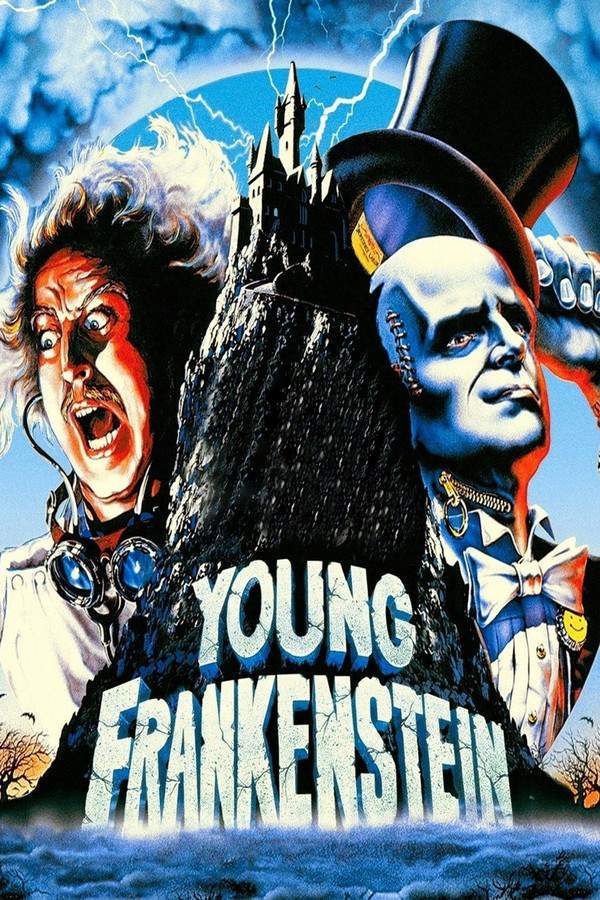
Young Frankenstein (1974) movie poster

Plot Summary

Young Frankenstein (1974) Plot Summary Explained

Release, runtime and language
1974 · 106 min · English
JustWatch #72 17
Starring
Gene Wilder, Madeline Kahn, Marty Feldman
Budget
$2.8M

Following in the footsteps of his infamous grandfather, Dr. Frederick Frankenstein inherits his ancestor's Transylvanian castle and laboratory. He initially attempts to distance himself from the family's legacy, but is drawn into recreating the experiments that brought his grandfather's monster to life. With the help of Igor, the bubbly Inga, and the unsettling Frau Blücher, Frederick’s plans are complicated by a living monster and the unexpected arrival of his fiancée, Elizabeth, leading to chaotic and hilarious consequences.

On this page (7)
  1. 1 Where to watch
  2. 2 What happens: full plot
  3. 3 Plot questions answered
  4. 4 The book behind the movie
  5. 5 Movie threads
  6. 6 Movies like Young Frankenstein
  7. 7 Every angle

Where to watch

Where to Watch Young Frankenstein (1974)

Where can you watch Young Frankenstein? Stream, rent or buy it in the US, including on fuboTV: current JustWatch availability with up-to-date prices.

Streaming availability powered by JustWatch

Full plot summary · contains spoilers

What Happens in Young Frankenstein: Full Plot Summary

The whole story of Young Frankenstein (1974) explained, from the opening scene to the final frame: every key event, every twist and what it all adds up to. Read it as a quick recap before the sequel, to check a scene you missed, or to finally understand what really happened.

Early in the 20th century, Dr. Frederick Frankenstein, a respected physician at an American medical school, finds himself engaged to the glamorous socialite, Elizabeth. He often becomes annoyed when people mention his infamous grandfather, Victor Frankenstein, the notorious mad scientist he desperately wants to distance himself from. Frederick insists that his last name is pronounced “Fronkensteen”, making his irritation clear. However, when a solicitor informs him about his inheritance of the family estate in Transylvania following the death of his great-grandfather, Baron Beaufort von Frankenstein, Frederick decides to make the journey to Europe to evaluate his newfound property.

Upon arrival at the Transylvania train station, Frederick encounters a peculiar duo: a hunchbacked servant named Igor with a strange fascination regarding the pronunciation of names, asserting that his name is pronounced “Eyegor” instead of the classic “Eegor,” and a lovely young assistant named Inga. Once at the estate, Frederick meets the daunting housekeeper, Frau Blücher, who aids him in uncovering a secret passage to his grandfather's laboratory. Fueled by curiosity, he begins perusing Victor's journals, leading him to the decision to revive his grandfather's work—to reanimate the dead.

Together with Igor, Frederick embarks on a daring escapade, stealing the body of a recently executed criminal. Determined to experiment with it, he instructs Igor to procure the brain of a noted "scientist and saint," Hans Delbrück. In a comical turn of events, Igor accidentally damages Delbrück's brain in a panic and instead brings back an "abnormal" brain. Unbeknownst to him, Frederick believes he has successfully transplanted Delbrück's brain into the corpse.

Through a series of electrical charges during a terrifying lightning storm, Frederick manages to bring the Monster to life. Though it takes its initial steps, the creature, startled by a match struck by Igor, becomes aggressive and nearly attempts to strangle Frederick before being sedated. Meanwhile, the townsfolk grow increasingly uneasy about Frederick's resurrection of his grandfather's legacy. The bumbling Inspector Kemp, a one-eyed police inspector with a thick German accent, raises concerns and insists on visiting Frederick for assurances that no further creations will take place.

Returning to his laboratory, Frederick is surprised to find Blücher granting the Monster its freedom. She reveals the creature’s fondness for violin music and her own history with Frederick's grandfather. As sparks fly from a switch, the Monster escapes into the darkness. Throughout his journey, it encounters both a young girl and a blind hermit, only to be recaptured by Frederick, who enters a delicate negotiation to calm the Monster's rage through flattery and reassurance, ultimately embracing his roots as a Frankenstein.

In a dazzling public showcase at a theater filled with high-profile guests, Frederick presents "The Creature," displaying its ability to follow simple commands. Dressed to the nines in top hats and tuxedos, they perform the song “Puttin’ On the Ritz.” However, the performance is abruptly disturbed when a stage light explodes, sending the Monster into a frenzy, resulting in chaos as it charges into the audience, leading to its capture. Back in the lab, Inga attempts to bring comfort to Frederick, leading to an intimate encounter on the suspended reanimation table.

Later that evening, the Monster breaks free from prison just as Elizabeth arrives unexpectedly. In an outrageous twist, the Monster abducts her, and in a surreal yet humorous turn of events, Elizabeth finds herself oddly drawn to the creature, captivated by his unexpected charms. Meanwhile, as the townsfolk seek the Monster, Frederick uses his violin to lure it back, successfully bringing it to the castle once more.

As a mob led by Kemp storms the laboratory, Frederick ingeniously manages to transfer some of his intellect to the Monster, enabling it to calm the villagers. In an unexpected moment of hospitality, Kemp invites the aghast mob for some sponge cake and wine while diverting to a lumber mill for a light-hearted excursion.

Eventually, time passes, and Frederick and Inga tie the knot. In a uniquely whimsical union, Elizabeth now sports a new hairstyle and marries the reformed and sophisticated Monster. While Frederick and Inga enjoy a moment of marital bliss, a curious question lingers about the nature of the transfer process. Frederick's playful grunt evokes laughter as they share a delightful moment reminiscent of the Monster's own quirks. Inga, conjuring memories of her escapade with the creature, begins to serenade with “Ah, Sweet Mystery of Life,” as Igor provides a lively soundtrack atop the castle.
Last updated: November 16, 2024 at 17:02

Was this helpful?

Plot questions answered

Young Frankenstein Plot Explained: Your Questions Answered

The questions people ask most about Young Frankenstein (1974): what happens in the confusing scenes, why the characters do what they do, the twists, hidden details and what the ending means. Each answer contains spoilers.

Q1

Why does Frederick decide to continue his grandfather's experiments?

Frederick initially despises his family's dark legacy and insists his name is pronounced 'Fronkensteen' to distance himself from it. However, after discovering his grandfather Victor's secret laboratory and journals, his curiosity overrides his resistance. The seduction of the forbidden knowledge, reanimating the dead, proves too powerful for him to ignore, leading him to attempt recreating his ancestor's work despite knowing the risks.

Foreshadowing: Earlier scenes establish Frederick's deep embarrassment about his grandfather, making his eventual decision to continue the work a ironic reversal.

  • frederick frankenstein
  • victor frankenstein
  • laboratory
  • experiments
  • transylvania estate
Q2

What happened to the brain Igor was supposed to bring?

Frederick ordered Igor to retrieve the brain of Hans Delbrück, described as a noted 'scientist and saint.' During the theft, Igor panicked and accidentally damaged Delbrück's brain. Fearing he would return empty-handed, Igor substituted an 'abnormal' brain from the morgue instead. Frederick never discovered the switch and believed he had successfully transplanted Delbrück's brain into the corpse, which explains the Monster's unpredictable and violent behavior.

Foreshadowing: The brain mix-up is set up by Igor's nervous, bumbling character from his first appearance at the train station.

  • igor
  • hans delbrück
  • brain transplant
  • abnormal brain
  • monster creation
Q3

Why does the Monster attack Frederick after being brought to life?

When Frederick successfully reanimates the Monster during a lightning storm, the creature initially takes its first steps. However, Igor strikes a match in panic, which Startles the Monster. The creature then becomes aggressive and tries to strangle Frederick before being sedated. This violent reaction stems from the abnormal brain Igor accidentally provided, making the Monster unstable and prone to outbursts.

Foreshadowing: The Monster's violent reaction is foreshadowed by the chaotic electrical storm during the reanimation scene, emphasizing the unpredictable nature of the experiment.

  • monster
  • frederick
  • strangulation
  • match
  • lightning storm
  • reanimation
Q4

Why does Elizabeth become attracted to the Monster after being abducted?

After the Monster escapes from prison and abducts Elizabeth, she surprisingly becomes drawn to him. The film presents this as a humorous twist, Elizabeth, who was initially engaged to the sophisticated Frederick, finds herself captivated by the Monster's unexpected charms. This absurd attraction leads to their eventual marriage at the film's end, with Elizabeth appearing sophisticated and sporting a new hairstyle.

Foreshadowing: The Monster's unexpected charm is hinted at earlier when he interacts gently with the blind hermit, showing a softer side.

  • elizabeth
  • monster abduction
  • attraction
  • marriage
  • relationship
Q5

How does Frederick transfer his intellect to the Monster?

When a mob storms the laboratory threateningly, Frederick uses the same electrical equipment from the reanimation process to transfer some of his own intellect to the Monster. This enables the Monster to think rationally and calmly defuse the volatile situation, convincing the villagers to stand down. The transfer demonstrates Frederick's growing control and connection with his creation.

Foreshadowing: The transfer ability is possible because the same electrical equipment and process that created the Monster is used, suggesting the connection between them.

  • intellect transfer
  • mob
  • laboratory
  • electricity
  • calming villagers
Q6

What is the significance of Frau Blücher's connection to Victor Frankenstein?

Frau Blücher reveals to Frederick that she had a history with his grandfather Victor. This connection explains why she helps Frederick access Victor's secret laboratory and assists with the reanimation process. Her knowledge and willingness to participate stem from her past relationship with Victor, making her an essential ally in Frederick's quest to revive his grandfather's work.

Foreshadowing: Frau Blücher's ominous presence and the wordplay around her name ('blucher' sounding like a horse's whinny) hint at her deeper connection to the Frankenstein legacy.

  • frau blücher
  • victor frankenstein
  • relationship
  • laboratory secret
  • housekeeper
Q7

Why does the Monster calm down when Frederick flatters him?

When Frederick finds the Monster after its escape, the creature is initially enraged. Frederick cleverly uses flattery, calling the Monster the 'most magnificent creature' he has ever seen, and offers reassurance. This approach works because the Monster, despite its violent nature, craves acceptance and validation, allowing Frederick to negotiate its return to the castle peacefully.

Foreshadowing: The Monster's desire for acceptance is shown earlier when it encounters the blind hermit, who treats it kindly.

  • monster
  • frederick
  • flattery
  • calming negotiation
  • escape
Q8

What happens during the Puttin' On the Ritz performance?

Frederick presents the Monster at a public theater showcase, where they perform 'Puttin' On the Ritz' dressed in top hats and tuxedos. The Monster impressively follows commands and sings along. However, the performance goes wrong when a stage light explodes, frightening the Monster and sending it into a frenzy. The creature charges into the audience, causing chaos and leading to its recapture.

Foreshadowing: The performance is set up as a public demonstration of the Monster's obedience, making the sudden disaster a comedic reversal.

  • puttin on the ritz
  • theater performance
  • stage light explosion
  • chaos
  • monster
Q9

Why does Frederick insist on pronouncing his name as Fronkensteen?

Frederick insists that his surname is pronounced 'Fronkensteen' rather than 'Frankenstein' to separate himself from his infamous grandfather's dark legacy. He becomes visibly annoyed whenever people reference Victor Frankenstein or confuse the pronunciations. This insistence highlights Frederick's initial desire to distance himself from his family's notorious scientific history before he ultimately embraces it.

Foreshadowing: From the first scene, Frederick's irritation at his family name establishes his attitude before his eventual reversal.

  • frederick
  • pronunciation
  • fronkensteen
  • family legacy
  • grandfather
Q10

How does the Monster become sophisticated enough to marry Elizabeth?

By the film's end, the Monster has transformed significantly from the violent creature Frederick first created. After Frederick transfers some of his intellect to the Monster during the mob scene, the creature gains greater mental capacity. Combined with the refined influence of those around him, including violin lessons from Frederick, the Monster becomes civilized enough to marry Elizabeth, who appears equally sophisticated at the wedding.

Foreshadowing: The intellectual transfer earlier demonstrates the Monster's capacity for change and sophistication.

  • monster
  • transformation
  • sophistication
  • marriage
  • elizabeth
  • civilization

Movie threads

More Movies Like Young Frankenstein, by Mood & Story

Curated lists built around what makes Young Frankenstein tick: the same mood, the same kind of story or the same emotional payoff. Each list explains why these movies belong together.

Madcap Genre Parodies like Young Frankenstein

Irreverent comedies that lovingly mock the tropes of classic film genres. If you liked the hilarious, irreverent take on classic horror in Young Frankenstein, you'll enjoy these movies. This list features comedies that brilliantly parody other genres, from science fiction to westerns, with the same madcap energy and playful spirit.

  • zany
  • playful
  • satirical
  • slapstick
  • irreverent
  • madcap
  • Tone: whimsical, irreverent
  • Pacing: fast, gag-driven
Why these movies?

The story pattern: Stories in this thread follow a familiar genre framework but subvert it at every turn for comedic effect. Characters often find themselves in absurd situations derived from serious tropes, leading to a series of chaotic set pieces and a resolution that prioritizes laughs over logic.

Why they belong together: Movies are grouped here for their shared approach to comedy through genre deconstruction. They share a whimsical tone, fast pacing, and a lighthearted intent to make audiences laugh by cleverly twisting familiar cinematic conventions.

Zany Ensemble Comedies like Young Frankenstein

Hilarious chaos ensues when eccentric characters collide in absurd situations. Fans of the chaotic character dynamics in Young Frankenstein will love these movies. Discover similar films where a group of eccentric personalities, from bumbling assistants to unhinged scientists, drive the humor through their absurd interactions and madcap adventures.

  • ensemble cast
  • eccentric
  • farce
  • chaotic
  • bumbling
  • hilarious
  • Tone: playful, farcical
  • Pacing: fast, energetic
Why these movies?

The story pattern: The narrative typically involves a simple goal or premise that is immediately complicated by the idiosyncrasies of each character. The journey is less about plot progression and more about a series of escalating comedic encounters, relying heavily on chemistry and timing between the ensemble cast.

Why they belong together: These films are united by their reliance on a strong, quirky ensemble to generate humor. They share a fast pace, low intensity, and a focus on character-driven absurdity rather than complex storytelling, resulting in a consistently lighthearted and hilarious experience.

If you liked this

Movies Like Young Frankenstein

Similar movies to Young Frankenstein: the same genre, themes or kind of story. Each one comes with its own plot summary, timeline and ending explained.

Browse all movie summaries

Every angle

Young Frankenstein (1974) Explained: Plot, Timeline & Characters

Everything about Young Frankenstein in one place: what happens in the plot summary, the timeline in chronological order, the characters and meaning and a spoiler-free summary. What's After the Movie adds the cast, box office and post-credit scenes.

Coming soon on iOS and Android

The Plot Explained Movie Summary App

Plot summaries, endings explained and timelines on your phone. Catch up on any movie in minutes, save your favorites and never miss a twist again.

Be the first to know when we launch. Your email stays private, always.

Learn more about the app