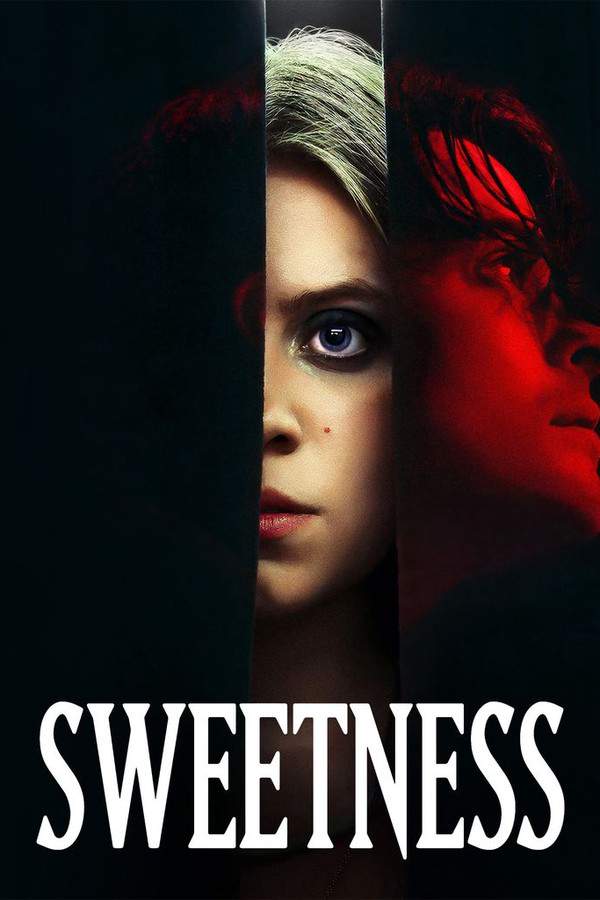
When a devoted fan discovers that her beloved rock‑star idol is sinking deeper into addiction, she decides to rescue him at any cost. Her well‑meaning intervention quickly spirals out of control, leading her to kidnap him in a delusional effort to “fix” his habit. What starts as a compassionate rescue transforms into a disturbing captivity as she confines him in the name of help.
Find where to stream, rent, or buy Sweetness (2026) in the US with current JustWatch availability, up-to-date pricing, and platform listings for subscription, rental, and digital purchase options.
Warning: spoilers below!
Haven’t seen Sweetness yet? This summary contains major spoilers. Bookmark the page, watch the movie, and come back for the full breakdown. If you're ready, scroll on and relive the story!
Still thinking about how Sweetness (2026) ended? Here’s a full breakdown of the ending, key final moments, major twists, and the deeper meaning behind the film’s conclusion.
Sweetness concludes with a chilling meditation on the destructive nature of obsession. After Rylee’s captive, the musician Payton, breaks free from her clutches, he escapes only to succumb to a fatal drug overdose. The tragedy is compounded by Rylee’s descent into violence; she killed her only friend, Sidney, and later murdered her stepmother, Marnie, to keep her secret safe. Yet, the film saves its darkest twist for the final moments, revealing the depths of a father’s denial. Rylee’s father, Ron, a police officer investigating Payton’s death, discovers his daughter’s ring on the dead singer’s necklace. In a moment of devastating complicity, he chooses to hide the evidence, effectively covering up her involvement and allowing her to evade justice.
A year later, the film presents a haunting aftermath. Rylee, now styling herself in Payton’s image with bold makeup, has posthumously released the song Payton wrote while chained in her basement. As she watches him win an award for that track, she believes this success belongs to both of them, speaking to him in her mind as if they remain partners. The ending is not a redemption, but a portrait of a completely fractured psyche. Rylee’s eerie smirk and lack of remorse make it clear that she views herself as a savior rather than a captor, unable to comprehend that her “rescue” was really a projection of her own toxic addiction to a person. By showing Rylee unpunished and validated by fame she helped manufacture, the film exposes the terrifying reality of parasocial obsession: it destroys the object of its affection while leaving the obsessed forever trapped in a delusion.
Last updated: March 15, 2026 at 01:54
Read frequently asked questions about the ending of Sweetness (2026), including final-scene interpretation, twist explanations, character outcomes, and the deeper meaning behind the conclusion. This ending explained FAQ is designed for viewers searching for clear spoiler-heavy answers and ending breakdown insights.
Payton dies because he succumbs to a fatal drug overdose shortly after breaking free from Rylee's captivity. His addiction, which Rylee originally tried to 'fix' by kidnapping him, ultimately proves fatal the moment he regains access to drugs. The film shows that his addiction was too powerful for him to overcome on his own, and freedom came too late.
Earlier scenes established Payton's deep addiction, showing he could not resist using even while being held captive.
Ron, a police officer investigating Payton's death, discovers his daughter's ring on the dead singer's necklace. Rather than face the devastating truth that his daughter is a killer, he chooses denial and covers up her involvement. This act of complicity represents his complete failure to confront reality, showing how even those closest to Rylee cannot see past their own need to protect her.
Ron was shown as a parent struggling to connect with Rylee, suggesting he'd rather maintain an illusion of normalcy than accept uncomfortable truths.
Rylee goes completely unpunished for her crimes. A year after Payton's death, she has released the song he wrote while chained in her basement and watches him win a posthumous award. She styles herself in his image with bold makeup and speaks to him in her mind as if they remain partners. She shows no remorse and views herself as his savior, not his captor.
The film established early on that Rylee genuinely believed she was helping Payton, showing she never recognized her actions as crimes.
Rylee kills both Sidney (her only friend) and Marnie (her stepmother) to keep her secret safe. Sidney threatened to expose the truth about the kidnapping, while Marnie discovered evidence linking Rylee to Payton's disappearance. Rather than let anyone reveal what she's done, Rylee eliminates them in cold blood, demonstrating how her delusion escalates into murder to protect her fantasy.
Earlier in the film, Rylee's behavior becomes increasingly erratic and controlling as her plan begins to unravel, hinting at her willingness to do whatever it takes to maintain her narrative.
Rylee's transformation, she adopts Payton's bold makeup and style, reveals a completely fractured psyche. She doesn't just mourn him; she literally becomes him. This signals that her obsession was never about wanting to save Payton, but about merging with him. She now lives in a world where they are 'partners,' which is why she claims his posthumous success belongs to both of them.
Rylee's obsession was always about her fantasy of who Payton was to her, not the real person, making this merge into his identity a logical endpoint.
The song Payton wrote while held captive in Rylee's basement becomes a posthumous success, winning an award that Rylee watches from her living room. This twist shows how Rylee has essentially manufactured a legacy for him using his captivity as inspiration. She believes this validates her actions, that her 'help' ultimately gave the world his greatest work. The award becomes another prop in her delusion.
Payton was established as a talented musician, so his ability to write a powerful song while captive is believable, even tragic.
Rylee lacks remorse because she operates entirely within a delusion where she is the hero, not the villain. Her psychology is so fractured that she cannot distinguish between rescuing someone and imprisoning them. Every action she took, kidnapping, captivity, murder, she experienced as necessary steps to save Payton. The eerie smirk at the end confirms she views herself as a martyr, not a criminal.
Rylee's initial motivation was framed as genuine (if misguided) compassion, suggesting she never developed the self-awareness to recognize her crimes.
Discover curated groups of movies connected by mood, themes, and story style. Browse collections built around emotion, atmosphere, and narrative focus to easily find films that match what you feel like watching right now.
Stories where admiration curdles into dangerous, delusional control.If you liked the dark descent into delusion in Sweetness, explore more movies about obsessive fandom and dangerous fixations. These psychological thrillers feature fans, stalkers, and protectors whose love turns into a controlling and violent nightmare.
These narratives typically follow a protagonist whose initial admiration or concern for a public figure or acquaintance becomes an all-consuming obsession. Their attempts to 'save' or 'possess' the object of their affection escalate from well-meaning gestures to extreme acts of control, kidnapping, and psychological manipulation, often set in claustrophobic environments.
Movies are grouped here for their shared exploration of a specific psychological breakdown, where love and help are perverted into control and violence. They share a dark tone, high intensity, and a deeply unsettling mood that examines the terrifying extremes of human attachment.

Hopeful rescues that devolve into grim and inescapable confinement.Fans of the grim captivity and failed intervention in Sweetness will find more movies with similar bleak narratives. These stories explore the dark consequences of well-intentioned acts that become terrifying ordeals of isolation and control.
The narrative pattern involves a character taking drastic, misguided action to 'save' someone from themselves, often from addiction or a perceived destructive path. This intervention morphs into imprisonment, stripping the victim of their autonomy. The story unfolds in a confined setting, emphasizing the claustrophobia and psychological torment, and almost always concludes with a devastatingly bleak outcome for all involved.
These films are united by their specific, grim premise of captivity born from twisted altruism. They deliver a heavy emotional weight through themes of isolation, loss of control, and the complete absence of redemption, resulting in a consistently dark tone and a profoundly unsettling viewer experience.
Don't stop at just watching - explore Sweetness in full detail. From the complete plot summary and scene-by-scene timeline to character breakdowns, thematic analysis, and a deep dive into the ending - every page helps you truly understand what Sweetness is all about. Plus, discover what's next after the movie.
Read a complete plot summary of Sweetness, including all key story points, character arcs, and turning points. This in-depth recap is ideal for understanding the narrative structure or reviewing what happened in the movie.
Track the full timeline of Sweetness with every major event arranged chronologically. Perfect for decoding non-linear storytelling, flashbacks, or parallel narratives with a clear scene-by-scene breakdown.
Discover the characters, locations, and core themes that shape Sweetness. Get insights into symbolic elements, setting significance, and deeper narrative meaning - ideal for thematic analysis and movie breakdowns.