Plot Explained Spoilers guaranteed!
Plot Explained

Browse by genre

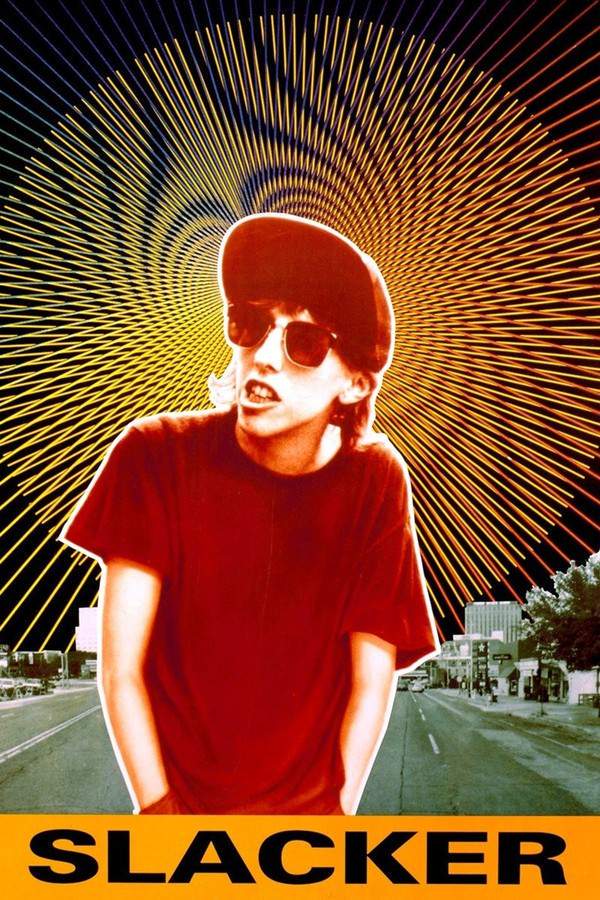
Slacker (1991) movie poster

Timeline

Slacker (1991) Timeline Explained – Every Event in Order

Release, runtime and language
1991 · 100 min · English
Loading streaming availability…
Budget
$23K

Austin, Texas serves as the backdrop for this unconventional comedy-drama, which follows a series of interconnected vignettes throughout a single day. The film introduces a diverse group of young adults – students, musicians, drifters, and dreamers – each grappling with their own aspirations and anxieties. Their meandering conversations and encounters reveal a snapshot of a generation searching for meaning and connection in a laid-back environment, exploring themes of friendship, ambition, and the challenges of finding your place.

On this page (6)
  1. 1 Where to watch
  2. 2 Events in order (15)
  3. 3 Timeline questions answered
  4. 4 Movie threads
  5. 5 Movies like Slacker
  6. 6 Every angle
Loading streaming availability…

15 events in order · contains spoilers

Slacker Timeline: Events in Chronological Order

Every key event of Slacker (1991) in order, scene by scene, with when and where it takes place. Use it to untangle flashbacks, time jumps and parallel storylines, to refresh your memory before the sequel or to find the exact scene you are thinking of.

  1. A talkative taxi ride introduces the day

    The film opens with a chatty taxi passenger weaving long, casual conversations as Austin moves by outside. The scene uses rapid-cut vignettes to establish Slacker's loose, roaming rhythm and to hint at the day’s mosaic structure. It shows how conversations drift from trivial to strange in a single morning.

    When
    morning
    Where
    Austin, inside a taxi
  2. A UFO buff proclaims aliens and moon landings

    In a street gathering, a UFO buff insists the U.S. has been on the moon since the 1950s. He threads his theory into everyday chatter, a hallmark of the film's fragmentary storytelling. The moment introduces the film’s appetite for eccentric viewpoints within a shared city space.

    When
    afternoon
    Where
    Austin, street
  3. A JFK conspiracy theorist voices suspicion

    Nearby, a JFK conspiracy theorist voices his suspicion in casual conversation. The dialogue mirrors the film’s recurring preoccupation with authority and hidden truths. The scene blends into the broader tapestry of voices that populate the day.

    When
    afternoon
    Where
    Austin street
  4. An elderly anarchist befriends a would-be thief

    An elderly anarchist befriends a man trying to rob his house, leading to uneasy humor and unexpected trust. The interaction destabilizes typical boundaries between antagonists and allies. It adds a strange warmth to the film’s portrait of community.

    When
    afternoon
    Where
    elderly anarchist's home
  5. A television set collector adds to the odd gallery

    Inside a cluttered dwelling, a man collects televisions and the conversations drift between pop culture and personal philosophy. The cluttered dwelling functions as a microcosm of pop culture obsession and personal philosophy. The scene moves with quick cuts and a friendly, rambling rhythm.

    When
    afternoon
    Where
    Austin apartment
  6. A Madonna pap smear seller becomes poster icon

    A provocative Madonna pap smear seller punctuates the day with a provocative image. The moment underscores Slacker’s habit of mixing shock with humor in everyday life. It also highlights the film’s willingness to push boundaries through art and kitsch.

    When
    afternoon
    Where
    street or marketplace
  7. A woman with a black eye offers Oblique Strategies

    A woman hiding a black eye offers random Oblique Strategies cards to passers-by. The exchanges feel half-absurd, half revealing about the characters’ strategies for coping with social awkwardness. The vignette emphasizes how people pass around ideas as a way to connect or deflect.

    When
    afternoon
    Where
    city street
  8. A tense moment around a possible family accident

    A young man sits at the center of a tense moment that may involve his mother and a car accident. The scene leaves his guilt or innocence unsettled, reflecting the film’s focus on ambiguous, everyday crises. It is one of Slacker’s many fragments that layers personal danger into ordinary life.

    When
    midday
    Where
    family home
  9. Renters uncover postcards in a rooming house

    Three renters in a rooming house discover and read a pack of postcards left by a former occupant. The postcards become a catalyst for memory, gossip, and small social rituals among strangers sharing space. The moment outlines how private artifacts migrate into shared rooms.

    When
    afternoon
    Where
    rooming house
  10. A young woman returns from a Dallas mental hospital

    A young woman returns to town after being confined in a Dallas mental hospital. She re-enters social spaces with guarded curiosity from friends and strangers alike. Her arrival threads into the day’s mosaic, illustrating reintegration and the fragility of belonging.

    When
    afternoon
    Where
    Austin, town
  11. A symbolic creek-side rejection of an ex

    A man persuades a friend to throw a tent and a typewriter into a creek as a symbolic rejection of an ex-girlfriend. The act is treated with deadpan humor and reflective conversations about desire, objects, and what it means to let go. The scene contributes to the film’s collage of idiosyncratic acts.

    When
    afternoon
    Where
    park or creekside
  12. Diner scene: coffee, newspaper, and strangers' remarks

    A young man tries to have coffee and read a newspaper in a diner as patrons interrupt with blunt remarks. The interactions comment on boundaries, privacy, and the uncomfortable social texture of casual encounters. The moment is one of several vignettes that test how people listen or fail to listen.

    When
    morning
    Where
    diner
  13. College couple argue over a Coke and timing

    Two college students argue over giving a Coke to a homeless person, escalating into personal attacks. They realize they will miss the movie they’re heading to see, and decide to meet again at the theater in two hours. The sequence blends mock seriousness with a wistful sense of time slipping away.

    When
    afternoon
    Where
    city street and theater district
  14. Hitchhiker from funeral and the question of escape

    A hitchhiker recounts coming from his stepfather's funeral, while a friend at a store asks 'How’d you get out?' and he answers 'Good behavior.' The exchange is dryly funny and nonchalant, typical of Slacker’s mood. It ties together travel, mortality, and social invisibility.

    When
    afternoon
    Where
    store in town
  15. Ending: four friends film their town and throw camera away

    Ending in a wordless, whimsical sequence, four friends drive around town filming with handheld 16mm cameras. They reach a park by a river, run and dance, and one friend throws his camera over the edge. The finale embodies the film’s playful, open-ended ethos about art, friendship, and escaping into motion.

    When
    evening
    Where
    park overlooking a river

Last updated: October 09, 2025 at 15:44

Was this helpful?

Timeline questions answered

Slacker Timeline Explained: Your Questions Answered

When does it happen, and why in that order? The questions people ask about the chronology of Slacker (1991): time jumps, flashbacks, cause and effect between scenes and the correct order of events, each answered with spoilers.

Q1

Why does the man throw his camera into the river at the end of the film?

The final scene shows four friends driving around filming with handheld 16mm cameras before one throws his camera into the river. This act serves as a symbolic release and rejection of the act of recording or documenting life. Rather than continuing to capture and preserve moments, the character chooses to fully experience the present moment through dance and laughter. It represents a rejection of the observer mentality that pervades the entire film - throughout Slacker, characters are constantly watching, filming, discussing, and analyzing, but rarely fully engaging. The camera toss embodies the film's whimsical, irreverent ethos and suggests that sometimes direct experience is more valuable than trying to capture or control it.

  • ending
  • camera
  • river
  • symbolism
  • release
  • filmmaking
Q2

What is the Madonna pap smear scene about?

A hipster woman tries to sell a Madonna pap smear - an image of Madonna (the pop star) depicted as a pap smear slide - to passersby. This scene represents the film's willingness to shock through the collision of religious iconography, celebrity culture, and body imagery. It underscores Slacker’s habit of mixing humor, provocation, and art in everyday urban life. The image became so iconic it appears on the film's poster. The scene reflects the characters' approach to art as provocation and their attempts to transgress social boundaries through provocative statements and objects.

  • madonna
  • pap smear
  • art
  • provocation
  • poster
Q3

Why does the elderly anarchist befriend the man trying to rob his house?

An elderly anarchist befriends a man who arrives to rob his home, leading to an unexpected moment of connection between two people on opposite sides of the law. The scene subverts typical antagonist-victim dynamics by showing how shared ideology - even if one is adopted and one is inherent - can create strange alliances. The anarchist sees past the criminal intent and finds common ground, demonstrating the film's interest in how people on the margins form communities outside conventional social structures. The interaction is played with uneasy humor, suggesting both vulnerability and genuine human connection across unlikely boundaries.

  • anarchist
  • robber
  • hospitality
  • community
  • unlikely alliance
Q4

What really happened with the young man and his mother in the car?

A young man is involved in a tense domestic scene that may involve his mother and a car accident, though the film deliberately leaves his guilt or innocence unsettled. The scene reflects Slacker’s recurring interest in ambiguous, everyday crises that remain unresolved. Viewers are left to wonder whether the accident was intentional or accidental, and what relationship exists between the characters. This ambiguity is central to the film's approach - it presents moments of potential drama or tragedy without providing clear answers, forcing viewers to sit with uncertainty rather than offering narrative resolution.

  • car accident
  • mother
  • ambiguity
  • guilt
Q5

What are the Oblique Strategies cards that the woman offers?

A woman wearing sunglasses to hide a black eye offers random cards from the Oblique Strategies deck to passersby. Oblique Strategies is a set of cards created by musician Brian Eno and artist Peter Schmidt, designed to help artists overcome creative blocks through cryptic prompts like "Remove specifics and convert to ambiguities" or "Honor thy error as a hidden intention." In the film, the cards serve as a metaphor for how people use ideas, philosophies, and random guidance to navigate social awkwardness or find meaning in everyday life. The woman with the black eye passing out these cards suggests people seeking direction or connection through unconventional means.

  • oblique strategies
  • cards
  • brian eno
  • creativity
  • guidance
Q6

What does the hitchhiker mean when he says "good behavior"?

A hitchhiker recounts coming from his stepfather's funeral when a friend asks how he got out. His dry reply - "Good behavior" - is a play on words referring to early release from prison or institutionalization. The darkly funny response suggests the hitchhiker is either making a morbid joke about his stepfather's death being a form of liberation, or implying he was somehow "released" from a difficult situation. The line exemplifies Slacker’s deadpan humor and how characters process heavy topics like death and family with casual deflection rather than direct emotional engagement.

  • hitchhiker
  • funeral
  • good behavior
  • release
  • dark humor
Q7

Why does a man throw a tent and typewriter into a creek?

A man persuades a friend to throw a tent and a typewriter into a creek as a symbolic rejection of his relationship with an ex-girlfriend. The objects represent different aspects of the failed relationship - the tent might symbolize shared trips or camping experiences, while the typewriter could represent creative collaboration or the ex's profession. Throwing them into the water is a ritualistic act of letting go, treating deadpan humor alongside genuine emotional release. The scene contributes to the film's collage of idiosyncratic coping mechanisms, showing how characters process heartbreak and transition through strange, personal rituals.

  • tent
  • typewriter
  • creek
  • breaking up
  • symbolism
  • letting go
Q8

Why is the young woman returning from a Dallas mental hospital significant?

A young woman returns to Austin after being placed in a Dallas mental hospital by her parents, re-entering social spaces with guarded curiosity. Her arrival threads into the day’s mosaic as a moment illustrating reintegration and the fragility of belonging. The scene touches on themes of mental health and institutionalization that run through the film, showing how characters navigate social expectations and personal vulnerability. Her presence raises questions about involuntary commitment, family dynamics, and the challenges of returning to a normal life after institutional care - themes that reflect the film's broader interest in people on society's margins.

  • mental hospital
  • dallas
  • reintegration
  • mental health
  • family
Q9

What is the UFO buff's theory about the moon landing?

A UFO enthusiast insists the United States has been on the moon since the 1950s, weaving this conspiracy theory into casual street conversation. The moment showcases the film's appetite for eccentric viewpoints and how fringe ideas become part of everyday Austin chatter. Like the JFK conspiracy theorist also featured, the scene reflects the film's preoccupation with authority, hidden truths, and skepticism toward official narratives. These characters embody the late 1980s Zeitgeist of distrust toward institutions and interest in alternative explanations for historical events.

  • ufo
  • moon landing
  • conspiracy
  • theory
  • austin
Q10

What do the postcards left by the former renter reveal?

Three renters in a rooming house discover and read a pack of postcards left by a fellow tenant who has moved out. The postcards become a catalyst for memory, gossip, and small social rituals among strangers sharing physical space. The scene illustrates how private artifacts migrate between people and how even absent strangers can impact those around them. The content of the postcards is never fully revealed to the viewer - the focus is on the act of discovery and the conversations it generates among the current renters, emphasizing how people piece together narratives about others from incomplete information.

  • postcards
  • rooming house
  • strangers
  • community
  • gossip
Q11

What is the college couple arguing about in the street?

Two college students argue over giving a can of Coke to a homeless person, with the disagreement quickly escalating into personal attacks about their values and priorities. The trivial nature of the original conflict contrasted with the intensity of the resulting personal jabs captures how small disagreements can reveal deeper tensions in relationships. They ultimately realize they'll miss their movie and agree to meet at the theater two hours later for the next showing. The scene exemplifies Slacker's interest in how people negotiate shared spaces, conflicting values, and the fleeting nature of social conflicts that get forgotten as quickly as they arise.

  • college students
  • coke
  • homeless
  • argument
  • conflict resolution
Q12

How does Slacker portray Austin, Texas?

Austin serves as an active participant in Slacker rather than just a backdrop. The film captures the city's laid-back, bohemian atmosphere in 1990 as a space where diverse characters - students, musicians, drifters, and dreamers - coexist and share ideas. The locations include familiar spots like diners, streets, rooming houses, and parks that become stages for spontaneous conversations and encounters. The film presents Austin as a place where unconventional ideas and lifestyles can flourish, where strangers engage in philosophical debates, and where people search for meaning and connection amid the everyday noise of urban life.

  • austin
  • texas
  • setting
  • bohemian
  • 1990s
  • city
Q13

Do the different characters in Slacker know each other?

The characters in Slacker exist in a loose-knit web where most know each other only tangentially or not at all, though the film hints at subtle connections. The structure moves like a relay, with one character's story fading as another begins nearby, suggesting a shared social world. Some characters appear briefly in the background of others' scenes, implying overlapping circles of acquaintance without making explicit the relationships. This approach creates a mosaic where Austin itself becomes the connecting thread - all these people inhabit the same city, frequent the same spaces, and contribute to the same atmosphere of searching and drifting.

  • characters
  • connections
  • mosaic
  • ensemble
  • overlap

Movie threads

More Movies Like Slacker, by Mood & Story

Curated lists built around what makes Slacker tick: the same mood, the same kind of story or the same emotional payoff. Each list explains why these movies belong together.

Mosaic of Urban Lives like in Slacker

Interconnected vignettes paint a portrait of a city and its dreamers. Explore movies like Slacker that weave together slice-of-life stories. If you enjoyed the meandering, interconnected vignettes in Austin, you'll find similar films about dreamers, drifters, and the philosophical rhythm of city life.

  • meandering
  • interconnected
  • reflective
  • slice-of-life
  • urban
  • ensemble
  • Tone: melancholic, reflective, whimsical
  • Pacing: variable, meandering
Why these movies?

The story pattern: Narratives in this thread unfold as a collection of vignettes or short episodes, often following a large ensemble cast. The connections between characters are frequently loose or coincidental, emphasizing the shared space and mood of the setting rather than a tightly woven plot. The journey is about observing a day in the life of a community.

Why they belong together: These films are grouped by their shared episodic, mosaic-like structure and their focus on capturing a specific cultural moment. They prioritize atmosphere, character observation, and philosophical conversation, creating a similar meandering and reflective viewing experience.


Philosophical Slacker Stories like Slacker

Stories of drifters and thinkers searching for meaning in a laid-back world. Find movies with a vibe similar to Slacker. This thread gathers films about thoughtful, disaffected characters, witty philosophical dialogues, and a search for purpose, perfect if you enjoyed the quirky, laid-back anxiety of the original.

  • quirky
  • laid-back
  • anxious
  • searching
  • philosophical
  • slacker-culture
  • Tone: melancholic, quirky, searching
  • Pacing: variable, conversational
Why these movies?

The story pattern: The narrative pattern focuses on character over plot, often following young adults who are intelligent but directionless. The conflict is internal—a struggle with existential questions, societal expectations, and finding one's place. The story unfolds through conversational scenes that reveal character and theme, rather than high-stakes action.

Why they belong together: This thread groups movies based on a shared central theme of 'slacker' culture and a specific character archetype: the philosophical dreamer. The similarity comes from the tone—a mix of melancholy and whimsy—and the focus on marginalized characters engaging in intellectual, searching dialogue.

If you liked this

Movies Like Slacker

Similar movies to Slacker: the same genre, themes or kind of story. Each one comes with its own plot summary, timeline and ending explained.

Browse all movie summaries

Every angle

Slacker (1991) Explained: Plot, Timeline & Characters

Everything about Slacker in one place: what happens in the plot summary, the timeline in chronological order, the characters and meaning and a spoiler-free summary. What's After the Movie adds the cast, box office and post-credit scenes.

Coming soon on iOS and Android

The Plot Explained Movie Summary App

Plot summaries, endings explained and timelines on your phone. Catch up on any movie in minutes, save your favorites and never miss a twist again.

Be the first to know when we launch. Your email stays private, always.

Learn more about the app