





Plot Explained Spoilers guaranteed!
Plot Explained

Browse by genre

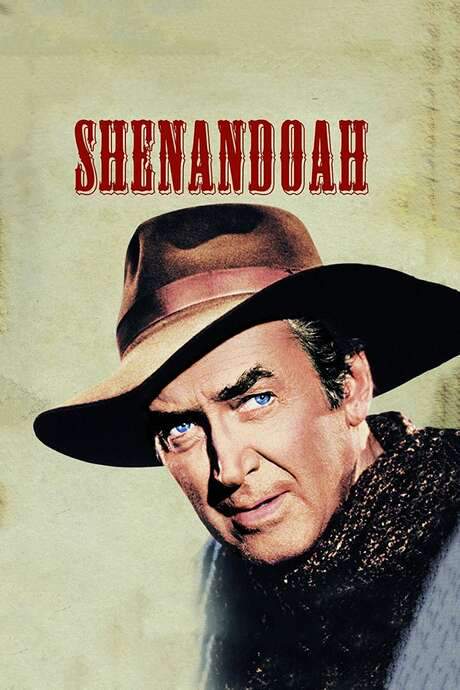
Shenandoah (1965) movie poster

Timeline

Shenandoah (1965) Timeline Explained – Every Event in Order

Release, runtime and language
1965 · 105 mins · English
Directed by
Andrew V. McLaglen
Starring
Warren Oates, James Stewart, Paul Fix, Strother Martin, Patrick Wayne, Harry Carey Jr.

Two mighty armies trample the Shenandoah valley, and a stubborn farming family stands against both. Charlie Anderson, a Virginia farmer, is drawn into the Civil War he tried to ignore when his youngest son is captured by Union forces, forcing the Andersons to confront the conflict head‑on.

On this page (6)
  1. 1 Where to watch
  2. 2 Events in order (12)
  3. 3 Timeline questions answered
  4. 4 Movie threads
  5. 5 Movies like Shenandoah
  6. 6 Every angle

Where to watch

Where to Watch Shenandoah (1965)

Where can you watch Shenandoah? Stream, rent or buy it in the US, including on Amazon Video, Apple TV Store and Fandango At Home: current JustWatch availability with up-to-date prices.

Streaming availability powered by JustWatch

12 events in order · contains spoilers

Shenandoah Timeline: Events in Chronological Order

Every key event of Shenandoah (1965) in order, scene by scene, with when and where it takes place. Use it to untangle flashbacks, time jumps and parallel storylines, to refresh your memory before the sequel or to find the exact scene you are thinking of.

  1. Family life on the Anderson farm during the Civil War

    Charlie Anderson leads a rugged, self-reliant family on a Virginia farm during the Civil War, managing the land without slaves. They are devout in church and meals, but Charlie takes credit for everything and blames God only for misfortune. The war rages nearby while the family focuses on protecting their own kin, preserving a sense of normalcy amid chaos.

    When
    1864
    Where
    Anderson family farm, Virginia
  2. Jennie marries Sam the Confederate officer

    Jennie is courted by a young Confederate officer named Sam, and Charlie ultimately gives his blessing for their wedding. The ceremony proceeds with joy, but a corporal interrupts to recall Sam back to duty. Sam departs shortly after the vows, leaving Jennie in sorrow.

    When
    Days after Charlie approves
    Where
    Church and nearby town
  3. Ann gives birth to Martha

    Ann goes into labor shortly after Sam leaves, and they welcome a baby girl named Martha in honor of Charlie's late wife. The birth gives the family a brief moment of joy amid the encroaching war. Charlie wrestles with the day’s sorrow while embracing his new role as father.

    When
    shortly after Sam's departure
    Where
    Anderson farmhouse
  4. Boy and Gabriel captured after stumbling onto an ambush

    Boy and his friend Gabriel stumble into a Confederate ambush while out hunting; their rebel kepi cap leads Union soldiers to capture Boy as a suspected Rebel. Gabriel, who has been told he is free by a Black Union soldier, runs to tell the Andersons what happened, and Jennie confirms the emancipation rumor before heading out on his own.

    When
    during Boy's hunting trip
    Where
    Near the pond and along the road
  5. Family heads out to find Boy

    They head from the farm toward Union lines in search of Boy, driven by a mix of fear and hope. The journey takes them toward possible Union camps and prisoner routes as they press on despite danger. Charlie's resolve deepens as the family stages a bold response to the crisis.

    When
    soon after Boy's capture
    Where
    From the farm toward Union lines and the depot
  6. Train depot and reunion with Sam

    The depot crowd reveals no more prisoners, but Charlie disarms the guards and discovers Sam among the liberated prisoners. Jennie is overjoyed to see her husband, and the group accompanies him as he tells the soldiers to burn the train and go home. The moment signals a fleeting glimmer of Confederate hopes in a collapsing war.

    When
    the depot scene during the prisoner transport
    Where
    Train depot, nearby crowd
  7. Boy and Carter escape toward the South

    Boy is taken aboard a paddle wheeler with Carter and fellow prisoners to escape toward Confederate lines. They reach a Confederate camp, but are attacked by Federal forces the next day; Carter is killed and Boy is shot in the leg. Gabriel, revealed as a Union soldier, helps Boy hide in a bush until the battle passes.

    When
    after the initial escape
    Where
    Paddle wheeler journey then Confederate camp
  8. Confederate scavengers raid the Anderson farm

    Back at the farm, Confederate scavengers raid the household, killing James and then attacking Ann. The violence shakes the family to its core and intensifies the loss around the brothers and sisters left on the land. The raid sets in motion the painful consequences of a war that spares few families.

    When
    aftermath of Boy's escape
    Where
    Anderson farm
  9. A sentry kills Jacob; Charlie confronts the cost of war

    While returning from the raid, a Confederate sentry wakes to the sound of horses and shoots sixteen-year-old Jacob. Charlie, shaken by the loss, asks the sentry his age and, recognizing the senseless cost of the war, tells him he should live to have his own sons and understand loss. The scene marks a stark personal tragedy for the family.

    When
    later the same day
    Where
    Road near the farm
  10. Doctors confirm losses; Martha survives

    The doctor informs the Andersons of the fates of James and Ann; Martha survives, cared for by a Black nanny at the farm. The family begins to map out a new normal in the wake of multiple losses, clinging to the newborn as a fragile beacon. Charlie contemplates the costs of war as he holds Martha.

    When
    the day after the raid
    Where
    Farmhouse
  11. Breakfast prayer and the graveyard visitation

    At breakfast Charlie attempts his customary prayer but cannot finish, weighed down by grief. He walks to the family graveyard and sees the graves of his wife, James, Jacob, and Ann, the toll of the war made visible among the stones. The distant church bells echo his sorrow as he processes what has happened.

    When
    the following morning
    Where
    Family graveyard and farmhouse
  12. Sunday church arrives with a hopeful moment

    The family dresses for church on a Sunday and, to everyone's relief, Boy staggers in with a crutch. Charlie helps his son to the pew and the entire congregation joins in singing, as if to reaffirm life and faith beyond the losses. The scene closes the film on a note of endurance and shared resilience.

    When
    the next Sunday
    Where
    Local church

Last updated: October 09, 2025 at 12:36

Was this helpful?

Timeline questions answered

Shenandoah Timeline Explained: Your Questions Answered

When does it happen, and why in that order? The questions people ask about the chronology of Shenandoah (1965): time jumps, flashbacks, cause and effect between scenes and the correct order of events, each answered with spoilers.

Q1

Why does Charlie Anderson block the train tracks to find Boy?

Charlie blocks the train tracks because the depot captain refuses to look through the boxcars for Boy, claiming he has schedules to keep. Charlie refuses to accept this denial and mounts a roadblock on the tracks, disarming the Union guards to search the train himself. This action demonstrates how far Charlie is willing to go to protect his family, showing that his paternal drive overrides his usual avoidance of the war.

  • charlie anderson
  • train depot
  • boy captured
  • union army
  • prisoner search
Q2

Why does Sam free the Confederate prisoners and burn the train?

Sam frees the prisoners and tells them to burn the train because he recognizes the South has slim odds of winning the war. As a Confederate officer, he has seen enough death and futility that he chooses to send the soldiers home to their families rather than continue fighting a lost cause. This moment shows Sam's moral shift from duty to compassion.

  • sam
  • confederate soldiers
  • train
  • prisoners
  • end of war
Q3

How does Gabriel end up as a Union soldier helping Boy?

Earlier in the film, Gabriel is told he is free by a Black Union soldier. He runs to inform the Andersons about Boy's capture, then heads toward his own uncertain future. Later, Gabriel enlist in the Union Army. When Boy is wounded during an attack on a Confederate camp, Gabriel, now serving with the Union, recognizes Boy and helps him hide in the brush until the danger passes.

Foreshadowing: Gabriel was told he was free by a Union soldier early in the film, setting up his later service.

  • gabriel
  • union army
  • boy wounded
  • escape
  • confederate camp
Q4

Why does a Confederate sentry kill Jacob Anderson?

A Confederate sentry kills Jacob when the family returns from the raid. The sentry wakes to the sound of horses and fires at them in panic, killing the sixteen-year-old Jacob in a single moment. The randomness and youth of the killer, one of the film's most devastating moments, emphasizes the senseless cost of war on both sides.

  • jacob
  • confederate sentry
  • killed
  • senseless death
  • war cost
Q5

What does Charlie mean when he tells the sentry to live and have sons?

After Jacob is killed, Charlie asks the sixteen-year-old sentry his age. When the boy answers, Charlie tells him he should live to grow old and have many sons so he can understand what it feels like to lose one of his own. This moment represents Charlie's recognition that the sentry is also just a child caught in war, and his grief transforms into a profound statement about the universal cost of conflict.

  • charlie
  • sentry
  • jacob
  • loss
  • fathers sons
  • grief
Q6

Why can't Charlie finish his prayer at breakfast after the losses?

Charlie cannot finish his prayer because he is overwhelmed by grief after losing his wife (previously), James, Jacob, and Ann. Throughout the film, Charlie has taken credit for everything and blamed God for his misfortunes, but at this moment, his faith fails him completely. The prayer he cannot complete symbolizes his spiritual crisis and the breaking of his stubborn pride.

Foreshadowing: Earlier scenes show Charlie taking credit during dinner prayers and blaming God for taking his wife.

  • charlie
  • prayer
  • grief
  • faith
  • breakfast
  • spiritual crisis
Q7

What happens to James and Ann during the Confederate raid on the farm?

Confederate scavengers raid the Anderson farm while the family is away searching for Boy. During the raid, James is killed, and Ann is attacked and dies. The newborn Martha survives, cared for by a black nanny at the farm. These losses occur while Charlie and his sons are away, adding tragic irony to their journey.

  • james
  • ann
  • confederate raid
  • farm
  • killed
  • martha survives
Q8

Why does Boy return with a crutch at the end of the film?

Boy returns with a crutch because he was shot in the leg during the attack at the Confederate camp where Carter was killed. After escaping with Carter aboard a paddle wheeler, they reached a Confederate camp that was assaulted by Federal forces. Boy was wounded in the leg but survived thanks to Gabriel's help hiding in the brush. His return with a crutch represents both his physical healing and the family's emotional restoration.

  • boy
  • crutch
  • wounded leg
  • carter
  • escape
  • return home
Q9

What does the final church scene symbolize in Shenandoah?

The final church scene symbolizes resilience and faith restored. After enduring tremendous loss, James, Jacob, and Ann, the Anderson family dresses for church as they always have. Boy enters with his crutch, and Charlie helps him to the pew. The congregation joins in a hymn, and Charlie's face softens with tenderness. The church bells that previously seemed like a requiem now toll for hope, representing a family choosing to believe in restoration rather than surrender to grief.

  • church
  • boy
  • charlie
  • resilience
  • faith
  • hope
  • final scene
Q10

How does the Anderson family cope with so many losses during the war?

The Anderson family copes by clinging to each other and their routines. Despite losing James, Jacob, and Ann, they continue attending church together, welcome newborn Martha as a beacon of life, and support one another through shared grief. The final church scene shows them choosing endurance over despair, with the community joining them in song. Their stubborn loyalty to family and faith becomes their way of resisting the war's destruction.

  • family
  • loss
  • coping
  • resilience
  • martha
  • church
  • endurance
Q11

Why does Charlie blame God for his wife's death but take credit for everything else?

Charlie views himself as a self-reliant God-fearing man who takes credit for his family's successes while blaming God for his losses, particularly his wife's death. This pattern reflects his stubborn pride and inability to accept vulnerability. Only after experiencing the cumulative losses of James, Jacob, and Ann does Charlie's spiritual pride crack, evident in his unfinished prayer and his confrontation with the young sentry.

Foreshadowing: Early scenes show Charlie giving lengthy prayers crediting himself and blaming God during meals.

  • charlie
  • pride
  • god
  • blame
  • wife death
  • self-reliance
Q12

Why is the baby named Martha after Charlie's late wife?

The baby is named Martha in honor of Charlie's late wife, who died before the film begins. When Ann gives birth during the war, the family welcomes a baby girl and names her Martha as a tribute to Charlie's deceased wife. This act connects the new life to the family's past, and when Charlie later holds Martha after learning of James and Jacob's deaths, the baby becomes a fragile symbol of continuity and hope amid destruction.

  • martha
  • named after wife
  • new baby
  • hope
  • legacy
  • ann

Movie threads

More Movies Like Shenandoah, by Mood & Story

Curated lists built around what makes Shenandoah tick: the same mood, the same kind of story or the same emotional payoff. Each list explains why these movies belong together.

Movies about war-torn families like Shenandoah

Families are torn apart by conflict but find strength in their loyalty. For viewers who appreciated the powerful family dynamics in Shenandoah, this collection features similar movies where families must endure the hardships of war. Discover stories highlighting loyalty, survival, and the heavy cost of conflict on the home front.

  • familial
  • gritty
  • somber
  • resilient
  • melancholic
  • hopeful
  • Tone: bittersweet, somber, hopeful
  • Pacing: steady, deliberate
Why these movies?

The story pattern: These narratives typically center on a family attempting to remain neutral or preserve their way of life, only to be violently pulled into a wider conflict. The plot is driven by external threats that directly attack the family, leading to a journey of loss, pursuit, and a hard-won reaffirmation of their bonds.

Why they belong together: Movies are grouped here for their shared focus on the domestic experience of war. They share a heavy emotional weight, a steady, character-driven pace, and a tone that balances devastating loss with the enduring, bittersweet hope found in familial love.

Bittersweet anti-war movies similar to Shenandoah

Personal tragedies reveal the profound human cost of large-scale conflict. If you liked Shenandoah's powerful message about the true cost of war, explore these similar films. They are emotionally heavy dramas with a steady pace and a bittersweet tone, using personal stories to deliver a poignant anti-war perspective.

  • somber
  • melancholic
  • gritty
  • thought-provoking
  • resilient
  • hopeful
  • Tone: bittersweet, melancholic, somber
  • Pacing: steady, methodical
Why these movies?

The story pattern: The narrative pattern follows an initially detached or principled individual or family whose world is shattered by the violence of war. Their journey forces a direct confrontation with the conflict's brutality, leading to significant personal losses that serve as a powerful argument against war itself, culminating in a conclusion that acknowledges sacrifice while questioning its purpose.

Why they belong together: These films are united by their central anti-war theme, conveyed through heavy emotional storytelling. They share a high-intensity, bittersweet mood, a steady pacing that allows the tragedy to resonate, and a straightforward narrative structure that makes the human cost unmistakably clear.

If you liked this

Movies Like Shenandoah

Similar movies to Shenandoah: the same genre, themes or kind of story. Each one comes with its own plot summary, timeline and ending explained.

Browse all movie summaries

Every angle

Shenandoah (1965) Explained: Plot, Timeline & Characters

Everything about Shenandoah in one place: what happens in the plot summary, the timeline in chronological order, the characters and meaning and a spoiler-free summary. What's After the Movie adds the cast, box office and post-credit scenes.

Coming soon on iOS and Android

The Plot Explained Movie Summary App

Plot summaries, endings explained and timelines on your phone. Catch up on any movie in minutes, save your favorites and never miss a twist again.

Be the first to know when we launch. Your email stays private, always.

Learn more about the app