Plot Explained Spoilers guaranteed!
Plot Explained

Browse by genre

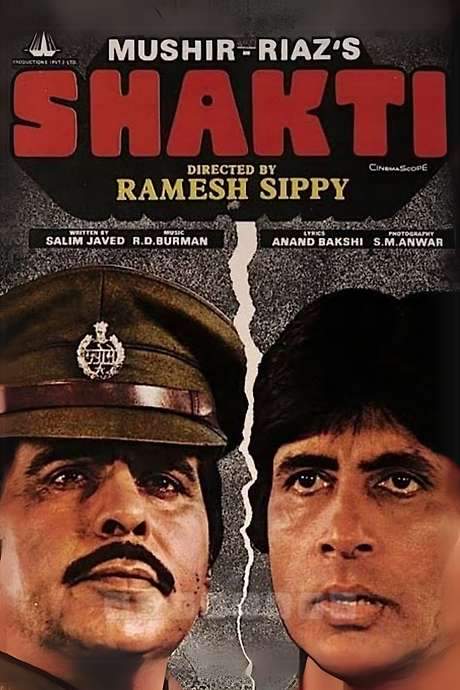
Shakti (1982) movie poster

Plot Summary

Shakti (1982) Plot Summary Explained

Release, runtime and language
1982 · 165 mins · Hindi
Loading streaming availability…
Directed by
Ramesh Sippy
Starring
Anil Kapoor, Amitabh Bachchan, Sharat Saxena, Kulbhushan Kharbanda, Satish Shah, Ashok Kumar

A Clash of Titans. A policeman’s son becomes a criminal after a childhood incident creates a rift between them.

On this page (5)
  1. 1 Where to watch
  2. 2 What happens: full plot
  3. 3 Plot questions answered
  4. 4 Movie threads
  5. 5 Every angle
Loading streaming availability…

Full plot summary · contains spoilers

What Happens in Shakti: Full Plot Summary

The whole story of Shakti (1982) explained, from the opening scene to the final frame: every key event, every twist and what it all adds up to. Read it as a quick recap before the sequel, to check a scene you missed, or to finally understand what really happened.

Ravi Kumar Anil Kapoor returns home at the railway station after finishing his B.A., excited to tell his grandfather that he wants to join the police force and serve the country just like him. Retired Commissioner of Police Ashwini Kumar Dilip Kumar listens with a wary eye, warning that the path is paved with tough, painful tests. He begins a long, winding flashback that reveals how a single decision can fracture a family and ignite a city’s darkest battles.

Ashwini’s world is a loving unit built around Sheetal Rakhee Gulzar and their son Vijay Amitabh Bachchan. In the line of duty, Ashwini climbs into the ring against the dreaded gangster J.K. Verma Amrish Puri. He takes down a key henchman, Yashwant, to cripple J.K.’s grip on the streets. But J.K. fights back with ruthless cunning, abducting Vijay to force Ashwini into a deadly stalemate. He demands Yashwant’s freedom in exchange for Vijay’s life. Ashwini refuses, his vow to the law unshakable, and he speaks into a recording device that captures every word of his stoic refusal. The moment is seismic: Vijay, listening in, realizes the stark distance growing between his father’s ideals and the brutal world he faces.

Left to his own devices, Vijay refuses to be a passive victim. He breaks free from his captors, and in a twist of fate is aided by K. D. Narang Kulbhushan Kharbanda, a rival gangster who sees something human in the boy and helps him escape to safety. Once Vijay returns home, the gulf between father and son widens; Vijay’s loyalty to the world J.K. represents clashes with Ashwini’s unwavering dedication to duty. Narang and J.K. soon become sworn enemies as the power struggle intensifies, each man trying to outmaneuver the other while keeping Vijay in their orbit.

Years pass, and Vijay has grown into a capable, resourceful man who starts seeing Roma Smita Patil—Ravi’s mother—through a protective lens. He steps in to rescue her from four rowdy men who threaten her at a restaurant, and their shared moment kindles a deep bond. Roma and Vijay fall in love, and when Narang discovers Vijay’s loyalty, he reluctantly hires him and brings him into his fold as his right-hand man. The two criminals’ worlds collide with explosive force, and J.K. schemes to wipe out Narang and anyone who stands in his way, including Vijay.

Ashwini, watching his son drift further from his values, urges Vijay to leave Narang’s shadow. But Vijay finds a sense of belonging with Roma, moving in together and beginning a life that feels almost normal—until the truth of Roma’s pregnancy with Ravi becomes known. Their relationship deepens into a quiet, steadfast family—yet danger remains ever-present. A chilling moment arrives when Ganpat Rai, a drunken would-be suitor for Roma, is manipulated by unseen hands to threaten the couple; Vijay’s brutal defense reveals the lengths to which violence has colored their world. The resulting murder of Rai, carried out by men in blue, drags Ashwini’s loyal officer Sudhakar Vikas Anand into a dangerous web of suspicion and legal peril.

Vijay is briefly jailed when Sudhakar presents a warrant accusing him of murder. The charges prove groundless, and he walks free, more determined to fight on the side of Narang. The duo’s uneasy alliance is shaken when J.K.’s men stage a truck heist that draws Vijay into another confrontation. Vijay captures J.K. and reminds him that he was once the boy abducted from school and left to grow up with a sense of vengeance. The confrontation highlights how much both men have become entangled in a web of retaliation and blood ties.

As the net tightens, journalists question Ashwini about the apparent conflict of interest—the city’s top cop, a father whose own son is one of its most feared gangsters. The Deputy Commissioner of Police accepts a challenge from his own conscience and asks for 48 hours to arrest Vijay and the other criminals; he refuses to betray the law, even as the personal stakes mount. In a sweeping sequence of arrests, J.K., Narang, and most of the gangsters are captured, though J.K. remains elusive, plotting a final, devastating move.

J.K. seizes the moment of weakness by targeting Sheetal Rakhee Gulzar in an attempt to break Ashwini’s resolve. Instead, Sheetal’s sacrifice hardens Vijay’s resolve, and he escapes from custody to hunt J.K. in a merciless, precise pursuit. He corners a den of J.K.’s men, delivering a stark message: he seeks only J.K., not his henchmen. In a brutal, direct confrontation, Vijay dismantles J.K.’s operation and learns that J.K. plans to flee India using false credentials.

The chase climaxes at the airport, where Vijay confronts J.K. in a dangerous disguise and ends his reign of terror with a fatal shot. The victory is not clean or painless: Ashwini tracks him down, overwhelmed with a father’s burden of love and regret. He shoots his own son, a final act born from years of conflict between duty and family. In a tearful farewell, Ashwini cradles Vijay, asks for forgiveness, and admits that his son’s love had always been a guiding light, even when their paths diverged.

Back in the present, Ashwini speaks softly to Ravi, asking whether he still wants to follow the path of the police. Ravi, with a quiet firmness that betrays no fear, answers with conviction that he will become an officer. The grandfather’s eyes well with tears as Roma Smita Patil and Ravi’s elder shadow of a grandmother bless the decision. The story closes on a hopeful note: Ravi boards a train, ready to pursue the calling that started this family’s long, painful odyssey, carrying with him the memory of a father’s sacrifice and a son’s enduring love.
Last updated: October 09, 2025 at 14:42

Was this helpful?

Plot questions answered

Shakti Plot Explained: Your Questions Answered

The questions people ask most about Shakti (1982): what happens in the confusing scenes, why the characters do what they do, the twists, hidden details and what the ending means. Each answer contains spoilers.

Q1

Why did Vijay turn to a life of crime despite being the son of a police commissioner?

Vijay's descent into crime began when he was kidnapped by gangster J.K. Verma as a child. Verma demanded that Ashwini release his henchman Yashwant in exchange for Vijay's release. Ashwini refused, prioritizing his duty to the law over his son's life. Vijay heard this recorded refusal and realized his father's values placed duty above family. This betrayal, combined with being abandoned by the police who were supposed to protect him, drove Vijay into the criminal world where he found belonging with rival gangster K.D. Narang, who had saved his life.

Foreshadowing: The kidnapping scene plants the seed of Vijay's resentment toward his father's rigid moral code.

  • vijay criminal background
  • ashwini son gangster
  • vijay kidnapping
Q2

Why did Ashwini refuse to exchange Yashwant for Vijay during the kidnapping?

Ashwini refused because he believed that releasing a criminal to save his own son would compromise his duty as a police officer. He refused to let personal family interests override his oath to uphold the law. Ashwini recorded his refusal on tape, speaking directly to Verma and stating he would not negotiate. This decision, while principled, permanently fractured his relationship with Vijay and set the tragic events of the film in motion.

Foreshadowing: This moment establishes the central theme of duty versus family that defines the entire film.

  • ashwini refuses exchange
  • vijay kidnapping
  • yashwant release
Q3

How did Vijay manage to escape from J.K. Verma's captivity?

Vijay escaped with the help of K.D. Narang, a rival gangster who saw humanity in the boy when others saw only a pawn. When Verma's enemies discovered Vijay was being held, they arranged his escape through Narang's network. Narang guided Vijay to safety, an act that made Narang a target in Verma's eyes and turned Vijay into a pawn in the ongoing gang war. This act of mercy created an unbreakable bond between Vijay and Narang.

Foreshadowing: Narang's kindness toward Vijay foreshadows their later partnership and the complex morality of the criminal world.

  • vijay escape captivity
  • kd narang saves vijay
  • vijay rescued
Q4

Why did Vijay choose to work for K.D. Narang after escaping?

Vijay chose to work for Narang because Narang had saved his life when no one else would help. While the police and his own father failed to rescue him, Narang risked his own safety to help Vijay escape. This created a debt of loyalty that led Vijay to join Narang's organization as his right-hand man. Narang gave Vijay a sense of belonging and purpose that his own family could not provide after the trauma of his kidnapping.

Foreshadowing: Vijay's loyalty to Narang mirrors the loyalty themes that culminate in the final confrontation.

  • vijay joins narang
  • narang gang
  • vijay right-hand man
Q5

Why did Ashwini kill his own son Vijay at the airport?

Ashwini was forced to kill Vijay because he had promised the Deputy Commissioner that he would arrest the criminals, including his own son. After Vijay killed J.K. Verma at the airport, Ashwini tracked him down to prevent further bloodshed and uphold his duty. In a devastating moment of conflict between paternal love and professional responsibility, Ashwini shot his mortally wounded son. He then cradled Vijay in his arms, asking for forgiveness and acknowledging that Vijay's love had always been his guiding light. The killing was not out of revenge but out of the same rigid duty that had driven him to refuse the exchange years earlier.

Foreshadowing: This tragic payoff is rooted in the same moral code Ashwini demonstrated when he refused to save Vijay as a child.

  • ashwini kills vijay
  • father shoots son
  • airport climax
Q6

Why did J.K. Verma kill Sheetal?

J.K. Verma murdered Sheetal (Vijay's mother and Ashwini's wife) as a final attempt to break Ashwini's resolve. Knowing that Vijay had escaped custody to hunt him down, Verma targeted Sheetal at home, believing that destroying the family would weaken both Ashwini and Vijay. However, instead of breaking them, Sheetal's sacrifice hardened Vijay's determination to end Verma's reign of terror permanently.

Foreshadowing: Sheetal's murder serves as the catalyst for Vijay's final, vengeful pursuit of Verma.

  • sheetal killed
  • jk verma murders sheetal
  • vijay mother death
Q7

What happened to the recording of Ashwini refusing to save Vijay?

The tape recording of Ashwini's refusal to exchange Yashwant for Vijay was made during the kidnapping confrontation. The recording captured every word of Ashwini's stoic refusal to negotiate, a moment that Vijay secretly listened to. This recording symbolized the growing distance between father and son, as Vijay heard his father choose duty over family. While the summary does not specify what happens to the tape afterward, it serves as the pivotal moment that turned Vijay against his father's values.

Foreshadowing: The tape represents the moment the family truly fractured, setting the tragic trajectory of the story.

  • tape recording
  • ashwini refusal
  • vijay hears recording
Q8

How did Vijay and Roma meet and fall in love?

Vijay rescued Roma when she was being harassed by four rowdy men at a restaurant. Vijay stepped in to protect her, and this act of bravery sparked a deep bond between them. They fell in love, and Roma became pregnant with Ravi. Vijay married her to formalize their family, and they began living together, creating a seemingly normal life despite the criminal underworld that surrounded them. Roma represented Vijay's attempt at building a legitimate future away from crime.

Foreshadowing: Their relationship provides Vijay with a reason to want out of the criminal world, though he remains trapped.

  • vijay roma love
  • roma rescued
  • vijay marriage
Q9

What caused the rivalry between J.K. Verma and K.D. Narang?

The rivalry between J.K. Verma and K.D. Narang was sparked when Narang helped Vijay escape from Verma's captivity. Before this act, Narang and Verma were rival gangsters competing for control of the city's underworld. When Narang showed mercy to Vijay, Verma saw it as a betrayal and an act of defiance. This turned personal, with each gangster trying to eliminate the other while vying for dominance over Vijay, who became a symbolic prize in their war.

Foreshadowing: The rivalry defines the criminal landscape and drives much of the conflict throughout the film.

  • jk verma vs narang
  • gangster rivalry
  • vijay caught between
Q10

How did Vijay finally kill J.K. Verma at the airport?

Vijay confronted J.K. Verma at the airport in disguise, where Verma was attempting to flee India using false credentials. After cornering Verma's men, Vijay delivered a direct message that he sought only Verma, not his henchmen. In a brutal confrontation, Vijay killed Verma, ending the reign of the man who had kidnapped him as a child and destroyed his family. However, this victory came at the ultimate price, as Ashwini arrived and killed Vijay to fulfill his duty.

Foreshadowing: The airport confrontation is the culmination of Vijay's decades-long quest for vengeance.

  • vijay kills verma
  • airport showdown
  • verma flees india
Q11

Why was Vijay arrested for Ganpat Rai's murder?

Vijay was arrested for the murder of Ganpat Rai, a drunken suitor who tried to pursue Roma. During a confrontation at a hotel, Vijay beat Rai, and two men in blue intervened, stabbing Rai to death. The next morning, Ashwini's loyal officer Sudhakar presented a warrant accusing Vijay of the murder. However, the charges proved groundless and Vijay was released. This false accusation, coming from his own father's department, further convinced Vijay that the police system was corrupt and加深 his commitment to Narang's criminal operation.

Foreshadowing: This incident illustrates how Vijay remains trapped between the criminal world and a justice system that suspects him.

  • vijay arrested murder
  • ganpat rai killed
  • sudhakar warrant
Q12

Why does Ravi want to become a police officer despite his family's tragedy?

Ravi, Vijay and Roma's son, chooses to become a police officer in the present day after hearing the full story from his grandfather Ashwini. Despite the tragedy that befell his father, who was killed by his own grandfather, the story concludes with Ravi Boarding a train to pursue his dream of joining the police force. The family's legacy of duty and sacrifice inspires Ravi to continue the tradition of service, even after witnessing its devastating cost. Ashwini blesses this decision with tears in his eyes, suggesting a hopeful resolution to the painful cycle.

Foreshadowing: This moment completes the circular narrative, showing how the family's sacrifices may yet produce positive results.

  • ravi police officer
  • grandson follows legacy
  • shakti ending

Movie threads

More Movies Like Shakti, by Mood & Story

Curated lists built around what makes Shakti tick: the same mood, the same kind of story or the same emotional payoff. Each list explains why these movies belong together.

Tragic family duty stories like Shakti

Stories where rigid principles and family love collide with devastating consequences. If you liked the heart-wrenching conflict in Shakti, explore more movies where familial duty and moral codes create an irreparable rift. These films feature heavy emotional weight, dark tones, and bittersweet or tragic endings, focusing on the high cost of choosing principle over love.

  • tragic
  • melancholic
  • familial
  • grief-stricken
  • tense
  • oppressive
  • Tone: dark, tragic, melancholic
  • Pacing: steady, escalating
Why these movies?

The story pattern: The narrative typically follows a central, morally rigid figure (like a father) whose commitment to duty causes a rift with a loved one (often a son), pushing them toward a destructive path. The story methodically escalates this conflict, leading to a climax where the initial principle results in a profound personal tragedy, such as a fatal confrontation.

Why they belong together: Movies are grouped here for their shared focus on the destructive power of ideological clashes within a family, their heavy emotional weight, and their tragic arcs. They resonate with viewers seeking deep, melancholic dramas about love, duty, and sacrifice.

Gangster epics with moral depth like Shakti

Gangster sagas where a character's fall is driven by personal trauma and redemption through sacrifice. For viewers who appreciated the gangster elements and moral complexity of Shakti, this collection highlights crime dramas with a steady pace and heavy emotional impact. These films explore themes of sacrifice, corruption, and the tragic consequences of a life of crime, often with a bittersweet conclusion.

  • violent
  • tense
  • tragic
  • grief-stricken
  • melancholic
  • oppressive
  • Tone: dark, grief-stricken, tense
  • Pacing: steady, character-driven
Why these movies?

The story pattern: These narratives often begin with a pivotal childhood or young adult trauma that sets the protagonist on a path of crime against a figure of authority. The plot steadily builds through rivalries and escalating violence, but the core remains the emotional conflict, leading to an ending where the protagonist's sacrifice resolves the central moral dilemma, albeit tragically.

Why they belong together: These films are connected by their fusion of the gangster genre with deep family drama, a steady pacing that allows for character development, and a focus on the psychological reasons behind a life of crime. They offer more than just action; they provide a poignant look at loss and reluctant redemption.

Every angle

Shakti (1982) Explained: Plot, Timeline & Characters

Everything about Shakti in one place: what happens in the plot summary, the timeline in chronological order, the characters and meaning and a spoiler-free summary. What's After the Movie adds the cast, box office and post-credit scenes.

Coming soon on iOS and Android

The Plot Explained Movie Summary App

Plot summaries, endings explained and timelines on your phone. Catch up on any movie in minutes, save your favorites and never miss a twist again.

Be the first to know when we launch. Your email stays private, always.

Learn more about the app