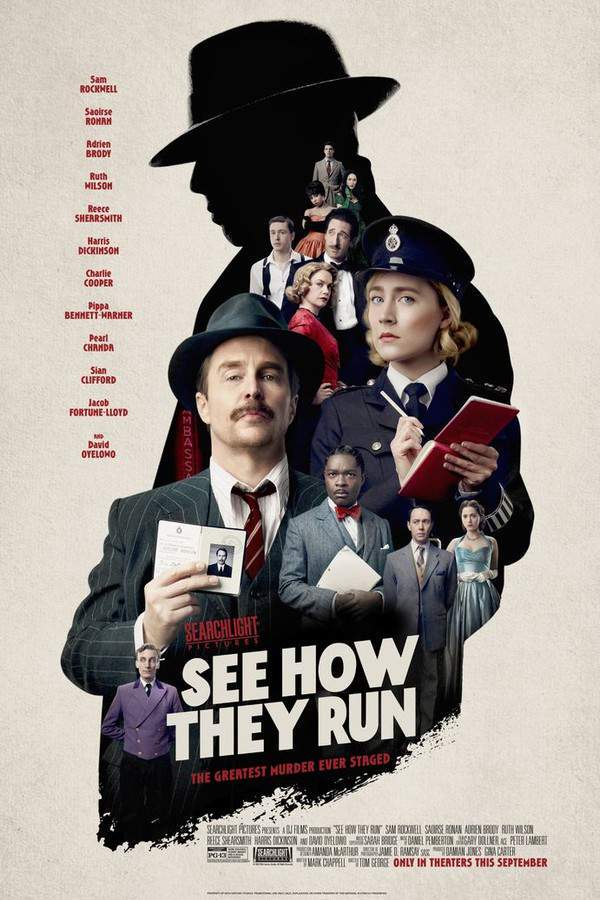
In 1950s London, the production of a successful play is disrupted by a shocking murder. A world-weary inspector and a young constable are assigned to investigate, quickly finding themselves immersed in the glamorous and sometimes dangerous world of the West End theater scene. As they pursue leads, they uncover a complex web of secrets and suspects in this witty and suspenseful whodunit that playfully nods to classic mystery films.
Warning: spoilers below!
Haven’t seen See How They Run yet? This summary contains major spoilers. Bookmark the page, watch the movie, and come back for the full breakdown. If you're ready, scroll on and relive the story!
Still thinking about how See How They Run (2022) ended? Here’s a full breakdown of the ending, key final moments, major twists, and the deeper meaning behind the film’s conclusion.
The ending of “See How They Run” reveals that the true culprit behind Kopernick’s and Mervyn’s murders is Dennis, the usher who had a deep personal connection to the story that inspired “The Mousetrap.” Dennis had lost his brother in a real tragedy and believed the play, which was based on his life, was exploitative and mocking his pain. His anger grew over the years as he watched the story being turned into a theatrical and cinematic spectacle, feeling that his grief was being profited from and trivialized. When Kopernick, the film director, began creating a climax that mirrored the original story of Dennis’ life but with added violence, Dennis saw it as a final insult and decided to take revenge. He murdered Kopernick and later Mervyn, who shared ideas with Kopernick and was involved in the film’s development.
However, the chaos reached its peak when Agatha Christie herself intervened. She cunningly offered Dennis poisoned tea, trying to calm him down and prevent further violence. Unfortunately, Dennis, in his desperation, seized Christie as a shield and almost caused more destruction. Stoppard and Stalker, the detectives, eventually uncover Dennis’ motive through clues he inadvertently left behind. They learn that Dennis felt betrayed and misunderstood, believing that the art based on his tragedy had been perverted to mock his suffering. Ultimately, Dennis’s rage culminated in a tragic shootout, where he held Christie hostage and was finally shot by Stoppard when he threatened to kill others, including himself. The film ends with Stoppard breaking the fourth wall, telling the audience not to reveal who the killer is, emphasizing the classic whodunit style.
In the final moments, Christie’s dinner at her house symbolizes that beneath the glamour and theatricality, real pain and unresolved trauma can still lie hidden. The story ultimately questions whether an artist’s creative liberties justify exploiting true human suffering, and whether society is willing to tolerate the uncomfortable truths that such stories may reveal. Dennis’s tragic story underscores the importance of respecting the line between art and reality, and how misusing personal tragedy can lead to devastating consequences. The ending leaves viewers pondering the blurred boundaries between fiction and life, morality, and the costs of artistic expression.
Last updated: June 25, 2025 at 08:59
Read frequently asked questions about the ending of See How They Run (2022), including final-scene interpretation, twist explanations, character outcomes, and the deeper meaning behind the conclusion. This ending explained FAQ is designed for viewers searching for clear spoiler-heavy answers and ending breakdown insights.
Dennis, the theater usher, is revealed as the killer of both Kopernick and Mervyn. He commits the murders because he believed the play "The Mousetrap" was based on his brother's tragic death and felt that his family's pain was being exploited for profit.
Earlier scenes show Dennis working in the theater with a haunted expression, hinting at his deeper connection to the production.
Dennis's brother died in a real tragedy that inspired "The Mousetrap." Over the years, he watched the story transform into a successful play and film, feeling that his grief was being trivialized and profited from. When director Kopernick added violent elements to the climax, Dennis saw it as the final insult.
Dennis killed Mervyn because he was involved in developing the film alongside Kopernick and shared ideas that Dennis felt further distorted his brother's story. Mervyn wasn't the primary target but became a victim due to his involvement in the project.
Agatha Christie attempts to intervene by offering Dennis poisoned tea to calm him down and prevent further violence. When that fails, she becomes hostage during the shootout until Stoppard shoots Dennis.
Christie's presence throughout the investigation builds toward her direct involvement in the climax.
The detectives uncover Dennis's motive by analyzing clues he inadvertently left behind. They realize his deep personal connection to the original tragedy and understand that he felt betrayed by how his family's pain was being turned into entertainment.
Dennis holds Agatha Christie hostage during a tense confrontation and threatens to kill others and himself. Detective Stoppard ultimately shoots Dennis when he refuses to release Christie, ending the threat.
Stoppard addresses the audience directly, asking them not to reveal who the killer is. This is a playful nod to classic whodunit conventions, emphasizing that the mystery should remain secret just like in "The Mousetrap," which traditionally doesn't reveal its killer.
The ending is ultimately happy for the main characters. Both Stoppard and Stacker achieve professional success and rekindle their bond. However, Dennis's story adds tragic weight, questioning the cost of artistic exploitation.
Christie's dinner at her house symbolizes that beneath the glamour and theatricality of the entertainment world, real pain and unresolved trauma can still lie hidden. It represents the film's theme that artistic expression can sometimes mask deeper human suffering.
The ending questions whether artists have the right to use real human suffering for creative expression and profit. Dennis's tragic story demonstrates how misusing personal trauma can lead to devastating consequences, leaving viewers to ponder the blurred boundaries between fiction and reality.
Discover curated groups of movies connected by mood, themes, and story style. Browse collections built around emotion, atmosphere, and narrative focus to easily find films that match what you feel like watching right now.
Murder investigations that cleverly wink at the genre while solving the case.If you enjoyed the clever, self-referential humor of See How They Run, you'll like these movies. This collection features witty whodunits that break the fourth wall and play with genre conventions, offering a fresh and fun twist on classic mystery stories with a light, entertaining tone.
The narrative follows a traditional murder investigation but is frequently punctuated by humorous asides, genre commentary, and characters who are aware they're in a mystery. The journey is as much about deconstructing the formula as it is about uncovering the truth, leading to a clever and satisfying conclusion.
Movies in this thread are grouped by their shared approach of blending a solid mystery plot with meta-humor and a lighthearted deconstruction of whodunit clichés. They appeal to viewers who love the genre but also appreciate a clever, playful, and slightly irreverent take on it.
Mismatched investigators navigate a glamorous historical setting to solve a crime.Fans of the 1950s London setting and the dynamic between the detectives in See How They Run will enjoy these films. Discover similar movies featuring unlikely investigative duos solving crimes in glamorous or distinctive historical periods, full of witty banter and a stylish atmosphere.
The narrative centers on the evolving partnership of two contrasting detectives as they unravel a crime. The historical setting is a key character, influencing the motives and methods. The plot unfolds through their banter and clashing perspectives, leading to a resolution that strengthens their bond.
These movies are grouped by their core combination of a charismatic detective duo, a strong sense of period style, and a mystery that is deeply intertwined with its glamorous or unique setting. They offer a blend of character-driven humor, investigative procedure, and historical immersion.
Don't stop at just watching - explore See How They Run in full detail. From the complete plot summary and scene-by-scene timeline to character breakdowns, thematic analysis, and a deep dive into the ending - every page helps you truly understand what See How They Run is all about. Plus, discover what's next after the movie.
Read a complete plot summary of See How They Run, including all key story points, character arcs, and turning points. This in-depth recap is ideal for understanding the narrative structure or reviewing what happened in the movie.
Track the full timeline of See How They Run with every major event arranged chronologically. Perfect for decoding non-linear storytelling, flashbacks, or parallel narratives with a clear scene-by-scene breakdown.
Discover the characters, locations, and core themes that shape See How They Run. Get insights into symbolic elements, setting significance, and deeper narrative meaning - ideal for thematic analysis and movie breakdowns.
Discover movies like See How They Run that share similar genres, themes, and storytelling elements. Whether you’re drawn to the atmosphere, character arcs, or plot structure, these curated recommendations will help you explore more films you’ll love.
See How They Run (2022) Plot Summary & Movie Recap
See How They Run (2022) Scene-by-Scene Movie Timeline
See How They Run (2022) Movie Characters, Themes & Settings
See How They Run (2022) Spoiler-Free Summary & Key Flow
Movies Like See How They Run – Similar Titles You’ll Enjoy
Murder Mystery (2019) Plot Summary & Ending Explained
Sleuth (2007) Story Summary & Characters
London Road (2016) Full Summary & Key Details
The Monster of London City (1964) Full Movie Breakdown
No Way to Treat a Lady (1968) Film Overview & Timeline
Run a Crooked Mile (1969) Detailed Story Recap
23 Paces to Baker Street (1956) Spoiler-Packed Plot Recap
Crime Is Our Business (2008) Film Overview & Timeline
Nobody Runs Forever (1968) Ending Explained & Film Insights
Murder Over New York (1940) Movie Recap & Themes
Sleuth (1972) Story Summary & Characters
Behind That Curtain (1929) Ending Explained & Film Insights
The Squeaker (1937) Full Summary & Key Details
Murder Without Crime (1950) Film Overview & Timeline
An Inspector Calls (1954) Spoiler-Packed Plot Recap