



Plot Explained Spoilers guaranteed!
Plot Explained

Browse by genre

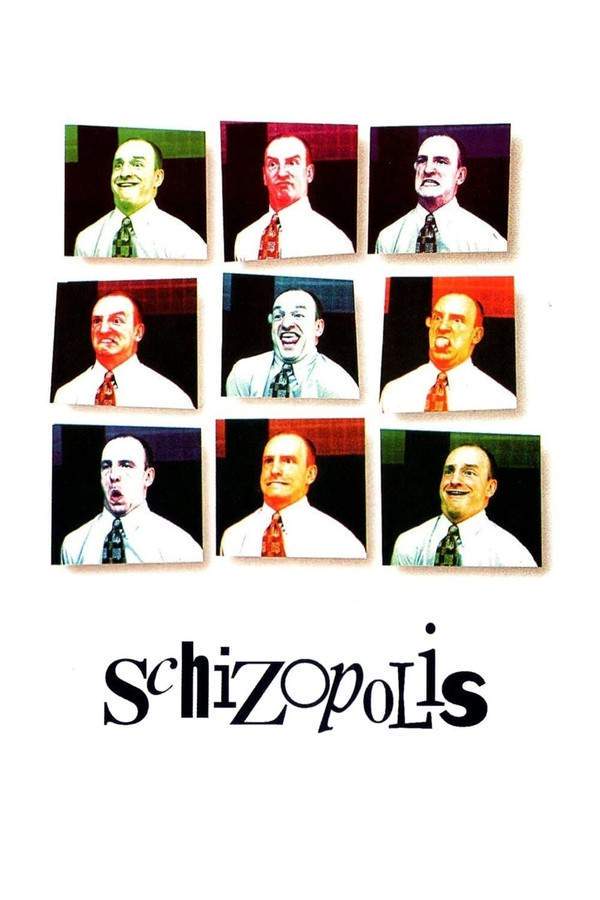
Schizopolis (1997) movie poster

Timeline

Schizopolis (1997) Timeline Explained – Every Event in Order

Release, runtime and language
1997 · 96 min · English
Directed by
Steven Soderbergh

This quirky comedy presents a unique challenge to the audience, inviting them to piece together a story of mistaken identity and unconventional humor. The film blends linguistic puzzles with the complexities of office politics, creating a deliberately disorienting and playful narrative. It showcases the filmmaker's experimental style and reputation for pushing creative boundaries, offering a deliberately ambiguous and thought-provoking experience.

On this page (6)
  1. 1 Where to watch
  2. 2 Events in order (15)
  3. 3 Timeline questions answered
  4. 4 Movie threads
  5. 5 Movies like Schizopolis
  6. 6 Every angle

Where to watch

Where to Watch Schizopolis (1997)

Where can you watch Schizopolis? Stream, rent or buy it in the US, including on Amazon Video, Google Play Movies and YouTube: current JustWatch availability with up-to-date prices.

Streaming availability powered by JustWatch

15 events in order · contains spoilers

Schizopolis Timeline: Events in Chronological Order

Every key event of Schizopolis (1997) in order, scene by scene, with when and where it takes place. Use it to untangle flashbacks, time jumps and parallel storylines, to refresh your memory before the sequel or to find the exact scene you are thinking of.

  1. Introduction by Soderbergh

    The film begins with director Steven Soderbergh addressing the audience, creating a unique introduction reminiscent of classic films. This sets an intriguing tone for the narrative that follows, where conventional storytelling is eschewed in favor of multiple perspectives.

  2. Fletcher's Perspective

    The first segment is told from Fletcher Munson's viewpoint, illustrating his daily experiences within a self-help organization called Eventualism. His ability to find deeper meanings begins to alienate him from his colleagues and his wife, leading to escalating tension in their home life.

    Where
    Office, Eventualism
  3. Lester Richards' Death

    The plot thickens when Fletcher’s co-worker, Lester Richards, dies unexpectedly, prompting Fletcher to take on the role of a speechwriter. As he immerses himself in his work, his relationship with his wife deteriorates, causing her to seek solace elsewhere.

    Where
    Office
  4. Elmo’s Affairs

    Parallel to Fletcher’s struggles, we meet Elmo Oxygen, an exterminator who engages in affairs with the wives of Eventualism employees. His secretive behavior and use of coded language during these encounters paint a vivid picture of his dubious morality.

    Where
    Various Homes
  5. Fletcher’s Doppelgänger Encounter

    Fletcher experiences a surreal moment when he is unable to unlock his car, discovering that his actual vehicle is nearby. This odd occurrence escalates when he sees his double enter the car, leading to an inexplicable sequence where he follows this doppelgänger home.

    Where
    Parking Lot
  6. Transformation into Dr. Korchek

    Upon closing his eyes, Fletcher unwittingly becomes his doppelgänger, Dr. Jeffrey Korchek, a dentist who is also having an affair with Fletcher's wife. This shift in perspective switches the narrative focus to Korchek's life and his interactions with those around him.

    Where
    Dr. Korchek's Home
  7. Korchek’s Brother

    The plot reveals Dr. Korchek's relationship with his brother, who is struggling with heroin addiction. Korchek admonishes his brother for his choices but is clearly conflicted about the situation, highlighting the complex dynamics of their relationship.

    Where
    Korchek's Home
  8. Attractive Woman Number 2

    Korchek becomes smitten with an attractive woman at work who resembles Mrs. Munson. As he navigates his feelings, he writes her a letter, unaware of the impending chaos in his life stemming from his infatuation.

    Where
    Office
  9. Consequences for Korchek

    Korchek’s day worsens as he faces various crises, including a harassment suit from Attractive Woman Number 2 and financial problems caused by his brother. These mounting issues culminate in a tragic twist when he is shot dead, altering the narrative's trajectory.

    Where
    Outside Work
  10. Elmo’s Career Change

    In a twist, Elmo is approached by a couple who urge him to abandon his extermination job and pursue a career in stardom. This moment serves as a turning point for his character, contrasting sharply with the darker paths taken by Fletcher and Korchek.

    Where
    Various Locations
  11. Mrs. Munson's Perspective

    The narrative then shifts to Mrs. Munson, presenting her struggles as a mother and her complicated relationships with Fletcher and Dr. Korchek. Her viewpoint adds depth to the story, elucidating the emotional turmoil faced by all characters.

  12. Reconciliation with Fletcher

    Following her tumultuous relationship with Korchek, Mrs. Munson reconciles with Fletcher. They return home together, signifying a fleeting moment of hope amidst the chaos that has unfolded.

    Where
    Munson Home
  13. Schwitters' Speech

    Fletcher aids Schwitters in finalizing a crucial speech, leading to Schwitters delivering an impassioned oration. The moment is punctuated by audience applause, symbolizing a rare success in the tumultuous lives of the characters.

  14. Elmo's Assault

    In a shocking twist, Elmo bursts into the speech event and shoots Schwitters in the shoulder, creating a dramatic climax. Though Schwitters survives, Elmo’s actions lead to his arrest, marking a grim end to his arc.

    Where
    Event Venue
  15. Soderbergh's Closing Remarks

    In the film's conclusion, Soderbergh returns to answer questions from the audience, engaged in a surreal dialogue. The final scene reveals him addressing an empty auditorium, adding to the film's overall feeling of disconnection and ambiguity.

    Where
    Auditorium

Last updated: November 16, 2024 at 11:43

Was this helpful?

Timeline questions answered

Schizopolis Timeline Explained: Your Questions Answered

When does it happen, and why in that order? The questions people ask about the chronology of Schizopolis (1997): time jumps, flashbacks, cause and effect between scenes and the correct order of events, each answered with spoilers.

Q1

Why does Fletcher take over Lester's position after his death?

After Fletcher's co-worker Lester Richards dies unexpectedly, Fletcher is asked to take over Lester's role as a speechwriter for Theodore Azimuth Schwitters. This promotion initially seems like an opportunity, but Fletcher becomes increasingly consumed by the work, prioritizing his job over his marriage. His obsession with finding deeper meaning in words, characteristic of his Eventualism training, eventually isolates him from his wife, creating the rift that drives her to seek comfort elsewhere.

Foreshadowing: Fletcher's early ability to detect deeper significance in situations hints at his eventual withdrawal into work as a coping mechanism.

  • fletcher munson
  • lester richards
  • speechwriter
  • eventualism
  • job promotion
Q2

How does Fletcher end up becoming Dr. Korchek?

Fletcher experiences a surreal moment in a parking lot when his car key doesn't work. He discovers his actual car is nearby, identical to the one he tried to enter. When he sees a man who looks exactly like him (his doppelgänger) getting into the car, Fletcher follows this double to his home. Upon closing his eyes, Fletcher inexplicably transforms into Dr. Jeffrey Korchek, swapping identities with his double.

Foreshadowing: The film's earlier focus on Fletcher's obsession with meaning over words creates the psychological instability that makes this surreal transformation plausible within the story's logic.

  • doppelganger
  • identity swap
  • dr korchek
  • transformation
  • parking lot
Q3

Why does Elmo shoot Schwitters during his speech?

Elmo Oxygen, the exterminator who has been having affairs with the wives of Eventualism employees, bursts into Schwitters' big speech event and shoots him in the shoulder. The exact motivation isn't fully explained, but Elmo's criminal activities with the affair photos and his overall subversive role in the story suggest he's acting to disrupt the organization. Schwitters survives the shooting, and Elmo is apprehended and interrogated.

Foreshadowing: Elmo's earlier use of coded language and secretive behavior with the affair photos establishes him as a destabilizing force within the Eventualism hierarchy.

  • elmo oxygen
  • schwitters
  • shooting
  • eventualism
  • climax
Q4

What is Mrs. Munson's relationship with Dr. Korchek?

Mrs. Munson is having a secret affair with Dr. Jeffrey Korchek, the dentist who is Fletcher's exact double. When Korchek becomes the focus of the narrative after the identity swap, viewers learn that he encourages Mrs. Munson to leave Fletcher for him. She eventually leaves Fletcher to be with Korchek, but later reconciles with Fletcher after her tumultuous relationship with the dentist.

Foreshadowing: Fletcher's growing disconnect from his wife earlier in the first segment establishes the emotional gap that makes her infidelity possible.

  • mrs munson
  • dr korchek
  • affair
  • infidelity
  • dentist
Q5

Why does the film tell the same story from three different perspectives?

Schizopolis presents the same narrative events three times from different viewpoints, Fletcher Munson, Dr. Jeffrey Korchek, and Mrs. Munson, each time with altered dialogue and shifted emphasis. This experimental structure is central to the film's themes of identity, perception, and the unreliability of narrative. By retelling identical events differently, Soderbergh explores how perspective shapes reality and highlights the absurdity of communication, matching the film's comedic and disorienting tone.

Foreshadowing: The director's opening address in the style of Cecil B. DeMille signals from the start that this will be a self-aware, unconventional storytelling experiment.

  • perspective
  • three viewpoints
  • non-linear
  • narrative structure
  • retelling
Q6

What's the purpose of the nonsense dialogue in the film?

The film features extended passages where characters speak in nonsensical, pseudo-meaningful phrases that sound profound but have no actual content, lines like 'Your brother, eight hours, fifteen thousand dollars.' This reflects Fletcher's journey from understanding words to seeking deeper meaning beyond them, eventually becoming disconnected from normal communication. The absurdity also serves the comedy, satirizing self-help jargon and corporate speak while creating deliberate disorientation.

Foreshadowing: Fletcher's increasing focus on finding meaning rather than accepting words at face value directly leads to his breakdown in communicating with his wife.

  • nonsense dialogue
  • coded language
  • communication
  • satire
  • self-help jargon
Q7

Why does Soderbergh end the film addressing an empty auditorium?

In the final scene, Steven Soderbergh returns to answer audience questions about the film in a surreal dialogue. However, the camera pans out to reveal he's speaking to an completely empty auditorium. This meta-fictional conclusion reinforces the film's themes of isolation, miscommunication, and the unreliable nature of perception. It also encapsulates the film's playful rejection of traditional narrative closure, leaving viewers as disconnected as the characters themselves.

Foreshadowing: The opening sequence where Soderbergh addresses the audience directly establishes the meta-fictional framework that pays off in this ambiguous ending.

  • soderbergh
  • ending
  • empty auditorium
  • meta-fiction
  • ambiguous conclusion
Q8

What is Eventualism?

Eventualism is the self-help organization led by Theodore Azimuth Schwitters where Fletcher Munson works. The organization appears to focus on personal development and finding deeper meaning in life, ironically, the very pursuit that eventually destroys Fletcher's marriage and sense of self. The name suggests a philosophy centered on eventual enlightenment or transformation, though the film satirizes these self-help concepts through absurd dialogue and the organization's dysfunctional employees.

Foreshadowing: Fletcher's training at Eventualism in detecting deeper significance directly leads to his ability to find meaning everywhere, and his subsequent isolation.

  • eventualism
  • schwitters
  • self-help organization
  • corporate satire
Q9

Why does Korchek's brother steal his money?

Dr. Korchek's brother is battling a heroin addiction and repeatedly asks Korchek for financial assistance. Despite Korchek admonishing him to avoid drug dealers, oddly claiming he has access to drugs himself, the brother ultimately steals Korchek's money. This betrayal contributes to Korchek's downhill spiral, which includes learning about the sexual harassment lawsuit and ultimately being shot dead.

Foreshadowing: Korchek's contradictory advice to his brother about drugs hints at his own moral hypocrisy and sets up the brother's later betrayal.

  • korchek brother
  • heroin addiction
  • theft
  • family betrayal
  • drugs
Q10

What happens to Dr. Korchek in the end?

Dr. Jeffrey Korchek meets a violent end. After a day full of mounting problems, including a sexual harassment lawsuit from Attractive Woman Number 2 and discovering his brother has stolen his money, Korchek leaves work and is shot dead. His death occurs while the narrative is focused on his perspective, and he doesn't survive to see the resolution of the story's various arcs.

Foreshadowing: Korchek's conflicted relationship with his brother and his reckless confession of feelings to a coworker foreshadow the chaos that leads to his demise.

  • korchek death
  • killed
  • shooting
  • consequences
Q11

Why does Elmo decide to pursue an acting career?

In a twist that diverges from the other characters' downward trajectories, Elmo Oxygen is approached by a couple who urge him to abandon his extermination job and pursue stardom in an action show. Unlike Fletcher's deterioration and Korchek's death, this represents an unexpected upward turn for Elmo, offering him an escape from his illicit activities photographing affairs. This moment marks a shift in Elmo's timeline that differs from the others, suggesting an alternative path available to him.

Foreshadowing: Elmo's secretive use of cameras during his affairs hints at an interest in image-making that would transfer to acting.

  • elmo oxygen
  • acting career
  • action show
  • career change
Q12

What is the man in the black T-shirt who appears at the beginning and end?

A man dressed only in a black T-shirt appears at both the beginning and end of the film, chased by white-coated figures through a field. At the start, the shirt displays the film's title 'Schizopolis,' which later changes to 'The End.' This recurring figure serves as a visual motifbookending the narrative, possibly representing the character within the film or the film itself being 'chased' by the audience. The changing text transforms his shirt from the movie's identity to its conclusion, adding another layer of meta-commentary.

Foreshadowing: The opening appearance of this figure establishes the looping, cyclical nature of the narrative that unfolds.

  • black t-shirt man
  • chase scene
  • opening and ending
  • visual motif

Movie threads

More Movies Like Schizopolis, by Mood & Story

Curated lists built around what makes Schizopolis tick: the same mood, the same kind of story or the same emotional payoff. Each list explains why these movies belong together.

Playfully Absurd Metafiction like in Schizopolis

Films that break narrative conventions with humor and self-aware experimentation. Explore movies like Schizopolis that use self-referential humor and unconventional narratives. If you enjoyed the meta-commentary and breaking of the fourth wall, you'll find similar quirky and intellectually playful films here.

  • meta
  • self-referential
  • quirky
  • playful
  • absurd
  • intellectual
  • Tone: whimsical, satirical
  • Pacing: variable, unpredictable
Why these movies?

The story pattern: Narratives in this thread subvert expectations, often featuring non-linear structures, direct address to the camera, and plots that comment on the nature of storytelling itself. The journey is intellectual and playful, prioritizing inventive form over straightforward resolution.

Why they belong together: These films are grouped by their shared commitment to playful experimentation, a whimsical tone that winks at the audience, and a light emotional weight that makes their conceptual puzzles enjoyable rather than taxing.

Movies about Linguistic Puzzles like Schizopolis

Stories where language itself becomes a source of comedy and conflict. Find films similar to Schizopolis that satirize language and communication. If you liked the bizarre dialogue and exploration of how words shape reality, this section highlights other quirky and thought-provoking stories.

  • satirical
  • linguistic
  • absurd
  • disorienting
  • quirky
  • thought-provoking
  • Tone: satirical, quirky
  • Pacing: variable, segmented
Why these movies?

The story pattern: The central conflict often revolves around miscommunication, with characters trapped in systems of jargon or struggling to express themselves. The plot unfolds through a series of misunderstandings, revealing the inherent comedy and alienation found in everyday and institutional language.

Why they belong together: These movies share a focus on language as a thematic cornerstone, a satirical edge aimed at bureaucracy or social norms, and a quirky, disorienting vibe that comes from seeing the world through a linguistic funhouse mirror.

If you liked this

Movies Like Schizopolis

Similar movies to Schizopolis: the same genre, themes or kind of story. Each one comes with its own plot summary, timeline and ending explained.

Browse all movie summaries

Every angle

Schizopolis (1997) Explained: Plot, Timeline & Characters

Everything about Schizopolis in one place: what happens in the plot summary, the timeline in chronological order, the characters and meaning and a spoiler-free summary. What's After the Movie adds the cast, box office and post-credit scenes.

Coming soon on iOS and Android

The Plot Explained Movie Summary App

Plot summaries, endings explained and timelines on your phone. Catch up on any movie in minutes, save your favorites and never miss a twist again.

Be the first to know when we launch. Your email stays private, always.

Learn more about the app