Plot Explained Spoilers guaranteed!
Plot Explained

Browse by genre

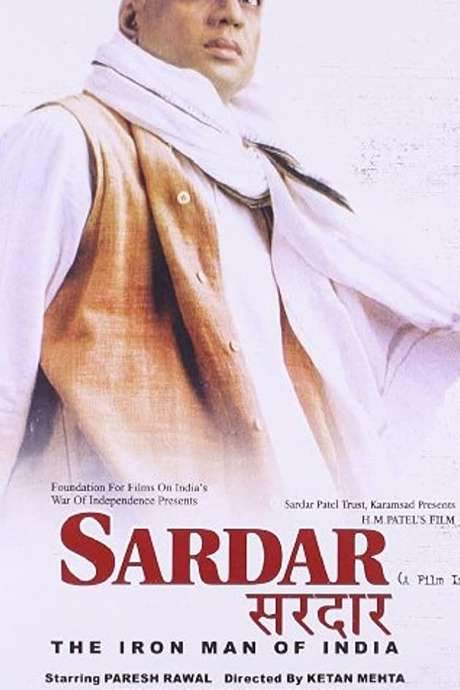
Sardar (1993) movie poster

Characters & Themes

Sardar (1993) Characters, Setting & Themes Explained

Release, runtime and language
1993 · 175 mins · Hindi
Directed by
Ketan Mehta
Starring
Satish Kaushik, Paresh Rawal, Suhasini Mulay, Benjamin Gilani, Annu Kapoor, Ashish Vidhyarthi

The 1993 Indian biographical drama chronicles the life of Sardar Vallabhbhai Patel, a pivotal leader in India’s struggle for independence and the architect of its political integration. Directed by Ketan Mehta and scripted by acclaimed playwright Vijay Tendulkar, the film portrays Patel’s steadfast determination and his role in uniting the nation’s princely states.

On this page (7)
  1. 1 Characters explained (5)
  2. 2 Where & when it takes place
  3. 3 Themes & meaning (3)
  4. 4 Character & meaning questions
  5. 5 Movie threads
  6. 6 Movies like Sardar
  7. 7 Every angle

5 main characters · contains spoilers

Sardar Characters Explained: Who Is Who

The main characters of Sardar (1993), heroes and villains: what drives them, how they change over the course of the story and what each of them reveals about the film's bigger ideas.

  • Sardar Patel (Paresh Rawal)

    Patel starts as a skeptic of Gandhi’s policies but undergoes a transformation after meeting Gandhi and hearing his lectures. He becomes a driving force behind organizing Satyagrahas in Gujarat and later plays a pivotal role in uniting the princely states into the Indian Union. His leadership is shown as both pragmatic and resolute, balancing political realism with national aspirations.

    • 🎯 Leadership
    • 🧭 Diplomacy
    • 🛡️ National unity
  • Mahatma Gandhi (Annu Kapoor)

    Gandhi is portrayed as the spiritual and strategic mentor whose nonviolent philosophy inspires Patel and others. His ideas shape the movement’s methods and the moral framework of the struggle for independence. The film emphasizes his influence on shaping a nonviolent path to freedom.

    • 💡 Nonviolence
    • 🕊️ Philosophy
    • 📜 Leadership legacy
  • Jawaharlal Nehru (Benjamin Gilani)

    Nehru is depicted as a key political leader whose stance and decisions intersect with Patel’s strategic plans. The film suggests Patel’s role in convincing the INC Working Committee and Nehru to consider the partition plan, illustrating the complexities of consensus-building in a diverse movement.

    • 🏛️ Politics
    • 🗳️ Democracy
    • 🧭 Leadership
  • Mohammad Ali Jinnah (Shri Vallabh Vyas)

    Jinnah appears as a central figure in the drive for a Muslim-majority state, with his calls contributing to the momentum of the Direct Action movement and the eventual push toward Partition. The portrayal underscores the political maneuvering and the path toward a divided subcontinent.

    • 🗳️ Politics
    • 🗺️ Nation-building
    • 🔥 Partition
  • Lord Mountbatten of Burma (Tom Alter)

    Mountbatten is shown in his role guiding the transition of power and overseeing the partition planning. His interactions with Indian leaders highlight the British perspective on exit strategies and the negotiation dynamics that shaped the newborn Indian state.

    • 🌐 Imperial politics
    • 🤝 Diplomacy
    • 🗺️ Transition

Last updated: February 17, 2026 at 18:16

Was this helpful?

Setting

Where and When Does Sardar Take Place?

The setting of Sardar (1993): the year and time period, the places and locations, and how they shape the characters, the mood and the tension of the story.

Time period

1940s

The film is set during the 1940s, the tense lead-up to India's independence. It covers the Quit India Movement and the critical period around the Partition. These years are depicted as a clash of ideals, negotiations, and the urgent drive to form a unified nation.

Location

Gujarat, Kashmir, Junagadh, Hyderabad, Shahpura (Rajasthan)

The story unfolds across key Indian locales—Gujarat where Patel drives satyagraha campaigns, Kashmir and Junagadh as contested princely states, Hyderabad as a symbolic challenge, and Shahpura in Rajasthan where personal resolve is tested. These places anchor the narrative of national integration, partition, and diplomacy. The varied landscapes reflect the political stakes of unifying a diverse subcontinent.

  • 🗺️ Indian geography
  • 🧭 National unity
  • 🏛️ History

Last updated: February 17, 2026 at 18:16

Was this helpful?

3 major themes

Sardar Meaning: Themes & Message Explained

What is Sardar (1993) really about? The emotional, social and philosophical themes the film keeps returning to, its symbolism and the message beneath the surface.

  • Unity

    A central thread shows Patel pursuing the integration of princely states into a single Indian Union. The narrative emphasizes diplomacy, compromise, and the balance between communal interests and national harmony. It portrays unity as a pragmatic goal achieved through tough political decisions and consensus-building.

  • Partition

    The film portrays the pressures and tensions leading to Partition, including riots and the moral urgency to prevent civil war. It highlights the difficult choice between splitting the country and preserving the integrity of the emerging nation. The consequences of partition drive the characters to navigate fear, violence, and political negotiation.

  • Leadership

    Patel's strategic leadership is shown as he moves from skepticism to decisive action. The story focuses on his ability to coordinate a broad coalition, manage conflicting interests, and steer India toward a stable future. Leadership here is depicted as a blend of bold vision and pragmatic compromises.

Last updated: February 17, 2026 at 18:16

Was this helpful?

Character & theme questions

Sardar Characters & Meaning: Your Questions Answered

The questions people ask about Sardar (1993): who the characters really are, their relationships, what the symbols mean, where it takes place and what the movie is really about. Each answer contains spoilers.

Q1

Where does the story primarily take place?

The film is set across key Indian locales including Gujarat, Kashmir, Junagadh, Hyderabad, and Shahpura. These locations anchor the narrative of national integration and partition in Sardar. The varied landscapes reflect the political stakes of unifying a diverse subcontinent during the independence era.

  • setting
  • indian geography
  • gujarat
  • kashmir
  • hyderabad
Q2

What time period does the story cover?

The movie takes place during the 1940s, specifically leading up to India's independence. It covers the Quit India Movement and the critical period around the Partition. These years are depicted as a clash of ideals and the urgent drive to form a unified nation in Sardar.

  • 1940s
  • independence
  • partition
  • quit india movement
  • time period
Q3

Who is the main character portrayed in the film?

The central figure is Sardar Vallabhbhai Patel, a pivotal leader in India's struggle for independence. He is shown as the architect of India's political integration and uniting of princely states. His leadership is depicted as both pragmatic and resolute in Sardar.

  • sardar patel
  • main character
  • leader
  • independence
  • protagonist
Q4

Which actor portrays Sardar Vallabhbhai Patel?

Paresh Rawal portrays Sardar Vallabhbhai Patel in the movie. He depicts Patel's transformation from a skeptic of Gandhi's policies to a driving force behind organizing Satyagrahas. Rawal's performance highlights the pragmatic and resolute nature of Patel's leadership.

  • paresh rawal
  • cast
  • actor
  • sardar patel
  • performance
Q5

Is this film based on true historical events?

Yes, Sardar is a biographical drama chroncling the life of Sardar Vallabhbhai Patel. It portrays real events like the struggle for independence and the political integration of India's princely states. The film maintains a factual and sober dramatization of these historical moments.

  • biographical
  • true events
  • history
  • factual
  • real story
Q6

What is the central theme of the story?

A central thread shows Patel pursuing the integration of princely states into a single Indian Union. The narrative emphasizes diplomacy, compromise, and the balance between communal interests and national harmony. Unity is portrayed as a pragmatic goal achieved through tough political decisions in Sardar.

  • unity
  • integration
  • theme
  • national harmony
  • diplomacy
Q7

How does the film depict the Partition of India?

The movie portrays the pressures and tensions leading to Partition, including riots and the moral urgency to prevent civil war. It highlights the difficult choice between splitting the country and preserving the integrity of the emerging nation. The consequences of partition drive the characters to navigate fear and negotiation.

  • partition
  • riots
  • tension
  • civil war
  • political negotiation
Q8

What style of leadership does Patel demonstrate?

Patel's strategic leadership is shown as he moves from skepticism to decisive action. The story focuses on his ability to coordinate a broad coalition and manage conflicting interests. Leadership here is depicted as a blend of bold vision and pragmatic compromises in Sardar.

  • leadership
  • strategic
  • pragmatic
  • decisive action
  • vision
Q9

What role does Mahatma Gandhi play in the narrative?

Gandhi is portrayed as the spiritual and strategic mentor whose nonviolent philosophy inspires Patel and others. His ideas shape the movement's methods and the moral framework of the struggle for independence. The film emphasizes his influence on shaping a nonviolent path to freedom.

  • mahatma gandhi
  • mentor
  • nonviolent
  • philosophy
  • independence
Q10

How is the relationship between Patel and Nehru shown?

Nehru is depicted as a key political leader whose stance and decisions intersect with Patel's strategic plans. The film suggests Patel's role in convincing the INC Working Committee and Nehru to consider the partition plan. This illustrates the complexities of consensus-building in a diverse movement.

  • nehru
  • relationship
  • politics
  • consensus
  • inc working committee
Q11

Who is portrayed as the driving force for a Muslim-majority state?

Mohammad Ali Jinnah appears as a central figure in the drive for a Muslim-majority state. His calls contribute to the momentum of the Direct Action movement and the eventual push toward Partition. The portrayal underscores the political maneuvering and the path toward a divided subcontinent.

  • jinnah
  • muslim-majority
  • direct action
  • partition
  • political maneuvering
Q12

What is Lord Mountbatten's role in the story?

Mountbatten is shown in his role guiding the transition of power and overseeing the partition planning. His interactions with Indian leaders highlight the British perspective on exit strategies. These dynamics shaped the negotiation process for the newborn Indian state in Sardar.

  • mountbatten
  • british
  • transition
  • power
  • partition planning
Q13

Why are locations like Gujarat and Hyderabad significant?

These places anchor the narrative of national integration, partition, and diplomacy. Gujarat is where Patel drives satyagraha campaigns while Hyderabad stands as a symbolic challenge. The varied landscapes reflect the political stakes of unifying a diverse subcontinent.

  • locations
  • gujarat
  • hyderabad
  • significance
  • political stakes
Q14

What is the overall tone of the film?

The tone is predominantly neutral, focusing on a factual and sober dramatization of historical events. It avoids leaning heavily into specific emotional tones though it ends on a notably hopeful note. The emotional weight is heavy due to the gravity of the subject matter including partition.

  • tone
  • neutral
  • factual
  • sober
  • hopeful
Q15

What message does the movie convey about national integrity?

The film conveys that unity is a pragmatic goal achieved through tough political decisions and consensus-building. It portrays Patel's steadfast determination and his role in uniting the nation's princely states. The ending is hopeful, concluding with the success of national integration.

  • message
  • national integrity
  • unity
  • success
  • integration

Movie threads

More Movies Like Sardar, by Mood & Story

Curated lists built around what makes Sardar tick: the same mood, the same kind of story or the same emotional payoff. Each list explains why these movies belong together.

Political Nation Building Dramas like Sardar

Biographical stories of leaders who forged nations from conflict. Find more movies like Sardar that dramatize the political struggles of nation building. If you enjoyed the story of Sardar Patel unifying India, you'll appreciate these films about leaders, independence movements, and the difficult political integration of countries.

  • historical
  • political
  • serious
  • contemplative
  • urgent
  • patriotic
  • Tone: neutral, sober, decisive
  • Pacing: steady, methodical
Why these movies?

The story pattern: These narratives typically follow a chronological, steady-paced progression through major historical events, from the initial conflict or colonial rule to the ultimate achievement of sovereignty or unification. The central character's journey is one of unwavering determination, strategic negotiation, and managing internal and external conflicts.

Why they belong together: Movies are grouped here based on their shared focus on historical political leadership during formative national periods. They carry a serious, contemplative tone, high intensity due to the monumental stakes, and a heavy emotional weight, often concluding with a sense of hard-won accomplishment.

Heavy-Hitting Historical Biopics like Sardar

Serious dramas that immerse you in pivotal, high-stakes moments of history. Discover intense historical biopics similar to Sardar. If you liked the serious, weighty drama of Sardar Patel's story, explore these films that delve into the lives of influential figures during times of great conflict and change.

  • serious
  • contemplative
  • urgent
  • reflective
  • sober
  • weighty
  • Tone: serious, reflective, sober
  • Pacing: steady, immersive
Why these movies?

The story pattern: The narrative pattern follows a linear, factual dramatization of a real person's involvement in world-changing events. The journey is emotionally heavy, focusing on struggle, sacrifice, and the immense pressure of making decisions that affect millions, often culminating in a historically significant, hopeful conclusion.

Why they belong together: These films share a cohesive vibe defined by high intensity, a steady, contemplative pace, and a heavy emotional weight derived from their factual gravity. The tone is predominantly neutral and sober, prioritizing a respectful portrayal of history over sensationalism.

If you liked this

Movies Like Sardar

Similar movies to Sardar: the same genre, themes or kind of story. Each one comes with its own plot summary, timeline and ending explained.

Browse all movie summaries

Every angle

Sardar (1993) Explained: Plot, Timeline & Characters

Everything about Sardar in one place: what happens in the plot summary, the timeline in chronological order, the characters and meaning and a spoiler-free summary. What's After the Movie adds the cast, box office and post-credit scenes.

Coming soon on iOS and Android

The Plot Explained Movie Summary App

Plot summaries, endings explained and timelines on your phone. Catch up on any movie in minutes, save your favorites and never miss a twist again.

Be the first to know when we launch. Your email stays private, always.

Learn more about the app