Plot Explained Spoilers guaranteed!
Plot Explained

Browse by genre

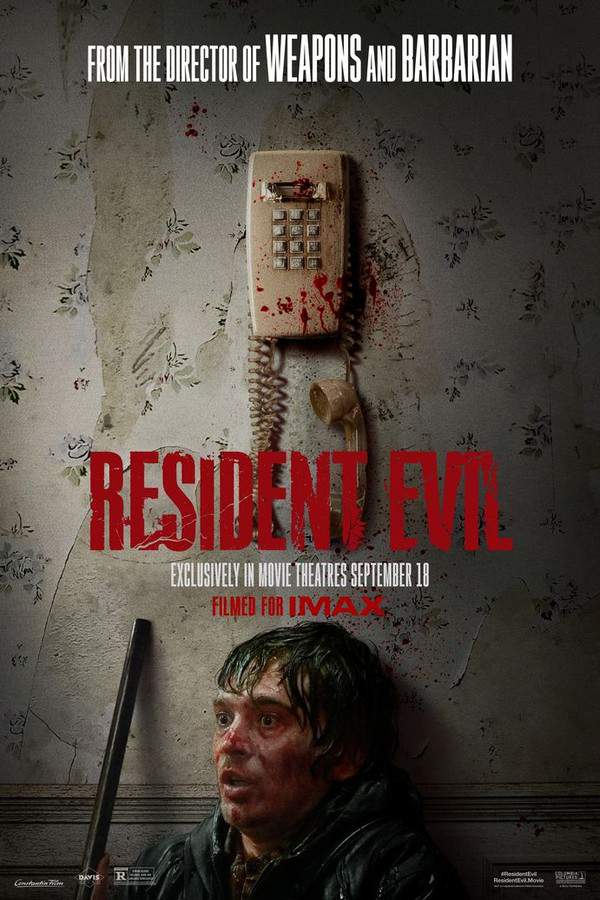
Resident Evil (2026) movie poster

Ending Explained

Resident Evil (2026) Ending Explained – Final Scene & Meaning

Release, runtime and language
2026 · 1 h 30 m · English
Echo score 78
Loading streaming availability…
Directed by
Zach Cregger
Starring
Austin Abrams, Paul Walter Hauser, Zach Cherry, Johnno Wilson, Shaun W. Loeser, Devon Stewart
Budget
$75M

Visionary filmmaker Zach Cregger (Weapons, Barbarian) delivers a thrilling, terrifying reinvention of the Resident Evil franchise. The all‑new story follows medical courier Bryan (Austin Abrams), who unwittingly becomes the focus of an unrelenting, nonstop race for survival as a single, horrifying night erupts into chaos, blending relentless horror with nonstop action.

On this page (6)
  1. 1 Where to watch
  2. 2 What happens at the end
  3. 3 Final events in order
  4. 4 Ending questions answered
  5. 5 Movie threads
  6. 6 Every angle
Loading streaming availability…

Ending explained · contains spoilers

What Happens at the End of Resident Evil?

How Resident Evil (2026) ends, what the final scene means, which earlier moments set it up and how to read the ending if the film leaves it open. The full ending explained, with every spoiler.

Bryan reaches the laboratory after carrying the promise of an antidote through the nightmare, but his own infection overtakes that possibility. His body develops tentacles and a mouth in his chest, and he kills the scientists even as he pleads for help. The last scientist, left hanging outside, tries to reach him with the needle that might offer treatment. It falls to the ground instead. The ending leaves Bryan transformed, with the hoped-for cure lost at the moment it seemed closest, rather than restoring the courier to safety.

The horror comes from the survival of Bryan's human intentions inside a body he can no longer control. His pleas do not prevent the violence, so becoming the monster does not mean he has willingly chosen the role. The failed needle completes the collapse of the practical goal that kept him moving: delivering himself to the right place proves insufficient once the infection takes command. That final separation between intention and action makes the ending tragic. It offers no confirmed recovery or assurance about what containment might follow.

Last updated: October 01, 2026 at 22:05

Was this helpful?

The last 4 events

How Resident Evil Ends: The Final Events in Order

The last events of Resident Evil (2026) in chronological order, the run-up to the ending explained above. The complete timeline has all 15 events, scene by scene.

Open the full timeline
  1. Infected Rooftop Chase

    Emerging from the sewers, Bryan witnesses hordes of infected running across rooftops. He narrowly avoids being hit as they leap onto cars and the concrete below, underscoring the chaos that has descended upon Raccoon City.

    Where
    City streets
  2. Attempt to Reach Safety

    Reaching Raccoon City General, Bryan records a message for Michelle, expressing his regrets and hopes for their future. However, he realizes the infection from his bite is worsening as time goes on.

    Where
    Raccoon City General
  3. Confrontation with The Puker

    Navigating through the hospital, Bryan encounters an infected known as 'The Puker.' As the creature spews acid in the elevator, he fights to survive and manages to turn the situation against The Puker in a moment of quick thinking.

    Where
    Elevator in Raccoon City General
  4. Transformation and Final Stand

    As Bryan reaches the scientists, he is overtaken by the mutation caused by his infection. In a tragic turn of events, he becomes a monstrous entity, consuming others and leaving havoc in his wake as the National Guard arrives to confront the chaos.

    Where
    Raccoon City General

Ending questions answered

Resident Evil Ending: Your Questions Answered

The questions people ask most about the ending of Resident Evil (2026): what the final scene means, how the twist works, what happens to each character and how to read the ending. Each answer contains spoilers.

Q1

Why does Bryan mutate at the laboratory instead of being cured?

Bryan finally reaches the Raccoon City General laboratory carrying the serum base that was supposed to serve as an antidote, but the infection has already progressed too far by the time he arrives. His body mutates uncontrollably, developing tentacles and a secondary mouth in his chest, and he kills the scientists before any treatment can be administered. The timing of the mutation is what makes the ending tragic: the cure is within reach at the exact moment Bryan is no longer capable of receiving it.

Foreshadowing: Throughout the run to the lab, Bryan repeatedly checks his wounds and shows signs of accelerating infection, warning that the clock is running out on his own body.

  • bryan mutation
  • laboratory
  • infection
  • cure
  • raccoon city general
Q2

What happens to the antidote serum in the final scene?

The serum base Bryan has been protecting is never successfully delivered or used. The last surviving scientist, left dangling outside the facility, tries to reach Bryan with a needle that could potentially treat him, but the needle slips and falls to the ground. With that final missed injection, the practical goal that drove the entire night collapses, and the cure is effectively lost at the moment it was closest to being used.

Foreshadowing: The serum is repeatedly described as fragile and time-sensitive, foreshadowing that its usefulness would expire before it could be deployed.

  • antidote
  • serum
  • needle
  • cure lost
  • final scene
Q3

Does Bryan die or fully transform into a monster?

Bryan does not die in a traditional sense; he fully transforms into a new monster. The human Bryan is gone as a functional being, but his memories, voice, and desire to be saved persist inside the mutated body. The horror of the ending is that the person who fought all night to deliver the cure survives as a consciousness trapped inside a creature the National Guard will now have to contain.

Foreshadowing: Bryan talks to himself throughout the film as if narrating his own survival, hinting that his identity is something he clings to rather than something his body still supports.

  • bryan transformation
  • monster
  • mutation
  • ending fate
  • national guard
Q4

Why is Bryan still pleading for help while killing the scientists?

The mutation takes over Bryan's motor control while his human awareness remains active, so he is simultaneously attacking the people he came to save and begging them to help him. This split between intention and action is the central horror of the ending: becoming a monster does not mean Bryan has chosen to be one. The scene is designed to show that the infection destroys agency before it destroys identity, making the transformation feel like a violation rather than a surrender.

  • bryan pleading
  • scientists
  • loss of control
  • identity
  • body horror
Q5

What does the falling needle mean in the ending of Resident Evil?

The falling needle represents the final collapse of any practical hope for Bryan. The last scientist stretches toward him with a syringe that could have changed the outcome, but the tool slips just out of reach and crashes to the floor. That single dropped object signals the end of the mission: the right place, the right moment, and the right people were all present, yet the cure still failed because the infection had already won the race.

  • falling needle
  • lost cure
  • final moment
  • symbolism
  • ending
Q6

What happens when the National Guard arrives at the end?

By the time the National Guard reaches the facility, the threat has not been contained; it has produced a new one. Instead of finding a survivor and a cure, they encounter Bryan fully mutated into a fresh monster, with the scientists dead and the serum wasted. The arrival of outside forces, which usually signals resolution in a survival story, instead frames the problem as something that has already spread beyond the point of easy containment.

Foreshadowing: Early reports on the radio about military cordons hint that help is coming, but never in a way that promises salvation.

  • national guard
  • containment
  • military arrival
  • raccoon city
Q7

Is there any hope or cure for Bryan at the end of the film?

No confirmed recovery is offered. The only plausible treatment in the scene is the needle the last scientist tries to use, and it falls before it can be administered. The ending does not tease a hidden backup sample, a delayed rescue, or an off-screen reversal, so the audience is left with the bleak certainty that Bryan is beyond saving as a human and will now be treated as a threat.

  • hope
  • cure
  • recovery
  • bryan fate
  • bleak ending
Q8

What does Bryan's transformation mean thematically?

Bryan's transformation reframes the entire film as a story about the failure of willpower against biology. He spends the night making the right choices, carrying the right payload, and reaching the right destination, yet none of that saves him because the infection operates on a timeline his choices cannot match. The ending suggests that heroic effort and moral intention are not enough to outrun a body that is already turning, which is the core tragedy the film leaves the audience with.

  • theme
  • meaning
  • body horror
  • infection
  • tragedy
Q9

What happens to Michelle and the baby by the end of Resident Evil?

Michelle and the unborn child she and Bryan were planning for are never reunited with him. Their planned future as a family becomes the emotional anchor that Bryan carries through the night, and that future is what the ending silently takes away. The romance works as a framing device precisely because it is never fulfilled, and the final transformation makes clear that the life they were building together will not happen.

Foreshadowing: Bryan repeatedly references the baby and Michelle during the run, establishing parenthood as the goal that the infection is steadily erasing.

  • michelle
  • baby
  • romance
  • family
  • bryan motivation
Q10

Why does the 2026 Resident Evil end so tragically without a rescue?

The bleak ending is deliberate and consistent with the film's structure as a nonstop survival run rather than a mystery with a hidden twist. Every ally Bryan picks up along the way dies, the serum he is carrying is wasted, and the scientist who could have helped him is killed by his own mutated body. The tragedy comes from completeness: there is no loose end that could still produce a happy outcome, which is what makes the final image of Bryan as a new monster feel final rather than ambiguous.

Foreshadowing: The film opens with Bryan already wounded and on a clock, signaling from the start that the night will not end with a clean recovery.

  • tragic ending
  • bleak
  • no rescue
  • resident evil 2026
  • zach cregger

Movie threads

More Movies Like Resident Evil, by Mood & Story

Curated lists built around what makes Resident Evil tick: the same mood, the same kind of story or the same emotional payoff. Each list explains why these movies belong together.

Nonstop survival horror like Resident Evil

Movies where threats come in waves and the audience never catches their breath. If you loved Resident Evil's relentless, breath-stealing pace, this is where you find more movies like it. These are high-intensity horror and action thrillers that refuse to slow down, keeping you locked in a constant state of danger with wave after wave of escalating threats. Perfect for viewers who want nonstop scares, frantic pacing, and survival stakes that never let up. Movies like Resident Evil that prioritize relentless momentum over quiet moments.

  • relentless
  • tense
  • desperate
  • claustrophobic
  • survival
  • nonstop
  • Tone: tense, dark, relentless
  • Pacing: fast and chaotic
Why these movies?

The story pattern: A protagonist is dropped into an impossible situation and forced to keep moving, fighting, and improvising to stay alive one more minute. There is no time to rest, no safe harbor, and no clear path forward. Allies fall, supplies run out, and the threat grows stranger and more personal until a final desperate push. The narrative is almost always linear: get from point A to point B while the world tears itself apart, each escalation forcing harder choices and grim sacrifices with no neat resolution in sight.

Why they belong together: They share a commitment to relentless pacing, constant danger, and visceral genre thrills. Whether the threat is infected, monstrous, or human, the hallmark is that the tension never fully breaks — quiet scenes are short, and every calm moment is just a setup for something worse. They tend to feature ordinary protagonists pushed to their absolute limits, graphic violence, and a sense that the danger is everywhere and inescapable, leaving viewers emotionally drained but riveted.
Viral outbreak and body horror like Resident Evil

Outbreak stories where infection turns people into something unrecognizable. Looking for more movies like Resident Evil's viral nightmare and grotesque transformation? This thread collects infection-driven horror and sci-fi stories where contagion, mutation, and body horror collide. If you liked Resident Evil's medical thriller DNA, disturbing imagery, and bleak ending where the infection wins, you'll find similar dark films here. Movies like Resident Evil with viral outbreak, biological horror, and tragic mutation arcs.

  • viral outbreak
  • body horror
  • mutation
  • infection
  • bleak
  • nightmarish
  • Tone: dark, bleak, nightmarish
  • Pacing: steady to fast escalation
Why these movies?

The story pattern: An outbreak or experimental pathogen begins quietly and spreads beyond containment. The protagonist — often someone close to the source, like a medical worker, courier, or family member — is forced to navigate escalating chaos while protecting a loved one or completing a desperate mission. As the infection takes hold, the line between hero and monster blurs, and the story starts to ask whether the cure is even worth it. Stories often end tragically, with the cure lost, the protagonist transformed, or society collapsed, leaving audiences with a heavy, unsettling final image.

Why they belong together: They are bound together by their central concern: what infection does to a body, and what survival costs. They tend to share a dark, bleak tone, a focus on medical or scientific conspiracies, graphic and disturbing body-horror imagery, and endings that deny easy victory. The mutation theme often doubles as a metaphor for loss of control and identity, and the bleak conclusions reinforce that the price of fighting the infection may be becoming it.

Every angle

Resident Evil (2026) Explained: Plot, Ending, Timeline & Characters

Everything about Resident Evil in one place: what happens in the plot summary, the timeline in chronological order, the characters and meaning, the ending explained and a spoiler-free summary. What's After the Movie adds the cast, box office and post-credit scenes.

Coming soon on iOS and Android

The Plot Explained Movie Summary App

Plot summaries, endings explained and timelines on your phone. Catch up on any movie in minutes, save your favorites and never miss a twist again.

Be the first to know when we launch. Your email stays private, always.

Learn more about the app