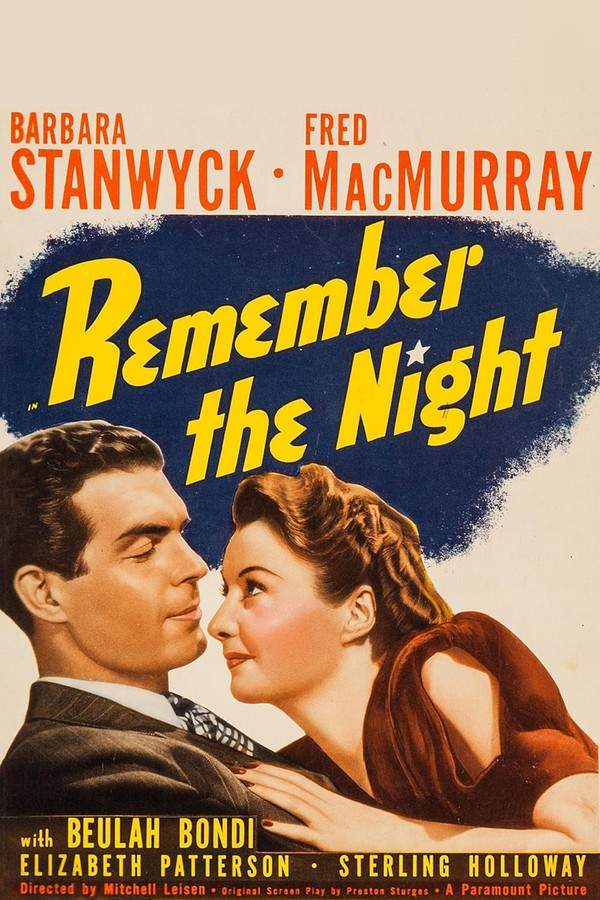
Lee Leander, Barbara Stanwyck, is arrested for allegedly stealing a bracelet from a New York jewelry store, a charge that sets off a delicate and often comic chain of events just before Christmas. The case is assigned to the assistant district attorney, Jack Sargent Fred MacMurray, who is determined to prosecute, but a technical quirk leads to a postponement that spares her a jury view during the holidays. This quiet act of mercy hints at a tension between duty and compassion that threads through the entire story.
When Lee voices concern about spending Christmas behind bars, Jack feels a spark of guilt and arranges bail through a bondsman. The bondsman, Fat Mike, mistakenly assumes that Jack intends to woo Lee, and after posting bail, he drops her off at Jack’s apartment. Learning that Lee is a fellow Hoosier—the same Kentucky-to-Indiana lineage that shapes much of their outlook—Jack offers to drive her to her mother’s house for Christmas before continuing to his own family. The road trip quickly spirals into a series of comic misadventures, misdirections, and moments of quiet realization.
On the way, Jack loses their way in Pennsylvania, and their attempt to find a simple, honest Christmas becomes a test of faith, patience, and loyalty. The pair are arrested by a wary landowner for trespassing and are brought before a stern justice of the peace. In a tense escape, Lee starts a small fire in a wastebasket as a distraction, and the two flee. Lee’s mother, Mrs. Malone [Georgia Caine], is revealed to be a cold and embittered woman who has remarried and stubbornly rejects the idea of a close relationship with her own daughter, coloring Lee’s past and shaping her present choices.
Returning to New York, Jack welcomes Lee into his family circle for the holiday, where he introduces her to his cousin Willie [Sterling Holloway], his aunt Emma, and his mother. The warmth of this home contrasts with the fragility of Lee’s own background, and the friction between Lee’s desire for a normal life and Jack’s burgeoning feelings becomes a central tension. The two share a New Year’s Eve kiss at a barn dance, a moment that sharpens the conflict between personal happiness and professional risk.
As the story unfolds, Jack’s aggressive courtroom tactics—designed to win sympathy for Lee—clash with the realities of how hard it is to bend truth to fit a narrative. His boss, whom he suspects of disapproval, listens from outside the courtroom and weighs the cost of personal entanglement against career advancement. Lee, torn between love and honesty, ultimately pleads guilty, a decision that seems to surrender her future in the moment. Yet she asks that Jack stand beside her and hold her hand during sentencing, a simple request that reveals the depth of their bond and trust.
The courtroom becomes a crucible where pride, duty, and affection collide. When Lee changes her plea to guilty, the outcome seems sealed, but the emotional stakes remain high: the possibility of a life together after she finishes her term and he takes time to reflect on what truly matters. In the final, intimate pledge, Jack promises to stand by her side, regardless of the consequences, leaving the door open for a future that could redefine both of their lives. The film closes on a note of cautious hope, anchored by the enduring belief that love—and the courage to face life together—can endure even under the weight of circumstance.