Plot Explained Spoilers guaranteed!
Plot Explained

Browse by genre

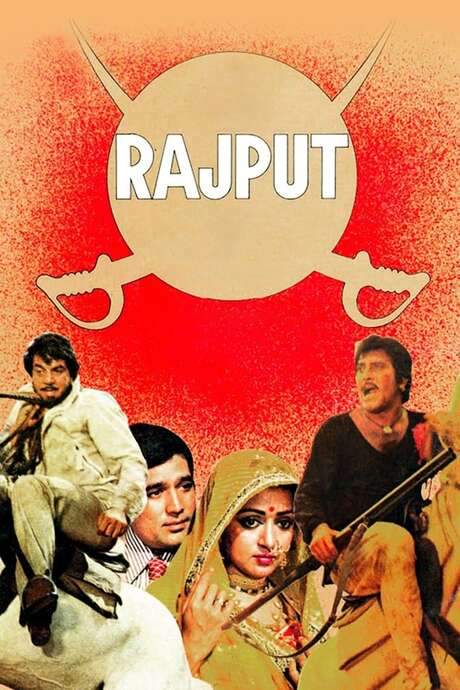
Rajput (1982) movie poster

Timeline

Rajput (1982) Timeline Explained – Every Event in Order

Release, runtime and language
1982 · 171 mins · Hindi
Directed by
Vijay Anand
Starring
Dharmendra, Vinod Khanna, Ranjeet Bedi, Hema Malini, Rajesh Khanna, Ranjeeta Kaur

When the Indian government orders his kingdom’s surrender, the Maharaja cannot cope and takes his own life. His son Jaipal assumes the throne, rebels and refuses to relinquish the title and lands. Amid this turmoil, Police Superintendent Dhirendra Singh assumes his duties.

On this page (5)
  1. 1 Events in order (12)
  2. 2 Timeline questions answered
  3. 3 Movie threads
  4. 4 Movies like Rajput
  5. 5 Every angle

12 events in order · contains spoilers

Rajput Timeline: Events in Chronological Order

Every key event of Rajput (1982) in order, scene by scene, with when and where it takes place. Use it to untangle flashbacks, time jumps and parallel storylines, to refresh your memory before the sequel or to find the exact scene you are thinking of.

  1. Kingdoms seized in independent India

    An amendment during independence results in kingdoms losing rulership. Jaipal Singh refuses to surrender, continuing to rule and extract taxes from his people. The move sparks resistance and sets a tense backdrop for the rest of the story.

    When
    early post-independence
    Where
    Jaipal's kingdom
  2. Dhirendra transferred after protests

    Police Inspector Dhirendra faces protests against Jaipal's tyranny and is transferred to a small village. The transfer places him at the center of a brewing conflict between the king's rule and the common people. The village becomes the stage for the coming drama.

    When
    shortly after protests
    Where
    small village
  3. Marriage arrangement to Janki

    Dhirendra's parents arrange his marriage to Janki, the daughter of a childhood friend. The union is meant to stabilize alliances amid political turmoil. The arrangement foreshadows personal loyalties clashing with public duty.

    When
    soon after transfer
    Where
    family home
  4. Love rivalries and forbidden union

    Janki loves Manupratap, and their romance fuels enmity between the two families. Both lovers confront disapproval from their kin, setting up future clashes and heartbreak. The feud underpins much of the forthcoming upheaval.

    When
    early period
    Where
    village
  5. Kamli is raped by Jaipal

    Jaipal rapes Kamli, forcing her to flee the village. The atrocity deepens the conflict and motivates Bhanupratap to seek revenge. The crime becomes a catalyst for shifting loyalties and violence.

    When
    before seven-year skip
    Where
    Kamli's village
  6. Jaipal seeks Janki's hand; forced marriage ensues

    Jaipal Singh declares he wants to marry Janki, provoking her father's anger and triggering a forced marriage to Dhirendra. The action intensifies the power struggle between Jaipal and the lovers. The union binds public authority to private turmoil.

    When
    early
    Where
    Jaipal's court / Dhirendra's home
  7. Rape attempt and Manupratap's intervention

    Jaipal's nephew tries to rape Janki during an abduction; Manupratap shoots him dead, saving Janki from immediate harm. Dhirendra misreads the incident as a rape, fueling bitter misunderstandings. The clash of perceptions deepens the rancor between families.

    When
    shortly after marriage
    Where
    village
  8. Pregnancy and the baby decision

    Janki becomes pregnant and faces pressure to abort, but she insists the child is Manupratap's. Dhirendra, showing mercy, permits the birth and refrains from forcing an end to the pregnancy. The baby ties the fates of multiple families together.

    When
    two months after marriage
    Where
    Dhirendra's home
  9. Birth of the son and a difficult counsel

    Janki gives birth to a son and goes to inform Manupratap in jail. Manupratap counsels Janki to live with Dhirendra and forget him, while Dhirendra initially resists but eventually accepts the child as part of the family. The reconciliation is fragile and tentative.

    When
    soon after birth
    Where
    jail / Dhirendra's home
  10. A killing, exile and new vigilantes

    Jaipal and Bhanupratap's father are killed by Jaipal, and Bhanupratap becomes the dacoit Bhavani. Jaipal also sends his daughter Jaya abroad to prevent her from questioning him. The cycle of violence now spreads beyond a single village.

    When
    after initial events
    Where
    Jaipal's realm / Bhavani's shadow area
  11. Seven years later: a new order emerges

    Seven years pass and Dhirendra becomes Superintendent of Police, facing a wave of dacoits that Jaipal cannot control. Bhavani robs the countryside while Kamli lives with her son outside the village. Jaya returns from abroad, complicating the power balance.

    When
    seven years later
    Where
    district / countryside
  12. Final confrontation and tragic sacrifice

    Manupratap believes Bhavani killed his father and sets out to confront him. Dhirendra learns Jaipal has kidnapped his son and plans to act within the law, only to discover Manupratap is the father of Janki's child. In a climactic sequence, Manupratap kills Jaipal and dies in Dhirendra's arms, and Dhirendra unites with Manupratap's child and Janki.

    When
    final confrontation
    Where
    battlefield / village

Last updated: October 09, 2025 at 14:56

Was this helpful?

Timeline questions answered

Rajput Timeline Explained: Your Questions Answered

When does it happen, and why in that order? The questions people ask about the chronology of Rajput (1982): time jumps, flashbacks, cause and effect between scenes and the correct order of events, each answered with spoilers.

Q1

Why does Dhirendra ask Janki to abort her pregnancy?

Dhirendra believes Jaipal's nephew raped Janki during the abduction attempt, so he suspects the child might be a product of that assault. He asks her to abort to prevent a child being born under Jaipal's shadow. However, Janki insists the child is Manupratap's, and Dhirendra eventually shows mercy by allowing her to give birth.

Foreshadowing: Earlier, Manupratap saved Janki from the assault, but Dhirendra misread the situation as a rape.

  • pregnancy
  • abortion
  • dhirendra
  • janki
  • rape
Q2

Why does Manupratap tell Janki to live with Dhirendra?

When Janki visits Manupratap in jail to inform him of their son's birth, he counsels her to forget him and stay with Dhirendra. Manupratap recognizes that Dhirendra is a decent man who has accepted Janki and is willing to raise the child. He prioritizes her security and stability over his own desires.

Foreshadowing: This moment reflects Manupratap's self-sacrificing nature that ultimately defines his character.

  • manupratap
  • janki
  • dhirendra
  • sacrifice
  • jail
Q3

Why does Bhanupratap become a dacoit?

Bhanupratap becomes a dacoit named Bhavani after Jaipal kills his father. Combined with Jaipal's earlier rape of Kamli, this tragedy motivates Bhanupratap to turn to banditry as a form of resistance against the tyrant's oppression. He steals from the rich to help the poor.

Foreshadowing: Jaipal's brutal attack on Kamli had already set Bhanupratap on a path of vengeance.

  • bhanupratap
  • bhavani
  • dacoit
  • jaipal
  • revenge
Q4

Why does Jaipal's daughter Jaya side with Bhanupratap?

After returning from abroad, Jaya is kidnapped by Bhanupratap as revenge against her father. However, she comes to understand his motivations and sees him as an educated, principled man fighting injustice. She chooses to support him and sees his cause as just, eventually developing feelings for him.

Foreshadowing: Jaipal sent Jaya abroad precisely to shield her from the growing dissent and keep her away from political turmoil.

  • jaya
  • bhanupratap
  • jaipal
  • kidnap
  • alliance
Q5

Who is the real father of Janki's son?

Manupratap is the biological father of Janki's son. Before her forced marriage to Dhirendra, Janki and Manupratap were in love. When Janki becomes pregnant, Dhirendra initially suspects the child resulted from the rape attempt, but Janki knows the truth, that the child is Manupratap's from their premarital relationship.

Foreshadowing: Janki's love for Manupratap is established early, and their romance fuels the enmity between families.

  • manupratap
  • janki
  • child
  • father
  • dhirendra
Q6

Why does Dhirendra decide to unite with Janki and Manupratap's child?

After discovering that Manupratap is the true father, Dhirendra is moved by justice and mercy. He chooses to create a new family with Janki and her son, accepting the child as his own. This act symbolizes forgiveness and redefines family beyond biological ties, honoring the sacrifice Manupratap made.

Foreshadowing: Dhirendra's earlier mercy in allowing the child's birth foreshadows his ultimate acceptance.

  • dhirendra
  • janki
  • child
  • family
  • sacrifice
  • adoption
Q7

How does Manupratap kill Jaipal and why does he die?

In the final confrontation, Manupratap confronts Jaipal and kills him to end the tyrant's oppression. However, Jaipal shoots Manupratap during the exchange, wounding him fatally. As he dies in Dhirendra's arms, Manupratap delivers his final wisdom: a man becomes a father through raising a child, not just begetting one, implying Dhirendra can be the true father to Janki's son.

Foreshadowing: Manupratap's sacrifice echoes his earlier advice about what it means to be a father.

  • manupratap
  • jaipal
  • death
  • sacrifice
  • fatherhood
Q8

Why does Jaipal Singh refuse to give up his kingdom?

After India's independence and an amendment strips kingdoms of their rulers, Jaipal Singh refuses to surrender power. He continues to rule as king and compels the people to pay taxes, asserting his authority despite the new legal reality. This defiance sparks the resistance that drives much of the film's conflict.

Foreshadowing: The opening sequence establishes Jaipal's refusal to adapt to the new political order.

  • jaipal
  • kingdom
  • independence
  • power
  • rebellion
Q9

Why does Kamli flee the village?

Kamli flees after Jaipal Singh rapes her, leaving her traumatized and with a son born from the assault. She cannot remain in a village where such violence occurred and seeks safety elsewhere, living outside the village with her child.

Foreshadowing: This brutal act by Jaipal directly motivates Bhanupratap's transformation into the dacoit Bhavani.

  • kamli
  • jaipal
  • rape
  • flight
  • son
Q10

What really happened during the abduction attempt on Janki?

Jaipal's nephew abducts Janki with the intention of raping her. However, Manupratap arrives in time and shoots the attacker dead. Janki falls unconscious during the struggle, but Manupratap saves her before any assault occurs. Dhirendra later misinterprets the incident as a rape, creating the misunderstanding that drives his demand for an abortion.

Foreshadowing: This violent encounter fuels the already tense rivalry between the families.

  • janki
  • manupratap
  • abduction
  • rape
  • jaipal nephew
Q11

Why is Janki forced to marry Dhirendra?

Janki's father Pratap Singh rejects her love for Manupratap due to the ongoing family feud. When Jaipal declares he wants to marry Janki, her father arranges a quick forced marriage to Dhirendra as a way to protect her from the king and preserve family honor. Janki has no choice in the matter.

Foreshadowing: The feud between the two families has been established from the start, preventing their union.

  • janki
  • forced marriage
  • dhirendra
  • pratap singh
  • feud
Q12

Why does Manupratap believe Bhavani killed his father?

Manupratap does not know that Bhanupratap is Bhavani. When he learns that his father and Jaipal have been killed, he assumes Bhavani, the notorious dacoit responsible for much of the region's violence, is responsible. This误会 leads him to seek revenge against Bhavani without realizing he is pursuing his own brother.

Foreshadowing: The audience knows Bhanupratap became Bhavani after his father's death, but Manupratap remains unaware.

  • manupratap
  • bhavani
  • bhanupratap
  • father
  • revenge
  • confusion

Movie threads

More Movies Like Rajput, by Mood & Story

Curated lists built around what makes Rajput tick: the same mood, the same kind of story or the same emotional payoff. Each list explains why these movies belong together.

Dynastic tragedies under political upheaval like in Rajput

Royal families and powerful clans torn apart by rebellion and tragic choices. If you liked the turmoil of Rajput, explore more movies like it featuring royal families torn apart by political rebellion. These similar epic dramas combine intense political transition with tragic family legacies, often involving difficult moral choices, sacrifice, and bittersweet endings after heavy conflict.

  • tragic
  • dramatic
  • tense
  • oppressive
  • melancholic
  • epic
  • Tone: dark, tragic, dramatic
  • Pacing: variable, epic
Why these movies?

The story pattern: The narrative follows a powerful ruling family whose authority is challenged by a new political order. The patriarch's inability to adapt leads to a crisis, forcing the heir to choose between surrender or a doomed rebellion. This choice triggers a chain of events involving personal sacrifices, tragic romances, and violence, culminating in the dynasty's fall, often with a pyrrhic victory or bittersweet resolution.

Why they belong together: These films are grouped by their shared focus on the intersection of immense political change and intimate family destruction. They share a high-intensity, dark tone, complex political and personal webs, and an emotionally heavy journey that weighs honor, duty, and sacrifice against the tide of history.


Bittersweet vengeance after profound trauma like in Rajput

Stories where justice is achieved, but the personal cost is devastating. Movies like Rajput that explore themes of revenge and justice achieved at a great personal cost. If you liked the heavy emotional journey and bittersweet ending of Rajput, these similar stories feature traumatic events, violent retribution, and resolutions where victory is deeply shadowed by tragedy.

  • tense
  • unsettling
  • tragic
  • redemptive
  • dramatic
  • passionate
  • Tone: dark, tense, unsettling
  • Pacing: variable, intense
Why these movies?

The story pattern: The plot is triggered by a severe personal or familial violation, such as assault, murder, or betrayal. The protagonist embarks on a path of vengeance that consumes them, often forcing difficult moral compromises and sacrifices. The climax sees the antagonist defeated, but key allies or the protagonist's own innocence are lost in the process, resulting in a somber, bittersweet conclusion.

Why they belong together: These films share a cohesive vibe defined by a high-tension, dark atmosphere, heavy emotional weight from disturbing themes, and a narrative structure where the pursuit of vengeance provides a pyrrhic victory. The pacing often alternates between deliberate emotional suffering and bursts of violent action.

If you liked this

Movies Like Rajput

Similar movies to Rajput: the same genre, themes or kind of story. Each one comes with its own plot summary, timeline and ending explained.

Browse all movie summaries

Every angle

Rajput (1982) Explained: Plot, Timeline & Characters

Everything about Rajput in one place: what happens in the plot summary, the timeline in chronological order, the characters and meaning and a spoiler-free summary. What's After the Movie adds the cast, box office and post-credit scenes.

Coming soon on iOS and Android

The Plot Explained Movie Summary App

Plot summaries, endings explained and timelines on your phone. Catch up on any movie in minutes, save your favorites and never miss a twist again.

Be the first to know when we launch. Your email stays private, always.

Learn more about the app