Plot Explained Spoilers guaranteed!
Plot Explained

Browse by genre

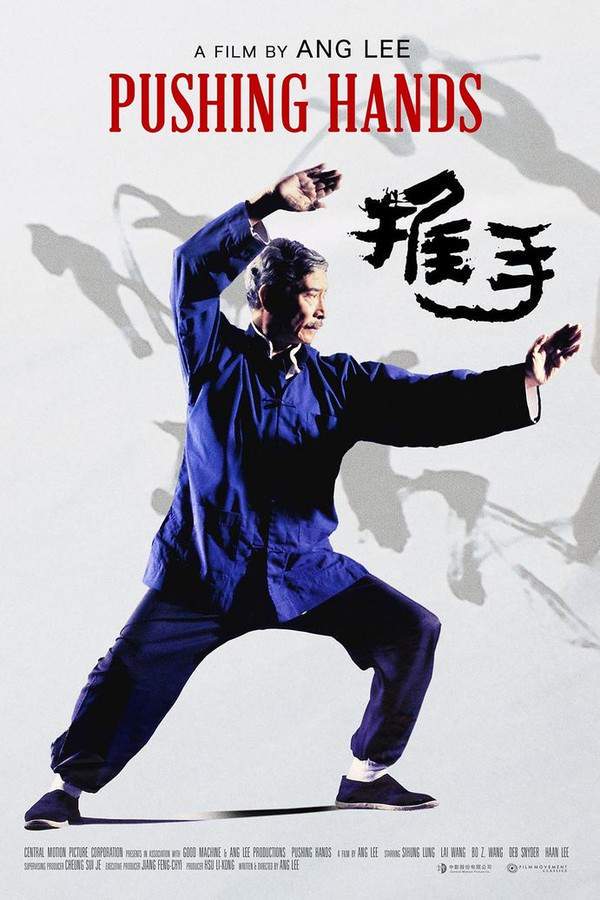
Pushing Hands (1991) (1995) movie poster

Plot Summary

Pushing Hands (1991) (1995) Plot Summary Explained

Release, runtime and language
1995 · 105 min · English
Loading streaming availability…
Directed by
Ang Lee
Starring
B.C. Lee, Bozhao Wang, Deb Snyder, Fanny De Luz, Haan Lee, Hung-Chang Wang

A traditional Chinese martial arts master, Mr. Chu, moves to New York City to live with his son and daughter-in-law. He struggles to understand their Americanized lifestyle and find common ground, leading to humorous clashes rooted in cultural differences and generational divides. Seeking a new sense of purpose, Chu begins teaching tai chi to local schoolchildren. Through this, he finds a way to connect with his family and community, gracefully blending tradition with modern life.

On this page (5)
  1. 1 Where to watch
  2. 2 What happens: full plot
  3. 3 Plot questions answered
  4. 4 Movie threads
  5. 5 Every angle
Loading streaming availability…

Full plot summary · contains spoilers

What Happens in Pushing Hands (1991): Full Plot Summary

The whole story of Pushing Hands (1991) (1995) explained, from the opening scene to the final frame: every key event, every twist and what it all adds up to. Read it as a quick recap before the sequel, to check a scene you missed, or to finally understand what really happened.

The tale unfolds with the Chinese tai chi master, Chu, embarking on a journey to the United States to be with his son, Alex, and his family. The challenge of communication looms large as Chu struggles with English, while his American daughter-in-law, Martha, does not speak Mandarin—a barrier that often leads to misunderstandings. They navigate their way through this linguistic maze with the help of Alex, their bilingual bridge. However, Martha finds Chu's presence to be an unwelcome disruption as it hinders her progress on her second novel.

Every Sunday, Chu passionately teaches tai chi at a local Chinese cultural center, where he encounters Mrs. Chen, another determined immigrant hailing from Beijing, who shares her culinary skills with eager students.

As the story deepens, we witness the escalating conflict between Chu and Martha, alongside Alex's internal battle between his duties as a son and the demands of everyday life. Tensions reach a peak one evening when, against Martha's wishes, Chu decides to take a solitary walk, igniting a family crisis. In the wake of this incident, Chu makes the bold choice to move out, seeking to live independently.

He secures a job as a dishwasher in a modest Chinatown restaurant, only to endure discrimination at the hands of the owner. However, in a gripping display of determination and skill, Chu draws upon his tai chi abilities to stand his ground during a confrontation, earning newfound respect within the community.

As the narrative approaches its conclusion, Alex begins to reassess his perceptions of his father and seeks to mend their fractured relationship. Even though Chu is adamant about his desire for solitude, Alex voices his feelings of love and encourages his father to visit often and engage with his grandson. In the end, Chu and Mrs. Chen continue their individual quests for freedom and independence in the vibrant tapestry of Chinatown.

Last updated: November 16, 2024 at 15:26

Was this helpful?

Plot questions answered

Pushing Hands (1991) Plot Explained: Your Questions Answered

The questions people ask most about Pushing Hands (1991) (1995): what happens in the confusing scenes, why the characters do what they do, the twists, hidden details and what the ending means. Each answer contains spoilers.

Q1

Why is Martha frustrated with Chu living in her home?

Martha views Chu's presence as a disruption to her life, particularly because it interferes with her ability to focus on writing her second novel. The language barrier between them creates constant misunderstandings, and the cultural differences make coexistence difficult. Without shared language or common ground, tensions naturally escalate throughout the household.

Foreshadowing: Early scenes establish Martha's need for quiet and solitude for writing, hinting at her eventual frustration.

  • martha
  • chu
  • tension
  • writing
  • language barrier
Q2

Why does Chu taking a walk cause such a major family crisis?

Chu takes a walk without informing Martha, which she interprets as a deliberate disregard for household rules and her authority. This incident represents the culmination of built-up tensions between them. Martha had been struggling with Chu's presence for weeks, and this unexpected action triggers a full-blown confrontation, forcing Alex to confront the impossible position of choosing between his wife and his father.

Foreshadowing: Earlier scenes show the growing resentment between Chu and Martha, with Alex constantly mediating.

  • walk
  • crisis
  • family conflict
  • alex
Q3

Why does Chu decide to move out of Alex's apartment?

After the family crisis triggered by his unauthorized walk, Chu realizes that his continued presence is causing more harm than good to his son's marriage. He chooses to leave to reclaim his independence and dignity, deciding that living apart is better than remaining in a household where he feels unwelcome and constantly at odds with his daughter-in-law.

Foreshadowing: Chu has already been teaching tai chi at the cultural center, suggesting he has a support network outside the family.

  • chu moves out
  • independence
  • alex
  • family conflict
Q4

How does Chu's tai chi training help him in his job at the Chinatown restaurant?

When the restaurant owner discriminates against Chu and confronts him, Chu uses his tai chi training to stand his ground during the confrontation. His display of martial arts skill and composure impresses onlookers and earns him newfound respect within the Chinatown community, helping him establish his place in his new environment.

Foreshadowing: Chu teaches tai chi every Sunday, establishing his skill level early in the film.

  • tai chi
  • chinatown
  • restaurant
  • respect
  • confrontation
Q5

Why does Alex decide to reconcile with his father after Chu moves out?

After Chu moves out, Alex begins to reflect on his father's sacrifices and the cultural displacement Chu experienced leaving China to be near his family. Alex realizes that pushing his father away was wrong and that he should maintain their relationship despite living separately. He expresses his love for Chu and encourages him to visit often and stay connected to his grandson.

Foreshadowing: Alex's role as translator throughout the film shows his deep connection to both his father and his wife, making his eventual choice meaningful.

  • alex
  • reconciliation
  • father
  • love
  • family
Q6

What is Mrs. Chen's role in Chu's story?

Mrs. Chen is another immigrant from Beijing whom Chu meets at the Chinese cultural center where he teaches tai chi. She shares her culinary skills with students there. In the film's conclusion, Mrs. Chen and Chu continue their individual quests for freedom and independence in Chinatown, suggesting they find companionship in their shared experience as immigrants seeking their own paths in America.

Foreshadowing: Mrs. Chen is introduced during Chu's tai chi classes, establishing their connection early.

  • mrs chen
  • immigrant
  • chinatown
  • companionship
Q7

Why does Chu prefer living alone over staying with his family?

Chu values his independence and dignity above all. Living with his son and daughter-in-law meant constantly navigating language barriers, cultural misunderstandings, and feeling like a burden. By moving out, Chu reclaims his autonomy and can live according to his own terms, even if it means being physically separated from his family.

Foreshadowing: Chu is established as a proud master who takes his craft seriously, suggesting he would not want to feel diminished.

  • independence
  • living alone
  • autonomy
  • dignity
Q8

How does Chu find purpose and belonging in America?

Chu discovers purpose by teaching tai chi every Sunday at the local Chinese cultural center, where he connects with other immigrants and shares his expertise. This teaching role allows him to maintain his identity as a master, contribute to the community, and eventually earn respect in Chinatown after standing up to discrimination with his martial arts skills.

Foreshadowing: The Sunday tai chi classes are established early as Chu's primary source of connection and identity.

  • purpose
  • tai chi
  • community
  • teaching
  • belonging
Q9

Why does the movie end with Chu living separately from his family?

The ending is bittersweet because Chu achieves independence and starts a new life with Mrs. Chen, yet remains physically separated from his son's family. This represents a meaningful compromise rather than a perfect resolution. Chu gains freedom and purpose, but the family's wounds from the conflict leave them living apart, showing the complex reality of immigrant families navigating cultural gaps.

Foreshadowing: The film's steady pacing builds toward this realistic conclusion rather than a perfectly happy reunion.

  • ending
  • bittersweet
  • independence
  • separation
  • family

Movie threads

More Movies Like Pushing Hands (1991), by Mood & Story

Curated lists built around what makes Pushing Hands (1991) tick: the same mood, the same kind of story or the same emotional payoff. Each list explains why these movies belong together.

Movies about immigrant family dynamics like Pushing Hands (1991)

Heartfelt tales of immigrant families bridging generational and cultural divides. If you enjoyed the cultural and generational clashes in Pushing Hands, explore more movies like it. These films focus on immigrant families navigating life in a new country, blending drama with gentle humor for a heartfelt and ultimately hopeful viewing experience about finding common ground.

  • heartfelt
  • reflective
  • hopeful
  • gentle
  • nostalgic
  • melancholic
  • Tone: hopeful, bittersweet
  • Pacing: steady, character-driven
Why these movies?

The story pattern: Stories in this thread typically follow an elder immigrant adjusting to life with their more assimilated children. Conflict arises from differing values and lifestyles, leading to a crisis that forces characters to re-evaluate their bonds. The resolution often involves a bittersweet but meaningful compromise, where independence and new purpose are found alongside a renewed, if changed, family connection.

Why they belong together: These movies are grouped together by their shared focus on the immigrant family experience, blending a medium emotional weight with a hopeful tone. They feature steady pacing, straightforward character arcs, and a similar mix of heartfelt drama and gentle comedy, resulting in a cohesive, reflective, and uplifting vibe.

Movies about elderly self-discovery like Pushing Hands (1991)

Quiet, reflective stories about seniors reclaiming their independence and identity. For viewers who appreciated Mr. Chu's journey in Pushing Hands, this list highlights similar movies about older characters finding new purpose. These gentle, hopeful dramas focus on personal growth, independence, and forming new bonds, offering a reflective and uplifting look at life's later chapters.

  • reflective
  • gentle
  • heartfelt
  • hopeful
  • melancholic
  • uplifting
  • Tone: hopeful, melancholic
  • Pacing: steady, reflective
Why these movies?

The story pattern: The narrative pattern follows an older protagonist who feels disconnected from their family or surroundings. Through a personal crisis or a new opportunity, they are pushed to step outside their comfort zone. The journey is internal and reflective, leading not to a dramatic triumph but to a quiet, earned sense of independence and a newly defined place in the world.

Why they belong together: These films share a specific mood blend: they are reflective, gentle, and heartfelt with an underlying melancholic yet ultimately hopeful tone. The pacing is consistently steady, focused on character development rather than plot twists, and the emotional intensity remains medium, creating a cohesive viewing experience of quiet optimism.

Every angle

Pushing Hands (1991) (1995) Explained: Plot, Timeline & Characters

Everything about Pushing Hands (1991) in one place: what happens in the plot summary, the timeline in chronological order, the characters and meaning and a spoiler-free summary. What's After the Movie adds the cast, box office and post-credit scenes.

Coming soon on iOS and Android

The Plot Explained Movie Summary App

Plot summaries, endings explained and timelines on your phone. Catch up on any movie in minutes, save your favorites and never miss a twist again.

Be the first to know when we launch. Your email stays private, always.

Learn more about the app