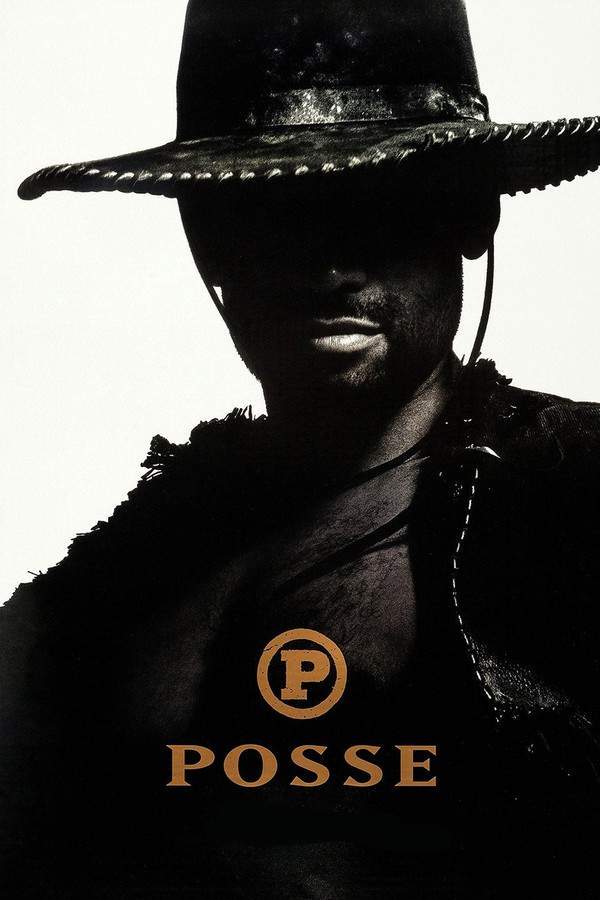
In 1898, convicted prisoner Buffalo Soldiers from the U.S. Army's 10th Cavalry Regiment are pressed into service for the Spanish–American War in Cuba. The unit, a segregated group fighting under the banner of the United States, is led by Jesse Lee, Mario Van Peebles, and they struggle to hold their ground against relentless assaults from enemy troops. When the corrupt and racist Colonel Graham, Billy Zane, orders Jesse to shoot a White prisoner to grant a retreat, Jesse finds himself confronted with a brutal moral choice. He demonstrates steady marksmanship by shooting the prisoner’s cigar from his mouth, but Graham coldly executes the man anyway and then offers Jesse’s command to Little J, Stephen Baldwin, another White prisoner, pushing the unit toward a perilous path. The demand to pull back is followed by a plan to wear civilian clothing and stage a robbery of a Spanish gold shipment—a setup designed to brand the 10 as deserters.
As the 10 move to fulfill the mission, Graham’s own cavalry forces march in. His aide Weezie, Charles Lane, creates a distraction that allows the 10 to turn the tables, shooting the Colonel and his troops. With Graham and his men presumed dead, the remnants—Jesse, Obobo, Angel, and Little J, along with Weezie—make their way from Cuba to New Orleans, still fugitives from the law. Their journey drops them into a web of new alliances and old loyalties as they try to stay one step ahead of Graham’s adversaries.
In New Orleans, Little J crosses paths with a gambler named Father Time, Big Daddy Kane. The two begin a tense poker game, a moment that soon spirals into danger when Time is caught cheating. Little J helps Time escape, and they hide in a hotel room, whispering a grim warning: “We were never here.” > We were never here
The pair’s escape is short-lived, as vengeful gamblers pursue them and Graham’s forces, who have survived Cuba, close in. Angel is killed in a firefight, and Little J, Time, and the others barely evade capture before reuniting with Jesse, who had headed west to wrap up some old business. The newly formed posse heads further west, with Graham’s cavalry still on their heels and a relentless drive to reach Freemanville, a town founded by King David where African-Americans have forged a home.
Freemanville welcomes Jesse and his group, including Carver, now sheriff of the town. Carver, Blair Underwood, and his deputy work to keep a low profile while the gang rebuilds trust among Freemanville’s residents. But trouble soon brews: Bates, a deputy in Cutterstown, pressures Carver to turn over Jesse. Freemanville’s defenders shelter Weezie, and their resistance intensifies as Bates’s men attack the town. In a brutal confrontation, Little J is beaten to death, and Obobo and Papa Joe, Melvin Van Peebles, are captured and sent to Cutterstown.
Jesse and Father Time stage a daring rescue by disguising themselves as Ku Klux Klan members, storming Cutterstown’s jail to free Obobo and Papa Joe. In the ensuing chaos, Jesse kills a deputy who was tied to the murder of King David’s family. When Bates arrives, he shoots and kills the mayor, and then he and Graham form an uneasy alliance that threatens Freemanville’s future. Jesse returns to the town and rallies a wary group of residents against Bates, exposing a scheme to seize Freemanville’s land for a railroad deal. As the townspeople rise, Graham arrives with his cavalry and a Gatling gun, forcing the defenders to stand their ground.
In a climactic bid to turn the tide, Jesse pulls off a dangerous gambit: dynamite to disrupt the Gatling gun and a daring counterattack that includes Weezie and Father Time arriving at a critical moment. Carver, driven by greed rather than loyalty, plans to flee with the deeds to Freemanville’s land. Lana, Salli Richardson-Whitfield, Carver’s ally’s daughter, stands against him, and Time’s intervention stops Carver from harming Lana. Time’s loyalty remains a theme, but it costs him his life when Carver strikes him down. Jesse arrives just in time to witness the betrayal and kills Bates in a final confrontation, putting an end to the sheriff’s scheming.
The saga reaches its last act in a blistering duel with Colonel Graham. Graham captures Lana and forces Jesse into a saloon, where their battle ends with Graham’s death and the saloon’s destruction by fire. As the smoke clears, Jesse, Obobo, Weezie, and Lana look on as Freemanville’s townspeople mobilize to face the aftermath, with the memory of what happened in Cuba and Cutterstown shaping their resolve.
The film closes with an elegiac coda: almost a century later, an old man recalls his youth when he met Jesse in Freemanville. He presents reporters with a small book Jesse had given him, a token of the hidden history of Black cowboys in the Old West. A final caption confirms a broader, long-overlooked legacy—there were more than 8,000 Black cowboys whose stories Hollywood had once neglected to tell.