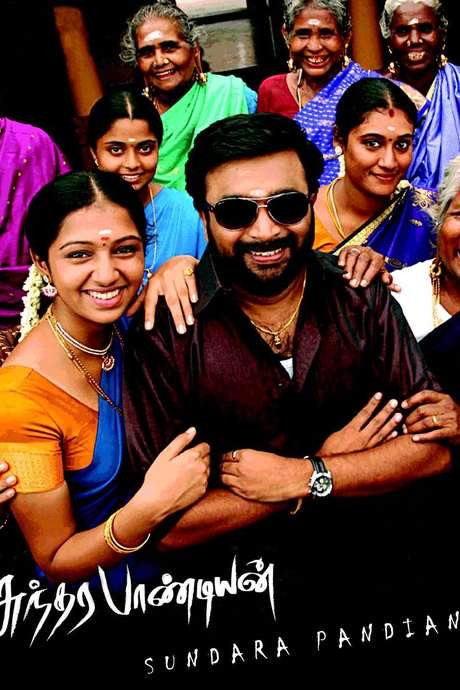
Two villages on the outskirts of Dharmapuri share the same god as their Kula Dheivam, and the idol is meant to be shared between them during festival times.
Oothukattaan is a wealthy powerhouse in his village who nurses a fierce grudge against the neighboring village after a past slight during his daughter’s ear-piercing ceremony, when the ritual was halted and she left with unpierced ears. Fueled by insult and pride, he vows to destroy the rival settlement and keep the idol for his own people. To realize this, he uses money and influence to stall government projects and welfare facilities that could reach the other village, slowly turning it into a barren land. He even leverages his resources to steer jobless youths away from the rival village, helping them find work in distant cities and thereby hollowing out the population there.
Ganesh is a clever, jobless youth living in the other village. Despite being without a job, he has earned respect through his social service and efforts to improve village life. He often roams with his buddy Tiger Pandi, a pair whose camaraderie makes them a recognizable presence in the community. Ootukattaan soon realizes that as long as Ganesh remains in the village, evacuating the population won’t be easy. To neutralize him, he offers Ganesh a job, and Ganesh agrees, hoping to keep his people safe even as he’s pulled into Oothukattaan’s schemes.
As Ganesh settles in, he uncovers a startling truth: Oothukattaan has a sister whom he married off to the neighboring village and has used that connection to push welfare schemes there. This revelation gives Ganesh a new motive: win Leelavathi, the daughter of Oothukattaan, and through her influence, perhaps convince the village to thrive rather than be crushed by external pressures. Ganesh makes his move and wins the heart of Leelavathi, and the pair’s relationship grows into a genuine bond.
Oothukattaan, sensing a threat to his plans, shifts his strategy. He plans to bring a beer factory to the next village, betting that the loss of their water resources will force the villagers to relocate. When he learns that Ganesh has won Leelavathi’s affection, he decides to remove him by any means necessary. He engineers a scheme to send Ganesh away from the village, manipulating the local sentiment to hold a vote that could expel him. Ganesh agrees to a poll, promising to step back if the majority favors his exit. But even as the crowd votes, Oothukattaan’s machinations come to light, and Ganesh is chased out of his home.
The factory plan proceeds with a twist: the land purchased by the factory owners is the villagers’ prize, but Ganesh refuses to sell his own land. Realizing they cannot go ahead without him, the factory project stalls, and the villagers beg Ganesh to return. He comes back only to discover that the entire crisis was driven by Oothukattaan—the very man who claimed to protect his village.
Leelavathi grows furious when she learns that Ganesh wooed her for the sake of his village’s welfare, and their relationship is strained as the truth sinks in. With the festival drawing near and the idol now once again a flashpoint, the threat to the village resurfaces. As old wounds, loyalties, and the devotion to the deity collide, the people brace for a clash that could redefine the future of both villages.
Together, the story threads themes of pride, community, and the complex pull of love and duty, showing how a shared tradition can become a battlefield when power and ego threaten to fracture it.