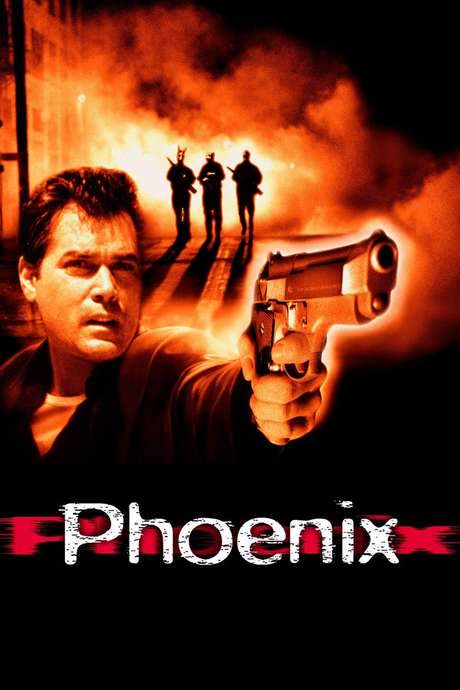
Harry Collins, Ray Liotta, is a Phoenix cop whose compulsive gambling has left him owing a considerable debt to a local Chicago gangster. As the pressure piles up and time runs short, he hatches a dangerous plan to settle his score by distracting his poker crew with a young woman he has picked up along the way: Veronica, Brittany Murphy. The distraction works, but the evening ends with misgivings and tears, reminding Collins of the human cost behind his bets. When he drops Veronica at her house, her mother watches the exchange with sharp eyes, and the moment lingers as a silent warning to Collins about the consequences of crossing lines he can’t uncross.
Veronica’s mother Leila, Anjelica Huston, challenges him in a quiet, clipped rebuke that forces Collins to confront the truth behind his own excuses. He insists he didn’t have sex with Veronica, but Leila’s cool rebuke makes him reassess his behavior. Her crisis of trust becomes the beginning of a wary, uncertain romance, as Collins discovers that genuine connection is possible even for a man chained to bad luck and bad decisions. Leila’s growing warmth teaches him something about making his own luck rather than simply chasing it, and he leaves with a fragile hope that perhaps one chance at redemption remains.
Meanwhile, the moneylenders in Chicago move to cut him off and give him a stark ultimatum: repay the debt within 48 hours or face a lethal consequence, including the murder of a suspect named Joey, held in custody in Chicago’s world. Mike Henshaw, Anthony LaPaglia, Collins’s corrupt partner, wastes no time in proposing murder as the simplest solution, but Collins refuses to welch on a bet or homicide as a means to clear the debt. Instead, he schemes to rob Louie, Giancarlo Esposito, a feared local loan shark, believing that a clean, decisive strike could reset the balance.
To pull off the heist, Collins recruits Henshaw and another crooked officer, James Nutter, Daniel Baldwin, and he adds a more straight-laced cop to the mix, Fred Shuster, Jeremy Piven. Behind closed doors, however, Shuster is wrestling with his own heartache: his wife Katie, Kari Wuhrer, is having an affair with Henshaw. The arrangement becomes a powder keg of loyalties and betrayals, and Shuster’s uneasy collaboration with Lt. Webber, Xander Berkeley, to bring down the corrupt cops takes on a double edge as trust frays on every side.
The plan goes forward, but the robbery unmasks fragility from the start. Henshaw, quick to pull the trigger, kills Louie before the safe can be cracked, complicating the crew’s meticulous timetable. Collins funds a locksmith to crack Louie’s safe, and the group splits with the money nearly within reach. Yet deception leaks quickly: Webber arrives at the rendezvous point ahead of the others, betrays Shuster, and shoots him, wounding Collins in the gut before escaping with the bulk of the cash. The betrayal sends shockwaves through the operation and detonates the fragile alliances that kept the heist moving.
Nutter and Henshaw, now wary that Collins may have turned on them, reach the meeting point and are surrounded by police. When Nutter tries to surrender, Henshaw executes him, prompting a brutal exchange that ends with Henshaw being cut down by fellow cops. Collins, wounded but alive, hitches a ride back to town and surprises Katie and Webber, who are revealed to be having an affair of their own. Against the odds, Collins asserts control of the situation, burning most of the money and denouncing both of them for their betrayal of Fred. He also alerts the authorities to Webber’s role, a calculated move to reposition himself as someone who can expose the corruption, not merely participate in it.
With the debt still hanging over his head, Collins takes just enough money to settle with Chicago and returns to the mob figure to finalize matters. Chicago, amused by Collins’s reluctance to murder Joey, throws a cruel reveal: Joey has already been killed in prison, and the whole ordeal could have been avoided if Collins had simply carried out the original instruction. The taunt stings, and in a sudden surge of fury, Collins turns on Chicago and his bodyguards, eliminating them in a brutal confrontation. Wounded and exhausted, Collins staggers back to his car, the money spent and his fate finally sealed as he collapses, seemingly dying from his injuries.
In the end, the film leaves Collins at the edge of a choice between the desolate path of unresolved debt and the perilous road to possible redemption. The arc traces a man who tries to break free from a cycle that is both outwardly transactional and inwardly corrosive, with the tension between loyalty, love, and crime riding at every turn. The story’s grit—set against a backdrop of corruption, shifting loyalties, and the frailty of human resolve—remains a stark meditation on luck, accountability, and the costs of living on the wrong side of the line.