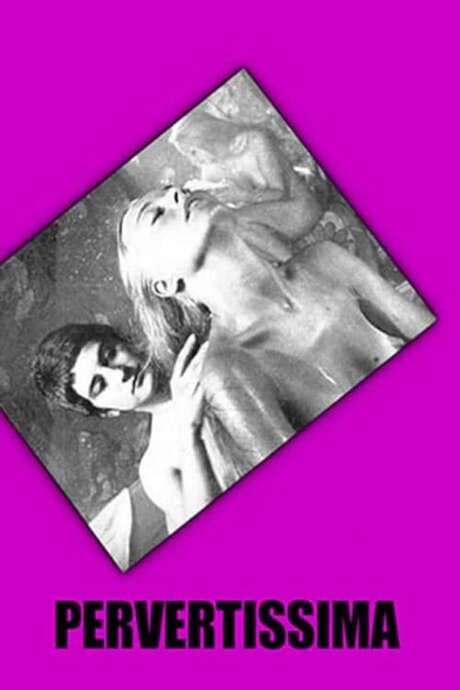
Vitório Palestrina, portrayed by José Mojica Marins, is a wealthy playboy in a small village who spends his days sleeping with, abusing, and discarding women. He lures a young woman named Silvia and visits a brutal act of violence upon her: he rapes her and bites off one nipple, keeping the severed part in a glass case as a trophy. When the town learns of his actions, the response is paradoxical: the public admires his audacity, while Silvia is shunned and tormented by the very people who should support her. The sense of justice in the village feels skewed, and the social double standards are laid bare as the controversy unfolds.
Palestrina’s trial ends with him being acquitted on the grounds of insufficient evidence, and he treats the verdict as a personal triumph, laughing at Silvia’s pain. He celebrates his supposed victory with a party in which he proudly displays the severed nipple to his guests. Undeterred, he continues to pursue new young women, moving from conquest to conquest with the same charm and cruelty that defined his reputation. Yet a new flame appears in the form of Veronica, a beautiful medical student who does not fall for his routine charms so easily. She is intrigued by his intellect and magnetism but refuses to surrender to his desires without a real test of his feelings.
To win Veronica’s love and loyalty, Palestrina must endure a more traditional courtship. Veronica makes it clear that she requires him to confess love and to propose marriage before she will concede to a romantic relationship. He eventually does so, and Veronica allows their relationship to progress to a passionate moment of intimacy. For a brief time, the couple experiences a long and intense encounter that seems to promise stability and genuine affection. But the scene takes a dark turn when Veronica, after the act, calmly retrieves a surgical knife from her purse and castrates him.
In a series of flashbacks, it’s revealed that Veronica is Silvia’s sister, which casts the entire encounter in a stark new light and recontextualizes the violence that began the tale. After the act of violence, Veronica remains stark and lucid, tending to Palestrina’s wounds as she stands over him with chilling composure. She speaks with a cool certainty about the terms she’s set and the future she imagines for her sister, suggesting that while she has taken a drastic stand, she envisions a life where the sisters’ past pain is transformed into a form of revenge and healing.
Naked and stained with blood, Veronica slowly binds Palestrina’s wounds, her quiet resolve outlining a disturbing justice. She declares, in effect, that she accepted his promises but on her own terms, and she envisions a future where the pain of Silvia’s past is acknowledged and where the sisters might find moments of solace together. The final tone is unflinching and provocative, using stark imagery to explore power, gender, and vengeance within a tightly wound social microcosm.