Plot Explained Spoilers guaranteed!
Plot Explained

Browse by genre

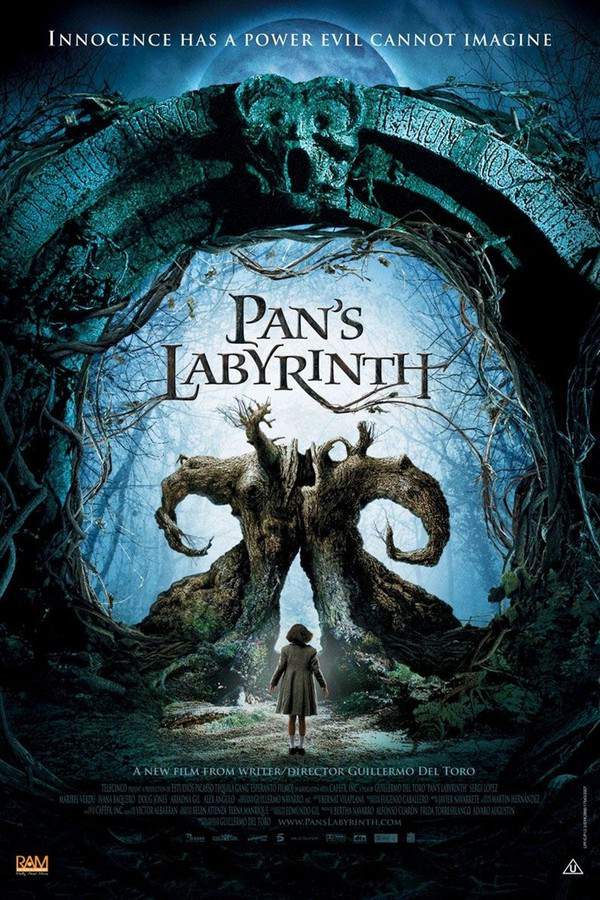
Pan's Labyrinth (2006) movie poster

Plot Summary

Pan's Labyrinth (2006) Plot Summary Explained

Release, runtime and language
2006 · 118 min · Spanish
Directed by
Guillermo del Toro
Starring
Sergi López, Ariadna Gil, Ivana Baquero
Budget
$19M

In post-civil war Spain, a young girl named Ofelia escapes the harsh realities of her life through a captivating imagination. Living with her pregnant mother and cruel stepfather, a ruthless captain of the Francoist army, she discovers a mystical labyrinth. There, she encounters a faun who claims she is a princess and tasks her with three dangerous quests to prove her royal lineage and return to her true kingdom. As she journeys deeper into this fantastical world, Ofelia must confront both the dangers within the labyrinth and the darkness of her stepfather's actions, blurring the lines between fantasy and reality.

On this page (6)
  1. 1 Where to watch
  2. 2 What happens: full plot
  3. 3 Plot questions answered
  4. 4 Movie threads
  5. 5 Movies like Pan's Labyrinth
  6. 6 Every angle

Where to watch

Where to Watch Pan's Labyrinth (2006)

Where can you watch Pan's Labyrinth? Stream, rent or buy it in the US, including on Amazon Video and Google Play Movies: current JustWatch availability with up-to-date prices.

Streaming availability powered by JustWatch

Full plot summary · contains spoilers

What Happens in Pan's Labyrinth: Full Plot Summary

The whole story of Pan's Labyrinth (2006) explained, from the opening scene to the final frame: every key event, every twist and what it all adds up to. Read it as a quick recap before the sequel, to check a scene you missed, or to finally understand what really happened.

In a mystical narrative, Princess Moanna (Ivana Baquero), the daughter of the king of the underworld, ventures into the human realm. However, the brilliance of the sunlight blinds her and wipes her memory clean. As a result, she becomes mortal and ultimately meets her demise. The king, convinced that her spirit will eventually return to the underworld, constructs labyrinths around the world to act as portals for her return.

Fast forward to 1944 Francoist Spain, we meet Ofelia (Ivana Baquero), a ten-year-old girl who travels with her ailing and pregnant mother, Carmen (Ariadna Gil), to meet her new stepfather, Captain Vidal (Sergi López). Vidal, who is the son of a renowned commander that perished in Morocco, is a staunch believer in Falangism and has been tasked with hunting down republican rebels. A peculiar stick insect catches Ofelia's attention; convinced it to be a fairy, she follows it into an ancient stone labyrinth. However, she is intercepted by Mercedes (Maribel Verdú), Vidal's housekeeper, who is clandestinely aiding her brother Pedro (Roger Casamajor) and the rebels. Mercedes, privy to Vidal's strategies, provides crucial information to the rebels that allows them to evade capture.

That night, the insect visits Ofelia's room and transforms into a fairy, guiding her into the labyrinth, where she encounters a faun (Doug Jones). The faun believes Ofelia to be the reincarnation of Princess Moanna and presents her with a book containing three tasks that she must fulfill to reclaim her immortality and original essence, ensuring that she retains her royal spirit.

Ofelia embarks on her first task, which involves retrieving a key from the belly of a gigantic toad. However, her concern for her mother, whose health is deteriorating, weighs heavily on her. The faun provides her with a mandrake root, instructing her to place it beneath Carmen's bed in milk, along with regular blood offerings to alleviate her mother's condition. With the aid of three fairy guides and a piece of magical chalk that allows her to open doors to various places, Ofelia confidently tackles her second task, which is to reclaim a dagger from the lair of the monstrous Pale Man (Doug Jones). Despite strict warnings against eating from the lavish feast laid before her, Ofelia cannot resist and consumes two grapes, provoking the Pale Man into a furious chase after he devours two of her fairy companions. Ultimately, she escapes, but the faun, enraged by her disobedience, withholds the details of her third task.

As events unfold, Ofelia witnesses the growing brutality of Captain Vidal as he relentlessly hunts the rebels. After he executes two local farmers on unfounded charges, the situation escalates as he interrogates and murders a captured rebel. The doctor attending to the captive, Doctor Ferreiro (Álex Angulo), meets a grim fate at Vidal's hands following the revelation of his allegiance to the rebels. Soon after, Vidal discovers Ofelia tending to the mandrake root, dismissing it as madness. Carmen agrees and destroys the root, which leads to her experiencing agonizing contractions and ultimately dying during childbirth.

In the midst of this turmoil, Mercedes finds herself compromised as a spy and attempts to help Ofelia escape. Unfortunately, they are apprehended, and while Ofelia is confined to her room, Mercedes faces interrogation and torture. In a daring escape, she stabs Vidal non-fatally and rejoins the rebels. The faun, having reconsidered his stance towards Ofelia, returns and insists that she bring her newborn brother into the labyrinth to finalize her quest.

Ofelia successfully retrieves her brother and flees into the labyrinth while Vidal pursues her amidst a rebel attack. Meeting the faun at the heart of the labyrinth, he suggests that the third task requires the sacrifice of innocent blood. However, Ofelia steadfastly refuses to harm her brother. Just then, Vidal confronts them and seizes the baby, ultimately shooting Ofelia in the process. As Vidal returns to the labyrinth's entrance, the rebels surround him, leading to his demise at the hands of Pedro after he expresses a poignant wish for his son to know his name—only for Mercedes to confirm that he will not.

Mercedes enters the labyrinth, finding a wounded Ofelia. In a dramatic turn, drops of Ofelia's blood trickle down a spiral stone staircase to an altar. In the golden throne room of the underworld, Ofelia, now dressed elegantly and without injury, stands before the King, who reveals that by prioritizing her own blood over another's, she has passed the ultimate test. The faun hails Ofelia with respect, calling her "Your Highness." The Queen, her mother, invites Ofelia to assume her rightful place beside her father. As Ofelia succumbs in Mercedes’ embrace, a serene smile graces her face.

The epilogue recounts the story of Princess Moanna, affirming that she returned to the underworld, reigning wisely for centuries while subtly leaving traces of her existence in the human realm, accessible only to those who truly seek them.

Last updated: November 07, 2024 at 23:20

Was this helpful?

Plot questions answered

Pan's Labyrinth Plot Explained: Your Questions Answered

The questions people ask most about Pan's Labyrinth (2006): what happens in the confusing scenes, why the characters do what they do, the twists, hidden details and what the ending means. Each answer contains spoilers.

Q1

Why does the faun ask Ofelia to sacrifice her brother in the final task?

The faun presents the third task as requiring "innocent blood," suggesting Ofelia must harm her brother to prove her royalty. However, this is ultimately a test of character. The underworld kingdom values compassion and self-sacrifice over ruthless ambition. By refusing to hurt her brother and instead protecting him, Ofelia demonstrates the very qualities that make her worthy of being Princess Moanna.

Foreshadowing: Earlier, the faun warns Ofelia that the Pale Man's lair has strict rules she must follow, establishing that the tests are designed to reveal her true nature.

  • faun
  • final test
  • sacrifice
  • brother
  • princess moanna
Q2

Why does Ofelia eat the grapes in the Pale Man's lair?

Ofelia is a hungry, curious child who has been warned not to eat anything in the Pale Man's lair. The grapes represent a temptation, she sees others eating and cannot resist. This disobedience has consequences: the Pale Man awakens and devours two of her fairy companions before she escapes. Her failure to follow the faun's rules angers him and nearly costs her the quest.

Foreshadowing: The faun specifically warns Ofelia about the Pale Man's lair before she enters, emphasizing that the feast is a test of her discipline.

  • pale man
  • grapes
  • disobedience
  • faun test
  • fairies
Q3

What causes Carmen's death after she destroys the mandrake root?

Carmen destroys the mandrake root after Vidal dismisses it as nonsense, calling Ofelia's belief in magic delusional. Immediately after destroying it, Carmen goes into severe contractions and dies during childbirth, giving birth to her son. The film implies the mandrake was keeping her alive, possibly through supernatural means or simply through the power of belief. Its destruction accelerates her death.

Foreshadowing: The faun tells Ofelia the mandrake root will help her mother, and Ofelia faithfully cares for it with blood offerings, establishing its importance to Carmen's survival.

  • carmen
  • mandrake root
  • death
  • childbirth
  • vidal
Q4

How does Ofelia become Princess Moanna at the end?

Ofelia dies in the real world after being shot by Vidal, but her spirit is taken to the underworld. There, the King reveals she has passed the ultimate test: when given the choice between sacrificing her brother to complete the quest and protecting him, she chose compassion over immortality. Her blood, the blood of a princess, opens the gateway to the underworld. She ascends to the throne as the true Princess Moanna, reuniting with her underworld parents.

Foreshadowing: The film opens with Princess Moanna's original journey to the human realm and the king's promise to build labyrinths for her return, establishing the cyclical nature of her story.

  • princess moanna
  • underworld
  • transformation
  • blood
  • immortality
Q5

What motivates Captain Vidal's extreme brutality?

Vidal is a true believer in Falangism, the fascist ideology of Franco's Spain. He is obsessed with eliminating republican rebels and proving himself worthy of his father's legacy as a famed commander who died in Morocco. His cruelty stems from ideological certainty, he sees any resistance as a threat to order. His obsession with his unborn son drives him to want to shape the child's future in his image, making his final moments poignant as he dies without his son knowing him.

Foreshadowing: Vidal's first scene establishes his cold demeanor and his determination to hunt rebels, setting the tone for his escalating violence throughout the film.

  • vidal
  • falangism
  • brutality
  • rebels
  • father legacy
Q6

How does Mercedes aid the rebel resistance?

Mercedes is Vidal's housekeeper but secretly supports the republican rebels, helping her brother Pedro and the resistance. She listens at keyholes and reads Vidal's documents to gather intelligence, passing crucial information to the rebels that helps them evade capture. When discovered, she attempts to help Ofelia escape, stabs Vidal non-fatally during captivity, and escapes to join the rebels in the mountains.

Foreshadowing: Early in the film, Mercedes intercepts Ofelia near the labyrinth, establishing her secret movement through the estate and her access to information.

  • mercedes
  • rebels
  • espionage
  • pedro
  • resistance
Q7

Is Ofelia's journey in the labyrinth real or imagined?

The film deliberately blurs the line between fantasy and reality. Elements like the mandrake root seemingly affect Carmen's health, and Ofelia's blood actually opens the underworld portal at the end. However, Vidal destroys the mandrake root and nothing supernatural saves Carmen, suggesting some elements may be Ofelia's imagination coping with her harsh reality. The ambiguity is central, the magical world may represent Ofelia's inner strength and moral compass rather than literal reality.

Foreshadowing: Mercedes tells Ofelia that her mother was once like her, a dreamer, hinting at the power of imagination as a survival mechanism.

  • fantasy
  • reality
  • labyrinth
  • imagination
  • ambiguity
Q8

What is the Pale Man and why is he dangerous?

The Pale Man is a monstrous creature who lives in a hidden lair within the labyrinth. He has no eyes, he detects movement by the vibration of footsteps. The lavish feast in his room is a trap: anyone who eats from it awaken him, and he will hunt them down to devour them. He represents temptation and the consequences of greed or curiosity, testing whether Ofelia can resist easy rewards.

Foreshadowing: The faun explicitly warns Ofelia not to eat anything in the Pale Man's lair, emphasizing the danger before she enters.

  • pale man
  • monster
  • feast
  • temptation
  • danger
Q9

What is the purpose of the three tasks the faun gives Ofelia?

The faun presents Ofelia with three tasks to prove she is the reincarnation of Princess Moanna and worthy of returning to the underworld. Each task tests a different virtue: retrieving the key from the toad tests courage and determination; taking the dagger from the Pale Man tested discipline (which she partially failed); and the final test, the most important, tested compassion and self-sacrifice. The tasks are designed to reveal whether her heart is truly noble.

Foreshadowing: The faun tells Ofelia the book contains the tasks that will help her "reclaim her immortality and original essence," framing the quests as a spiritual journey.

  • faun
  • tasks
  • tests
  • princess moanna
  • immortality
Q10

What happens to Vidal's baby son at the end?

Vidal's son survives. During the chaos of the rebel attack on Vidal's estate, Ofelia rescues the baby from her crib and carries him into the labyrinth to protect him. Vidal pursues her, shoots her, and attempts to take the baby. When the rebels arrive, they surround Vidal, and Mercedes' brother Pedro kills him. Mercedes then enters the labyrinth and finds the baby alive in Ofelia's arms. The child is left in Mercedes' care, escaping the cycle of violence that defined his father's life.

Foreshadowing: Vidal's obsession with having a son to continue his legacy is established early, making his failure to protect or shape that son thematically significant.

  • baby
  • son
  • vidal
  • mercedes
  • rebel attack
Q11

What was the mandrake root supposed to do for Carmen?

The faun gives Ofelia a mandrake root and instructs her to place it beneath Carmen's bed in milk, with regular blood offerings. He claims it will ease Carmen's suffering and help her recover from her illness and difficult pregnancy. Ofelia faithfully follows these instructions, and Carmen's health initially appears to stabilize. However, when Vidal discovers the root and Carmen destroys it believing it to be madness, she immediately goes into labor and dies, suggesting the root was either genuinely keeping her alive or represented the last hope in Ofelia's eyes.

Foreshadowing: The faun presents the mandrake as a gift to help Ofelia's mother, connecting Ofelia's love for her mother to her willingness to complete the tasks.

  • mandrake
  • root
  • carmen
  • healing
  • faun magic
Q12

Why does Ofelia refuse to become a princess when it means sacrificing her brother?

Ofelia's refusal to harm her brother stems from her love for him and her moral compass, she cannot commit violence against an innocent child, even for a kingdom. This choice is precisely what makes her worthy of being Princess Moanna. The underworld kingdomvalues compassion above all else. The faun's test was designed to see if Ofelia would repeat the selfish behavior of the original Princess Moanna, who ventured into the human realm out of curiosity and lost herself. Ofelia's sacrifice proves she has the genuine heart of a ruler.

Foreshadowing: The film establishes Ofelia as a caring, imaginative child who worries deeply about her mother and is willing to risk herself for others, her character arc is built around selflessness.

  • choice
  • compassion
  • sacrifice
  • brother
  • kingdom

Movie threads

More Movies Like Pan's Labyrinth, by Mood & Story

Curated lists built around what makes Pan's Labyrinth tick: the same mood, the same kind of story or the same emotional payoff. Each list explains why these movies belong together.

Dark Fairy Tales like Pan's Labyrinth

Mythical quests and magical worlds used to explore mature, brutal themes. If you loved the blend of brutal reality and dark fantasy in Pan's Labyrinth, explore these movies. This list features similar films where fairy tale logic is used to tell mature, emotionally heavy stories about war, fascism, and moral choices, creating a uniquely haunting experience.

  • dark fantasy
  • dreamlike
  • oppressive
  • melancholic
  • brutal
  • mythical
  • Tone: dark, melancholic, haunting
  • Pacing: steady, methodical
Why these movies?

The story pattern: Stories in this thread follow protagonists, often children or young adults, who encounter a strange, otherworldly realm. This fantasy world, however, is not an escape but a reflection or direct confrontation with the darkness of their real-life circumstances. The narrative intertwines a mythical quest with a grim reality, where success in one world may come at a terrible cost in the other.

Why they belong together: Movies are grouped here for their shared core concept: using dark, often Gothic, fantasy to dissect serious human struggles. They share a melancholic, dreamlike mood, a high emotional weight, and a bittersweet or bleak resolution that challenges traditional fairy tale endings.

Movies about Innocence Under Tyranny like Pan's Labyrinth

Young protagonists navigating oppressive worlds of war and authoritarian rule. For viewers who appreciated the perspective of a child confronting fascism in Pan's Labyrinth, this collection features similar movies. Discover stories where young characters face the horrors of war and oppression, exploring themes of rebellion, moral choice, and the bittersweet loss of childhood.

  • oppressive
  • war-torn
  • brutal
  • suspenseful
  • coming of age
  • rebellion
  • Tone: dark, oppressive, bittersweet
  • Pacing: steady, character-driven
Why these movies?

The story pattern: The narrative pattern centers on a young protagonist whose world is invaded by an impersonal, violent ideology. Their personal journey of growth and understanding is forced to accelerate, often involving a moral awakening or a defiant act. The story contrasts the naive perspective of youth with the stark cruelty of the adult world, creating a powerful emotional arc.

Why they belong together: These films are connected by their central theme of childhood confronted with extreme political or social violence. They share a dark, oppressive mood, a steady pacing that builds dread, and deliver a heavy emotional impact, frequently culminating in a bittersweet ending where innocence is sacrificed for a greater understanding or a moral victory.

If you liked this

Movies Like Pan's Labyrinth

Similar movies to Pan's Labyrinth: the same genre, themes or kind of story. Each one comes with its own plot summary, timeline and ending explained.

Browse all movie summaries

Every angle

Pan's Labyrinth (2006) Explained: Plot, Timeline & Characters

Everything about Pan's Labyrinth in one place: what happens in the plot summary, the timeline in chronological order, the characters and meaning and a spoiler-free summary. What's After the Movie adds the cast, box office and post-credit scenes.

Coming soon on iOS and Android

The Plot Explained Movie Summary App

Plot summaries, endings explained and timelines on your phone. Catch up on any movie in minutes, save your favorites and never miss a twist again.

Be the first to know when we launch. Your email stays private, always.

Learn more about the app