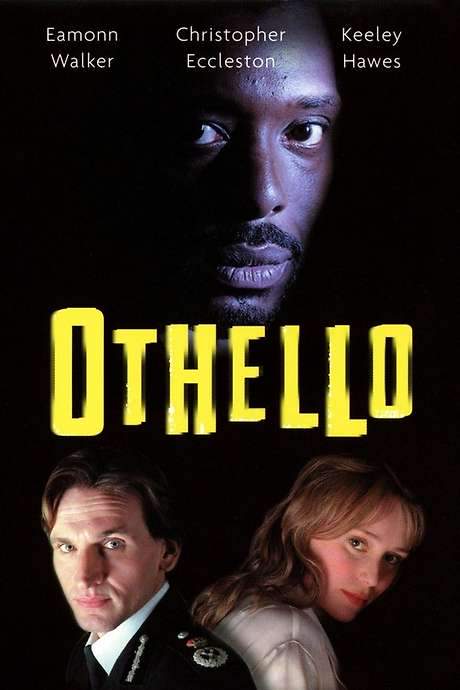
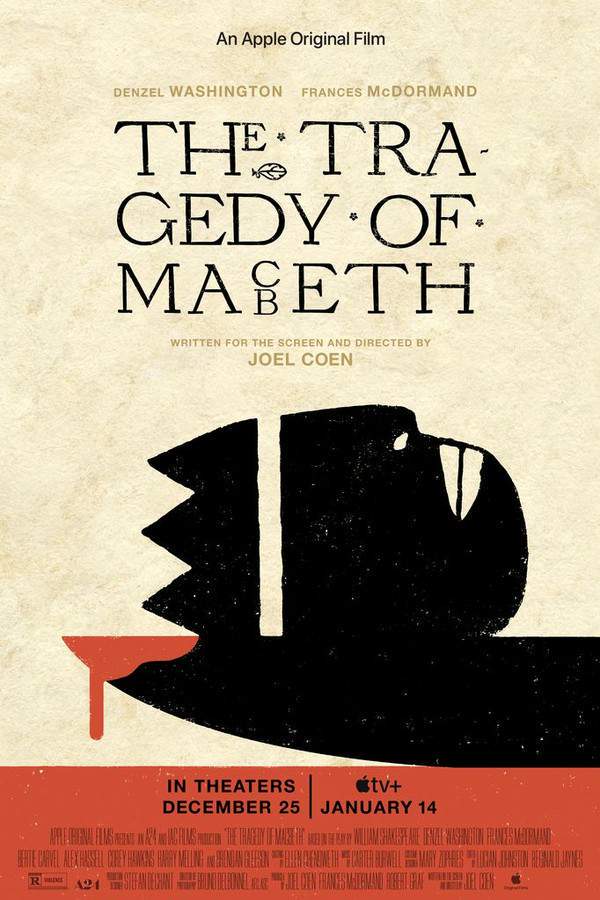
The film is narrated by Ben Jago, Christopher Eccleston, a corrupt detective who makes a habit of bending people to his will, often without them realizing how deeply they’re being pulled into his schemes. His narration threads through a web of power, pride, and personal vendettas, exposing how one man’s hunger for control can corrupt an entire system and the people closest to him.
The drama kicks off when Sinclair Carver, the Commissioner of London's Metropolitan Police, is toppled after being recorded using racist language. The political machinery responds with a calculated public relations move: John Othello, a Black police officer, is named the new Commissioner as a symbol of progress, just as a reporter hails him for ending a riot. But the appointment does not bring unity; it sparks a dangerous rivalry. Jago, Carver’s chief lieutenant, feels robbed of the prize he believed was his, and he begins to wage a personal campaign to ruin Othello’s life and erode his authority.
Jago’s strike is both invasive and intimate. He corals a spark from Dessie Brabant, a wealthy white woman married to Othello, by posting on a neo-Nazi site about their marriage, trying to inflame hostility and isolate Dessie. He then engineers a network of complicity around Dessie, proposing Michael Cass, a seductive inspector, to “look after” her during the day. To add fuel to the fire, Jago ensnares Dessie’s closest confidante, Lulu, Rachael Stirling, drawing her into a dangerous dynamic that could yield secrets about Dessie’s past and her relationship with Cass.
As Othello starts a probe into the death of Billy Coates, a Black drug addict beaten by police, the investigation reveals a troubling truth: the three officers who claimed self-defense actually arrived with the intent to attack. Through Alan Roderick, a fellow officer, Othello begins to see a possible witness who could flip the case. Jago, sensing vulnerability, offers protection in exchange for testimony against the other officers. The truth initially wins Othello acclaim, but Jago’s influence begins to tilt the balance. When Roderick is called to testify, he is found dead from an overdose; the assumption is that Jago manipulated the situation to ensure Roderick’s silence. Othello rejects taking the blame, warning that he trusts no one but himself.
With Dessie and Cass, misunderstandings fester, and Jago presses the tension by suggesting DNA analysis to determine whether Dessie has slept with Cass. A televised interview becomes a stage for Othello’s unraveling, during which he lashes out at Cass in a car park. Guilt gnaws at Jago, but his calculus—securing control and teaching Othello a hard lesson—overrides his remorse. He informs Othello that the DNA results back his suspicion, even as the truth remains murky and manipulated.
That night, when Othello confronts Dessie, she denies any affair, but the damage has been done. In a sudden burst of rage, Othello smothers Dessie to death. Alarmed by Dessie’s absence, Jago and Lulu break into the flat and discover her corpse. Jago quickly spins a tale to Othello: the tests were negative, Dessie was innocent, and the nightmare of manipulation can be resolved. Othello, realizing he has been used as a pawn in a cruel game, confronts Jago, who calmly notes that Othello took what was his—yet adds that his love for Othello remains unchanged.
Outside, the pair wait for the arrival of the police, while Othello, overwhelmed by the rigged chessboard of power and deceit, ends his own life. The political leadership, seeking stability over scandal, appoints a new Commissioner as Jago emerges from the shadows as the favored ally. The closing lines mark a chilling confession: the conflict was not merely about race or politics; it was, at its core, about love, “simple as that,” a phrase that encapsulates the moral of a story where loyalty, ambition, and passion collide in the darkest of ways.
> It wasn't about race or politics but love, "simple as that."