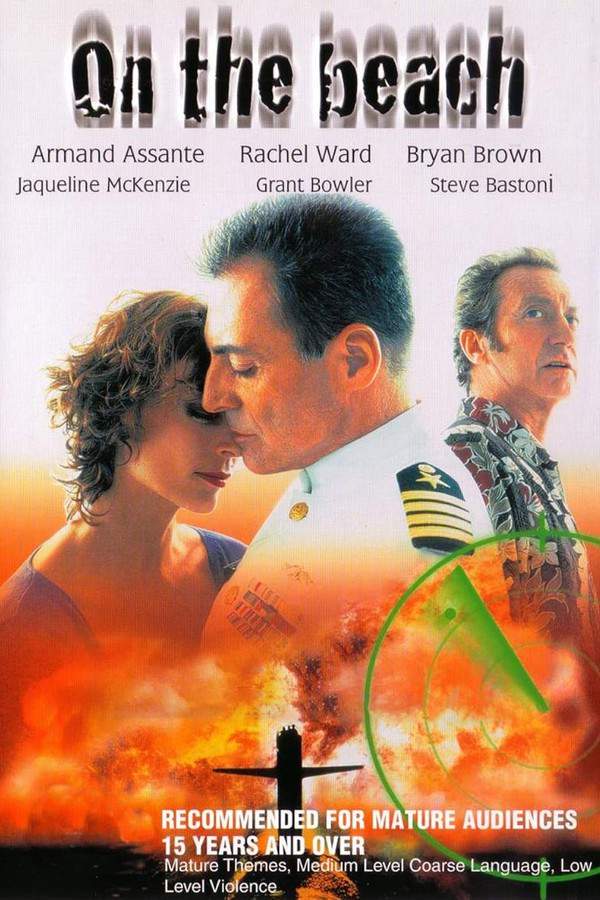
Just before Christmas, Sharon, a Sydney Opera House usherette, and her friend Eva meet their best mates Brendan and Tony amid an anti-war protest outside two United States Navy ships. Despite their festive Santa outfits, the men try to charm the women, and Brendan boasts that he is a singer who has performed at the Opera House. The foursome head out on a double date to see Midnight Oil, only then to be abruptly dismissed from their flat after overhearing the men falsely claim they’ve seduced their dates. As the world outside grows tenser with reports of mounting conflict between the United States and the Soviet Union, a potential nuclear flashpoint hangs over everything.
On New Year’s Eve, Sharon is working at the Opera House again, and after the performance Eva meets her so they can hit a party. Their night takes a strange turn when they discover a sleeping U.S. Navy Sailor in one of the theatres. The man, who introduces himself as Sam, has deserted his ship and been hiding within the building for months, long before the war seems inevitable. Sharon recognizes him from a newspaper article that described him as missing. As they talk in the theatre’s control room, Brendan unexpectedly returns to the stage and reveals that he actually works as a cleaner at the Opera House, adding a comic note to the tense situation. While the two women converse with Brendan, Sam overhears on the radio that war has erupted in Europe and that tactical nuclear weapons have already been used in Germany. The news only grows more alarming as reports reveal that four Australian targets — North West Cape, Pine Gap, Nurrungar, and Jervis Bay — have been struck by nuclear weapons.
With orders to shelter inside the Opera House, the group searches for the safest course of action as the conflict intensifies. They start by hiding in the basement, then move to a nearby bar (which Brendan has the key to), where they loosen up with drinks and a game of strip poker. The night unfolds with an atmospheric interlude as they watch a sequence from the silent film Metropolis, its underground workers’ world providing a surreal echo of their own crisis and an impending sense of flood and catastrophe. Through a series of flashbacks and conversations about their pasts, the four start to form a fragile bond that tempers fear with fragile trust and shared humanity.
The next morning, Brendan and Sharon grow closer and share a moment of intimacy in a storage room, while Eva discovers a television and learns that Europe’s war has escalated into a full-scale nuclear exchange, with Europe and the United States left in ruins. The newscasts show horrifying footage of burned and disfigured victims near New York City, underscoring the scale of the devastation. As firestorms illuminate the sky over Sydney and air-raid sirens wail, the four decide to seek safety underground, joining thousands of others who crowd into the Martin Place railway station.
In a poignant scene, Sharon and Eva lift the mood of the crowd by singing a wistful tune, “It Might as Well Rain Until September,” even as the room plunges into darkness and an explosion sounds above. The film ends on a stark, unresolved image: the frame freezes as the question lingers—has Sydney itself been hit by a nuclear strike, and what does survival look like in the face of a world-consuming catastrophe?