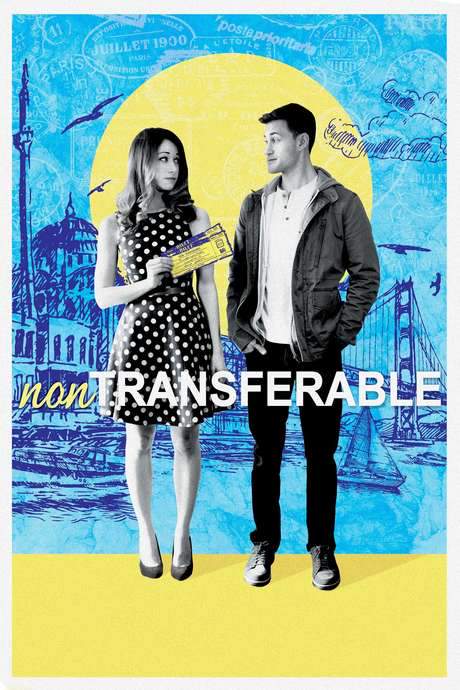
Amy Tyler is a young woman who plans a romantic, surprise trip to Europe with her boyfriend Josh Merit. When the relationship fortunately dissolves before they can embark, she makes a bold, almost audacious choice: she advertises her travel tickets online in search of another man who shares the same name as her ex, hoping to salvage the dream by inviting a total stranger to join the journey instead. This premise sits at the heart of a story that blends whimsy with a practical question about identity, chance, and the boundaries of online matchmaking in a traveler’s world where plans can be turned on a dime.
The film’s setup threads together a scenario that feels both intimate and expansive. It plays out against a backdrop where a simple name can unlock a passport to a new companion and a fresh set of adventures, inviting viewers to consider how much of our path depends on luck and the people we meet along the way. The premise is not just a quirky gimmick—it becomes a lens through which the characters navigate their own expectations, hopes, and hesitations about whether a stranger can truly bridge the gap left by a failed relationship.
Inspiration behind the screenplay breathes through the narrative as well. The story, though written in 2012, bore uncanny similarities to a real-life 2014 incident in which a Toronto man named Jordan Axani offered his travel tickets to a woman named Elizabeth Gallagher after a breakup with his girlfriend who shared the same name. The idea of a no-transfer policy suddenly loosening its grip because a ticket could be used by anyone bearing the same name adds an intriguing layer of tension to the premise, and this real-world parallel gives the film a grounded, almost documentary-like resonance.
As the project found its footing, a BuzzFeed article about the real-life story helped reawaken interest in the script. Brendan Bradley, one of the film’s creators, reflected on the journey: > "I wrote this script five years ago," Bradley said, "and everyone told me ... 'This would never happen! This is too unrealistic!' And the project didn’t get any traction because everyone thought the premise was too crazy. And then it happened in real life." This meta moment underscores the film’s core tension—the way fiction can anticipate, or at least mirror, the twists that life sometimes throws our way.
Throughout its running time, the film maintains a balance between light, observational humor and a more thoughtful exploration of connection. It invites audiences to watch as ordinary people—drawn from a diverse cast of characters—navigate the uncertainties of travel, the awkwardness of meeting strangers, and the possibility that a shared name can unlock something unexpectedly meaningful. The journey becomes less about the destination and more about the people who converge along the way, each contributing a fragment of ordinary humanity that, when put together, reveals a larger tapestry of what it means to seek companionship in a world where plans are always subject to change.
In the end, the narrative underscores a gentle, hopeful message: sometimes the most improbable arrangements can lead to genuine human connection, and the courage to put faith in chance can open doors to experiences none of us would have predicted.