Plot Explained Spoilers guaranteed!
Plot Explained

Browse by genre

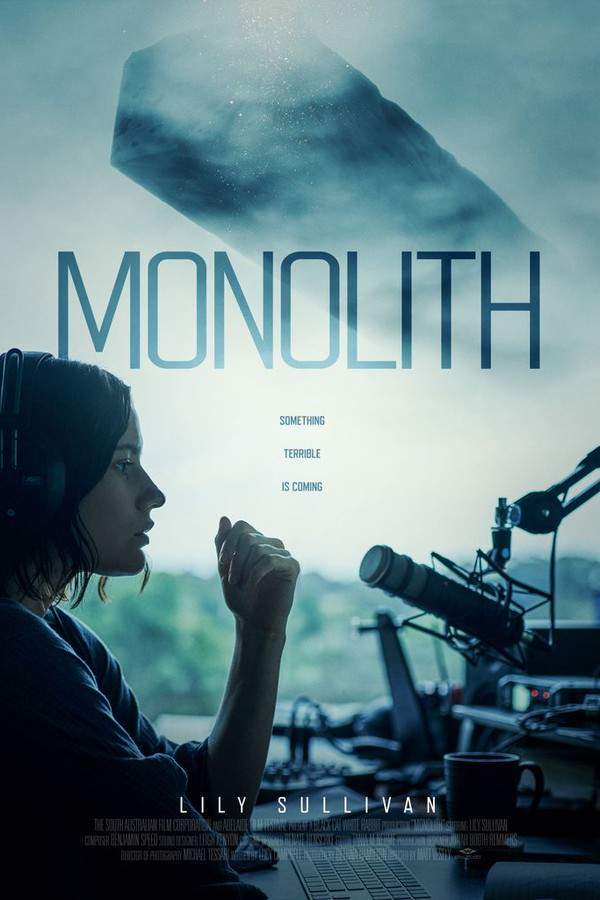
Monolith (2024) movie poster

Ending Explained

Monolith (2024) Ending Explained – Final Scene & Meaning

Release, runtime and language
2024 · 1 h 34 m · English
Echo score 78
Directed by
Matt Vesely
Starring
Damon Herriman, Lily Sullivan, Erik Thomson, Ling Cooper Tang, Ansuya Nathan, Terence Crawford
Budget
$640K

A struggling journalist attempts to rebuild her career by investigating a puzzling conspiracy. As she digs deeper, she uncovers unsettling truths that challenge her understanding of reality and forces her to confront hidden secrets within her own past, blurring the distinction between fact and fiction.

On this page (6)
  1. 1 What happens at the end
  2. 2 Final events in order
  3. 3 Ending questions answered
  4. 4 Movie threads
  5. 5 Movies like Monolith
  6. 6 Every angle

Ending explained · contains spoilers

What Happens at the End of Monolith?

How Monolith (2024) ends, what the final scene means, which earlier moments set it up and how to read the ending if the film leaves it open. The full ending explained, with every spoiler.

In the climax of Monolith, the story takes a surreal turn, revealing that the entire narrative was largely an internal struggle within the protagonist, the podcast host. After obsessively pursuing the truth behind the mysterious black brick—believed to be some kind of alien artifact that influences people’s minds—she begins to experience astonishing physical and mental sensations. Ultimately, she pulls a black brick out of her mouth, a symbolic act that represents her finally confronting her guilt and internal conflicts. This act leads to her creating a perfect duplicate of herself, which signifies her attempt to face and perhaps overcome her own shame and unresolved issues. The duplicate is more confident and less troubled, suggesting that the original host has managed to shed her guilt. The confrontation between the two versions of herself is tense, culminating in a physical clash that leaves it ambiguous as to who emerges victorious. However, it’s implied that the original host, having faced her own darkness head-on, has ultimately won. This ending suggests that the black brick, and by extension the monoliths, serve as metaphors for guilt, repressed memories, and the subconscious struggle for redemption. The film leaves viewers questioning whether the external alien influence is real or simply a projection of internal turmoil, ultimately emphasizing that the greatest mysteries we face are within ourselves. The surreal conclusion invites reflection on how our guilt and unresolved conflicts shape our reality, and how confronting them can be a necessary step toward healing.

Last updated: June 25, 2025 at 08:44

Was this helpful?

The last 4 events

How Monolith Ends: The Final Events in Order

The last events of Monolith (2024) in chronological order, the run-up to the ending explained above. The complete timeline has all 15 events, scene by scene.

Open the full timeline
  1. The Video Revelation

    A package arrives, delivering a USB containing a video of the podcaster from her childhood. In a shocking twist, she sees herself mentioning a black brick as a birthday gift, causing her to panic and seek answers from her father about its significance.

  2. Confrontation with Lang

    The podcaster confronts Lang about the true nature of the bricks, questioning if he is toying with her. Their conversation takes a dark turn as strange occurrences lead to a chilling revelation about the bricks' influence on their lives.

  3. Dialogue with Floramae

    After engaging with Paula, the daughter of Ms. King, the podcaster learns about the repercussions of her journalism on their family. Paula accuses her of ruining lives over the past events involving the brick and the subsequent fallout.

  4. The Fateful Encounter

    In a climactic final scene, a dark twist emerges as the podcaster confronts a duplicate of herself formed from one of the black bricks. A struggle ensues, leading to a deadly confrontation that raises questions about identity, truth, and the power of the bricks.

Ending questions answered

Monolith Ending: Your Questions Answered

The questions people ask most about the ending of Monolith (2024): what the final scene means, how the twist works, what happens to each character and how to read the ending. Each answer contains spoilers.

Q1

What does the ending of Monolith mean?

The ending reveals that the entire investigation was an internal psychological struggle within the protagonist. The black bricks represent her guilt and repressed memories about a traumatic childhood event. By pulling the brick from her mouth, she confronts her buried trauma directly. The duplicate she creates symbolizes her attempt to shed her guilt and become a more confident version of herself. The ambiguous physical confrontation suggests she has faced her inner darkness, though whether she overcomes it remains uncertain.

Foreshadowing: Earlier interviews with witnesses hint at the bricks affecting people differently, suggesting the phenomenon may be subjective.

  • ending meaning
  • interpretation
  • psychological
  • guilt
  • confrontation
Q2

What is the black brick the protagonist pulls from her mouth?

The black brick pulled from her mouth is a symbolic representation of repressed guilt and buried trauma. In the context of the story, this act mirrors a traumatic childhood memory where she swallowed a small object after being involved in her younger sister's accident. The brick materializes as a physical manifestation of the guilt she has carried for years, making the abstract concept of internal conflict tangible.

Foreshadowing: The protagonist experiences physical sensations throughout the film that correlate with her emotional state.

  • black brick
  • symbolism
  • guilt
  • trauma
  • repression
Q3

Who is the duplicate that appears at the end of Monolith?

The duplicate is a manifestation of the protagonist's ideal self, confident, unburdened by guilt, and emotionally resilient. She creates this doppelganger as a way to confront and potentially transfer her shame onto another entity. The duplicate represents the person she wishes she could be, free from the weight of her past mistakes.

Foreshadowing: Throughout the investigation, the protagonist expresses regret over her career failures and the childhood incident.

  • duplicate
  • doppelganger
  • alternate self
  • split personality
Q4

Is the alien conspiracy in Monolith real or imagined?

The ending strongly implies the alien conspiracy was largely a projection of the protagonist's internal turmoil rather than an external threat. The mysterious black bricks that appeared to influence others may have been manifestations of collective guilt or paranoia. The film leaves this ambiguous but suggests the real mystery was always internal, the guilt and secrets people carry.

Foreshadowing: Witness accounts about the bricks vary wildly, with some experiencing extreme effects while others notice nothing.

  • alien
  • conspiracy
  • real vs imagined
  • hallucination
  • projection
Q5

What happens to the protagonist at the end of Monolith?

The protagonist physically confronts her duplicate in a tense struggle. While the film remains ambiguous about who survives, it implies the original host emerges victorious because she has finally faced her guilt head-on. However, the unclear outcome suggests she may have been fundamentally changed by the confrontation, potentially becoming the confident version she created.

Foreshadowing: Her mental state deteriorates as she gets closer to the truth, blurring reality and perception.

  • protagonist fate
  • outcome
  • survival
  • confrontation
Q6

Why does the protagonist create a duplicate of herself?

She creates the duplicate as a psychological mechanism to externalize and confront her shame. The duplicate represents the confident, guilt-free version she believes she could be if she could separate herself from her traumatic past. This act suggests she is attempting to literally shed her guilt rather than continue carrying it internally.

Foreshadowing: She frequently expresses dissatisfaction with who she has become and yearns for redemption.

  • duplicate creation
  • motivation
  • shame
  • redemption
  • splitting
Q7

What is the significance of the fight between the two versions?

The physical fight represents the internal battle between the protagonist's guilt-ridden self and her desire to be free from that burden. It is essentially a literal depiction of the psychological struggle she has endured throughout the film. The ambiguous outcome suggests this battle may be ongoing or that the line between her true self and her idealized self has become irreversibly blurred.

Foreshadowing: The tension between her current identity and her desired identity builds throughout the narrative.

  • fight
  • confrontation
  • internal battle
  • duality
  • resolution
Q8

What do the monoliths represent in Monolith?

The monoliths serve as metaphors for guilt, repressed memories, and the subconscious struggle for redemption. They appear to different people in different ways, affecting each individual based on their own internal conflicts. The black bricks materialize when people confront their buried secrets, making them physical anchors of psychological weight.

Foreshadowing: Different witnesses describe the bricks affecting them in ways that reflect their personal anxieties and regrets.

  • monolith meaning
  • symbolism
  • mystery objects
  • metaphor
Q9

Does the original host or the duplicate survive the ending?

The film implies the original host survives, having finally confronted her inner darkness directly. However, the ambiguous nature of the ending suggests the distinction may no longer matter, perhaps she has merged with her duplicate or has been fundamentally transformed. The post-credits hint at future secrets suggests her story may continue in an uncertain form.

Foreshadowing: The duplicate displays qualities the original desires, blurring the line between them.

  • survival
  • who wins
  • fate
  • continuation
Q10

What is the childhood memory the protagonist is repressing?

The protagonist carries guilt from a childhood incident involving her younger sister. While the exact details are layered in mystery, she was involved in an accident or event that resulted in harm to her sister, and she swallowed a small object afterward, possibly the origin of the black brick that appears in her mouth. This traumatic memory became buried and manifested as the black brick conspiracy she investigated.

Foreshadowing: She shows reluctance to discuss her family background and exhibits anxiety when the investigation approaches personal territory.

  • childhood trauma
  • sister
  • accident
  • repressed memory
  • origin
Q11

Is there a hint about what happens next after the ending?

The film includes a post-credits scene or hint suggesting a future secret is yet to be revealed. This implies the protagonist's story may continue, potentially in another investigation or as a different person entirely. The ambiguity leaves room for interpretation about whether this represents a sequel setup or simply reinforces the theme that personal mysteries never truly resolve.

Foreshadowing: The final shots leave visual ambiguity about the protagonist's location and state.

  • sequel
  • hint
  • future
  • post credits
  • continuation

Movie threads

More Movies Like Monolith, by Mood & Story

Curated lists built around what makes Monolith tick: the same mood, the same kind of story or the same emotional payoff. Each list explains why these movies belong together.

Movies about Psychological Unraveling like Monolith

Stories where a character's grip on reality frays under the weight of investigation. If you enjoyed the mind-bending tension of Monolith, this collection features movies like it where protagonists confront mysteries that blur the line between fact and fiction. These similar psychological thrillers focus on unreliable narrators and the unsettling erosion of reality, perfect for fans of investigative paranoia.

  • unreliable narrator
  • paranoid
  • psychological
  • uncanny
  • investigative
  • claustrophobic
  • Tone: dark, paranoid, uncanny
  • Pacing: steady, methodical
Why these movies?

The story pattern: The narrative follows a driven individual investigating an anomaly, but the deeper they dig, the more the evidence seems to reflect or distort their own psyche. The plot structure often involves gathering cryptic clues from witnesses, leading to a climax where the protagonist must confront a doppelganger, a repressed memory, or a fundamental truth that shatters their worldview.

Why they belong together: These movies are grouped together because they share a core theme of epistemological crisis. They create a cohesive experience through a dark tone, steady pacing that builds dread, and a heavy emotional weight derived from the protagonist's psychological collapse. The ambiguous endings leave a lasting sense of unease.

Claustrophobic Thrillers with Atmospheric Dread like Monolith

Slow-building tension that isolates characters in a web of unease. For viewers who liked the isolating and anxious vibe of Monolith, this list highlights similar mystery and sci-fi stories defined by their claustrophobic atmosphere. These movies share a steady pacing and high intensity, building unsettling tension in confined spaces or paranoid mindstates, much like Monolith's descent into conspiracy.

  • claustrophobic
  • atmospheric
  • anxious
  • slow burn
  • uneasy
  • isolating
  • Tone: dark, unsettling, anxious
  • Pacing: steady, slow burn
Why these movies?

The story pattern: The narrative is character-centric, trapping the protagonist in a situation—physical or psychological—that grows increasingly oppressive. The plot unfolds through gradual revelations that deepen the mystery without providing clear answers, prioritizing a consistent mood of anxiety over conventional plot resolution. The journey is often more important than the destination.

Why they belong together: These films are united by their masterful control of mood. They share a dark tone, steady pacing that methodically increases tension, and a high-intensity viewing experience rooted in psychological dread. The shared use of claustrophobic, anxious, and uncanny moods creates a distinctly cohesive and unsettling vibe.

If you liked this

Movies Like Monolith

Similar movies to Monolith: the same genre, themes or kind of story. Each one comes with its own plot summary, timeline and ending explained.

Browse all movie summaries

Every angle

Monolith (2024) Explained: Plot, Ending, Timeline & Characters

Everything about Monolith in one place: what happens in the plot summary, the timeline in chronological order, the characters and meaning, the ending explained and a spoiler-free summary. What's After the Movie adds the cast, box office and post-credit scenes.

Coming soon on iOS and Android

The Plot Explained Movie Summary App

Plot summaries, endings explained and timelines on your phone. Catch up on any movie in minutes, save your favorites and never miss a twist again.

Be the first to know when we launch. Your email stays private, always.

Learn more about the app