Year: 1999
Runtime: 102 min
Language: English
Director: John Duigan
Budget: $21M
In a world devastated by a catastrophic event, a young woman named Molly fights to survive on her own. Her isolated existence is threatened when a group of dangerous scavengers discovers her, forcing her to defend herself and revealing the strength of the human spirit in the face of overwhelming despair. She must learn to overcome incredible odds to protect herself and perhaps find a reason to hope again.
Warning: spoilers below!
Haven’t seen Molly yet? This summary contains major spoilers. Bookmark the page, watch the movie, and come back for the full breakdown. If you're ready, scroll on and relive the story!
Read the complete plot breakdown of Molly (1999), including all key story events, major twists, and the ending explained in detail. Discover what really happened—and what it all means.
Molly McKay, an autistic woman, has spent most of her life in a mental institution after her parents’ deaths in a tragic automobile accident. When budget cuts force the facility to close, she is left in the care of her non-autistic older brother, Buck McKay, who has rarely been involved in her life beyond special occasions as they’ve grown apart.
Buck, an advertising executive who hasn’t settled down, finds his carefree bachelor existence upended by Molly’s exacting routines and needs. She verbalizes very little and tends to arrange her shoes in neat rows, a stickler for order that soon disrupts Buck’s day-to-day existence. His attempts to manage her hygiene and feeding prove challenging, and a daycare option is quickly ruled out as impractical. A cringeworthy moment at Buck’s workplace—Molly marching into a meeting in the nude—highlights how out of sync they are with the outside world and forces Buck to re-evaluate who will look after her. After a chaotic morning, Buck’s assistant agrees to take Molly home, and Buck learns that even small errands can turn into major upheavals when Molly becomes involved in life outside the institution.
A fountain scene, where Molly plays in the water while Buck’s world continues to unravel, marks a turning point: Buck loses his job as a consequence of the incident, and his sense of stability collapses. Feeling restless and isolated, he invites Sam from the institution to visit, hoping for some guidance. Sam, who communicates effectively with Molly, suggests exploring whether Molly might be eligible for a program Buck now works with, a possibility that could help her engage with the broader world.
Molly’s neurologist, Dr. Susan Brookes, proposes an experimental approach: implanting genetically modified brain cells into Molly’s brain. Buck initially resists the idea, but as he witnesses Molly’s capacity for understanding begin to expand in small ways, he finally agrees to proceed. The decision comes with a crisis, however, as Molly experiences a seizure that leaves Buck shaken and worried that she nearly died. When Dr. Brookes pushes for another attempt, Buck’s fear resurfaces, and he hesitates to move forward.
Time passes, and a change starts to take root. Molly shows moments of comprehension and the ability to grasp abstract concepts, prompting Buck to write a simple list of learning goals for her. One morning, Buck wakes to find that Molly has accomplished many of the items on that list. The sight fills him with renewed optimism, and he accompanies Molly back to Dr. Brookes for further development. Under careful guidance, Molly begins a gradual, almost miraculous improvement: she speaks more clearly, engages in conversations, and interacts with others in a way that feels more natural.
With the breakthrough, Buck begins taking Molly to a variety of social experiences—a performance of Romeo and Juliet, a baseball game, and elegant dinners—moments that once felt impossible for both of them. For a time, the improvement seems sustained, and the pair cultivate a relationship that is full of new textures and possibilities. Yet the progress is not permanent. After several months, Molly’s brain starts to reject the transplanted cells, and she slowly slides back toward her earlier state. The hope of a lasting cure gives way to the reality that the improvement can fade, and Buck and Molly must confront the inevitability of regression.
In the final scenes, Buck makes a quiet, heartfelt choice: he accepts Molly’s autism as part of who she is and commits to remaining in her life. He builds a room for her in his own home—a space designed to resemble the one she had at the institution—an enduring symbol of his promise to support her, no matter what changes come. The film closes on a tempered note of kinship and resilience, underscoring a family’s determination to stay connected through the ebbs and flows of Molly’s condition.

Last Updated: October 09, 2025 at 15:39
Discover curated groups of movies connected by mood, themes, and story style. Browse collections built around emotion, atmosphere, and narrative focus to easily find films that match what you feel like watching right now.
Emotional stories about the heavy burdens and quiet rewards of caring for a loved one.If you were moved by Molly's story, explore more movies like it about the challenges and profound connections of caring for a family member. These similar drama films share a tender, heartfelt tone and explore themes of disability, sacrifice, and the resilience of family bonds.
These narratives typically follow a caregiver, often a family member, as they navigate the physical and emotional demands of supporting a loved one with significant needs. The plot revolves around their personal growth, ethical dilemmas, and the shifting dynamics of their relationship, culminating in an ending that acknowledges both loss and the strength of enduring love.
Movies are grouped here for their shared focus on the caregiver experience, their bittersweet emotional tone that balances hardship with heartfelt connection, and their straightforward, character-driven storytelling that carries a heavy emotional weight.
Stories where profound sadness is balanced by glimmers of resilience and human connection.Find films that share Molly's unique emotional blend of heartfelt sadness and resilient hope. These movies like Molly feature a steady pace, a bittersweet tone, and explore personal growth through difficult circumstances, perfect if you appreciate deeply moving character studies.
The narrative pattern involves a protagonist in a state of isolation or grief who undergoes a journey of personal growth. While they may not achieve a traditional happy ending, they find a form of acceptance or a new reason to hope, often through a connection with others. The journey is defined by its emotional honesty, acknowledging pain while celebrating small acts of resilience.
These films are united by their specific emotional recipe: a melancholic mood underpinned by a consistent thread of hope. They share a steady, reflective pacing and a medium intensity that allows for deep character exploration without extreme drama, creating a cohesive, poignant vibe.
Don't stop at just watching — explore Molly in full detail. From the complete plot summary and scene-by-scene timeline to character breakdowns, thematic analysis, and a deep dive into the ending — every page helps you truly understand what Molly is all about. Plus, discover what's next after the movie.
Track the full timeline of Molly with every major event arranged chronologically. Perfect for decoding non-linear storytelling, flashbacks, or parallel narratives with a clear scene-by-scene breakdown.
Discover the characters, locations, and core themes that shape Molly. Get insights into symbolic elements, setting significance, and deeper narrative meaning — ideal for thematic analysis and movie breakdowns.
Get a quick, spoiler-free overview of Molly that covers the main plot points and key details without revealing any major twists or spoilers. Perfect for those who want to know what to expect before diving in.
Visit What's After the Movie to explore more about Molly: box office results, cast and crew info, production details, post-credit scenes, and external links — all in one place for movie fans and researchers.
Discover movies like Molly that share similar genres, themes, and storytelling elements. Whether you’re drawn to the atmosphere, character arcs, or plot structure, these curated recommendations will help you explore more films you’ll love.
Molly (1999) Scene-by-Scene Movie Timeline
Molly (1999) Movie Characters, Themes & Settings
Molly (1999) Spoiler-Free Summary & Key Flow
Movies Like Molly – Similar Titles You’ll Enjoy
Marnie (1964) Film Overview & Timeline
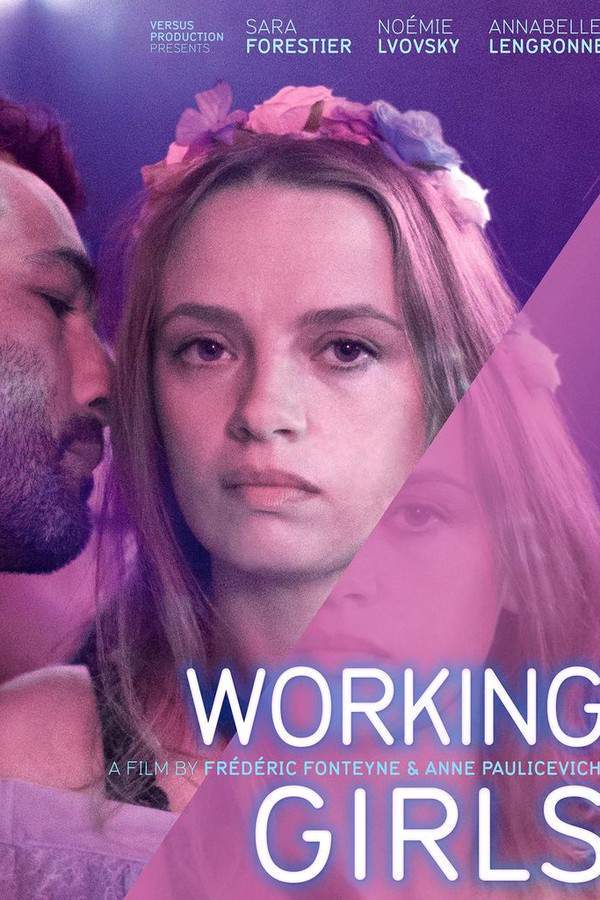
Working Girls (1987) Film Overview & Timeline
Moka (2017) Full Movie Breakdown
Look Both Ways (2006) Full Movie Breakdown
Maelstrom (2002) Spoiler-Packed Plot Recap
Lovely Molly (2012) Movie Recap & Themes
Molly's Theory of Relativity (2013) Spoiler-Packed Plot Recap
Stray Dolls (2020) Plot Summary & Ending Explained
The Re-Education of Molly Singer (2023) Full Movie Breakdown
Numb (2007) Film Overview & Timeline
Maeve (1981) Ending Explained & Film Insights
The Strange Love of Molly Louvain (1932) Detailed Story Recap
Lovin’ Molly (1974) Complete Plot Breakdown
MollyCam (2008) Plot Summary & Ending Explained
Moll Flanders (1996) Full Summary & Key Details