








Plot Explained Spoilers guaranteed!
Plot Explained

Browse by genre

Mary Poppins (1964) movie poster

Timeline

Mary Poppins (1964) Timeline Explained – Every Event in Order

Release, runtime and language
1964 · 139 min · English
JustWatch #29,597 2
Directed by
Robert Stevenson
Starring
Julie Andrews, Dick Van Dyke

Facing financial hardship and the potential loss of their home, the Banks family is in desperate need of a miracle. As bank teller Michael Banks struggles to find a lost inheritance certificate, the magical Mary Poppins returns to bring enchantment and wonder back into their lives. She guides them on a fantastical journey filled with laughter, adventure, and heartwarming moments, helping them rediscover the importance of family, imagination, and believing in the impossible.

On this page (7)
  1. 1 Where to watch
  2. 2 Events in order (14)
  3. 3 Timeline questions answered
  4. 4 The book behind the movie
  5. 5 Movie threads
  6. 6 Movies like Mary Poppins
  7. 7 Every angle

Where to watch

Where to Watch Mary Poppins (1964)

Where can you watch Mary Poppins? Stream, rent or buy it in the US, including on BroadwayHD, Disney Plus and Amazon Video: current JustWatch availability with up-to-date prices.

Streaming availability powered by JustWatch

14 events in order · contains spoilers

Mary Poppins Timeline: Events in Chronological Order

Every key event of Mary Poppins (1964) in order, scene by scene, with when and where it takes place. Use it to untangle flashbacks, time jumps and parallel storylines, to refresh your memory before the sequel or to find the exact scene you are thinking of.

  1. Winifred returns home; children run away

    In 1910, Winifred Banks returns to her Edwardian London home after a suffragette rally and learns that Jane and Michael have run away for the fourth time this week, prompting their nanny Katie Nanna to quit. The household is thrown into confusion as the children paste their own ad for a kind nanny. The incident sets the stage for a new, mysterious governess to enter the Banks family.

    When
    Evening, 1910
    Where
    Banks residence, London
  2. George seeks a stern nanny; kids respond with an ad

    That night, George posts a newspaper ad seeking a stern, no-nonsense nanny. Jane and Michael submit their own advertisement for a kind, sympathetic nanny. George tears up their note and throws the scraps into the fireplace, but a gust of wind carries the scraps up the chimney into the sky.

    When
    Night
    Where
    Banks residence, interior
  3. Mary Poppins arrives and is hired

    The next day, a mysterious Mary Poppins descends from the sky, carrying the children's advertisement in her hand. She agrees with the requests in the ad but promises to be firm with the children. Mary convinces George to hire her, beginning her unconventional care.

    When
    Morning
    Where
    Banks residence, interior
  4. Nursery cleaning with magical help

    Mary immediately demonstrates a magical touch, helping the children clean their nursery with a wave of her umbrella. The room brightens and becomes spotless as Jane and Michael watch in awe. This marks the start of Marys transformative, whimsical approach to parenting.

    When
    Day
    Where
    Banks residence, nursery
  5. Park adventure with Bert

    In the park, Mary meets Bert, a jack-of-all-trades who works as a street painter. Mary transports the group into one of Bert's drawings, and the children ride a carousel while Mary and Bert sing together. They later participate in a playful horse race, which Mary wins, using the nonsense word to describe her victory.

    When
    Daytime
    Where
    Park; Bert's drawing
  6. Drawings disappear; lullaby

    A thunderstorm dissolves Bert's drawings, returning the group to London. Back at home, Mary sings the children's lullaby as they settle in for the night. The magical excursion leaves the Banks family with a renewed sense of wonder.

    When
    Evening
    Where
    London
  7. Uncle Albert and the bank plan

    The next day, Mary and the children visit Albert, Mary's jovial uncle whose laughter causes him to float. George grows irritated by the cheerful atmosphere and threatens to fire Mary. She persuades him to take the children to his workplace, hoping a change of scene will help.

    When
    Next day
    Where
    Albert's home; George's workplace
  8. Lullaby about St. Paul's bird girl

    That evening, Mary sings a lullaby about a woman who sells bird food on the steps of St. Paul’s Cathedral. The gentle tune soothes the children and begins to soften George’s worries. It reinforces Mary’s growing influence over the household.

    When
    Evening
    Where
    Banks residence, interior
  9. Bank visit and the seed of a run

    The next day at the bank, Mr. Dawes Sr., George's elderly boss, advises Michael to invest his tuppence, snatching it away from him in the process. Other customers overhear the conflict and join the demand for their money back, triggering a bank run. The incident exposes the fragility of the Banks' finances and George's fragile leadership.

    When
    Next day
    Where
    Bank of London
  10. East End escape and rooftop celebration

    Jane and Michael flee the bank and get lost in the East End. Bert, now a chimney sweep, guides them home and helps them scale the rooftops with playful dancing. The rooftop sequences emphasize the boundary between reality and the magic Mary brings to the family.

    When
    Afternoon
    Where
    East End; London rooftops
  11. George is cashiered; a joke and a magical float

    George receives a humiliating cashiering at the bank after the day's chaos. In a moment of defiance, he repeats Mary’s playful word and tells a joke Albert taught the children, prompting Mr. Dawes Sr. to float up laughing. The moment shifts the family toward a new sense of buoyancy and possibility.

    When
    Evening
    Where
    Bank; Banks home
  12. Mary tells the children she must leave; kite and reconciliation begin

    The next day Mary tells the children she must leave, signaling the end of her tenure with the Banks. George makes amends and bonds with his children, repairing his relationship as they fly a kite together in the park. The family slowly embraces a renewed sense of togetherness.

    When
    Next day
    Where
    Park and Banks home
  13. Dawes Sr.'s death; Dawes Jr. rehiring George

    Mr. Dawes Sr. dies laughing after overhearing the family’s dynamics, and Mr. Dawes Jr. rehires and promotes George. The bank’s morale improves, and the household experiences a renewed sense of stability. The event signals a hopeful new chapter for the Banks family.

    When
    Following day
    Where
    Bank
  14. Mary departs; goodbye from Bert

    Mary leaves the Banks home to return to the skies, concluding her magical stewardship of the children. Bert looks up and says goodbye, urging her not to stay away too long. The film closes with London returning to its ordinary rhythm, warmed by Mary’s memory.

    When
    End
    Where
    London streets; Banks home

Last updated: October 09, 2025 at 15:41

Was this helpful?

Timeline questions answered

Mary Poppins Timeline Explained: Your Questions Answered

When does it happen, and why in that order? The questions people ask about the chronology of Mary Poppins (1964): time jumps, flashbacks, cause and effect between scenes and the correct order of events, each answered with spoilers.

Q1

Why does Mary Poppins appear at the Banks house?

Mary Poppins arrives because the children's torn advertisement for a kind nanny is blown up the chimney by a gust of wind. She appears with the restored advertisement in hand, having been summoned by their sincere wish for a loving caretaker. The magical wind literally delivers their plea to her.

Foreshadowing: The wind carries the torn scraps into the sky, setting the stage for Mary's supernatural arrival.

  • mary poppins arrival
  • banks family
  • magical nanny
  • advertisement
Q2

How does Mary Poppins enter Bert's drawing?

Mary uses her magical umbrella to step from the real world into one of Bert's chalk drawings. She opens her umbrella and walks off the pavement, transporting herself, Bert, and the children into the animated world inside the artwork where they can ride the carousel.

  • bert drawing
  • chalk drawing
  • magical umbrella
  • carousel
Q3

Why does Uncle Albert float in the air?

Uncle Albert floats because his laughter is so joyful and constant that it defies gravity. His endless giggling causes him to levitate, and he remains suspended above the ceiling unless he calms down. Mary explains this is the joy that runs in her family.

  • uncle albert
  • laughter
  • float
  • joy
Q4

What triggers the bank run at the Bank of London?

The bank run begins when Mr. Dawes Sr. snatches Michael's tuppence coin, insisting he invest it. Other customers nearby misinterpret the conflict and fear their money is unsafe, sparking a panic where everyone demands their savings back at once.

  • bank run
  • mr dawes
  • michael
  • tuppence
  • bank of london
Q5

Why does George Banks get fired from the bank?

George is cashiered (fired) because the chaotic bank run damages the bank's reputation, and as an employee whose family was involved in causing the incident, he becomes a scapegoat. His position becomes untenable despite years of loyal service.

  • george banks
  • fired
  • cashiered
  • bank
  • bank run
Q6

What changes George Banks' attitude toward his family?

George's attitude shifts after two key moments: Bert advises him to spend more time with his children, and Michael offers his tuppence to help pay the household expenses. This gesture of selflessness from his young son moves George to prioritize family over work.

Foreshadowing: Earlier, George prioritizes work over the children and misses their performances.

  • george banks
  • reconciliation
  • family
  • kids
  • tuppence
Q7

Why does Mr. Dawes Sr. float up and die laughing?

Mr. Dawes Sr. floats and dies from laughter when he hears George repeat the nonsense word 'Supercalifragilisticexpialidocious' and tell a joke Albert taught the children. The absurdity and joy of the moment overcome him, and he dies happily laughing, though his death allows his son to promote George.

Foreshadowing: Albert's floating and laughter set the precedent for joyful levitation.

  • mr dawes sr
  • death laughing
  • supercalifragilisticexpialidocious
  • joke
Q8

Why does Mary Poppins leave the Banks family?

Mary leaves because her purpose is fulfilled. She was brought in to help the family rediscover joy and togetherness, and she has succeeded in reuniting George with his children. When she tells the children her work is done, the family no longer needs her magical intervention.

  • mary poppins departure
  • leaves
  • family
  • fulfilled
Q9

How does George Banks get his job back?

After Mr. Dawes Sr. dies laughing, his son Mr. Dawes Jr. takes over the bank. Moved by George's heartfelt story and loyalty, he rehires George and promotes him to a higher position, demonstrating that the family's crisis has been resolved.

  • george banks
  • job back
  • promotion
  • mr dawes jr
  • bank
Q10

What is the significance of the kite-flying scene at the end?

The kite-flying scene represents the family's renewed bond and hopeful future. George actively participates in the activity with his children, something he would never have done before Mary arrived. The completed kite flying in the park symbolizes their unity and new beginning.

  • kite
  • banks family
  • reconciliation
  • park
  • hope

Movie threads

More Movies Like Mary Poppins, by Mood & Story

Curated lists built around what makes Mary Poppins tick: the same mood, the same kind of story or the same emotional payoff. Each list explains why these movies belong together.

Movies with a Magical Guardian like Mary Poppins

A wondrous outsider brings magic and healing to a troubled family. Discover films where a magical being or whimsical outsider arrives to help a family in need, much like in Mary Poppins. If you loved the enchanting guidance and joyful adventures, you'll find similar stories of wonder and domestic healing in these movies.

  • whimsical
  • enchanting
  • comforting
  • uplifting
  • heartwarming
  • magical
  • Tone: whimsical, uplifting
  • Pacing: steady, episodic
Why these movies?

The story pattern: These stories typically follow a family unit struggling with emotional distance or a practical problem. The arrival of a magical catalyst disrupts their routine, introducing whimsy and impossible solutions. The narrative is driven by episodic adventures that teach heartfelt lessons, culminating in the family's emotional reconciliation and a return to stability, now infused with newfound magic.

Why they belong together: These films are grouped by their shared core premise of external, benevolent magic solving internal family strife. They share a whimsical tone, low intensity, and a focus on comfort, joy, and the power of belief, creating a consistently uplifting and enchanting viewing experience.
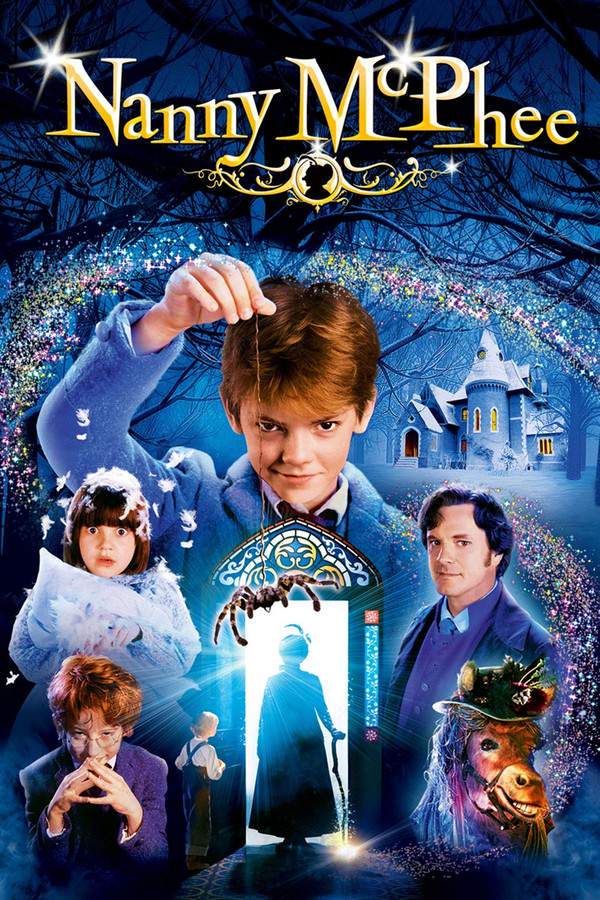
Joyful Musical Fantasies similar to Mary Poppins

Uplifting stories where song and fantasy guide characters back to what matters. If you enjoyed the blend of live-action storytelling with animated sequences and memorable songs in Mary Poppins, explore these films. They capture a similar vibe of cheerful musical numbers driving a narrative of rediscovery and lighthearted, family-friendly magic.

  • musical
  • whimsical
  • uplifting
  • nostalgic
  • cheerful
  • fantasy
  • Tone: whimsical, cheerful
  • Pacing: steady, set-piece driven
Why these movies?

The story pattern: The plot follows a character or family who has lost their sense of wonder, often due to adult responsibilities. The story uses musical numbers as pivotal turning points, seamlessly transitioning into animated or highly stylized fantasy worlds. These journeys are not just for entertainment but serve as metaphorical lessons, breaking down cynicism and rebuilding a sense of joy and belief in the impossible.

Why they belong together: This thread connects films through their unique combination of the musical genre with fantasy elements and a strongly whimsical tone. They share a specific emotional mix: high humor, low sadness, and a steady, comforting pace that uses music and animation as primary tools for character development and delivering an uplifting message.

If you liked this

Movies Like Mary Poppins

Similar movies to Mary Poppins: the same genre, themes or kind of story. Each one comes with its own plot summary, timeline and ending explained.

Browse all movie summaries

Every angle

Mary Poppins (1964) Explained: Plot, Timeline & Characters

Everything about Mary Poppins in one place: what happens in the plot summary, the timeline in chronological order, the characters and meaning and a spoiler-free summary. What's After the Movie adds the cast, box office and post-credit scenes.

Coming soon on iOS and Android

The Plot Explained Movie Summary App

Plot summaries, endings explained and timelines on your phone. Catch up on any movie in minutes, save your favorites and never miss a twist again.

Be the first to know when we launch. Your email stays private, always.

Learn more about the app