Plot Explained Spoilers guaranteed!
Plot Explained

Browse by genre

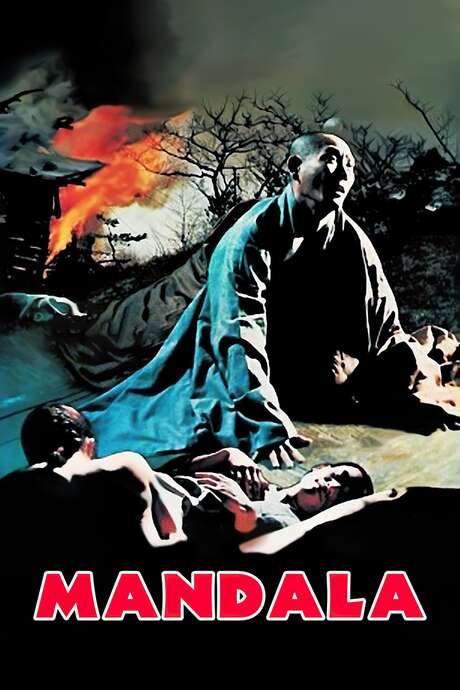
Mandala (1981) movie poster

Characters & Themes

Mandala (1981) Characters, Setting & Themes Explained

Release, runtime and language
1981 · 111 mins · Korean
Directed by
Im Kwon-taek
Starring
Ahn Sung-ki, Park Jeong-ja, Jeon Moo-song, Gi Jeong-su, Park Am, Ra Jeong-ok

A story that follows the lives and interactions of two Buddhist monks living in South Korea.

On this page (7)
  1. 1 Characters explained (4)
  2. 2 Where & when it takes place
  3. 3 Themes & meaning (4)
  4. 4 Character & meaning questions
  5. 5 Movie threads
  6. 6 Movies like Mandala
  7. 7 Every angle

4 main characters · contains spoilers

Mandala Characters Explained: Who Is Who

The main characters of Mandala (1981), heroes and villains: what drives them, how they change over the course of the story and what each of them reveals about the film's bigger ideas.

  • Pobun (Beop-woon)

    played by Ahn Sung-ki

    A disciplined monk-in-training who travels with Ji-san. After six years of practice, he grows disenchanted with routine and seeks deeper meaning through companionship and hardship. He is patient, introspective, and carries the story forward as he confronts loss and spiritual responsibility.

    • 🎯 Protagonist
    • 🧭 Spiritual journey
    • 🧘‍♂️ Discipline
  • Ji-san

    played by Jeon Moo-song

    An older monk whose wandering path challenges conventional devotion. He pairs skepticism with ritual, helping Beop-woon realize that Buddha-like insight can emerge outside temples. His eventual death marks a turning point and a meditation on legacy.

    • 🧭 Mentor
    • 🕯️ Ritualist
    • 🕊️ Death and memory
  • Ok-sun

    A woman who embodies a memory Ji-san could not forget; Beop-woon entrusts her with Ji-san's Buddha statue. Her presence grounds the narrative in personal memory and unresolved longing, signaling the possibility of compassion beyond a monk's world.

    • 🌸 Memory
    • 🕊️ Compassion
  • Beop-woon's Mother

    Beop-woon's mother abandoned him as a child; their eventual meeting underscores themes of forgiveness and reconciliation. Her absence has shaped his emotional life and his decisions on the path.

    • 👩‍👦 Family
    • 💔 Abandonment
    • 🕊️ Reunion

Last updated: February 18, 2026 at 23:21

Was this helpful?

Setting

Where and When Does Mandala Take Place?

The setting of Mandala (1981): the year and time period, the places and locations, and how they shape the characters, the mood and the tension of the story.

Time period

20th century

The events unfold in a 20th-century Korean setting, where military checkpoints intersect with rural temples and mountain hermitages. This period mixes political tension with enduring religious practice, shaping the characters' journeys. The journey travels through both roads and secluded mountain retreats, reflecting a time when tradition and modernity coexist.

Location

Checkpoint, temple, hermitage in the mountains

A rural Korean landscape centers the film: a military checkpoint interrupts travel for passengers, a temple serves as a gathering place for monks, and a remote hermitage in the mountains becomes the setting for isolation and spiritual practice. The checkpoint represents state control intruding on spiritual travels, while the temple and hermitage embody different modes of spiritual life. The film uses these spaces to contrast discipline, ritual, and the pursuit of meaning.

  • 🎯 Checkpoint
  • 🏯 Temple
  • 🗻 Hermitage

Last updated: February 18, 2026 at 23:21

Was this helpful?

4 major themes

Mandala Meaning: Themes & Message Explained

What is Mandala (1981) really about? The emotional, social and philosophical themes the film keeps returning to, its symbolism and the message beneath the surface.

  • Spirituality

    The film pushes Beop-woon and Ji-san beyond the boundaries of formal temples, suggesting that insight can arise outside established institutions. It explores doubt, endurance, and the limits of ritual when seeking true awakening. The presence of a shamanic ritual and the ritual of opening the eyes highlight a lived, experiential spirituality that transcends dogma.

  • Abandonment

    Beop-woon's childhood abandonment by his mother drives his emotional choices and relationships. The narrative uses his connection with Ok-sun and Ji-san to examine forgiveness and reconciliation. Through memory and longing, the film shows how early wounds shape identity and spiritual longing.

  • Mortality

    Death is treated as an inevitable, transformative moment rather than a defeat. Ji-san's death—frozen in a lotus position—forces Beop-woon to confront impermanence and the fragility of life. The cremation ceremony and the Buddha statue gift bind memory to ritual and continuity.

  • Nature and Solitude

    Mountains and the hermitage serve as a counterbalance to social constraints, inviting introspection and humility. Isolation fosters inner clarity and a redefinition of purpose beyond social roles. The landscape acts as a mirror for the characters' evolving beliefs and emotional resilience.

Last updated: February 18, 2026 at 23:21

Was this helpful?

Character & theme questions

Mandala Characters & Meaning: Your Questions Answered

The questions people ask about Mandala (1981): who the characters really are, their relationships, what the symbols mean, where it takes place and what the movie is really about. Each answer contains spoilers.

Q1

What are the main locations in the film?

The film takes place across rural South Korea, featuring three key settings: a military checkpoint that represents state control interrupting spiritual travels, a temple serving as a gathering place for monks, and a remote mountain hermitage where the characters engage in isolation and intensive spiritual practice. These spaces contrast institutional religious life with wilderness solitude.

  • rural korea
  • temple
  • hermitage
  • checkpoint
  • setting
  • mountains
Q2

When is the story set?

The story unfolds in 20th-century Korea, a period marked by the coexistence of tradition and modernity. The military checkpoint setting reflects the era's political tensions, while the temple and mountain hermitage represent enduring religious practices that persist alongside contemporary changes.

  • 20th century
  • korea
  • time period
  • historical setting
Q3

What are the main themes of the movie?

The film explores four interconnected themes: Spirituality, finding insight beyond formal temple institutions through experiential practice; Abandonment, how early wounds shape identity and spiritual longing, particularly through Beop-woon's relationship with his mother; Mortality, death as a transformative moment rather than defeat; and Nature and Solitude, mountains and hermitage as spaces for introspection that challenge social constraints.

  • spirituality
  • abandonment
  • mortality
  • nature
  • themes
  • meaning
Q4

Who is Beop-woon and what is his role?

Beop-woon is a disciplined monk-in-training who has practiced for six years but growing disenchanted with routine, he seeks deeper meaning through companionship and hardship. As the story's central figure, he navigates loss, spiritual responsibility, and his unresolved emotional wounds from childhood abandonment by his mother.

  • beop-woon
  • monk
  • character
  • spiritual journey
Q5

Who is Ji-san and what does he represent?

Ji-san is an older wandering monk whose path challenges conventional devotion. He pairs skepticism with ritual practice, helping Beop-woon understand that Buddha-like insight can emerge outside established temples. His eventual death marks a pivotal turning point and meditates on legacy and the fragility of life.

  • ji-san
  • wandering monk
  • character
  • spiritual teacher
Q6

Why is the mountain hermitage important?

The mountain hermitage serves as a counterbalance to social constraints, offering isolation that fosters inner clarity and allows the monks to redefine their purpose beyond institutional roles. The remote setting symbolizes the pursuit of genuine spiritual awakening away from the distractions and rituals of temple life.

  • hermitage
  • mountain
  • solitude
  • spiritual retreat
  • isolation
Q7

What role does spirituality outside Buddhism play?

The film includes a shamanic ritual, highlighting that spiritual insight can arise through diverse traditions beyond formal Buddhist institutions. This presence of folk spirituality alongside temple Buddhism emphasizes the movie's exploration of lived, experiential religion that transcends doctrinal boundaries.

  • shamanic ritual
  • spirituality
  • folk religion
  • ritual
Q8

Who is Ok-sun and what does she represent?

Ok-sun is a woman who embodies a memory from Ji-san's past that he could not forget. Beop-woon entrusts her with Ji-san's Buddha statue after his death. Her presence grounds the narrative in personal memory and unresolved longing, representing the possibility of compassion and connection beyond a monk's isolated world.

  • ok-sun
  • woman
  • memory
  • compassion
  • buddha statue
Q9

What is Beop-woon's relationship with his mother?

Beop-woon's mother abandoned him during childhood, and this early wound deeply shapes his emotional life and decisions on his spiritual path. Their eventual meeting becomes a crucial moment for examining themes of forgiveness and reconciliation, directly connecting his personal trauma to his quest for spiritual understanding.

  • beop-woon mother
  • abandonment
  • forgiveness
  • family
  • reconciliation
Q10

What happens to Ji-san and what does his death symbolize?

Ji-san dies frozen in a lotus position, a death treated as a transformative spiritual moment rather than a defeat. His cremation ceremony and the gift of his Buddha statue to Ok-sun bind memory to ritual and continuity, forcing Beop-woon to confront impermanence and the fragility of life.

  • ji-san death
  • mortality
  • impermanence
  • cremation
  • spiritual death
Q11

What does the military checkpoint symbolize?

The military checkpoint represents state control and political tension intruding upon spiritual travels. It contrasts the monks' internal spiritual journey with the external world of institutional authority, highlighting the tension between secular constraints and the pursuit of religious enlightenment.

  • checkpoint
  • military
  • symbolism
  • state control
  • political tension

Movie threads

More Movies Like Mandala, by Mood & Story

Curated lists built around what makes Mandala tick: the same mood, the same kind of story or the same emotional payoff. Each list explains why these movies belong together.

Spiritual dramas about existential doubt like Mandala

A quiet exploration of faith, doubt, and the search for meaning in isolation. Explore movies like Mandala that follow characters on a contemplative spiritual journey. These films share a melancholic tone, slow pacing, and heavy emotional weight, focusing on themes of faith, loss, and existential crisis.

  • contemplative
  • spiritual
  • existential
  • somber
  • austere
  • lonely
  • Tone: melancholic, contemplative
  • Pacing: slow, meditative
Why these movies?

The story pattern: These narratives typically follow a protagonist's internal journey through doubt and spiritual questioning, often set against a stark, isolating backdrop. The conflict is internal rather than external, focusing on the slow, painful process of seeking meaning amidst suffering and loss. The journey is more important than a tidy resolution.

Why they belong together: Movies in this thread are grouped by their shared focus on the spiritual and existential realm. They create a cohesive experience through slow, deliberate pacing, a melancholic and somber mood, and a heavy emotional weight derived from themes of grief, ritual, and the search for purpose.
Slow burn movies about grief and loss like Mandala

Stories where sorrow unfolds slowly, emphasized by a stark and lonely atmosphere. Discover atmospheric slow burns similar to Mandala, where a melancholic tone and heavy emotional weight explore themes of grief, loss, and human connection against a stark backdrop.

  • somber
  • grief
  • lonely
  • contemplative
  • austere
  • emotional
  • Tone: melancholic, somber
  • Pacing: slow, deliberate
Why these movies?

The story pattern: The narrative pattern involves characters processing profound loss or confronting mortality in a reflective manner. The pacing is intentionally slow, allowing the emotional impact of events to resonate fully. The setting often acts as a character itself, with landscapes mirroring the internal desolation or peace of the characters.

Why they belong together: These films are connected by their shared mood of solemn contemplation and their commitment to a slow, immersive pace. They prioritize emotional authenticity and the gradual unfolding of grief over conventional plot mechanics, creating a uniquely poignant and resonant viewing experience.

If you liked this

Movies Like Mandala

Similar movies to Mandala: the same genre, themes or kind of story. Each one comes with its own plot summary, timeline and ending explained.

Browse all movie summaries

Every angle

Mandala (1981) Explained: Plot, Timeline & Characters

Everything about Mandala in one place: what happens in the plot summary, the timeline in chronological order, the characters and meaning and a spoiler-free summary. What's After the Movie adds the cast, box office and post-credit scenes.

Coming soon on iOS and Android

The Plot Explained Movie Summary App

Plot summaries, endings explained and timelines on your phone. Catch up on any movie in minutes, save your favorites and never miss a twist again.

Be the first to know when we launch. Your email stays private, always.

Learn more about the app