Plot Explained Spoilers guaranteed!
Plot Explained

Browse by genre

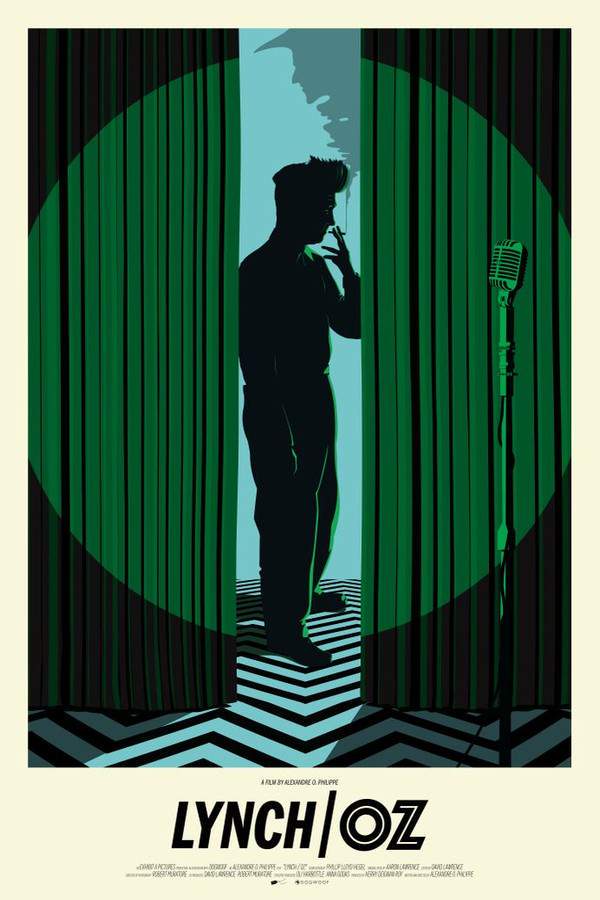
Lynch/Oz (2023) movie poster

Timeline

Lynch/Oz (2023) Timeline Explained – Every Event in Order

Release, runtime and language
2023 · 108 min · English
Echo score 56
Loading streaming availability…
Directed by
Alexandre O. Philippe
Starring
Judy Garland, John Waters, Aaron Moorhead, Justin Benson, Amy Nicholson, Jason Stoval

"Lynch/Oz" examines the significant influence of "The Wizard of Oz" on the work of filmmaker David Lynch. The documentary explores how themes, imagery, and cultural references from Fleming's classic film resonate throughout Lynch's career, from his early shorts to acclaimed series like "Twin Peaks." It investigates the deep connection between these two distinct cinematic visions and considers whether "The Wizard of Oz" serves as a lasting touchstone in Lynch’s artistic expression.

On this page (7)
  1. 1 Where to watch
  2. 2 Events in order (14)
  3. 3 Timeline questions answered
  4. 4 Movie threads
  5. 5 Movies like Lynch/Oz
  6. 6 Categories
  7. 7 Every angle
Loading streaming availability…

14 events in order · contains spoilers

Lynch/Oz Timeline: Events in Chronological Order

Every key event of Lynch/Oz (2023) in order, scene by scene, with when and where it takes place. Use it to untangle flashbacks, time jumps and parallel storylines, to refresh your memory before the sequel or to find the exact scene you are thinking of.

  1. The Wizard of Oz premieres

    Victor Fleming directs The Wizard of Oz, the film that becomes America's primordial fairytale. Its imagery and themes cast a long shadow over American popular culture for generations. Decades later, it would become the central reference point in David Lynch's creative imagination.

    When
    1939
    Where
    United States
  2. David Lynch debuts with The Alphabet

    Lynch's very first short film, The Alphabet, marks the beginning of a filmography spanning nearly five decades. Even at this early stage, the seeds of the surrealism that would define his career are present. This debut is where Lynch/Oz begins tracing the enduring Oz influence.

    When
    1969
  3. Lynch builds his singular brand of surrealism

    Over the following decades, Lynch develops a singular brand of popular surrealism across his films and television work. His distinctive style makes him one of American cinema's most fascinating filmmakers. The documentary argues that this entire body of work is steeped in the imagery of The Wizard of Oz.

  4. Mulholland Drive screens at the New York Film Festival

    Lynch's film Mulholland Drive is screened at the 2001 New York Film Festival. Following the screening, Lynch participates in a Q&A panel with the audience. This seemingly ordinary event proves to be the origin point of the entire documentary.

    When
    2001
    Where
    New York
  5. Lynch's famous Oz confession

    During the Q&A panel, Lynch is asked about the impact of Victor Fleming's film on his work. He responds, "There is not a day that goes by that I don't think about The Wizard of Oz." This candid admission becomes the seed from which Lynch/Oz grows.

    When
    2001
    Where
    New York
  6. The concept for Lynch/Oz is born

    The documentary's concept originates directly from Lynch's festival response. His words inspire a reevaluation of his entire extended filmography through the lens of Oz. The idea of exploring the deep connection between the fairytale and Lynch begins to take shape.

  7. A documentary in six chapters

    Lynch/Oz is structured into six distinct chapters, each examining a different facet of the Oz influence. This format allows multiple perspectives to coexist within a single film. Each chapter is entrusted to a different narrator with their own unique viewpoint.

  8. Filmmakers and critics join as narrators

    The documentary enlists a lineup of filmmakers and critics to narrate its chapters. Among them are Karyn Kusama, Rodney Ascher, and John Waters. Each brings their own perspective on the symbiosis between Lynch's work and The Wizard of Oz.

  9. Karyn Kusama narrates a chapter

    Filmmaker Karyn Kusama, known for Jennifer's Body, provides narration for one of the chapters. She offers her own reading of how The Wizard of Oz echoes throughout Lynch's work. Her contribution adds a fellow filmmaker's insight to the documentary's analysis.

  10. Rodney Ascher narrates a chapter

    Rodney Ascher, the director of Room 237, lends his voice to a chapter of the film. Ascher is known for probing obsessive film interpretation, making him a fitting narrator. His chapter contributes a distinctive analytical lens to the Oz-Lynch connection.

  11. John Waters narrates a chapter

    Cult filmmaker John Waters, famous for Multiple Maniacs, Pink Flamingos, and Female Trouble, narrates one of the chapters. His subversive sensibility brings a unique flavor to the documentary. Waters's narration adds yet another layer of perspective on Lynch's surrealism.

  12. Hundreds of film clips illustrate the connection

    The documentary incorporates hundreds of film clips to build its argument. Side-by-side comparisons reveal recurring imagery, themes, and motifs linking Lynch's films to The Wizard of Oz. The sheer volume of footage demonstrates just how deep the influence runs.

  13. The analysis reaches Twin Peaks: The Return

    The documentary's survey of Lynch's filmography extends all the way to his latest series, Twin Peaks: The Return. The show provides fresh evidence of the Oz influence in Lynch's late-career work. This brings the exploration nearly half a century forward from The Alphabet.

    When
    2017
  14. Solving one of cinema's most fascinating puzzles

    Lynch/Oz frames its subject as one of the most fascinating puzzles in the history of motion pictures. The film reevaluates Lynch's entire extended filmography through the lens of this enduring influence. It ultimately illuminates the symbiosis between America's primordial fairytale and Lynch's singular brand of popular surrealism.

Last updated: October 28, 2026 at 07:11

Was this helpful?

Timeline questions answered

Lynch/Oz Timeline Explained: Your Questions Answered

When does it happen, and why in that order? The questions people ask about the chronology of Lynch/Oz (2023): time jumps, flashbacks, cause and effect between scenes and the correct order of events, each answered with spoilers.

Q1

What did David Lynch say about The Wizard of Oz in 2001?

At the 2001 New York Film Festival Q&A for Mulholland Drive, Lynch said, “There is not a day that goes by that I don't think about The Wizard of Oz.” Lynch/Oz treats that spontaneous admission as the seed for its entire project: reexamining his career through the lens of the 1939 film.

Foreshadowing: The festival response is presented as the documentary's originating moment, not merely as background trivia.

  • david lynch
  • wizard of oz quote
  • 2001 q&a
  • mulholland drive
  • documentary inspiration
Q2

Why is The Wizard of Oz important to David Lynch?

The documentary presents the 1939 film as a lasting touchstone in Lynch's imagination, reflected in recurring imagery, dreamlike surrealism, and themes across his shorts, features, and television work. Lynch/Oz treats this influence as a decades-long artistic relationship rather than an isolated episode.

  • david lynch influence
  • wizard of oz importance
  • lynch surrealism
  • artistic touchstone
Q3

How does the documentary show that The Wizard of Oz influenced Lynch?

Lynch/Oz uses hundreds of clips from Lynch's work and side-by-side comparisons with The Wizard of Oz to make recurring visual and thematic parallels visible. The evidence is assembled chronologically, beginning with Lynch's 1969 short The Alphabet and extending to Twin Peaks: The Return in 2017.

Foreshadowing: The early clips from The Alphabet signal that the comparison will cover Lynch's whole career, not just his best-known features.

  • film comparisons
  • oz influence
  • lynch filmography
  • archival clips
  • visual parallels
Q4

What does “symbiosis” mean in the documentary's argument?

“Symbiosis” describes the documentary's view of the relationship between Lynch and The Wizard of Oz: Oz helps reveal patterns in Lynch's work, while Lynch's recurring imagery and references demonstrate the fairytale's continuing cultural afterlife. The term presents the connection as broader than a single borrowed scene or episode.

  • symbiosis
  • david lynch
  • wizard of oz
  • artistic influence
  • cultural afterlife
Q5

Why does the documentary use six chapters and different narrators?

Each chapter examines a different facet of the Oz-Lynch connection, allowing the documentary to move between Lynch's early shorts, features, and television work without forcing every observation into one voice. Filmmakers and critics, including Karyn Kusama, Rodney Ascher, John Waters, Amy Nicholson, Aaron Moorhead, and Justin Benson, supply distinct creative and analytical perspectives.

  • six chapters
  • documentary narrators
  • karyn kusama
  • rodney ascher
  • john waters
  • lynch oz structure
Q6

Which David Lynch works does the documentary examine?

Lynch/Oz traces Lynch's filmography from his 1969 debut short The Alphabet through his features and television work, culminating in Twin Peaks: The Return in 2017. That span covers nearly five decades and lets the documentary test the Oz connection across changes in medium, style, and career stage.

  • david lynch filmography
  • the alphabet
  • twin peaks the return
  • lynch films
  • documentary scope
Q7

Why does The Alphabet matter to Lynch/Oz's argument?

The 1969 short is included because it marks the very beginning of Lynch's filmography, where the seeds of his signature surrealism are already visible. Starting there allows Lynch/Oz to present the Oz connection as a thread running through his entire career, not as something that appeared only after he became famous.

Foreshadowing: By starting with Lynch's debut, the documentary establishes the baseline against which his later work is compared.

  • the alphabet
  • david lynch debut
  • early surrealism
  • lynch career origins
Q8

How does Twin Peaks: The Return support the Oz comparison?

Twin Peaks: The Return serves as the documentary's late-career endpoint, showing that the imagery and themes associated with The Wizard of Oz were still present in Lynch's work in 2017. Including it extends Lynch/Oz's argument from his 1969 debut across nearly five decades of surrealism.

Foreshadowing: The 1969 debut provides the early endpoint for the documentary's nearly five-decade span.

  • twin peaks the return
  • david lynch
  • wizard of oz influence
  • 2017
  • late career
Q9

What themes and imagery connect Lynch's work to The Wizard of Oz?

The documentary points to dreamlike surrealism and recurring visual motifs as clear links while placing both The Wizard of Oz and Lynch's work within the tradition of American fairytales and reflections on the American dream. Lynch/Oz uses the older film as a reference point for recognizing those patterns across Lynch's films and television.

  • lynch themes
  • oz imagery
  • american dream
  • surrealism
  • dreamlike visuals
Q10

Is the documentary a conventional biography of David Lynch?

Not in the conventional sense: Lynch/Oz is an analytical essay about one sustained artistic influence rather than a chronological account of Lynch's private life. Its six-chapter structure follows Oz-related imagery and themes across Lynch's public work, using critics and filmmakers as interpretive guides.

  • documentary format
  • david lynch biography
  • analytical essay
  • six chapter structure
Q11

Why does Lynch/Oz begin with the 1939 premiere of The Wizard of Oz?

The opening establishes The Wizard of Oz as the primordial American fairytale whose imagery and themes shaped popular culture for decades before Lynch's career began. That chronology explains why Lynch/Oz treats the film not as a contemporary release but as a long-standing reference point in Lynch's imagination.

  • 1939 wizard of oz
  • american fairytale
  • cultural influence
  • lynch oz timeline

Movie threads

More Movies Like Lynch/Oz, by Mood & Story

Curated lists built around what makes Lynch/Oz tick: the same mood, the same kind of story or the same emotional payoff. Each list explains why these movies belong together.

Cinephilic documentaries about artistic influence like Lynch/Oz

Measured film essays trace hidden echoes between classics and the artists they haunt. Discover movies like Lynch/Oz that trace how a classic shapes another filmmaker's themes, imagery, and recurring symbols. These thoughtful film essays combine archival clips, critical perspectives, and cultural memory, making them ideal for viewers who enjoy layered cinema history and affectionate artistic obsession.

  • reflective
  • nostalgic
  • cinephilic
  • cerebral
  • layered
  • archive-driven
  • Tone: reflective, nostalgic, cerebral
  • Pacing: steady, measured
Why these movies?

The story pattern: The documentary form unfolds by introducing a familiar cultural landmark, then moving through an artist's earlier and later work to reveal recurring visual and thematic echoes. Multiple critical voices complicate the central connection while the pace remains measured. The journey shifts from analytical curiosity toward an affectionate sense of cinema's collective memory and afterlife.

Why they belong together: These films are cerebral and cinephilic rather than plot-driven. Their steady movement through archival material, layered commentary, and repeated motifs creates a reflective mood, while nostalgia and melancholy color the examination of lasting influence.
Surreal, dreamlike cinema with mythic echoes like Lynch/Oz

Journeys where surreal imagery turns longing, identity, and folklore into shifting dreams. Explore movies like Lynch/Oz and similar surreal cinema that use dreamlike imagery, mythic journeys, and archival reflection to unpack identity, belonging, and American folklore. These cerebral stories feel layered, tender, and gently uncanny, unfolding at a measured pace rather than through frenetic spectacle.

  • dreamlike
  • surreal
  • mythic
  • nostalgic
  • cerebral
  • layered
  • Tone: dreamlike, nostalgic, quietly uncanny
  • Pacing: steady, contemplative
Why these movies?

The story pattern: These stories often begin with a recognizable quest or cultural myth, then displace it into a strange realm where identities and desires become unstable. Visual motifs recur across scenes or across a creator's body of work, gradually turning an apparent journey inward. The emotional movement favors curiosity and wonder, with melancholy or unease lingering beneath the surface.

Why they belong together: They share dreamlike imagery, archetypal references, and a measured, low-intensity rhythm. Their worlds feel simultaneously familiar and uncanny, while the focus on recurring symbols invites viewers to connect surface events with deeper themes of identity, longing, and cultural myth.

If you liked this

Movies Like Lynch/Oz

Similar movies to Lynch/Oz: the same genre, themes or kind of story. Each one comes with its own plot summary, timeline and ending explained.

Browse all movie summaries

Categories

Movie Lists Featuring Lynch/Oz

Lynch/Oz appears in these hand-built movie categories. Each one groups movies by a specific mood, theme or story type, with their plot summaries and endings explained.

View all movie categories

Every angle

Lynch/Oz (2023) Explained: Plot, Timeline & Characters

Everything about Lynch/Oz in one place: what happens in the plot summary, the timeline in chronological order, the characters and meaning and a spoiler-free summary. What's After the Movie adds the cast, box office and post-credit scenes.

Coming soon on iOS and Android

The Plot Explained Movie Summary App

Plot summaries, endings explained and timelines on your phone. Catch up on any movie in minutes, save your favorites and never miss a twist again.

Be the first to know when we launch. Your email stays private, always.

Learn more about the app