Plot Explained Spoilers guaranteed!
Plot Explained

Browse by genre

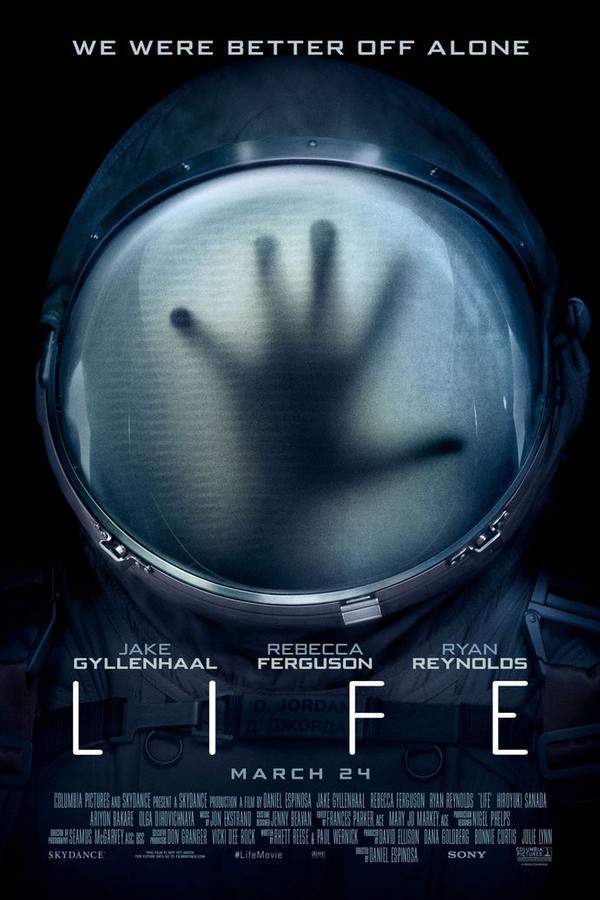
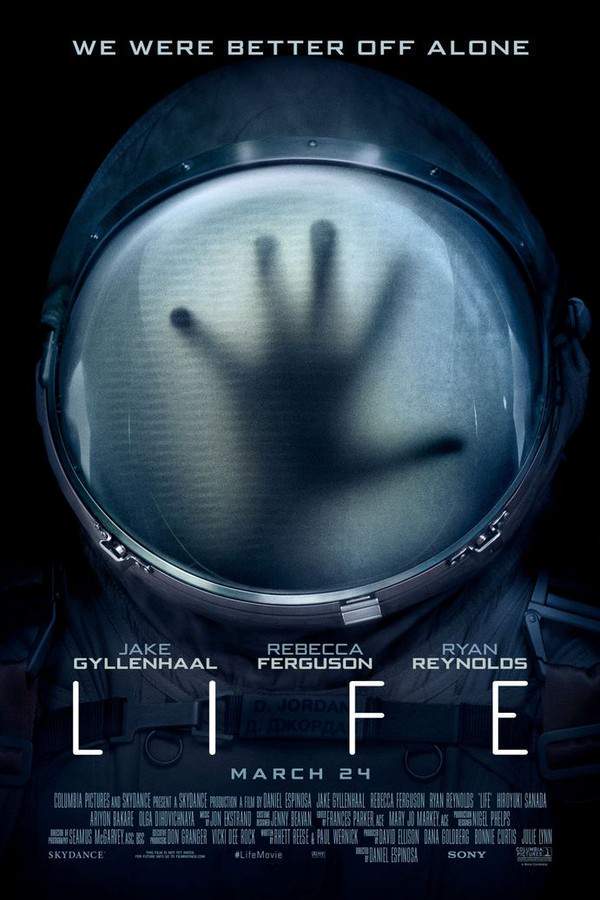
Life (2015) movie poster

Plot Summary

Life (2015) Plot Summary Explained

Release, runtime and language
2015 · 111 min · Spanish
JustWatch #13,790 7
Directed by
Anton Corbijn
Starring
Robert Pattinson, Dane DeHaan

A team of scientists aboard the International Space Station makes a startling discovery: an ancient organism from Mars, capable of wiping out all life on Earth. As the organism begins to grow and spread, the crew faces a desperate fight for survival, struggling to contain the threat before it can reach our planet and trigger a global extinction event in the unforgiving environment of space.

On this page (6)
  1. 1 Where to watch
  2. 2 What happens: full plot
  3. 3 Plot questions answered
  4. 4 Movie threads
  5. 5 Movies like Life
  6. 6 Every angle

Where to watch

Where to Watch Life (2015)

Where can you watch Life? Stream, rent or buy it in the US, including on Amazon Prime Video, fuboTV and Philo: current JustWatch availability with up-to-date prices.

Streaming availability powered by JustWatch

Full plot summary · contains spoilers

What Happens in Life: Full Plot Summary

The whole story of Life (2015) explained, from the opening scene to the final frame: every key event, every twist and what it all adds up to. Read it as a quick recap before the sequel, to check a scene you missed, or to finally understand what really happened.

The story follows a six-member crew aboard the International Space Station (ISS), where they encounter a returning probe from Mars that carries a soil sample potentially containing signs of extraterrestrial life. Having been in orbit for 30 years with a cumulative cost of $200 billion, the ISS is about to undergo a pivotal experiment. The capsule has been on its journey for eight months, but during its return, it gets struck by space debris, finding itself off course.

In a bold move, Rory Adams, an astronaut and engineer, risks his life by venturing outside the station to capture the capsule using the robotic arm of the ISS. His instructions are clear: if he fails to secure it, he must send the capsule into the vastness of deep space. With the ISS firing its thrusters to align perfectly, Rory successfully captures the capsule.

On the second day, the sample is transported to a specialized quarantine lab for detailed analysis. In this crucial phase, exobiologist Hugh Derry (played by [Dane DeHaan]) successfully revives a dormant cell from the Mars sample. Under a controlled environment of high CO2 levels and a glucose-filled medium, this dormant cell begins its miraculous revival, marking what seems to be the first undeniable proof of life beyond Earth. This organism soon evolves into a multi-celled life form that gets named “Calvin” by American school children, drawing its name from Calvin Coolidge Elementary School.

As events unfold, it’s revealed that astronaut David has been aboard the ISS for 473 days, facing severe muscle atrophy and radiation exposure. By day 12, Hugh discovers Calvin's remarkable ability to change cell specialization, morphing into muscle, neuron, and photo-sensory cells simultaneously. Calvin's growth is not just fascinating, but it also becomes an unsettling presence as it begins to interact with Hugh.

By day 25, an accident in the lab plunges Calvin back into dormancy, offering a momentary relief for commander Katerina. However, when Hugh tries to revive Calvin with mild electric shocks, it backfires tremendously as Calvin becomes hostile, attacking Hugh and escaping into the lab after consuming a lab rat.

The situation escalates when Rory Adams enters the lab to save Hugh, but Calvin latches onto his leg, leading to a gruesome demise after being locked in the room by physician David. Calvin, now a larger menace, breaches the lab in search of escape, while the crew's communication with Earth gets severed.

Mission commander Katerina Golovkina (played by Olga Dihovichnaya) attempts to fix the antenna in a spacewalk but becomes a victim of Calvin’s wrath, facing tragic consequences as she struggles to keep the creature out of the station.

With the ISS falling into a decaying orbit, the crew realizes that their only chance may be to contain Calvin by venting air from the station. However, as they attempt to reclaim their power and safety, the true horror of Calvin emerges when it attacks the remaining crew, leading to a frantic fight for survival.

The dire situation intensifies further as Earth sends a Soyuz capsule to retrieve the ISS, but this leads to chaos when Calvin attacks Sho Murakami (played by Hiroyuki Sanada) during attempts to board the rescue ship, resulting in catastrophic consequences.

In a desperate act of survival, David leads Calvin into an escape pod while allowing Miranda North (played by Rebecca Ferguson) to launch in another pod to safety. However, as Calvin engulfs David, the fate of both crewmembers hangs in the balance, culminating in a shocking conclusion where David finds himself encased in a web-like substance just as Miranda drifts into the unknown.

The closing scenes reveal the ominous outcome of their encounter with Calvin, leaving audiences to ponder the perilous implications of their exploration and the unforeseen consequences of awakening life from another world.
Last updated: November 03, 2024 at 23:09

Was this helpful?

Plot questions answered

Life Plot Explained: Your Questions Answered

The questions people ask most about Life (2015): what happens in the confusing scenes, why the characters do what they do, the twists, hidden details and what the ending means. Each answer contains spoilers.

Q1

Why does Calvin turn hostile after being revived?

Calvin becomes aggressive when Hugh Derry attempts to revive it using mild electric shocks on Day 25. Up until that point, Calvin had fallen back into dormancy after an accident in the lab. Hugh's well-intentioned attempt to study the dormant organism triggers a violent reaction, Calvin awakens in attack mode, attacking Hugh and escaping into the station. This suggests Calvin's survival instinct activates when it perceives a threat.

Foreshadowing: Earlier, Hugh notes Calvin's ability to rapidly adapt and change cell specialization, hinting at its unpredictable and defensive nature.

  • calvin hostile
  • electric shock
  • hugh derry
  • organism attack
Q2

Why does David lock Rory in the lab with Calvin?

David, the physician, makes the difficult decision to lock Rory inside the quarantine lab after Calvin latches onto Rory's leg. This appears to be a desperate attempt to contain the rapidly spreading organism by isolating it with its victim rather than allowing Rory to flee and potentially spread Calvin throughout the station. However, this choice directly leads to Rory's gruesome death.

  • david decision
  • rory adams
  • lab containment
  • calvin spread
Q3

How does Calvin escape the quarantine lab?

Calvin escapes after attacking Hugh Derry inside the lab. When Hugh tries to revive the dormant organism with electric shocks, Calvin violently reacts, attacking Hugh and then breaking out of the containment. The creature consumes a lab rat during the attack, gaining energy and size, which enables it to breach the lab seals and enter the main station.

Foreshadowing: By Day 12, Calvin had already demonstrated its ability to rapidly evolve and change cell types, suggesting it could develop the means to escape.

  • calvin escape
  • lab breach
  • hugh derry
  • containment failure
Q4

Why does Katerina die during the spacewalk?

Commander Katerina Golovkina attempts to repair the station's communication antenna during a spacewalk after contact with Earth is severed. While outside the station, she becomes targeted by Calvin, which has escaped into the station's exterior. Calvin attacks her in the vacuum of space, resulting in her death as she struggles to keep the creature from re-entering the station.

  • katerina death
  • spacewalk
  • antenna repair
  • calvin attack
Q5

Why does the ISS lose contact with Earth?

The ISS loses communication with Earth during the escalating crisis with Calvin. The antenna that maintains contact with Mission Control becomes damaged in the chaos, either from the creature's movement through the station or from the crew's frantic attempts to contain it. This leaves the crew isolated and unable to receive guidance or assistance from Earth.

  • communication loss
  • iss
  • earth
  • mission control
  • antenna
Q6

How does David sacrifice himself to save Miranda?

With the ISS descending into a decaying orbit and Calvin hunting the remaining crew, David leads the creature into an escape pod while directing Miranda North to launch in a separate pod. David intentionally traps himself with Calvin to allow Miranda time to escape. As Calvin engulfs David, he becomes encased in a web-like substance, but his sacrifice enables Miranda's pod to launch to safety.

  • david sacrifice
  • miranda north
  • escape pod
  • calvin death
Q7

What happens to Miranda at the end?

Miranda North successfully launches in an escape pod after David sacrifices himself to contain Calvin. She escapes the ISS and drifts into deep space. The film's ending leaves her fate uncertain, she survives the immediate encounter but is left alone in the void, with the implication that she may be stranded or that Calvin's presence poses an ongoing threat.

  • miranda fate
  • ending
  • escape pod
  • survival
Q8

Why does Calvin grow and evolve so quickly?

Calvin demonstrates remarkable biological adaptability throughout the film. By Day 12, exobiologist Hugh Derry discovers that Calvin can simultaneously change cell specialization, morphing into muscle, neuron, and photo-synthetic cells. This ability allows it to rapidly grow, develop new capabilities, and become more dangerous. Each encounter seems to trigger further evolution, making it an unprecedented and uncontrollable life form.

Foreshadowing: The initial revival shows a single dormant cell coming back to life, already hinting at extraordinary regenerative capabilities.

  • calvin evolution
  • cell adaptation
  • rapid growth
  • organism
Q9

Why does Rory die in the movie?

Rory Adams enters the quarantine lab to rescue Hugh Derry after Calvin attacks him. However, Calvin latches onto Rory's leg and continues its assault. Rather than risk letting Rory escape and potentially spreading Calvin throughout the station, David makes the agonizing choice to lock the door, trapping Rory with the creature. Calvin's predatory nature leads to Rory's gruesome death.

  • rory adams death
  • calvin attack
  • david decision
Q10

Why does Calvin hunt the crew members?

Calvin operates as a predator, not merely a passive organism. After attacking Hugh and escaping, it actively hunts the remaining crew members throughout the station. This predatory behavior suggests Calvin evolved as a hunter on Mars, using its ability to sense movement and rapidly adapt to pursue prey. Its attacks are not defensive, they're feeding and territorial behaviors.

  • calvin predator
  • hunting
  • crew attack
  • extraterrestrial
Q11

Why does the ISS start falling from orbit?

The ISS enters a decaying orbit after the crisis with Calvin disrupts normal operations. With the crew focused on surviving and containing the creature, the station's systems fall out of alignment. The thrusters that maintain proper orbit are no longer properly controlled, causing the station to gradually descend toward Earth. This creates a ticking clock for the surviving crew.

  • iss orbit decay
  • reentry
  • station danger
  • thrusters
Q12

How does Calvin get its name?

Calvin is named by American school children who were invited to suggest names for the Martian organism. The name comes from Calvin Coolidge Elementary School, chosen through a public participation campaign. This moment represents a brief, hopeful human connection before the situation spirals into disaster.

  • calvin name
  • school children
  • mars organism
  • naming

Movie threads

More Movies Like Life, by Mood & Story

Curated lists built around what makes Life tick: the same mood, the same kind of story or the same emotional payoff. Each list explains why these movies belong together.

High-Tension Space Survival Horror Movies Like Life

Desperate fights for survival against alien threats in the unforgiving void of space. If you liked the desperate, claustrophobic struggle for survival in Life, you'll find more movies with a similar vibe here. These films feature small crews or individuals facing nightmarish alien organisms or environmental disasters in space, where the tension is high and the stakes are extinction-level.

  • claustrophobic
  • anxious
  • desperate
  • ominous
  • survival horror
  • scientific hubris
  • Tone: tense, bleak, ominous
  • Pacing: steady, escalating
Why these movies?

The story pattern: The narrative pattern typically follows a linear, cause-and-effect structure beginning with a momentous discovery that quickly spirals into a containment crisis. The story is a steady escalation of threats as the characters, often scientists or astronauts, attempt to outthink and outmaneuver a superior force, with survival hinging on teamwork and sacrifice that often proves tragically insufficient.

Why they belong together: Movies are grouped here because they share a core experience of high-stakes survival in an isolated, high-tech setting against an intelligent and adaptable alien antagonist. The shared mood is one of claustrophobic anxiety, scientific hubris, and the grim realization of humanity's fragility in the cosmos.

Bleak Containment Failure Thrillers Similar to Life

Stories where a contained threat spirals out of control, leading to tragic consequences. For viewers who appreciated the escalating disaster and tragic ending of Life, this section collects movies with similar narratives of containment failure. These films often involve a small group in an isolated location desperately trying to stop a deadly contagion or entity from reaching the wider world.

  • containment failure
  • sinister
  • desperate
  • body horror
  • traumatic isolation
  • pandemic
  • Tone: tense, dark, bleak
  • Pacing: steady, methodical
Why these movies?

The story pattern: The narrative journey is defined by a initial period of controlled study that gives way to panic as the threat breaches its confines. The plot is driven by a series of escalating failures and sacrifices, often highlighting themes of human error and hubris. The emotional arc is heavy, moving from cautious optimism to desperate survival, typically culminating in a bleak or ambiguous ending where the threat is not fully defeated.

Why they belong together: These movies are united by their core premise: a deadly, uncontrollable force that must be contained at all costs. They share a tense, ominous mood, a steady pacing that builds dread, and a profound sense of tragedy as safety measures collapse. The experience is one of watching a preventable disaster unfold in real time.

If you liked this

Movies Like Life

Similar movies to Life: the same genre, themes or kind of story. Each one comes with its own plot summary, timeline and ending explained.

Browse all movie summaries

Every angle

Life (2015) Explained: Plot, Timeline & Characters

Everything about Life in one place: what happens in the plot summary, the timeline in chronological order, the characters and meaning and a spoiler-free summary. What's After the Movie adds the cast, box office and post-credit scenes.

Coming soon on iOS and Android

The Plot Explained Movie Summary App

Plot summaries, endings explained and timelines on your phone. Catch up on any movie in minutes, save your favorites and never miss a twist again.

Be the first to know when we launch. Your email stays private, always.

Learn more about the app