Plot Explained Spoilers guaranteed!
Plot Explained

Browse by genre

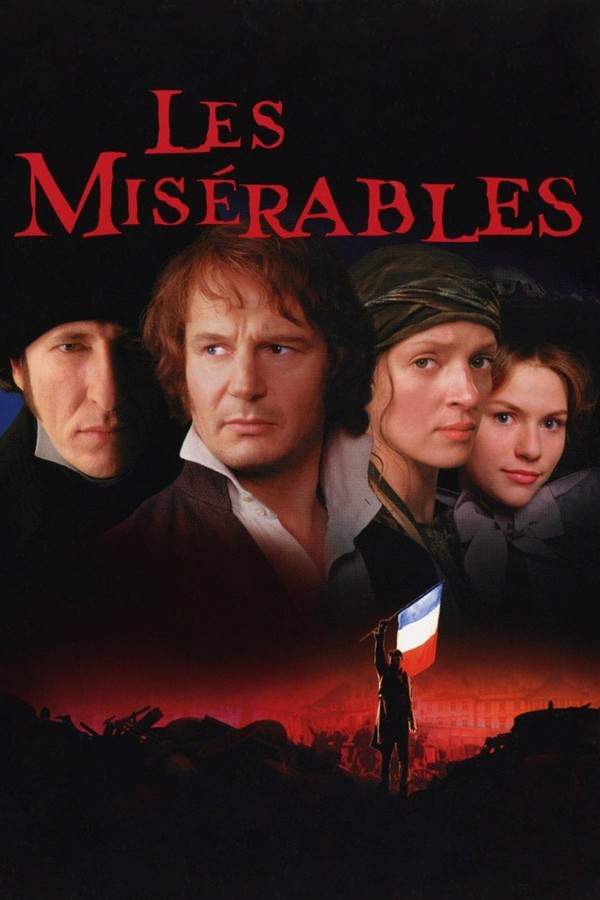
Les Misérables (1978) movie poster

Characters & Themes

Les Misérables (1978) Characters, Setting & Themes Explained

Release, runtime and language
1978 · 150 mins · English
Loading streaming availability…
Directed by
Glenn Jordan
Starring
John Gielgud, Ian Holm, Richard Jordan, Celia Johnson, Anthony Perkins, Flora Robson

A classic tale of a man’s search for freedom and another’s quest for revenge. In 19th‑century France, ex‑convict Jean Valjean, imprisoned for stealing a loaf of bread, is pursued relentlessly by Inspector Javert. Their cat‑and‑mouse chase consumes both lives, eventually drawing Valjean into the upheaval of the student revolutions that erupt across France.

On this page (8)
  1. 1 Where to watch
  2. 2 Characters explained (7)
  3. 3 Where & when it takes place
  4. 4 Themes & meaning (3)
  5. 5 Character & meaning questions
  6. 6 Movie threads
  7. 7 Movies like Les Misérables
  8. 8 Every angle
Loading streaming availability…

7 main characters · contains spoilers

Les Misérables Characters Explained: Who Is Who

The main characters of Les Misérables (1978), heroes and villains: what drives them, how they change over the course of the story and what each of them reveals about the film's bigger ideas.

  • Jean Valjean (Richard Jordan)

    A former convict who seeks redemption after a miraculous mercy from a bishop. He disguises himself as Madeleine, builds a prosperous life, and becomes a protector to Cosette. His moral evolution drives the plot as he fights to do right by those he has ignored or harmed. His strength and kindness are tested repeatedly by Javert and the demands of his own conscience.

    • 🎭 Protagonist
    • 🕊️ Redemption
    • 🧭 Identity
  • Javert (Anthony Perkins)

    A relentless police inspector whose life is defined by law and order. HeFixates on Valjean, recognizing him in both the Toulon escape and Madeleine’s rise. His rigid sense of justice leads to a fatal moral dilemma when mercy challenges his worldview. His arc ends in a dramatic, self-imposed downfall.

    • ⚖️ Law
    • 🕵️‍♂️ Obsession
    • 🎭 Antagonist
  • Fantine (Angela Pleasence)

    A young mother whose fall into poverty is swift and brutal. Valjean’s attempt to help her culminates in a personal tragedy that underscores the perils faced by the vulnerable. Her brief life becomes a catalyst for Valjean’s resolve to protect Cosette. Fantine’s suffering highlights the social costs of neglect and exploitation.

    • 💔 Tragedy
    • 🏚️ Poverty
  • Cosette (Caroline Langrishe)

    A sheltered girl rescued from the Thénardiers and raised in a convent-stead, she grows into a symbol of innocence and love. She becomes the focal point of Valjean’s protective care and a catalyst for his humanity. Her presence helps anchor the emotional core of the story amid upheaval.

    • 👧 Innocence
    • 💖 Love
  • Marius (Christopher Guard)

    A young revolutionary with a capacity for romance, he navigates family expectations and political loyalties. He falls for Cosette, drawing Cosette and Valjean into the broader conflict of the era. His choices link personal desire with public responsibility during the barricade.

    • 💘 Romance
    • 🗳️ Politics
  • Bishop Myriel (Claude Dauphin)

    A compassionate bishop whose act of mercy sets the plot in motion. He teaches Valjean that redemption is possible through grace and second chances. His quiet faith frames the moral center of the story and challenges the harsh judgment Valjean previously faced.

    • 🙏 Mercy
    • ✝️ Faith
  • Gavroche (Dexter Fletcher)

    An agile street urchin who embodies the grit and resilience of the Paris streets. His actions at the barricade reveal a keen awareness of danger and loyalty to the cause. He represents the younger generation caught between poverty and political upheaval.

    • 🧒 Child
    • 🗺️ Streetwise

Last updated: October 04, 2025 at 16:00

Was this helpful?

Setting

Where and When Does Les Misérables Take Place?

The setting of Les Misérables (1978): the year and time period, the places and locations, and how they shape the characters, the mood and the tension of the story.

Time period

Early 19th century

Set in post-revolutionary France, the tale unfolds against a backdrop of social inequality and reform. The narrative spans Valjean’s transformation, his acts of mercy, and the rise of radicalism leading to a barricade in the streets of Paris. The period is marked by conflict between the oppressed poor and a rigid, policing state.

Location

Toulon, Paris, Arras, England

The story moves from the grim confines of Toulon prison to the bustling towns and Parisian streets where Valjean rebuilds his life. It shows the contrast between the church-run sanctuary of a Paris convent and the grim, crowded neighborhoods where the poor suffer. Key locations include the town where Valjean becomes mayor under the Madeleine name, the convent garden, and the barricaded streets of Paris amid social upheaval.

  • 🗺️ France
  • 🏙️ Urban settings
  • 🏞️ Diverse locales

Last updated: October 04, 2025 at 16:00

Was this helpful?

3 major themes

Les Misérables Meaning: Themes & Message Explained

What is Les Misérables (1978) really about? The emotional, social and philosophical themes the film keeps returning to, its symbolism and the message beneath the surface.

  • Redemption

    A lone convict's transformation centers the film: mercy shown by the Bishop reshapes Valjean's choices and sets him on a path of moral stewardship. His life as Madeleine, his rescue of Fantine, and his protection of Cosette illustrate how mercy can redeem a person’s past. The story emphasizes that one compassionate act can purchase a different future, even if pursued by relentless forces.

  • Injustice

    The narrative foregrounds poverty, exploitation, and a legal system that punishes the vulnerable. Fantine’s decline and the Thénardiers’ predatory behavior highlight social inequity. Javert’s rigid moral code contrasts with acts of mercy, underscoring the human cost of uncompromising justice.

  • Revolution

    Radical ideas and public unrest frame the later portions of the story, with a barricade reflecting collective action and sacrifice. The film treats revolution as a backdrop that intensifies personal decisions rather than a simple political message. Personal loyalties, love, and duty intersect with the tumultuous political climate.

Last updated: October 04, 2025 at 16:00

Was this helpful?

Character & theme questions

Les Misérables Characters & Meaning: Your Questions Answered

The questions people ask about Les Misérables (1978): who the characters really are, their relationships, what the symbols mean, where it takes place and what the movie is really about. Each answer contains spoilers.

Q1

Where is Les Misérables set?

The story unfolds across several key locations in 19th-century France: the grim Toulon prison where Jean Valjean is incarcerated, the provincial town where he becomes the wealthy mayor under the name Madeleine, the Paris convent that shelters Cosette, and the barricaded streets of Paris during the revolutionary uprising. The setting contrasts the oppressive confinement of prison with the bustling urban poverty of Parisian neighborhoods.

Foreshadowing: The harshness of Toulon establishes the world Valjean escapes from, setting the stage for his transformation.

  • setting
  • locations
  • france
  • toulon
  • paris
  • convent
Q2

What time period does the film depict?

Les Misérables is set in early 19th-century France, specifically during the period following the French Revolution. This era was marked by social inequality, reform movements, and growing radicalism that would eventually culminate in the 1830 July Revolution, which provides the backdrop for the film's climax.

  • time period
  • 19th century
  • french revolution
  • historical context
Q3

What are the main themes of the film?

The film centers on three interconnected themes: redemption, as demonstrated through Bishop Myriel's mercy transforming Jean Valjean's life; injustice, highlighting the poverty and exploitation faced by vulnerable characters like Fantine; and revolution, depicting how the 1830 barricade in Paris intensifies personal moral decisions against a backdrop of political upheaval.

  • themes
  • redemption
  • injustice
  • revolution
  • mercy
Q4

Who is Inspector Javert?

Inspector Javert is a relentless police inspector whose life is defined by absolute adherence to law and order. He becomes obsessed with capturing Jean Valjean after recognizing him as a former convict, pursuing him across decades. His rigid moral worldview creates a fatal internal conflict when mercy challenges his understanding of justice, ultimately leading to his dramatic downfall.

  • javert
  • inspector
  • police
  • pursuit
  • justice
Q5

What is Bishop Myriel's role in the story?

Bishop Myriel serves as the moral catalyst of the entire narrative. When Jean Valjean, recently escaped from prison, steals his silverware, the Bishop not only refuses to press charges but gives him the remaining silver as a gift. This act of grace demonstrates that redemption is possible through compassion, setting Valjean on his path of moral transformation.

  • bishop myriel
  • mercy
  • redemption
  • grace
Q6

What drives Jean Valjean's character?

Jean Valjean's primary motivation is redemption for his past crimes. After the Bishop shows him mercy despite his theft, Valjean dedicates his life to helping the vulnerable, rescuing Fantine, protecting Cosette, and living as the virtuous Madeleine. His moral evolution is driven by a desire to prove that one compassionate act can purchase a different future.

  • jean valjean
  • motivation
  • redemption
  • transformation
Q7

Who is Fantine and why is she important?

Fantine is a young mother whose rapid fall into poverty and exploitation highlights the film's theme of social injustice. After losing her job, she is forced into desperate circumstances that lead to her tragic decline. Her suffering becomes a catalyst for Valjean's commitment to protect Cosette, demonstrating the human cost of neglect and the oppression of the vulnerable.

  • fantine
  • poverty
  • exploitation
  • social injustice
Q8

What role does Cosette play in the story?

Cosette serves as a symbol of innocence and hope throughout the film. Rescued from the exploitative Thénardiers and raised within the protective walls of a convent, she becomes the focal point of Valjean's protective love. Her presence anchors the emotional core of the narrative and represents the future that Valjean's redemption is trying to secure.

  • cosette
  • innocence
  • protection
  • love
Q9

What is the significance of the barricade in Paris?

The barricade represents the film's revolution theme, depicting the 1830 July Revolution in Paris where students and workers rose against the monarchy. The film uses this political upheaval as a backdrop that intensifies personal decisions rather than delivering a simple political message. It brings together characters like Marius and Gavroche while drawing Valjean and Cosette into the conflict.

  • barricade
  • paris
  • revolution
  • 1830
  • uprising
Q10

How does the film portray social inequality?

Les Misérables foregrounds the stark social inequality of early 19th-century France through contrasting settings, the grim, crowded neighborhoods where the poor suffer against the prosperity Valjean builds as Madeleine. Fantine's swift decline, the Thénardiers' predatory exploitation, and Javert's rigid enforcement of harsh laws all highlight how the legal system punishes the vulnerable.

  • social inequality
  • poverty
  • exploitation
  • class
  • france
Q11

Who is Gavroche?

Gavroche is a street urchin who embodies the grit and resilience of Paris's poorest neighborhoods. Appearing at the barricade, he demonstrates keen awareness of danger while remaining loyal to the revolutionary cause. He represents the younger generation caught between poverty and political upheaval, highlighting how revolution affects children.

  • gavroche
  • street urchin
  • paris
  • revolution
  • youth
Q12

What is the emotional tone of the film?

The film balances dark themes of police brutality, poverty, and starvation with a fundamentally hopeful core about the transformative power of mercy. While Valjean achieves redemption and secures a happy future for Cosette, this comes at great personal sacrifice amid significant tragedy. The tone is described as bittersweet, with heavy emotional weight dealing with injustice, obsession, and the cost of compassion.

  • tone
  • bittersweet
  • emotional
  • dark themes
  • hope

Movie threads

More Movies Like Les Misérables, by Mood & Story

Curated lists built around what makes Les Misérables tick: the same mood, the same kind of story or the same emotional payoff. Each list explains why these movies belong together.

Redemptive journeys with a bittersweet cost like in Les Misérables

Characters find grace and purpose through immense personal sacrifice and suffering. If you liked Les Misérables, you'll find similar stories of profound personal change here. These movies feature characters seeking redemption through hardship, resulting in bittersweet yet hopeful endings. Explore other heavy dramas about sacrifice, mercy, and the long path to grace.

  • redemptive
  • somber
  • hopeful
  • moral struggle
  • sacrificial
  • melancholic
  • Tone: bittersweet, hopeful, somber
  • Pacing: steady, character-driven
Why these movies?

The story pattern: The narrative pattern centers on a flawed or broken protagonist who is given a chance at redemption, often through caring for another. Their journey is met with relentless external opposition and internal struggle. The climax typically involves a great sacrifice, leading to an ending that validates their moral growth but acknowledges the deep scars and losses endured along the way.

Why they belong together: Movies are grouped here for their shared focus on the redemptive arc, where hope is hard-won and tempered by tragedy. They share a heavy emotional weight, a bittersweet tone, and a central theme that true change requires profound sacrifice, creating a deeply moving and morally complex viewing experience.

Relentless pursuit stories in a grim social landscape like Les Misérables

A tense cat-and-mouse chase set against a backdrop of poverty and injustice. Find movies similar to Les Misérables that feature a relentless chase narrative set against a backdrop of social injustice. These stories combine high personal stakes with a critique of societal ills, resulting in tense, heavy dramas about obsession, justice, and the human cost of conflict.

  • relentless
  • tense
  • somber
  • moral struggle
  • social injustice
  • obsessive
  • Tone: tense, bleak, somber
  • Pacing: steady, relentless
Why these movies?

The story pattern: The narrative is built around the escalating conflict between a pursuer and their quarry, whose fates become inextricably linked. This personal duel unfolds within a larger, tumultuous social or historical context that amplifies the stakes. The story explores how systemic injustice fuels both the pursuit and the need for escape, often building to a dramatic, fateful confrontation.

Why they belong together: These films are connected by their core structure of a high-stakes pursuit and their immersion in a grim, socially conscious setting. They share a high intensity, a tense and somber mood, and a pacing that steadily builds pressure, creating a cohesive vibe of being swept up in an inescapable conflict within a broken world.

If you liked this

Movies Like Les Misérables

Similar movies to Les Misérables: the same genre, themes or kind of story. Each one comes with its own plot summary, timeline and ending explained.

Browse all movie summaries

Every angle

Les Misérables (1978) Explained: Plot, Timeline & Characters

Everything about Les Misérables in one place: what happens in the plot summary, the timeline in chronological order, the characters and meaning and a spoiler-free summary. What's After the Movie adds the cast, box office and post-credit scenes.

Coming soon on iOS and Android

The Plot Explained Movie Summary App

Plot summaries, endings explained and timelines on your phone. Catch up on any movie in minutes, save your favorites and never miss a twist again.

Be the first to know when we launch. Your email stays private, always.

Learn more about the app