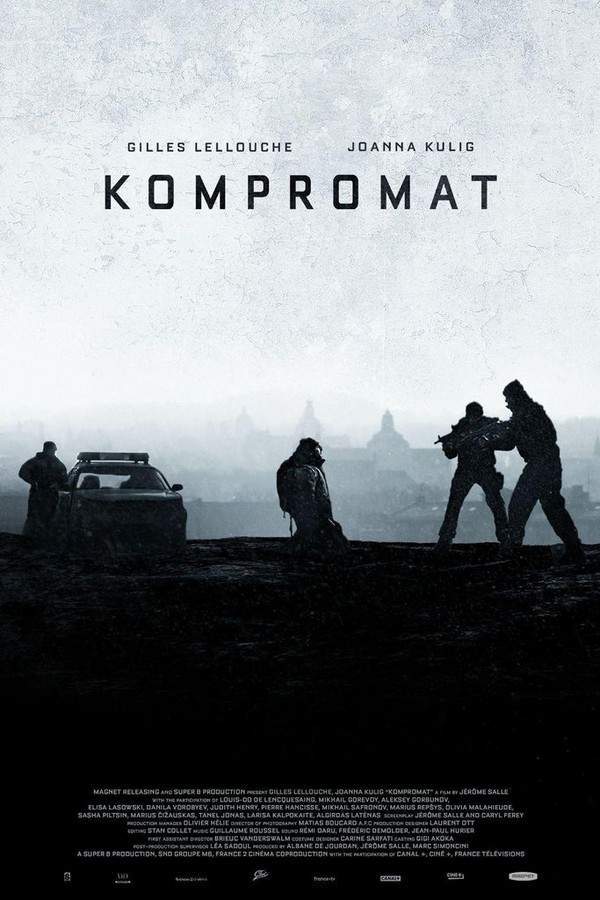
In Irkutsk, Mathieu Roussel, director of the Alliance française, works to promote the French language and francophone culture in the region. His life takes a sharp turn when he is forcibly removed from his home and accused by the Russian Federal Security Service (FSB) of disseminating child pornography and molesting his own daughter. The case is built as a classic example of kompromat, with planted material such as alleged child pornography on his computer and a dance performance he gave that featured a passionate dance between two men. The atmosphere in the holding cells turns brutal as other prisoners learn of the charges and beat him mercilessly.
Roussel’s lawyer arranges a measured path out of custody, moving him to house arrest under surveillance. He obtains prohibited SIM cards from Svetlana, who believes in his innocence and despises her father-in-law Rostov, the head of the FSB. These tiny devices allow him to text and access the Internet without detection, a fragile thread to somehow prove his innocence. Yet the lawyer knows the odds are stacked against him and advises a daring escape. To thwart tracking, Roussel conceals his ankle bracelet with aluminium foil and heads toward the bus station. When the FSB notices the bracelet has stopped transmitting, Svetlana provides the number of the SIM card she gave him, and the authorities trace the signal to a phone left on a bus bound for Ulaanbaatar. Svetlana quickly moves him to a secret apartment, keeping him one step ahead of the pursuit.
Former Spetsnaz Sagarine is brought in to locate the fugitive. He quickly suspects Svetlana of aiding the escape but cannot produce hard evidence. Roussel’s image flashes on TV, triggering neighbors to report him, and he flees again—this time toward Moscow—with help from a priest who poses as the bishop of the patriarch of Moscow in order to derail the search and shield him from immediate capture. Roussel makes it to the French Embassy, but the FSB soon narrows down his location. He attempts to slip away in the commotion of a celebratory embassy scene but is spotted by Sagarine. With Svetlana’s aid, he breaks away and drives toward the Estonian border.
At the border, Svetlana and Roussel share a moment of intimacy, but she insists she will stay in Russia with her husband and does not answer when he promises he will call. On the home front, Sasha, Svetlana’s husband, hangs himself after a confrontation with his father Rostov. A recent news report confirms that Roussel has returned to France, and he makes one final call to Svetlana, though the film ends before her reply is heard, leaving her choice — and the entire moral calculation — open to interpretation.
As the chase pushes into the woods and across borders, the pursuer Sagarine closes in, and in a dramatic confrontation near a marsh, Roussel overpowers him and drowns him, then slips away into Estonia. The conclusion of the story is emotionally ambiguous: a man accused, a woman torn between loyalty and desire, and a chessboard of political power where truth, residence, and safety blur into a precarious future. The film leaves viewers with a haunting question about justice, loyalty, and the cost of seeking asylum from a system determined to define you.