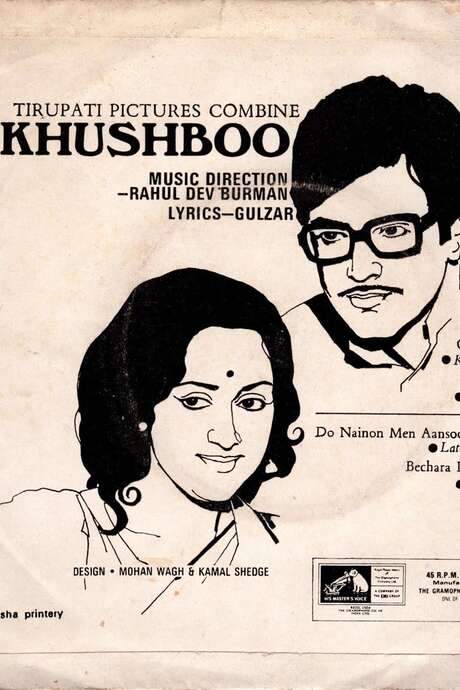
Year: 1975
Runtime: 132 mins
Language: Hindi
Director: Gulzar
Kusum and Brindavan are childhood sweethearts in a tiny Indian village who promise to marry. Kusum tattoos his name on her arm, but they are separated and she believes he has abandoned her, so she scars the arm to erase the mark. Years later, caring for a wealthy villager, Kusum discovers the doctor is Brindavan, sparking hope of reunion.
Find where to stream, rent, or buy Khushboo (1975) in the US with current JustWatch availability, up-to-date pricing, and platform listings for subscription, rental, and digital purchase options.
Warning: spoilers below!
Haven’t seen Khushboo yet? This summary contains major spoilers. Bookmark the page, watch the movie, and come back for the full breakdown. If you're ready, scroll on and relive the story!
Explore the full timeline and setting of Khushboo (1975). Follow every major event in chronological order and see how the environment shapes the story, characters, and dramatic tension.
Last updated: February 18, 2026 at 23:33
Meet the key characters of Khushboo (1975), with detailed profiles, motivations, and roles in the plot. Understand their emotional journeys and what they reveal about the film’s deeper themes.
Last updated: February 18, 2026 at 23:33
Explore the central themes of Khushboo (1975), from psychological, social, and emotional dimensions to philosophical messages. Understand what the film is really saying beneath the surface.
Last updated: February 18, 2026 at 23:33
Browse frequently asked questions about Khushboo (1975) focused on characters, relationships, themes, symbols, setting, and story context. This movie info FAQ gives spoiler-aware explanations for character arcs, world details, and thematic interpretation so readers can better understand what the film is really about.
Khushboo takes place in two interconnected Indian villages – one where Kusum grows up with her mother and brother, and another where Vrindavan establishes his medical practice after his father's death. Both settings reflect a close-knit, reputation-driven society where family honor and marriage customs dictate daily life.
The film explores three core themes: Love vs Duty, which examines the tension between personal desire and social obligation; Reconciliation, focusing on forgiveness and second chances after years of separation; and Resilience, highlighting Kusum's strength in enduring hardship while maintaining her identity.
Kusum is the film's protagonist, a woman married as a child who defies social odds by maintaining her belief that she is Vrindavan's wife. After being separated from his family during a riot, she moves to a different village with her mother and brother, carrying both pride and longing throughout the years of separation.
Vrindavan (also called Dr. Brindaban) is a compassionate doctor who practices in his village after his father's death. He remarries after Kusum's separation but retains a deep, tender longing for her, embodying the conflict between duty and genuine emotion.
Love vs Duty refers to the central conflict where Kusum and Vrindavan's romantic bond is threatened by arranged marriage expectations, family misunderstandings, and social stigma. Their devotion must survive displacement, time, and ego-driven barriers that keep them apart.
Resilience represents Kusum's ability to endure the consequences of child marriage, separation from her husband's family, and life split between two households. Her strength guides the family toward harmony, demonstrating how love can grow despite severe social constraints.
Family elders, particularly Brindavan's mother, play a crucial reconciling role in the story. She seeks to unite Kusum with Vrindavan and eventually blesses their union, reflecting how traditional parental influence can bridge years of estrangement through forgiveness rather than pride.
Kunj Bihari is Kusum's protective brother, portrayed by Govardhan Asrani. He delays his own marriage to secure his sister's future and embodies the theme of familial loyalty, representing the tension between personal happiness and duty to relatives.
The village society in Khushboo is portrayed as close-knit and reputation-driven, where marriage and duty shape every choice. This social structure creates the barriers that keep Kusum and Vrindavan apart, as family honor and traditional values conflict with their personal desire to be together.
Khushboo has a bittersweet tone, balancing the profound sadness of separation, loss, and societal pressure with hopefulness for reunion. The emotional weight is medium – themes of death, rejection, and unrequited love are present but never overwhelming, culminating in a reunion that comes only after significant suffering.
Discover curated groups of movies connected by mood, themes, and story style. Browse collections built around emotion, atmosphere, and narrative focus to easily find films that match what you feel like watching right now.
Stories where love is tested by time, distance, and tragic misunderstandings.If you enjoyed the poignant journey of Khushboo, this section features movies with similar narratives of love enduring decades apart. Find more romantic dramas where characters navigate loss and hope, driven by fate and the possibility of second chances.
These movies typically follow a linear timeline spanning years or decades. The core conflict arises from an external separation (family, war, social pressures) compounded by a crucial misunderstanding that prevents reunification. The emotional journey is one of sustained longing, personal growth amidst loss, and a climactic, hard-won reconciliation.
They share a focus on the enduring power of love against all odds, a bittersweet tone balancing sadness with hope, and a slow, reflective pacing that allows the emotional weight of the separation to resonate deeply with the viewer.
Quiet, character-driven stories steeped in a sense of place and past.For viewers who liked the nostalgic and reflective mood of Khushboo, this section highlights similar gentle dramas. Discover more films with a slow build, a bittersweet tone, and a strong sense of place that explores themes of family, duty, and longing.
The narrative is often straightforward, prioritizing emotional atmosphere over complex plotting. The journey is internal, following characters as they reflect on their lives, confront the past, and navigate the quiet conflicts between personal desire and societal or familial expectations.
They are grouped by a shared slow pacing that invites contemplation, a melancholic yet sentimental tone, and a medium emotional intensity derived from relatable human struggles rather than high-stakes drama, creating a consistent, resonant viewing experience.
Don't stop at just watching - explore Khushboo in full detail. From the complete plot summary and scene-by-scene timeline to character breakdowns, thematic analysis, and a deep dive into the ending - every page helps you truly understand what Khushboo is all about. Plus, discover what's next after the movie.
Read a complete plot summary of Khushboo, including all key story points, character arcs, and turning points. This in-depth recap is ideal for understanding the narrative structure or reviewing what happened in the movie.
Track the full timeline of Khushboo with every major event arranged chronologically. Perfect for decoding non-linear storytelling, flashbacks, or parallel narratives with a clear scene-by-scene breakdown.