Plot Explained Spoilers guaranteed!
Plot Explained

Browse by genre

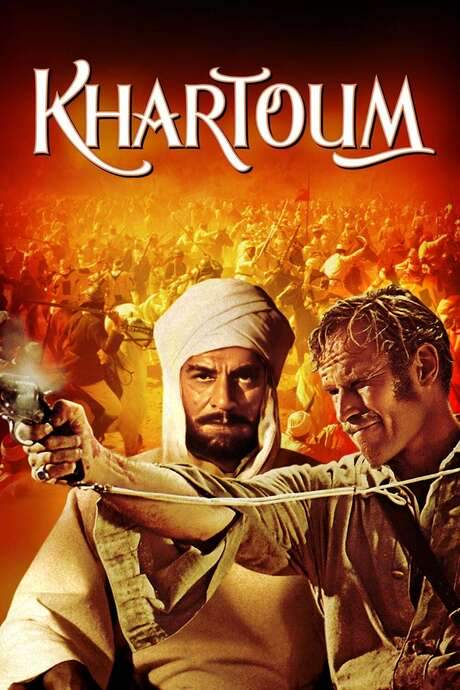
Khartoum (1966) movie poster

Timeline

Khartoum (1966) Timeline Explained – Every Event in Order

Release, runtime and language
1966 · 134 mins · English
Loading streaming availability…
Directed by
Basil Dearden, Eliot Elisofon
Starring
Alexander Knox, Douglas Wilmer, Johnny Sekka, Ralph Richardson, Michael Hordern, Charlton Heston

Set along the split of the Nile, the epic Cinerama saga follows English General Charles George Gordon, appointed military governor of Anglo‑Egyptian Sudan by the British Prime Minister. Though ordered to evacuate Egyptian forces, Gordon refuses to abandon Khartoum, staying to shield its inhabitants from an advancing Muslim army threatening conquest.

On this page (6)
  1. 1 Where to watch
  2. 2 Events in order (13)
  3. 3 Timeline questions answered
  4. 4 Movie threads
  5. 5 Movies like Khartoum
  6. 6 Every angle
Loading streaming availability…

13 events in order · contains spoilers

Khartoum Timeline: Events in Chronological Order

Every key event of Khartoum (1966) in order, scene by scene, with when and where it takes place. Use it to untangle flashbacks, time jumps and parallel storylines, to refresh your memory before the sequel or to find the exact scene you are thinking of.

  1. Egyptian force lured into the desert

    In 1883, a force of 10,000 Egyptian troops commanded by Colonel William Hicks is drawn into the Sudan desert and ambushed by Mahdist forces. The troops are defeated and their weapons captured, exposing the vulnerability of the occupying force. The brutal outcome foreshadows the coming collapse of dhimmi rule in the region.

    When
    1883
    Where
    Sudan (desert)
  2. Gladstone weighs Khartoum policy

    Back in Britain, Prime Minister Gladstone faces intense public pressure to avenge Hicks. He decides to dispatch General Gordon to Khartoum as a politically expedient move, even though the mission is not officially sanctioned. The government hopes to dodge direct responsibility by placing the burden on Gordon.

    When
    early 1884
    Where
    London
  3. Gordon travels to Khartoum

    Gordon and his aide Stewart travel to Khartoum, and upon his February 1884 arrival he is hailed as the city's savior. He immediately begins organizing defences despite limited resources. The welcome bolsters his resolve as the crisis deepens.

    When
    February 1884
    Where
    Khartoum
  4. Gordon meets the Mahdi

    Gordon visits the Mahdi at an insurgent camp and engages in a tense parley. He learns that the Mahdi intends to take Khartoum and kill its inhabitants as an example of power. The exchange reveals the stark chasm between Gordon's mission and the Mahdi's aims.

    When
    February 1884
    Where
    Mahdi's insurgent camp
  5. Khartoum's defensive moat

    Back in Khartoum, Gordon oversees the construction of defensive works and digs a moat between the White Nile and the Blue Nile. The improvised barrier is meant to slow any assault and buy time for relief. The city becomes a fortress under Gordon's engineering guidance.

    When
    1884
    Where
    Khartoum
  6. Stewart travels to London to explain

    Gordon's aide, Colonel Stewart, travels to London to explain the situation on the ground. His dispatches reveal the dire strategic scenario and the unsanctioned nature of Gordon's mission. The government becomes increasingly aware of the emergency.

    When
    1884
    Where
    London
  7. Public outcry spurs a relief force

    Months pass as a public outcry in Britain pressures Gladstone to send relief, but the Prime Minister delays with cautious expectations that Gordon might retreat. The decision leads to a delayed but eventual move to evacuate civilians and troops. The political tug-of-war shapes the crisis more than battlefield actions.

    When
    1884-1885
    Where
    Britain
  8. News of Wolseley's relief force

    Gordon receives word that a relief force led by General Wolseley is being dispatched from Britain. The prospect of rescue hardens Gordon's stance as time runs out. The tension between relief efforts and Khartoum's siege continues to escalate.

    When
    1884-1885
    Where
    Khartoum
  9. Winter recedes and the moat is exposed

    As winter ends, the Nile's waters recede and the moat dries, leaving Khartoum's small Egyptian army vulnerable to a larger Mahdist assault. The defensive line collapses under overwhelming odds. The garrison is forced to confront the inevitability of a major offensive.

    When
    January 1885
    Where
    Khartoum
  10. Khartoum falls and Gordon is killed

    On 26 January 1885, Khartoum falls to the Mahdist forces. Gordon and the foreign garrison and civilians are slaughtered, and Gordon's head is displayed on a pole—an infamous symbol of the siege's brutality. The relief force arrives too late to save the city.

    When
    26 January 1885
    Where
    Khartoum
  11. Relief arrives two days late

    The British relief column arrives two days after Khartoum has fallen. A last-ditch rescue is unable to turn the outcome, and the British withdraw from the Sudan soon after. The disaster reverberates back in Britain as a political and moral blow.

    When
    28 January 1885
    Where
    Khartoum/Sudan
  12. Mahdi dies; aftermath looms

    The Mahdi dies about six months after Khartoum's fall, leaving the region in unrest and uncertainty. Public outrage in Britain over the catastrophe stirs debates about future intervention. The long shadow of Khartoum influences policy for years to come.

    When
    mid-1885
    Where
    Sudan
  13. 1898: Khartoum is recaptured

    A decade after the disaster, Britain and its Egyptian allies invade the Sudan and recapture Khartoum in 1898. The victory restores colonial authority and marks a new chapter in the region's history. The episode shapes British imperial policy for years to come.

    When
    1898
    Where
    Khartoum, Sudan

Last updated: October 07, 2025 at 09:31

Was this helpful?

Timeline questions answered

Khartoum Timeline Explained: Your Questions Answered

When does it happen, and why in that order? The questions people ask about the chronology of Khartoum (1966): time jumps, flashbacks, cause and effect between scenes and the correct order of events, each answered with spoilers.

Q1

Why did Colonel Hicks' expedition fail so quickly in the Sudan?

Colonel William Hicks led a force of 10,000 poorly trained Egyptian troops into the Sudan desert, where they were lured into an ambush by Muhammad Ahmed's Mahdist forces. The Egyptian soldiers, though well-armed, lacked the experience and discipline to fight effectively against the native tribesmen. The Mahdi's forces easily defeated them, seized their weapons, and left Khartoum vulnerable to the coming siege.

  • colonel hicks
  • egyptian troops
  • mahdi
  • sudan
  • ambush
  • defeat
Q2

Why did Prime Minister Gladstone send Gordon to Khartoum?

Gladstone sent General Charles George Gordon to Khartoum as a politically expedient move to appease public pressure after Hicks' defeat. The mission was deliberately unofficial, Gordon was told to evacuate troops and civilians with virtually no support from London. This allowed the government to appear to act while avoiding direct accountability if the mission failed.

  • gladstone
  • general gordon
  • london
  • politics
  • khartoum mission
Q3

Why did Gordon refuse to evacuate Khartoum?

Despite being ordered to withdraw, Gordon refused to abandon Khartoum's inhabitants to the Mahdi's forces, who intended to slaughter them as an example. Gordon, known for his religious convictions and sense of duty, chose to stay and organize the city's defenses. His arrival had already made him a symbol of hope for the residents, making retreat impossible in his eyes.

  • general gordon
  • evacuation
  • mahdi
  • khartoum residents
  • defense
Q4

What happened during Gordon's meeting with the Mahdi?

Gordon visited the Mahdi's insurgent camp in February 1884, accompanied only by a servant, in an attempt at negotiation. The Mahdi made clear that he intended to seize Khartoum and kill its inhabitants as punishment and as an example of his power. The tense exchange revealed the irreconcilable gap between Gordon's humanitarian mission and the Mahdi's religious conquest.

  • gordon
  • mahdi
  • negotiation
  • insurgent camp
  • khatoum siege
Q5

What was the purpose of the moat Gordon dug in Khartoum?

Gordon, who was a qualified engineer, dug a ditch creating a defensive moat between the White Nile and the Blue Nile. This improvised barrier was intended to slow any Mahdist assault and buy time for the expected relief force to arrive. The moat became Khartoum's primary defense as the siege tightened.

  • gordon
  • moat
  • nile
  • defense
  • engineering
  • khartoum fortifications
Q6

Why was the relief force to Khartoum delayed?

The relief force was delayed due to political indecision in London. Gladstone, despite public pressure, moved cautiously, hoping Gordon might retreat on his own. Months passed as the government debated the cost and risk of military intervention. By the time General Wolseley's relief column was assembled and dispatched, it was already too late.

  • wolseley
  • relief force
  • gladstone
  • delay
  • british government
  • public outcry
Q7

Why did Khartoum fall to the Mahdist forces?

Khartoum fell on 26 January 1885 because the city's defenses eventually crumbled. As winter ended, the Nile's waters receded, drying up the moat Gordon had dug and eliminating the main defensive barrier. The small Egyptian garrison was overwhelmed by tens of thousands of Mahdist warriors attacking from all sides.

  • mahdist forces
  • siege
  • fall
  • nile
  • moat
  • egyptian garrison
  • january 1885
Q8

Why did the British relief column arrive after Khartoum had fallen?

The relief column arrived two days too late because the journey from Britain was lengthy and the departure had been delayed by political considerations. By the time Wolseley's forces reached Khartoum on 28 January 1885, the city had already fallen and Gordon had been killed.

  • wolseley
  • relief column
  • arrival
  • too late
  • british forces
  • january 1885
Q9

What happened to Gordon's body after he was killed?

After Gordon was killed during the fall of Khartoum on 26 January 1885, the Mahdi initially ordered that Gordon not be harmed. However, he and the foreign garrison were nevertheless slaughtered, and Gordon's head was displayed on a pole as a stark symbol of the city's defeat. This brutal act became an infamous image of the siege.

  • gordon death
  • head displayed
  • pole
  • mahdi
  • brutality
  • khartoum fall
Q10

Why was Gordon killed despite the Mahdi's initial order against it?

Despite a brief injunction from the Mahdi against killing Gordon personally, the orders were not followed. Gordon and the entire foreign garrison were slaughtered during the capture of Khartoum. The exact reason for the breakdown of this order remains tied to the chaos of the assault and the ferocity of the Mahdist forces.

  • mahdi
  • gordon execution
  • order
  • khartoum fall
  • slaughter
  • garrison
Q11

What was the political impact in Britain after Khartoum fell?

The fall of Khartoum was a massive political and moral blow to Britain. The disaster sparked intense public outrage and debates about the government's handling of the crisis. While Britain withdrew from the Sudan temporarily, the catastrophe helped spur a later campaign that culminated in the recapture of Khartoum in 1898.

  • britain
  • political fallout
  • public outrage
  • withdrawal
  • 1898 recapture
  • imperial policy

Movie threads

More Movies Like Khartoum, by Mood & Story

Curated lists built around what makes Khartoum tick: the same mood, the same kind of story or the same emotional payoff. Each list explains why these movies belong together.

Movies about doomed stands like Khartoum

Stories of noble but futile last stands against overwhelming forces. Explore more movies like Khartoum that depict tragic last stands and heroic failures. If you were captivated by the story of General Gordon's defiant stand in Sudan, you'll find similar tales of principled resistance against impossible odds in these historical epics and dramas.

  • doomed
  • tragic
  • somber
  • tense
  • heroic failure
  • grim
  • Tone: dark, somber, tragic
  • Pacing: steady, deliberate
Why these movies?

The story pattern: This narrative pattern follows a protagonist, often a military or moral leader, who refuses to retreat or compromise in the face of an unstoppable enemy or force. The story builds methodically towards a climactic confrontation that is foreshadowed as doomed, emphasizing the tragedy of idealism clashing with harsh reality.

Why they belong together: Movies are grouped here for their shared mood of impending doom, their focus on the psychological burden of leadership in a hopeless situation, and their ultimately tragic conclusions that leave a heavy emotional impact.

Grim colonial conflict movies similar to Khartoum

Epic stories exposing the moral complexity and brutal consequences of imperialism. Find movies similar to Khartoum that explore the bleak realities of colonialism and imperial warfare. If you appreciated the complex portrayal of British involvement in Sudan, these films offer comparable depth, focusing on military strategy, political betrayal, and the heavy moral price of empire.

  • morally complex
  • gripping
  • epic
  • somber
  • political
  • war
  • Tone: dark, morally complex
  • Pacing: steady, methodical
Why these movies?

The story pattern: The narrative typically unfolds through the perspective of a conflicted agent of the empire, wrestling with orders that clash with their conscience or witnessing the devastating impact of foreign intervention. The plot often involves a military campaign or siege that highlights the strategic and human failures of colonial power.

Why they belong together: This thread unites films through their dark tone, focus on themes like colonialism and religious war, and their depiction of leadership dilemmas within a morally ambiguous historical context. They share a steady pacing that builds tension towards a sobering conclusion.

If you liked this

Movies Like Khartoum

Similar movies to Khartoum: the same genre, themes or kind of story. Each one comes with its own plot summary, timeline and ending explained.

Browse all movie summaries

Every angle

Khartoum (1966) Explained: Plot, Timeline & Characters

Everything about Khartoum in one place: what happens in the plot summary, the timeline in chronological order, the characters and meaning and a spoiler-free summary. What's After the Movie adds the cast, box office and post-credit scenes.

Coming soon on iOS and Android

The Plot Explained Movie Summary App

Plot summaries, endings explained and timelines on your phone. Catch up on any movie in minutes, save your favorites and never miss a twist again.

Be the first to know when we launch. Your email stays private, always.

Learn more about the app