Plot Explained Spoilers guaranteed!
Plot Explained

Browse by genre

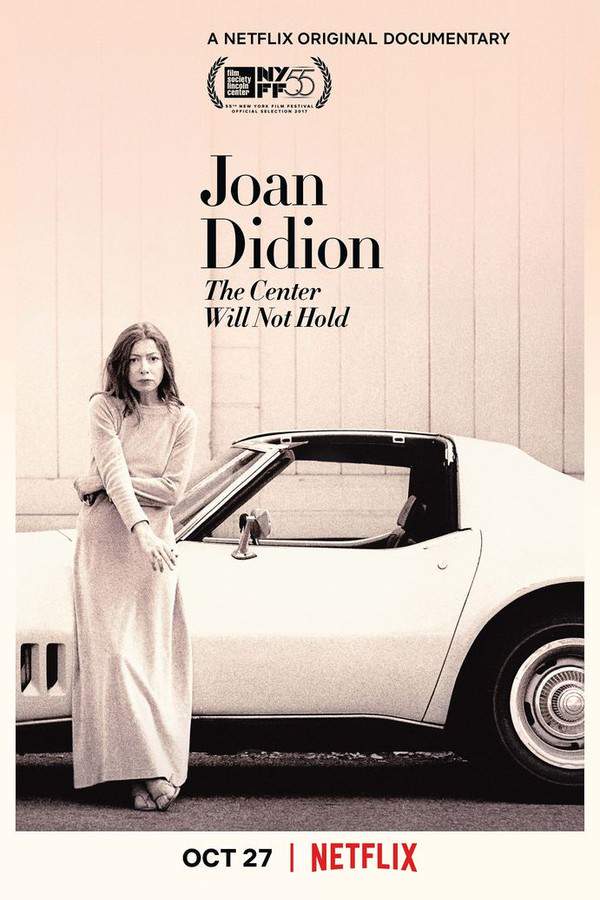
Joan Didion: The Center Will Not Hold (2017) movie poster

Timeline

Joan Didion: The Center Will Not Hold (2017) Timeline Explained – Every Event in Order

Release, runtime and language
2017 · 94 min · English
Echo score 65
Loading streaming availability…
Starring
Harrison Ford, Hilton Als, Griffin Dunne, Amy Robinson, Catherine Hearst, David Hare

This documentary explores the life and career of acclaimed writer Joan Didion, interweaving her personal story with the cultural and political landscape of America. Through candid conversations with her nephew, Griffin Dunne, the film reveals Didion’s journey as a writer, from her observations of the 1960s counterculture to her experiences with profound grief and loss. It offers an intimate look at a remarkable woman and her enduring impact on American literature.

On this page (6)
  1. 1 Where to watch
  2. 2 Events in order (15)
  3. 3 Timeline questions answered
  4. 4 Movie threads
  5. 5 Movies like Joan Didion: The Center Will Not Hold
  6. 6 Every angle
Loading streaming availability…

15 events in order · contains spoilers

Joan Didion: The Center Will Not Hold Timeline: Events in Chronological Order

Every key event of Joan Didion: The Center Will Not Hold (2017) in order, scene by scene, with when and where it takes place. Use it to untangle flashbacks, time jumps and parallel storylines, to refresh your memory before the sequel or to find the exact scene you are thinking of.

  1. A Journal at Age Five

    Joan Didion's mother gave her a journal when she was five years old, telling her to write down her thoughts instead of whining about them. This early gift sparked a lifelong dedication to writing. Born in California, Didion spent many years living in Sacramento, and she later recalled that her father suffered from severe depression throughout her childhood, though she did not recognize it at the time.

    When
    Age five
    Where
    Sacramento, California
  2. Winning the Vogue Contest

    Didion won a writing contest held by Vogue magazine, launching her professional writing career. Her first piece for the magazine was about self-respect, and its deeply personal nature was unusual for the publication at the time.

    Where
    New York City
  3. Publishing Run, River

    Didion published her first novel, Run, River, marking her debut as a fiction writer. Despite the significance of the milestone, the book sold only 11 copies, a humbling start to her career as a novelist.

  4. Marriage to John Gregory Dunne

    Didion married John Gregory Dunne, who was also a writer. The couple lived in New York until Didion was 28 years old, when she realized she was no longer happy in the city. They then moved to California, initially planning to stay for six months.

    Where
    New York City
  5. Life in Portuguese Bend

    Didion and Dunne bought a house in Portuguese Bend, where they stayed for a year. During this time, Dunne conducted research for a book he was writing about the California grape strike.

    Where
    Portuguese Bend, California
  6. Adopting Quintana

    One day, Dunne received a phone call that there was a baby girl at the hospital who needed a home. Didion and Dunne took her in, named her Quintana, and performed a baptism for her at their kitchen sink. After adopting Quintana, the couple moved out of the beach house.

    Where
    Portuguese Bend, California
  7. The Counterculture and Cielo Drive Murders

    Didion liked to write pieces on rock and roll subjects and began writing about hippiedom, a growing trend at the time. Many of her pieces were published in New York, where readers could catch a glimpse of the unfamiliar West Coast lifestyle. In August 1969, word of the murders on Cielo Drive shook the community, and Didion interviewed Linda Kasabian as she testified about the murders.

    When
    August 1969
    Where
    Los Angeles, California
  8. Play It as It Lays and Malibu

    In the mid-1960s, Didion and Dunne began to have marital problems, at one point writing about being on the brink of divorce. Didion channeled this turmoil into the novel Play It as It Lays, whose protagonist Maria was loosely based on herself. The couple moved back to the beach, this time to Malibu overlooking the ocean, and living near the water was helpful for Didion. She wrote A Book of Common Prayer in anticipation of Quintana growing up and leaving her, using novels to deal with her own fears.

    When
    Mid-1960s
    Where
    Malibu, California
  9. Turning to Political Writing

    Didion began transitioning her writing toward politics, a shift supported by Bob Silvers, the editor-in-chief of the New York Review of Books. She wanted to investigate the brutality in El Salvador, and also wrote about the Central Park jogger case and the Bush-Cheney administration.

  10. Quintana's Honest Words

    Dunne's work brought him and Didion back to New York City. One day, Quintana told Didion that she had been remote as a mother. The admission made Didion realize how little parents truly understand their children.

    Where
    New York City
  11. Quintana's Wedding and Sudden Illness

    In July 2003, Quintana got married. That December, she was too sick to attend Christmas Eve dinner, and her condition worsened until she was admitted to the ICU.

    When
    2003
  12. The Death of John Gregory Dunne

    While Quintana was still recovering in the hospital, Didion suffered another devastating loss. One day, as Didion was preparing supper at home, Dunne slumped in his chair and died.

    Where
    New York City
  13. Losing Quintana

    Didion sent Quintana on a short trip to Malibu, but she fell and suffered brain injuries at the airport. Quintana went into a coma and struggled to recover for two years, until she died in August 2005.

    When
    August 2005
    Where
    Malibu, California
  14. The Year of Magical Thinking

    Didion described the grief of losing her husband and daughter as dislocating to both her mind and body. In her memoir The Year of Magical Thinking, she wrote about the feelings of emptiness and void that came with losing Dunne. She admitted she was scared to move on and let go, fearing that her memories of Dunne and Quintana would become increasingly remote as time passed.

  15. Blue Nights and the Medal of Arts

    Didion's nephew, Griffin Dunne, wanted to write a play about her life and helped her regain her health when she weighed only about 75 pounds. She wrote Blue Nights about Quintana as a way to confront her death, realizing she had focused on her daughter's amusing side while not fully seeing her troubled side. She also felt guilty about not properly taking care of Quintana after the adoption. During the Obama presidency, Didion was awarded a National Medal of Arts for exploring the depths of sorrow.

Last updated: October 20, 2026 at 01:17

Was this helpful?

Timeline questions answered

Joan Didion: The Center Will Not Hold Timeline Explained: Your Questions Answered

When does it happen, and why in that order? The questions people ask about the chronology of Joan Didion: The Center Will Not Hold (2017): time jumps, flashbacks, cause and effect between scenes and the correct order of events, each answered with spoilers.

Q1

How did Quintana die?

Quintana suffered brain injuries after falling at the Malibu airport during a short trip Joan Didion had arranged for her. She fell into a coma and struggled to recover for two years before dying in August 2005, the second devastating loss Didion faced within roughly two years.

Foreshadowing: Quintana's baptism at the kitchen sink as an adopted child foreshadowed the deep bond and eventual grief that would define Joan Didion's relationship with her daughter.

  • quintana
  • brain injury
  • coma
  • malibu airport
  • death
Q2

Why did John Gregory Dunne die so suddenly?

John Gregory Dunne died at home while Joan Didion was preparing supper. He simply slumped in his chair, marking a sudden and unexpected death that devastated Didion while Quintana was still critically ill in the hospital.

  • john gregory dunne
  • sudden death
  • heart
  • chair
Q3

Why did Didion write The Year of Magical Thinking?

Joan Didion wrote the memoir to process the dislocating grief of losing her husband John Gregory Dunne. She was afraid to move on and let go, fearing that her memories of Dunne and Quintana would become increasingly remote as time passed.

Foreshadowing: Didion had previously used novels like Play It as It Lays to work through personal fears, establishing a pattern of processing turmoil through writing that would culminate in her grief memoirs.

  • year of magical thinking
  • grief memoir
  • loss
  • letting go
Q4

Why did Didion interview Linda Kasabian about the Manson murders?

Joan Didion had been documenting the West Coast counterculture, so the August 1969 murders on Cielo Drive struck the community she had been writing about. She interviewed Kasabian as she testified, capturing a firsthand account of the tragedy for her readers in New York.

Foreshadowing: Didion's earlier writing about hippiedom and the West Coast positioned her to be present at the cultural rupture caused by the Manson murders.

  • linda kasabian
  • manson murders
  • cielo drive
  • counterculture
  • journalism
Q5

Why did Didion transition from cultural writing to political journalism?

Joan Didion shifted toward political writing with the encouragement of Bob Silvers, editor-in-chief of the New York Review of Books. She wanted to investigate events like the brutality in El Salvador, the Central Park jogger case, and the Bush-Cheney administration, expanding her scope beyond California counterculture.

  • political writing
  • bob silvers
  • el salvador
  • central park jogger
  • bush-cheney
Q6

How did Didion and Dunne adopt Quintana?

John Gregory Dunne received a phone call one day that a baby girl at the hospital needed a home. They took her in, named her Quintana, and performed an impromptu baptism for her at their kitchen sink before moving out of the beach house.

Foreshadowing: The kitchen sink baptism foreshadowed Quintana's central role in Didion's life and eventual grief.

  • adoption
  • quintana
  • kitchen sink baptism
  • hospital
  • john gregory dunne
Q7

What did Quintana mean when she said Didion was a remote mother?

Quintana once told Joan Didion that she had been emotionally distant as a parent. The comment struck Didion deeply and made her realize how little parents actually understand their own children, a regret she later explored in her writing.

  • quintana
  • motherhood
  • remote
  • parenting
  • self-awareness
Q8

Why did Didion feel guilty about Quintana?

Joan Didion later realized she had focused on Quintana's amusing side while failing to see her troubled side. She felt she had not properly taken care of Quintana after the adoption, a guilt she worked through in her memoir Blue Nights.

Foreshadowing: Quintana's later health crises and eventual death made Didion's earlier inattention feel even more painful in retrospect.

  • guilt
  • adoption
  • troubled
  • blue nights
  • motherhood
Q9

Why did Didion write Blue Nights?

Joan Didion wrote Blue Nights as a way to directly confront Quintana's death. The book allowed her to work through feelings of guilt and the realization that she had not fully understood her daughter's struggles after the adoption.

  • blue nights
  • quintana
  • grief
  • memoir
  • motherhood
Q10

Why did Didion move from New York back to California?

Joan Didion moved back to California with Dunne after realizing at age 28 that she was no longer happy living in New York. They initially planned to stay for six months and eventually settled in beach communities like Portuguese Bend and later Malibu, where living near the ocean helped her write.

  • new york
  • california
  • portuguese bend
  • malibu
  • move
Q11

Why was Griffin Dunne's play about Didion important?

Didion's nephew Griffin Dunne wanted to write a play based on her life and helped her regain her health when she weighed only about 75 pounds. Preparing for the project gave her a renewed sense of purpose after years of devastating grief.

  • griffin dunne
  • play
  • nephew
  • weight loss
  • recovery
Q12

Why did Didion receive the National Medal of Arts?

Joan Didion was awarded the National Medal of Arts during the Obama presidency in recognition of her contributions to American literature, particularly her unflinching exploration of grief, loss, and the depths of sorrow in her memoirs and novels.

Foreshadowing: Didion's lifelong habit of processing personal pain through writing culminated in public recognition of that very practice.

  • national medal of arts
  • obama presidency
  • recognition
  • american literature
Q13

Why did Didion write Play It as It Lays?

Joan Didion wrote the novel during a period of marital problems with Dunne, when they were on the brink of divorce. The protagonist Maria was loosely based on Didion herself, and the novel became a way to channel her personal turmoil into fiction.

Foreshadowing: Didion's habit of using novels to work through her own fears, established here, continued with A Book of Common Prayer and her later grief memoirs.

  • play it as it lays
  • marital problems
  • fiction
  • maria
  • autobiography

Movie threads

More Movies Like Joan Didion: The Center Will Not Hold, by Mood & Story

Curated lists built around what makes Joan Didion: The Center Will Not Hold tick: the same mood, the same kind of story or the same emotional payoff. Each list explains why these movies belong together.

Intimate writer portraits like Joan Didion: The Center Will Not Hold

Quiet films about literary voices holding their private devastation. Movies like Joan Didion: The Center Will Not Hold that follow acclaimed writers and thinkers through profound personal grief, blending biography, literary legacy, and quiet devastation. These intimate documentary portraits trace how loss reshapes a creative life and a public voice, offering reflective viewing for fans of literary biography.

  • literary
  • grief-stricken
  • intimate
  • contemplative
  • quiet devastation
  • biographical
  • Tone: melancholic, reflective
  • Pacing: slow, contemplative
Why these movies?

The story pattern: Stories in this thread usually unfold as a quiet accumulation of memory rather than a dramatic arc. They trace a writer or creative figure from early ambitions and craft, through cultural influence, into deeply personal losses, often the death of a partner or child. The narrative moves through interviews, archival footage, and reflective narration, slowly revealing how grief and creative work intertwine. Recognition or artistic vindication may arrive, but never fully erases the private sorrow at the center.

Why they belong together: They are grouped by their shared focus on literary and journalistic lives shaped by grief, their reliance on intimate testimony rather than spectacle, and their sustained melancholic register. The pacing is slow, the emotional weight is heavy, and the storytelling prioritizes reflection and craft over plot. Viewers come for the writer, but stay for the honesty about loss and creativity.

Slow, melancholic documentaries like Joan Didion: The Center Will Not Hold

Slow, reflective documentaries that carry the weight of a whole life. If you liked Joan Didion: The Center Will Not Hold, you'll love these slow-paced documentaries and intimate biographies that blend personal story with American cultural history. Each offers a contemplative, melancholic experience with a bittersweet ending, heavy emotional weight, and the sense of witnessing a remarkable life marked by both achievement and loss.

  • slow
  • contemplative
  • melancholic
  • intimate
  • nostalgic
  • bittersweet
  • Tone: melancholic, bittersweet
  • Pacing: slow, meditative
Why these movies?

The story pattern: Films in this thread typically trace a single life from formative years through public recognition, with cultural and political history woven in as backdrop rather than focus. Conflict is internal: regret, grief, aging, moral reckoning. The narrative privileges archival texture, lingering interviews, and quiet moments over action, and the ending usually carries a bittersweet or melancholic note that honors both triumph and what was lost along the way.

Why they belong together: They share a patient, reflective pacing, a melancholic or bittersweet tone, and a moderate complexity that invites viewers into a specific life and era. The intensity is restrained but the sadness score is high, and the stories reward close attention. Together they form a viewing mood of quiet devastation, ideal for audiences who value emotional truth and craftsmanship over spectacle.

If you liked this

Movies Like Joan Didion: The Center Will Not Hold

Similar movies to Joan Didion: The Center Will Not Hold: the same genre, themes or kind of story. Each one comes with its own plot summary, timeline and ending explained.

Browse all movie summaries

Every angle

Joan Didion: The Center Will Not Hold (2017) Explained: Plot, Timeline & Characters

Everything about Joan Didion: The Center Will Not Hold in one place: what happens in the plot summary, the timeline in chronological order, the characters and meaning and a spoiler-free summary. What's After the Movie adds the cast, box office and post-credit scenes.

Coming soon on iOS and Android

The Plot Explained Movie Summary App

Plot summaries, endings explained and timelines on your phone. Catch up on any movie in minutes, save your favorites and never miss a twist again.

Be the first to know when we launch. Your email stays private, always.

Learn more about the app