Plot Explained Spoilers guaranteed!
Plot Explained

Browse by genre

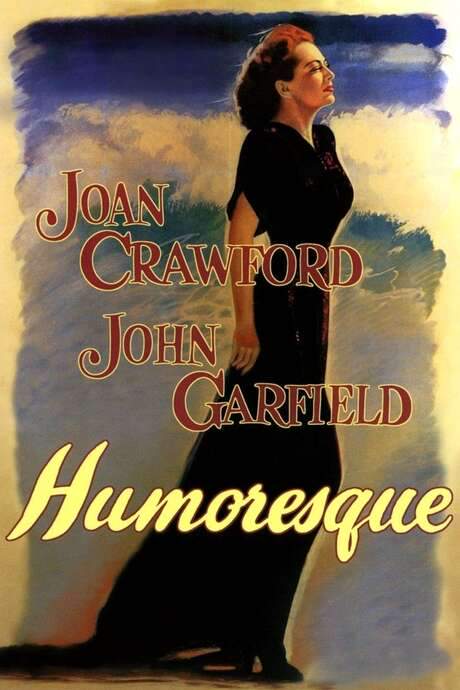
Humoresque (1946) movie poster

Timeline

Humoresque (1946) Timeline Explained – Every Event in Order

Release, runtime and language
1946 · 125 mins · English
Loading streaming availability…
Directed by
Jean Negulesco
Starring
John Garfield, Robert Blake, J. Carrol Naish, Joan Crawford, Stuart Hall, Nestor Paiva

TWO WHO MET AND KISSED AND NEVER SHOULD HAVE MET AGAIN! A classical musician from a working class background is sidetracked by his love for a wealthy, neurotic socialite.

On this page (6)
  1. 1 Where to watch
  2. 2 Events in order (14)
  3. 3 Timeline questions answered
  4. 4 Movie threads
  5. 5 Movies like Humoresque
  6. 6 Every angle
Loading streaming availability…

14 events in order · contains spoilers

Humoresque Timeline: Events in Chronological Order

Every key event of Humoresque (1946) in order, scene by scene, with when and where it takes place. Use it to untangle flashbacks, time jumps and parallel storylines, to refresh your memory before the sequel or to find the exact scene you are thinking of.

  1. Opening crisis in New York City

    The film opens with a canceled performance by Paul Boray in New York City, leaving him emotionally wrecked. His manager Bauer storms at him, insisting that Paul is misreading what it means to perform. Sid Jeffers, Paul's loyal accompanist, urges him not to give up and to keep playing the right thing.

    When
    present
    Where
    New York City
  2. Childhood decision: violin over family finances

    As a boy, Paul rejects his father's cautious outlook and chooses the violin as his instrument. Esther, his mother, buys the $8 violin, supporting his dream. This moment marks the beginning of a lifelong pursuit of musical greatness.

    When
    childhood
    Where
    variety store
  3. 1930: independence and first professional gig

    The family frets about finances, and Paul resolves to stand on his own instead of depending on them. He finds a job with a locally broadcast orchestra, with Sid Jeffers serving as his pianist. This marks the start of his professional career.

    When
    1930
    Where
    local broadcast orchestra
  4. First encounter with Helen Wright

    At a party on Long Island, Helen Wright appears as a self-centered patroness who is initially rude to Paul. The next day she sends a gold cigarette case with an apology note, snagging his attention. Through her connections, Paul gains a manager, Bauer.

    When
    1930s
    Where
    Wrights' Long Island home party
  5. The romance grows on the Long Island shore

    On the beach near the Wrights' Long Island home, Helen warns Paul that love can be dangerous, yet she confesses she cannot fight her feelings. He reciprocates, and they share a kiss. Their attraction marks a turning point in Paul’s life.

    When
    1930s
    Where
    Long Island beach
  6. Esther suspects trouble and warns Paul

    Waiting at home, Esther confronts Paul about missing a date with Gina, a fellow musician, and suspects the affair with Helen. Paul denies any betrayal, but Esther cautions him to consider his future and family reputation.

    When
    early career
    Where
    Paul's home
  7. Debut concert and Victor's contempt

    After Paul’s debut concert, Victor sneers at him from the wings, calling him a savage. Esther absorbs the harsh judgment of their social circle and worries about the path Paul has chosen. Paul’s confidence grows from his success even as trouble looms.

    When
    early career
    Where
    concert hall
  8. Tour across America; jealousy and Teddy's Bar encounter

    Paul tours across America and has lunch with Gina; Sid arrives with Helen, inflaming jealousy. They end up at Teddy’s Bar, where Helen makes a scene before she and Paul retreat to her home, where he declares his love.

    When
    months after debut
    Where
    Teddy's Bar / Long Island
  9. Paul’s apartment and family clash

    In his new apartment filled with Helen’s photographs, Paul confesses his love to his mother, triggering an argument in which Esther slaps him. Disquieted by rumors, Victor asks Helen for a divorce, testing the couple’s bond.

    When
    post-tour
    Where
    Paul's apartment
  10. Helen seeks Esther’s approval

    Helen visits Esther to persuade her that she truly loves Paul, insisting she can change. Esther remains skeptical and tells Helen to stay away from Paul, warning that her past won’t be erased. The tension between love and family loyalty deepens.

    When
    post-apartment
    Where
    Esther's home
  11. Rehearsal note and Carmen Fantasie

    During a rehearsal, Paul receives a note from Helen claiming good news and asking to see him immediately. He crumples the note and keeps playing, continuing the Carmen Fantasie on stage to demonstrate his focus and resolve.

    When
    before Liebestod
    Where
    rehearsal hall
  12. Teddy's Bar final confrontation

    Back at Teddy’s Bar, Helen grows increasingly drunk and unable to tolerate the house pianist. Paul arrives to take her home, reiterating that he wants to marry her even as she tries to push him away.

    When
    late
    Where
    Teddy's Bar
  13. Liebestod performance and Helen’s death

    Paul performs his transcription of Wagner’s Liebestod, heard by Helen by radio as she drowns in despair on the beach. Neither Esther nor Helen attend the performance, underscoring the tragedy of their entangled fates.

    When
    final
    Where
    on radio / the beach
  14. Closing scene: acceptance and return to ordinary life

    In the final moments, Jeffers consoles a distraught Paul, who asks Jeffers to tell Bauer he isn’t running away. The film ends with Paul walking toward his family’s grocery store, choosing to face life with music in a gentler light.

    When
    ending
    Where
    street by the grocery store

Last updated: October 09, 2025 at 11:06

Was this helpful?

Timeline questions answered

Humoresque Timeline Explained: Your Questions Answered

When does it happen, and why in that order? The questions people ask about the chronology of Humoresque (1946): time jumps, flashbacks, cause and effect between scenes and the correct order of events, each answered with spoilers.

Q1

Why does Helen send Paul a gold cigarette case after being rude to him?

Helen sends the cigarette case as an apology the day after their first encounter. Despite initially being brusque and dismissive toward Paul at the party, she is intrigued by his stubborn integrity and talent. The gold case represents her first genuine gesture toward him, and through her connections, she helps him secure a manager, moving him into a new social and professional orbit.

  • gold cigarette case
  • helen wright
  • paul boray
  • apology
  • social connections
Q2

Why does Helen resist Paul's help after falling from her horse?

Helen's resistance stems from her inner conflict between fear and desire. She is torn between her attraction to Paul and her awareness that pursuing a relationship with a working-class musician would destabilize her privileged world. When he reaches out to help her after the fall, she initially pushes him away because she knows getting close to him means risking everything she has known.

Foreshadowing: Earlier at the party, Helen warns Paul that love can be dangerous, foreshadowing her internal struggle.

  • horse fall
  • helen wright
  • fear and desire
  • resistance
  • emotional conflict
Q3

Why does Esther slap Paul when he confesses his love for Helen?

Esther slaps Paul during a heated argument after he displays a wall of photographs of Helen in his new apartment and tells her the truth of his love. The slap represents her desperate attempt to snap him out of what she sees as a destructive path. As a mother who sacrificed for his musical dreams, she cannot accept that he would throw away his future and family reputation for a wealthy, neurotic woman with a questionable past.

Foreshadowing: Earlier, Esther warned Paul to consider his future after he missed a date with Gina, foreshadowing her strong opposition.

  • esther boray
  • slap
  • family conflict
  • helen wright
  • mother son
Q4

What causes Helen to walk into the ocean and die?

Helen's suicide is triggered by listening to Paul's radio broadcast of his Liebestod performance, a transcription of Wagner's opera about Tristan and Isolde's tragic love. The emotionally charged piece, performed while neither she nor Esther attend in person, makes her realize the ruin her relationship has caused. She understands she cannot reform, cannot truly have Paul without destroying his career and family bonds, and chooses death over facing that loss.

Foreshadowing: Earlier, Victor challenges Helen about whether she can truly reform and be happy with Paul, planting the seeds of her despair.

  • helen suicide
  • ocean
  • liebestod
  • tragic ending
  • radio broadcast
Q5

Why does Paul crumple Helen's note during rehearsal?

Paul crumples the note from Helen claiming good news and asking him to come immediately because he chooses music over their relationship at that moment. He continues rehearsing the Carmen Fantasie, demonstrating his focus and resolve to prioritize his career. This choice illustrates the central conflict of the film, Paul's ambition and artistic dedication versus his complicated love for Helen, and foreshadows his ultimate failure to save her.

  • crumpled note
  • rehearsal
  • carmen fantasie
  • career vs love
  • priorities
Q6

Why does Victor Wright oppose Paul's relationship with Helen?

Victor Wright, Helen's much older husband, initially dismisses Paul as a "savage" after his debut concert, revealing the class prejudice that defines his opposition. When rumors swirl about Helen's intentions, Victor challenges whether she can truly reform and be happy with someone from Paul's social standing. His opposition stems from both personal humiliation and genuine doubt about whether Helen is capable of genuine love and change.

  • victor wright
  • class prejudice
  • savage
  • opposition
  • social standing
Q7

Why does Helen visit Esther to ask for her blessing?

Helen visits Esther in an attempt to prove that she truly loves Paul and can change her ways. She argues that being with Paul is worth the risk of her comfortable life. However, Esther remains unconvinced and tells Helen to leave Paul alone, warning that her scandalous past won't be erased. This visit highlights the irreconcilable divide between Helen's desperate hope and the family's steadfast rejection.

  • helen visit esther
  • blessing
  • family approval
  • social class divide
Q8

What is the significance of Paul's Liebestod performance at the end?

Paul performs his transcription of Wagner's Liebestod (Love Death) as the emotional centerpiece of his concert, a piece that speaks to tragic, consuming love ending in death. The performance is heard by Helen via radio broadcast as she walks along the shore. Neither Esther nor Helen attends in person, underscoring the tragedy of their entangled fates. The Liebestod literally means "love death," foreshadowing Helen's fate and the death of Paul's relationship dreams.

  • liebestod
  • wagner
  • love death
  • transcription
  • tragic performance
Q9

Why does Paul choose his career over his relationship with Gina Romney?

Paul's career gradually takes precedence over his relationship with Gina, who represents stability and a suitable match from his own social sphere. The pivotal scene occurs during his American tour when lunch with Gina triggers Helen's jealous departure. Paul follows Helen instead, choosing the intense, destructive passion over the practical, supportive love Gina offers. His choice ultimately leads to professional triumph but personal tragedy.

  • gina romney
  • career choice
  • paul boray
  • passion vs stability
Q10

Why does Helen smash her drink against the wall at Teddy's Bar?

Helen smashes her drink during a dramatic scene at Teddy's Bar after seeing Paul with Gina during lunch. Consumed by jealousy, she makes a scene that forces Paul to choose between the two women. This violent outburst reveals the depth of her emotional instability and her inability to share Paul, setting up the destructive trajectory of their relationship.

  • teddys bar
  • jealousy
  • drink smash
  • emotional outburst
Q11

Why does Paul leave his family in 1930 to pursue music?

Paul leaves his family in 1930 after overhearing his father and brother discussing financial strain. Rather than continue depending on his struggling family, he resolves to stand on his own and pursue his musical talent professionally. He finds work with a locally broadcast orchestra, beginning his journey from aspiring violinist to rising concert artist.

  • 1930
  • independence
  • family finances
  • broadcast orchestra
  • paul boray

Movie threads

More Movies Like Humoresque, by Mood & Story

Curated lists built around what makes Humoresque tick: the same mood, the same kind of story or the same emotional payoff. Each list explains why these movies belong together.

Tragic Passionate Romances like Humoresque

Intense love affairs that burn brightly but lead to inevitable ruin. If you were captivated by the doomed, intense romance in Humoresque, this collection features movies like it. Discover similar stories of self-destructive love, neurotic relationships, and passionate affairs that end in sorrow, perfect for fans of heavy, dramatic romantic tragedies.

  • tragic
  • passionate
  • tormented
  • melancholic
  • intense
  • dramatic
  • Tone: melancholic, intense, tragic
  • Pacing: steady, character-driven
Why these movies?

The story pattern: These narratives typically follow a pattern of magnetic attraction leading to an all-consuming affair. The central conflict is often internal—a battle between love and self-preservation—where the relationship itself becomes the source of pain. The journey is one of escalating emotional stakes, culminating in a loss that feels both inevitable and devastating.

Why they belong together: These films are grouped together because they share a core focus on the destructive power of passion. They deliver a heavy, intense viewing experience defined by melancholic tones, complex character psychology, and the shared narrative beat of a love that cannot survive its own intensity.

Movies about Artistic Sacrifice like Humoresque

Stories of gifted artists navigating the tensions between love, life, and their craft. For viewers who appreciated the theme of artistic ambition in Humoresque, this thread gathers similar movies about musicians, painters, and writers. Explore stories that examine the price of genius, the clash between personal life and creative drive, and the dramatic tension found in sophisticated artistic worlds.

  • dramatic
  • sophisticated
  • tormented
  • melancholic
  • artistic
  • ambitious
  • Tone: dramatic, melancholic, sophisticated
  • Pacing: steady, methodical
Why these movies?

The story pattern: The narrative follows an artist's ascent, often from humble beginnings, focusing on the external and internal obstacles they face. A key element is a complicated romantic relationship that either fuels or hinders their talent, set against a backdrop of high society or bohemian circles. The story explores whether great art requires personal sacrifice and the emotional toll of such a choice.

Why they belong together: These movies are connected by their exploration of the artist's journey, blending themes of ambition, class, and toxic relationships. They share a sophisticated, dramatic mood, a steady pacing that allows for character depth, and a consistent tone of melancholy stemming from the inherent conflicts of a life devoted to art.

If you liked this

Movies Like Humoresque

Similar movies to Humoresque: the same genre, themes or kind of story. Each one comes with its own plot summary, timeline and ending explained.

Browse all movie summaries

Every angle

Humoresque (1946) Explained: Plot, Timeline & Characters

Everything about Humoresque in one place: what happens in the plot summary, the timeline in chronological order, the characters and meaning and a spoiler-free summary. What's After the Movie adds the cast, box office and post-credit scenes.

Coming soon on iOS and Android

The Plot Explained Movie Summary App

Plot summaries, endings explained and timelines on your phone. Catch up on any movie in minutes, save your favorites and never miss a twist again.

Be the first to know when we launch. Your email stays private, always.

Learn more about the app