Plot Explained Spoilers guaranteed!
Plot Explained

Browse by genre

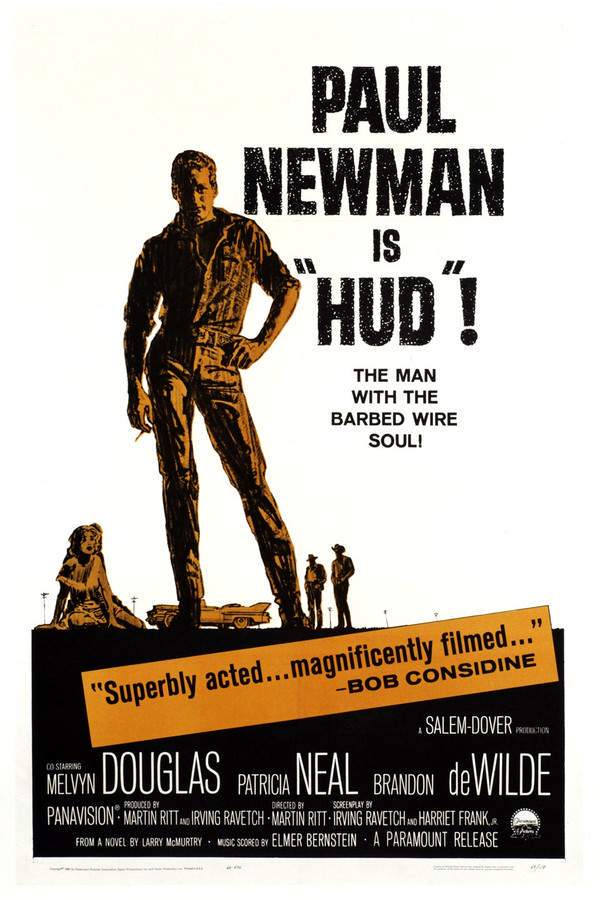
Hud (1963) movie poster

Timeline

Hud (1963) Timeline Explained – Every Event in Order

Release, runtime and language
1963 · 112 min · English
Loading streaming availability…
Directed by
Martin Ritt
Starring
Paul Newman, Melvyn Douglas, Patricia Neal, Whit Bissell, Crahan Denton, Brandon De Wilde

In the harsh Texas landscape, Hud Bannon lives a life of self-indulgence, marked by drinking and casual relationships. His actions clash with the hard work and values of his father, who strives to maintain the family ranch. Young Lonnie, witnessing his uncle's behavior, struggles with admiration and disappointment as he confronts the complexities of morality and the consequences of reckless choices. The film explores themes of family, duty, and the loss of innocence against a backdrop of rural decline.

On this page (6)
  1. 1 Where to watch
  2. 2 Events in order (15)
  3. 3 Timeline questions answered
  4. 4 Movie threads
  5. 5 Movies like Hud
  6. 6 Every angle
Loading streaming availability…

15 events in order · contains spoilers

Hud Timeline: Events in Chronological Order

Every key event of Hud (1963) in order, scene by scene, with when and where it takes place. Use it to untangle flashbacks, time jumps and parallel storylines, to refresh your memory before the sequel or to find the exact scene you are thinking of.

  1. Lon's Arrival

    The film opens with Lon, a young and impressionable teenager, arriving in town to find his Uncle Hud. He is dropped off and tells the driver that he just needs to locate Hud's pink Cadillac. This marks the beginning of his adventure and connection with his uncle.

    When
    Morning
    Where
    Texas
  2. Finding Hud

    Lon successfully identifies Hud's pink Cadillac parked outside a local couple's home. He honks the horn, awakening an annoyed Hud, who is in a compromising situation. This encounter signals the start of their strained relationship, grounded in Hud's reckless behavior.

    When
    Morning
    Where
    Local Couple's House
  3. Hud's Return Home

    Hud begrudgingly leaves the couple's house with Lon after being threatened by the woman's husband. Despite the tension, Hud attempts to brush off the incident with humor, showcasing his lack of regard for consequences.

    When
    Morning
    Where
    Texas Highway
  4. The Dead Heifer

    At the ranch, Homer shows Hud and Lon the corpse of a dead heifer, which died for unknown reasons. Homer plans to call the state vet, but Hud insists on avoiding government intervention and downplays the situation, leading to a clash of values between the father and son.

    When
    Afternoon
    Where
    Ranch
  5. Alma and Hud

    Hud encounters Alma, the housekeeper, while she is stranded with a flat tire. He offers her a ride, demonstrating his flirtatious nature and the complexity of relationships within the household. Alma's teasing reveals her disinterest in Hud's advances.

    When
    Afternoon
    Where
    Country Road
  6. The Vet's Warning

    The state vet arrives and warns Homer that the heifer died from foot and mouth disease, implying that all their cattle may have to be slaughtered. Homer struggles with the reality of this news, while Hud pushes for a more mercenary approach to save their livelihood.

    When
    Next Day
    Where
    Ranch
  7. Dinner Discussions

    During dinner, Homer and Lon discuss their hopes and dreams, revealing a generational gap in perspective. The conversation steers towards Lon's future, hinting at his desire for a life away from the shadow of Hud's controversial lifestyle.

    When
    Evening
    Where
    Ranch House
  8. The Pig Scramble

    At the local pig scramble, Hud participates in a competition and wins, showcasing his charm and ability to attract attention. Later, he tries to engage Lon, encouraging him to let go and enjoy life, solidifying Hud's influence over his impressionable nephew.

    When
    Afternoon
    Where
    Rodeo
  9. Trouble at the Diners

    Lon's admiration for Hud clashes with the reality of Hud's aggressive nature when they get into a bar fight. Hud's reckless behavior pushes Lon towards a moral understanding of right and wrong as he witnesses the consequences of his uncle's choices.

    When
    Evening
    Where
    Diner
  10. Homer's Illness

    After a visit to a diner, Homer collapses, revealing his deteriorating health. This moment signifies the toll of the impending decisions regarding the cattle slaughter and further complicates the family dynamics between Hud, Lon, and Homer.

    When
    Evening
    Where
    Diner
  11. The Cattle's Fate

    As the situation worsens, the vet confirms the disease, leading to a crucial decision to kill all the cattle. Homer and Hud's conflicting values arise again, with Hud advocating for fleeting gains at the expense of ethics.

    When
    Next Day
    Where
    Ranch
  12. Homer's Last Stand

    Homer, overwhelmed by the impending death of his cattle, ultimately decides to kill his two Longhorn steers. This painful farewell displays his deep respect for their lineage, contrasting with Hud's indifferent attitude towards ranching and life.

    When
    Next Day
    Where
    Ranch
  13. Alma's Departure

    Alma decides to leave, feeling unsafe after the incident with Hud. Lon's attempts to persuade her to stay highlight his maturity and growth, while reflecting the tumultuous environment shaped by Hud's behavior.

    When
    Evening
    Where
    Bus Station
  14. Homer's Death

    In a tragic culmination of events, Homer dies, prompting a reflection on his legacy and the differences between him and Hud. Lon grapples with feelings of loss and confusion as he navigates the void left by his grandfather's death.

    When
    Evening
    Where
    Roadside
  15. Lon's Farewell

    After the funeral, Lon decides to leave and find a life away from Hud's influence. This final act of independence signifies Lon's growth and his desire to seek a better future, breaking free from the toxic legacy of Hud.

    When
    End of Film
    Where
    Ranch

Last updated: January 19, 2025 at 18:49

Was this helpful?

Timeline questions answered

Hud Timeline Explained: Your Questions Answered

When does it happen, and why in that order? The questions people ask about the chronology of Hud (1963): time jumps, flashbacks, cause and effect between scenes and the correct order of events, each answered with spoilers.

Q1

Why does Hud oppose calling the state vet about the dead heifer?

Hud opposes calling the vet because he wants to avoid government intervention. When the heifer dies, Homer suspects something serious and wants to call the state veterinarian, but Hud strongly disagrees. His reasoning is that if the authorities confirm an outbreak like foot-and-mouth disease, they will force the family to slaughter all their cattle. Hud sees this as a threat to his immediate income and lifestyle, prioritizing short-term financial gain over the ethical responsibility to prevent spreading disease to other ranches.

Foreshadowing: Earlier, Hud dismisses rules and regulations as things meant to be bent, establishing his character as someone who prioritizes personal convenience over community welfare.

  • hud
  • heifer
  • veterinarian
  • cattle
  • disease
  • foot and mouth
Q2

Why does Homer decide to kill his own cattle instead of selling them?

Homer decides to kill his two Longhorn steers because he cannot bear to see them taken by government authorities or sold to someone else after the disease is confirmed. These cattle represent generations of careful breeding and his life's work on the ranch. Homer's decision is driven by deep respect and affection for his animals, he would rather end their lives himself with dignity than watch them be destroyed by officials or profit from selling them to buyers who would likely slaughter them anyway. This act contrasts sharply with Hud's mercenary attitude.

Foreshadowing: Earlier discussions about legacy and values hint at Homer's emotional attachment to his cattle as family heritage.

  • homer
  • cattle
  • longhorn steers
  • death
  • ranch
  • legacy
Q3

Why does Alma leave the ranch?

Alma leaves because she feels unsafe after an incident with Hud's unwanted advances. Throughout the film, Hud persistently flirts with Alma despite her clear disinterest and her position as the household's housekeeper. When the situation becomes uncomfortable and threatening enough, Alma decides she can no longer stay and leaves by bus. Her departure represents another victim of Hud's self-centered behavior and further isolates Lon emotionally.

Foreshadowing: Alma consistently resists Hud's advances and criticizes his behavior throughout the film, building toward her decision to leave.

  • alma
  • housekeeper
  • leaves
  • bus
  • unsafety
  • hud
Q4

Why does Lon decide to leave Hud at the end of the movie?

Lon decides to leave Hud after witnessing the full consequences of his uncle's reckless lifestyle, Alma's departure, Homer's death, and the destruction of the family's cattle. Throughout the film, Lon is torn between admiration for Hud's charm and freedom, and horror at his moral emptiness. After losing his grandfather and seeing how Hud responds to tragedy with cynicism rather than grief, Lon chooses to seek a better life away from his uncle's corrupting influence. This marks his final rejection of the lifestyle Hud represents.

Foreshadowing: During dinner conversations, Lon discusses his desire for a different future, hinting at his eventual departure.

  • lon
  • farewell
  • leaves
  • hud
  • independence
  • future
Q5

What causes Homer's death?

Homer dies from natural causes related to deteriorating health, though the stress of the crisis accelerates his decline. After the vet confirms the cattle must be slaughtered due to foot-and-mouth disease, Homer suffers under the weight of losing his livelihood and making impossible decisions. He collapses at a diner and later dies, with his death representing the end of an era for traditional ranching values. The film suggests his health had been declining for some time, but the emotional toll of the cattle crisis pushes him over the edge.

Foreshadowing: Homer's frailty becomes more apparent as the cattle crisis intensifies, with him slumping and unable to maintain his former strength.

  • homer
  • death
  • health
  • collapse
  • diner
  • cattle
Q6

Why does Hud shoot at the vultures circling the dead heifer?

Hud shoots at the vultures as a demonstration of his rebellious nature and defiance of rules. When the heifer dies, Homer wants to handle the situation properly and legally, but Hud disregards proper procedure. He fires at the vultures not to protect the carcass, but to assert his independence and show contempt for conventional authority. This moment establishes Hud's character as someone who acts on impulse and treats laws and regulations as obstacles rather than guidelines.

Foreshadowing: This scene precedes Hud's opposition to calling the vet, reinforcing his pattern of rule-breaking.

  • hud
  • vultures
  • shooting
  • rebellion
  • heifer
Q7

What is the significance of Hud's pink Cadillac?

Hud's pink Cadillac serves as a symbol of his flashy, self-indulgent lifestyle and rejection of traditional ranching values. The car is immediately distinctive and represents Hud's priority on appearances, pleasure, and status rather than hard work. When Lon arrives in town, he's told to look for the pink Cadillac to find Hud, showing how Hud has become known for this ostentatious vehicle rather than for any contribution to the family ranch. The Cadillac embodies the superficial charm that masks Hud's moral emptiness.

Foreshadowing: The Cadillac appears first in the opening scene, setting up Hud's character before viewers meet him directly.

  • hud
  • pink cadillac
  • symbol
  • lifestyle
  • status
Q8

Why does Hud try to convince Homer to sell the cattle despite knowing about the disease?

Hud wants to sell the cattle because he prioritizes immediate financial profit over ethics, law, and long-term consequences. Even after learning the heifer died from foot-and-mouth disease and that all their cattle may be infected, Hud pushes Homer to quickly sell the animals before authorities can intervene. His motivation is purely self-serving, he wants money now and doesn't care about the potential spread of disease to other ranches or the moral implications. This exemplifies the fundamental conflict between Hud's short-sighted selfishness and Homer's sense of responsibility.

Foreshadowing: Earlier scenes establish Hud's belief that rules exist to be bent, foreshadowing his willingness to break laws for personal gain.

  • hud
  • cattle
  • sell
  • disease
  • money
  • profit
Q9

What is the root of the conflict between Hud and his father Homer?

The conflict between Hud and Homer stems from fundamentally opposed worldviews and values. Homer represents traditional ranching values, hard work, integrity, respect for animals, and community responsibility. Hud embodies self-indulgence, irresponsibility, and disregard for rules or others. Homer is disappointed that his son has become a reckless, drinking womanizer who offers nothing to the family. Hud resents his father's moral expectations and feels constrained by them. Their clashes over the dead heifer and the cattle disease are just manifestations of this deep-seated generational and philosophical divide.

Foreshadowing: From the first scene, Hud's reaction to Homer's summons reveals their tumultuous relationship and sets up their ongoing conflict.

  • hud
  • homer
  • father
  • son
  • conflict
  • values
  • morals
Q10

Why is Lon's relationship with Hud so complicated?

Lon's relationship with Hud is complicated because he is torn between admiration and disappointment. As a teenager, Lon is drawn to Hud's charm, confidence, and freedom, everything his grandfather Homer represents seems rigid by contrast. Hud represents excitement and rebellion against the older generation's constraints. However, as Lon witnesses Hud's reckless behavior, his bar fight aggression, his mistreatment of Alma, and his willingness to exploit others for profit, Lon gradually recognizes the hollowness beneath the charm. This tension between youthful admiration and moral awakening drives Lon's character arc throughout the film.

Foreshadowing: At the pig scramble, Hud encourages Lon to let go and enjoy life, while Homer's conversations hint at the values Lon should prioritize.

  • lon
  • hud
  • nephew
  • uncle
  • admiration
  • morality
Q11

What does the ending imply about Hud's future?

The ending implies Hud will continue his lonely, self-destructive path. Left alone in the empty house after Homer's death and Lon's departure, Hud drinks and stares out at the Texas sunset, a metaphor for his hollow existence. The film suggests he will remain trapped in his cycle of drinking, casual relationships, and moral emptiness. With his father gone and his nephew fled, Hud has burned all his meaningful connections. Yet nothing indicates he will change; the final image suggests a man confronting the consequences of his choices but lacking the self-awareness or will to reverse course.

Foreshadowing: Hud's earlier remark that 'nobody gets out of life alive' foreshadows his acceptance of mortality without seeking redemption.

  • hud
  • ending
  • alone
  • empty house
  • sunset
  • isolation
Q12

Why is the dead heifer so important to the plot?

The dead heifer serves as the catalyst that triggers the film's central crisis and exposes all family tensions. When the heifer dies mysteriously, Homer's decision to call the vet sets Hud against him in their fundamental clash over ethics versus profit. The subsequent diagnosis of foot-and-mouth disease forces impossible choices that ultimately lead to Homer's death, the destruction of the ranch's livelihood, and the family's dissolution. Without the heifer's death, the latent conflicts between Hud and Homer might have remained unexpressed, and the tragic events that follow would not have occurred.

  • heifer
  • death
  • disease
  • cattle
  • crisis
  • plot

Movie threads

More Movies Like Hud, by Mood & Story

Curated lists built around what makes Hud tick: the same mood, the same kind of story or the same emotional payoff. Each list explains why these movies belong together.

Intense family dramas in harsh settings like Hud

Intense stories of family bonds fracturing under the weight of tradition and rebellion. If you appreciated the familial strife and atmospheric setting of Hud, explore more movies like it. This collection features similar stories of dysfunctional families, generational conflict, and moral decay set against stark, rural backdrops that amplify the emotional weight.

  • somber
  • oppressive
  • morally ambiguous
  • lonely
  • confrontational
  • atmospheric
  • Tone: melancholic, morally ambiguous
  • Pacing: slow, character-driven
Why these movies?

The story pattern: Narratives in this thread typically center on a family unit strained to its breaking point by a corrosive force, often a charismatic but destructive member. The plot unfolds slowly, driven by tense dialogue and atmospheric pressure rather than external events, building towards a bleak conclusion that emphasizes loss and loneliness.

Why they belong together: These films are grouped together for their shared mood of somber melancholy, high emotional intensity from interpersonal clashes, and a slow, contemplative pacing that allows the weight of moral ambiguity and familial disappointment to fully settle on the viewer.

Movies with magnetic antiheroes like Hud Bannon

Compelling character studies of magnetic figures who leave ruin in their wake. For viewers fascinated by the complex character of Hud, this list highlights other movies with similar charismatic but destructive antiheroes. Discover films where a compelling protagonist's moral collapse and corrosive influence drive a heavy, character-focused narrative.

  • morally ambiguous
  • confrontational
  • somber
  • character study
  • heavy
  • corrosive
  • Tone: bleak, confrontational
  • Pacing: slow, psychological
Why these movies?

The story pattern: The narrative pattern follows a magnetic individual who lives by a self-serving code, challenging the values of a more principled community or family. The story explores the tension between admiration for their freedom and horror at their consequences, often witnessed through the eyes of a younger character losing their innocence.

Why they belong together: These films share a high emotional weight driven by a central, morally complex character. They feature a bleak tone, a slow, deliberate pacing that allows for deep character exploration, and an intense focus on the psychological and emotional fallout of one person's choices.

If you liked this

Movies Like Hud

Similar movies to Hud: the same genre, themes or kind of story. Each one comes with its own plot summary, timeline and ending explained.

Browse all movie summaries

Every angle

Hud (1963) Explained: Plot, Timeline & Characters

Everything about Hud in one place: what happens in the plot summary, the timeline in chronological order, the characters and meaning and a spoiler-free summary. What's After the Movie adds the cast, box office and post-credit scenes.

Coming soon on iOS and Android

The Plot Explained Movie Summary App

Plot summaries, endings explained and timelines on your phone. Catch up on any movie in minutes, save your favorites and never miss a twist again.

Be the first to know when we launch. Your email stays private, always.

Learn more about the app