Plot Explained Spoilers guaranteed!
Plot Explained

Browse by genre

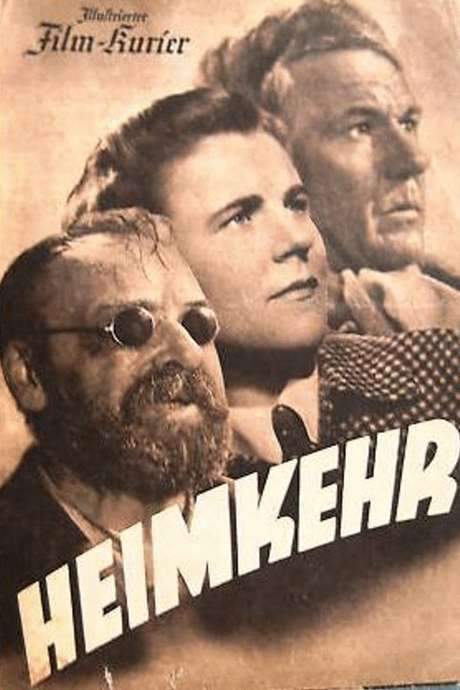
Homecoming (1941) movie poster

Timeline

Homecoming (1941) Timeline Explained – Every Event in Order

Release, runtime and language
1941 · 94 mins · German
Directed by
Gustav Ucicky
Starring
Berta Drews, Carl Raddatz, Otto Wernicke, Paula Wessely, Attila Hörbiger, Ruth Hellberg

The film is a Nazi propaganda piece designed to justify the invasion of Poland. It depicts ethnic Germans living in Poland as victims of discrimination and oppression by Poles, and dramatizes their rescue by the German army, presenting the attack as a humanitarian intervention.

On this page (5)
  1. 1 Events in order (13)
  2. 2 Timeline questions answered
  3. 3 Movie threads
  4. 4 Movies like Homecoming
  5. 5 Every angle

13 events in order · contains spoilers

Homecoming Timeline: Events in Chronological Order

Every key event of Homecoming (1941) in order, scene by scene, with when and where it takes place. Use it to untangle flashbacks, time jumps and parallel storylines, to refresh your memory before the sequel or to find the exact scene you are thinking of.

  1. German school seized and demolished

    In the Wołyń Voivodeship, the German minority endures escalating oppression. Marie watches as her German school is seized by Polish authorities and demolished by an angry mob. The act foreshadows the violence that will engulf the family and community.

    Where
    German school, Wołyń
  2. Thomas protests to the mayor

    Dr. Thomas formally protests to the mayor, arguing that minority rights are guaranteed by the constitution. His appeal is ignored, underscoring the authorities' refusal to protect the German community. The moment shows the growing power imbalance that fuels further actions.

    Where
    Town hall
  3. Marie and Fritz travel to the capital

    Marie and her fiancé Fritz drive to the provincial capital to present their case to the Voivode. They are not received by officials there, leaving them frustrated and determined. They decide to stay in the capital to pursue legal avenues the next day.

    Where
    Provincial capital
  4. Cinema visit with Karl

    That evening, they go to the cinema accompanied by Karl Michalek, who has been pressed into service by the Polish Army. The outing offers a chance for normalcy amid mounting tension. The crowd's mood soon turns dangerous.

    When
    That evening
    Where
    Provincial capital cinema
  5. Fritz attacked for not singing anthem

    When the audience refuses to sing the Polish national anthem, a furious crowd assaults Fritz, inflicting serious injuries. Marie and Karl witness the brutality and fear for his life. The incident marks a brutal escalation of ethnic hostility inside the cinema.

    When
    That evening
    Where
    Cinema
  6. Fritz dies after refused admission

    Marie tries to have Fritz admitted to a hospital, but admission is refused. He dies from his injuries, and Marie faces the devastating consequence of institutional prejudice. The death deepens the community's grief and anger.

    When
    Shortly after the cinema attack
    Where
    Hospital
  7. Dr. Thomas blinded in attack

    Back home, violence against Germans continues as Marie's father, Dr. Thomas, is attacked and blinded. The assault removes a respected healer and symbol of the community's resilience. The family grapples with personal loss amid the broader chaos.

    When
    After Fritz's death
    Where
    Home in Wołyń
  8. Martha Launhardt dies from stones

    The innkeeper Ludwig Launhardt's wife, Martha, dies after being struck by stones thrown by Poles. Her death underscores the civilian cost of the escalating ethnic conflict and shocks the village. The tragedy compounds the residents' fear and anger.

    When
    During the unrest after the cinema attack
    Where
    Innkeeper's inn
  9. Villagers listen to Hitler on 1 Sept 1939

    At the outbreak of the invasion, German villagers secretly gather in a barn to hear Hitler’s speech on 1 September 1939. They are discovered, arrested, and imprisoned by occupying authorities. The scene dramatizes the rapid shift from oppression to outright militarized control.

    When
    1 September 1939
    Where
    Barn in a German village
  10. Prisoners face abuse and plan escape

    Marie consoles the prisoners, promising they will escape and return home where they can hear only German. They endure abuse from prison guards, but hold fast to the hope of freedom and reunion. The promise anchors their courage as the situation grows more dire.

    When
    During captivity after 1 Sept 1939
    Where
    Barn prison
  11. Escape through underground cellar

    The prisoners escape through an underground cellar, narrowly avoiding a massacre. They are saved by invading Wehrmacht soldiers, whose arrival shifts the odds in their favor. The evacuation marks a turning point from captivity to rescue.

    When
    During the invasion of Poland
    Where
    Barn underground cellar; rescued by Wehrmacht
  12. Return to homeland and marriage offer

    The escapees prepare for resettlement into the Reich homeland, and Ludwig Launhardt asks Marie for her hand. The family and community readies for departure under the looming prospect of exile. The personal offer of marriage adds a note of hope amid upheaval.

    When
    End of the film
    Where
    Along the route to the Reich
  13. Crossing into the Reich; Hitler's image at the checkpoint

    The group crosses the border into the Reich, signaling their transfer to the objective homeland. At the checkpoint, a massive image of Hitler dominates the scene, underscoring the propaganda environment of the era. The film closes on this somber, propagandistic note.

    When
    End of the film
    Where
    Border checkpoint into the Reich

Last updated: October 09, 2025 at 14:12

Was this helpful?

Timeline questions answered

Homecoming Timeline Explained: Your Questions Answered

When does it happen, and why in that order? The questions people ask about the chronology of Homecoming (1941): time jumps, flashbacks, cause and effect between scenes and the correct order of events, each answered with spoilers.

Q1

Why did Fritz die after the cinema attack?

Fritz died because he was brutally assaulted by a Polish crowd for refusing to sing the Polish national anthem, Mazurek Dąbrowskiego. After being beaten severely, Marie tried to get him admitted to a hospital, but he was refused admission due to institutional prejudice against Germans. He succumbed to his injuries shortly after, marking a devastating turning point for Marie and the community.

Foreshadowing: The attack was foreshadowed by the tense atmosphere in the cinema where the audience demanded national anthem participation, creating a powder keg situation.

  • fritz mutius
  • cinema attack
  • polish anthem
  • refused hospital
  • ethnic violence
Q2

Why was Dr. Thomas blinded in the attack?

Dr. Thomas was targeted in a brutal assault that left him blinded as violence against the German minority escalated in Wołyń Voivodeship. As a respected physician who had formally protested to the mayor about constitutionally guaranteed minority rights, he became a specific target for attackers. The assault removed both a healer and a symbol of the community's resilience.

Foreshadowing: His vulnerability was foreshadowed by his earlier powerless protest at the town hall, which was ignored by authorities.

  • dr thomas
  • blinded
  • assault
  • german minority
  • protest
Q3

Why was Marie's German school seized and demolished?

Marie watched as her German school was seized by Polish authorities and demolished by an angry mob, representing the escalating oppression against the German minority in the region. This act was part of the broader discrimination faced by ethnic Germans, including denial of hospital access and other institutional services.

Foreshadowing: The school demolition foreshadowed the mounting violence that would later claim lives and leave Dr. Thomas blinded.

  • marie school
  • german school
  • demolished
  • oppression
  • wołyń
Q4

Why were the villagers arrested after listening to Hitler's speech?

On September 1, 1939, German villagers secretly gathered in a barn to hear Hitler's speech marking the invasion of Poland. They were discovered, arrested, and imprisoned by Polish authorities. Their crime was listening to the German leader's address during an act of war, which was treated as seditious by the occupying Polish forces.

Foreshadowing: The secret gathering in the barn reflected the desperate measures Germans had already been forced to take amid escalating persecution.

  • hitler speech
  • barn arrest
  • september 1939
  • german villagers
  • invasion poland
Q5

How did the prisoners escape from the barn prison?

The prisoners escaped through an underground cellar beneath the barn where they were being held. Marie had been comforting the captives, promising they would escape and return to their homeland where only German would be spoken. They managed to flee through this hidden passage, narrowly avoiding a massacre. They were ultimately rescued by invading Wehrmacht soldiers.

Foreshadowing: Marie's promise of escape and her belief in rescue gave the prisoners hope and motivation to survive until the opportunity arose.

  • underground cellar
  • prison escape
  • wehrmacht rescue
  • marie's promise
  • barn prison
Q6

Why does Ludwig Launhardt propose to Marie at the end?

As the escapees prepare for resettlement into the Reich, Ludwig Launhardt asks Marie for her hand in marriage. This proposal represents a personal hope for connection and stability amid the national upheaval and displacement. Ludwig's wife Martha had earlier died from stones thrown by Poles, adding emotional weight to his desire for companionship and family continuity.

Foreshadowing: The proposal reflects the film's theme of personal relationships intertwined with the larger political conflict and displacement.

  • ludwig launhardt
  • marriage proposal
  • marie
  • resettlement
  • reich
Q7

Why was Fritz refused admission to the hospital?

Fritz was refused hospital admission purely because he was German. After the brutal attack at the cinema, Marie desperately tried to get him medical help, but the hospital denied him treatment based on his ethnicity. This institutional prejudice directly contributed to his death from injuries that might have been survivable with proper care.

Foreshadowing: The refusal was consistent with the broader systemic discrimination Dr. Thomas had been protesting throughout the film.

  • hospital refusal
  • ethnic discrimination
  • fritz death
  • medical denied
  • prejudice
Q8

Why did Martha Launhardt die?

Martha Launhardt, the wife of innkeeper Ludwig Launhardt, died after being struck by stones thrown by Poles during the escalating ethnic violence. Her death occurred during the unrest following the cinema attack and Fritz's death, underscoring the civilian cost of the conflict. The tragedy shocked the village and compounded the community's fear and anger.

Foreshadowing: Her death represented the growing violence that would continue to escalate until the invasion.

  • martha launhardt
  • stoning death
  • ludwig wife
  • civilian casualty
  • village violence
Q9

What is the significance of Hitler's portrait at the border?

At the final checkpoint crossing into the Reich, a massive portrait of Hitler dominates the scene, serving as the closing image of the film. This visual was deliberately placed to reinforce the Nazi propaganda narrative, presenting the invasion as a humanitarian mission that saved ethnic Germans from oppression. The stark image underscores the film's political purpose and the normalization of authoritarian imagery.

Foreshadowing: The portrait at the border was the culmination of the film's buildup, from Hitler's speech to the Wehrmacht rescue.

  • hitler portrait
  • checkpoint border
  • reich
  • propaganda ending
  • final scene
Q10

Why were ethnic Germans facing oppression in Wołyń?

The film depicts ethnic Germans in Wołyń Voivodeship as facing escalating discrimination and hostility from the Polish majority. Dr. Thomas, a physician, could not secure hospital resources for his patients, and the German community faced mounting pressure including school closures, mob violence, and denial of constitutional protections. This oppression was the narrative justification for the German invasion portrayed in the film.

Foreshadowing: The oppression was established early through Dr. Thomas's failed protest and the school demolition.

  • ethnic germans
  • wołyń voivodeship
  • discrimination
  • minority oppression
  • polish-german tensions
Q11

Why couldn't Marie and Fritz meet with the Voivode?

Marie and her fiancé Fritz traveled to the provincial capital to present their case to the Voivode, hoping for a formal hearing about the oppression of Germans. They were never granted an audience with the official, leaving them frustrated. They decided to stay in the capital to pursue legal avenues the next day, but their inability to be heard represented the systemic failure to address German grievances.

Foreshadowing: This rejection foreshadowed the institutional prejudice that would later cost Fritz his life.

  • voivode
  • capital appeal
  • hearing refused
  • legal avenues
  • marie fritz
Q12

Who was Karl Michalek and what happened to him?

Karl Michalek was Marie's friend who accompanied her and Fritz to the cinema that evening. He had been pressed into service by the Polish Army, meaning he was forcibly conscripted, adding to the sense that ordinary lives were being forced into dangerous and unfamiliar circumstances. He was present during the attack on Fritz and witnessed the violence firsthand.

Foreshadowing: Karl's forced conscription illustrated how the conflict affected not just the German community but also individuals caught between opposing forces.

  • karl michalek
  • polish army
  • pressed into service
  • cinema
  • forced conscription

Movie threads

More Movies Like Homecoming, by Mood & Story

Curated lists built around what makes Homecoming tick: the same mood, the same kind of story or the same emotional payoff. Each list explains why these movies belong together.

Propaganda films with tense oppression like in Homecoming

Films that use a tense narrative to promote a specific, often disturbing, political ideology. Explore movies like 'Homecoming' that function as powerful political propaganda. These films share a tense, oppressive tone and a steady, methodical pacing, depicting grim struggles and persecution to serve an ideological message. If you are interested in the mechanics of cinematic persuasion and heavy, politically charged dramas, this thread is for you.

  • propaganda
  • tense
  • oppressive
  • grim
  • anxious
  • political
  • Tone: tense, bleak, oppressive
  • Pacing: steady, methodical
Why these movies?

The story pattern: Narratives in this thread typically follow a straightforward, escalating structure where a group is depicted as victims of systemic oppression, leading to a crisis that justifies a specific political or military intervention. The emotional journey is one of increasing anxiety and suffering, culminating in a resolution framed as necessary but morally complex.

Why they belong together: These movies are grouped by their shared purpose as propaganda, their consistently tense and bleak tone, high emotional intensity, and their focus on themes of political conflict, ethnic strife, and persecution. They create a similar viewing experience of discomfort and ideological engagement.

Bittersweet rescue dramas in grim settings like in Homecoming

Stories where salvation from oppression comes with a heavy moral and emotional cost. Find movies similar to 'Homecoming' that focus on a rescue narrative within a grim, oppressive setting. These dramas deliver a bittersweet ending where physical safety is achieved, but at a significant cost, resulting in a heavy emotional weight. If you liked the complex feeling of rescue underscored by suffering in 'Homecoming', explore these titles.

  • bittersweet
  • grim
  • tense
  • hopeful
  • traumatic
  • war
  • Tone: grim, tense, bittersweet
  • Pacing: steady, building to crisis
Why these movies?

The story pattern: The narrative pattern involves characters enduring extreme persecution and violence in a hostile environment. Their eventual rescue or escape is the climax, but the resolution is ambiguous; while there is relief, it is tempered by loss, trauma, or ethical quandaries about the means of salvation, preventing a purely happy ending.

Why they belong together: Movies in this thread share a core plot structure of rescue from oppression, a consistently grim and tense atmosphere, a bittersweet emotional conclusion, and a heavy emotional weight. They are united by the specific emotional mix of hope and profound sadness.

If you liked this

Movies Like Homecoming

Similar movies to Homecoming: the same genre, themes or kind of story. Each one comes with its own plot summary, timeline and ending explained.

Browse all movie summaries

Every angle

Homecoming (1941) Explained: Plot, Timeline & Characters

Everything about Homecoming in one place: what happens in the plot summary, the timeline in chronological order, the characters and meaning and a spoiler-free summary. What's After the Movie adds the cast, box office and post-credit scenes.

Coming soon on iOS and Android

The Plot Explained Movie Summary App

Plot summaries, endings explained and timelines on your phone. Catch up on any movie in minutes, save your favorites and never miss a twist again.

Be the first to know when we launch. Your email stays private, always.

Learn more about the app