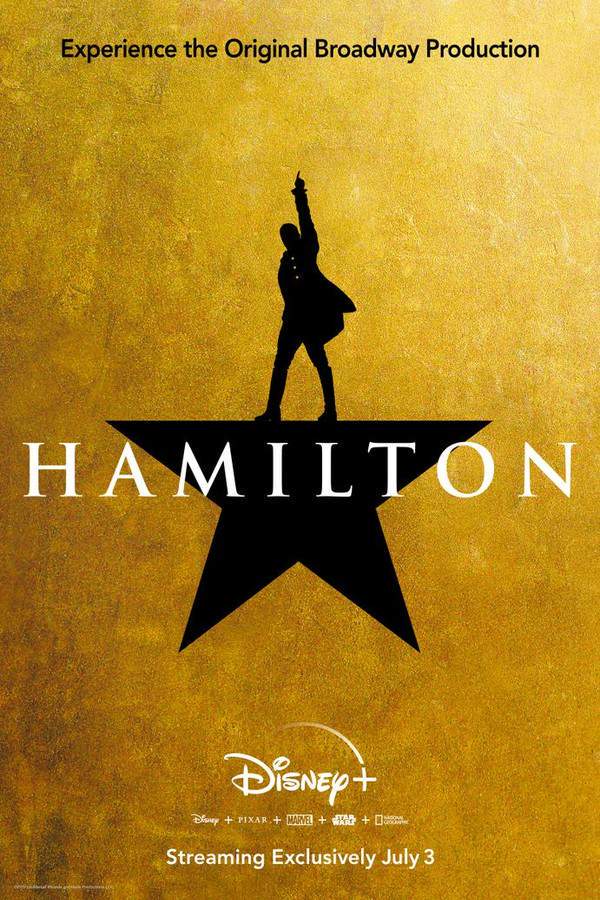
The ending of "Hamilton" is both dramatic and deeply symbolic. Alexander Hamilton, knowing his duel with Aaron Burr is inevitable, decides not to shoot Burr directly but instead raises his gun to the sky, following the advice he gave to his son Philip before he was killed in a duel. Burr, unaware of Hamilton’s intention, fires and kills him. This act of Hamilton’s—choosing not to aim at his opponent—connects his death to his son's, highlighting a recurring theme of sacrifice and the tragic costs of his beliefs. Hamilton’s refusal to throw away his shot at life, instead opting for a final act that ensures his lasting legacy, underscores his obsession with how history will remember him. Throughout the musical, Hamilton is haunted by his mortality, and in these last moments, his decision to die with integrity is a statement about what he hopes his story will be—one of principle, sacrifice, and lasting influence.
As the final song concludes, Hamilton appears briefly on stage for a moment of reconciliation with Eliza, which ends with her gasping, clutching her chest, and the lights fading out. This moment has sparked debate: some see it as Eliza seeing the audience, symbolizing how her story—and Hamilton’s—is now in the public eye, emphasizing the importance of legacy beyond death. Others interpret it as her final breath, a poignant farewell and reunion with Alexander in the afterlife, fulfilling her lifelong dedication to preserving his memory. Phillipa Soo, who plays Eliza, has mentioned that the scene is intentionally ambiguous, representing transcendence and the enduring nature of love, memory, and storytelling.
In the aftermath of Hamilton’s death, Burr grapples with his own guilt and reputation. He survives the duel but is forever marked as the man who killed Hamilton, a villain in history’s narrative. His subsequent life is turbulent, entangled in conspiracy and political destruction, ultimately leading to his exile in Europe and the loss of his former prominence. Meanwhile, Hamilton’s legacy endures through his contributions to America’s financial system and his complex relationship with the issue of slavery, which remains a nuanced part of his story. The musical’s closing questions—"Who tells your story?"—highlight the ongoing significance of history, storytelling, and whose voices are remembered. Ultimately, the ending emphasizes that Hamilton’s legacy—like all history—is shaped by those who tell it, and even in death, his impact continues through the stories we preserve.