Plot Explained Spoilers guaranteed!
Plot Explained

Browse by genre

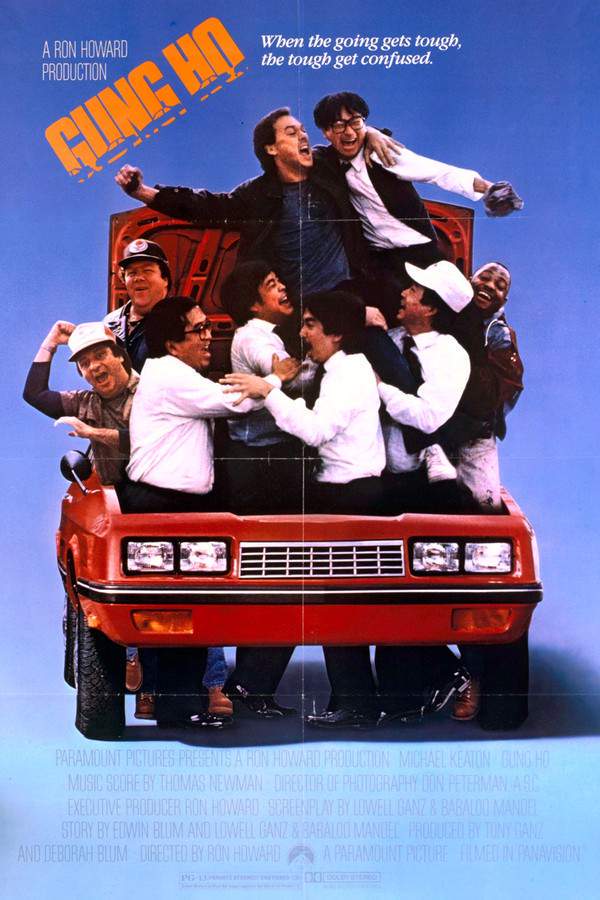
Gung Ho (1986) movie poster

Timeline

Gung Ho (1986) Timeline Explained – Every Event in Order

Release, runtime and language
1986 · 111 min · English
Loading streaming availability…
Directed by
Ron Howard
Starring
Michael Keaton, Gedde Watanabe

When an American auto plant faces closure, a Japanese company takes over, implementing new and innovative management styles. Factory worker Hunt Stevenson finds himself caught between his colleagues’ skepticism and the unfamiliar corporate culture. He must learn to adapt and bridge the gap between American work ethic and Japanese business practices to save the plant and the jobs of everyone involved.

On this page (6)
  1. 1 Where to watch
  2. 2 Events in order (15)
  3. 3 Timeline questions answered
  4. 4 Movie threads
  5. 5 Movies like Gung Ho
  6. 6 Every angle
Loading streaming availability…

15 events in order · contains spoilers

Gung Ho Timeline: Events in Chronological Order

Every key event of Gung Ho (1986) in order, scene by scene, with when and where it takes place. Use it to untangle flashbacks, time jumps and parallel storylines, to refresh your memory before the sequel or to find the exact scene you are thinking of.

  1. Factory Closure

    The automobile factory in rural Pennsylvania remains shut down for an astonishing nine months due to an economic downturn. The local community faces significant hardships as families rely on the factory for their livelihoods.

    Where
    Pennsylvania
  2. Acquisition by Assan Motors

    A glimmer of hope arises when a Japanese corporation, Assan Motors, acquires the factory. However, the company requires convincing from local stakeholders to resume operations, creating a crucial opportunity for intervention.

    Where
    Pennsylvania
  3. Hunt's Journey to Japan

    Hunt Stevenson, portrayed by Michael Keaton, travels to Japan to present a compelling case to Assan's management. His efforts are vital in persuading the Japanese executives to consider reopening the factory and investing in the community.

    Where
    Japan
  4. Factory Reopening

    The Assan Motors team travels to America, leading to the reopening of the factory. Despite the celebration, workers are dismayed to discover that their wages will be significantly lower than what they had previously earned.

    Where
    Pennsylvania
  5. Cultural Clash

    As operations commence, a profound culture clash emerges between the American workers and Japanese management. The management's strict regimens and high productivity expectations quickly frustrate the local workforce, leading to increased tension.

    Where
    Pennsylvania
  6. Unpaid Overtime

    Unpaid overtime becomes the norm under the new management, as the focus on output intensifies. Workers feel the pressures mount as their well-being is overshadowed by the management's relentless pursuit of productivity.

    Where
    Pennsylvania
  7. Baseball Game Incident

    During a company baseball game meant to foster team spirit, tensions escalate markedly. A contentious incident culminates in a worker intentionally colliding with a Japanese manager, highlighting the growing divide between the two cultures.

    Where
    Pennsylvania
  8. Production Ultimatum

    As the labor situation becomes increasingly fraught, Japanese management threatens to close the factory unless Hunt can ensure the production of 15,000 automobiles in a month. This ultimatum sets the stakes sky-high, pushing everyone to the limit.

    Where
    Pennsylvania
  9. Workers' Skepticism

    Hunt shares the ultimatum with the workers, but they respond with skepticism about reaching such a lofty goal. In an attempt to reassure them, he falsely claims a smaller raise would take effect if they produce 13,000 vehicles instead.

    Where
    Pennsylvania
  10. Commitment to the Goal

    Reluctantly, the workforce agrees to strive for the ambitious 15,000 production goal. However, as they face grueling hours and numerous challenges, doubts begin to creep in regarding the feasibility of this target.

    Where
    Pennsylvania
  11. Decision to Protest

    After reaching the 13,000 vehicle threshold, discontent and frustration compel the workers to protest against management. Hunt finds himself torn between his commitments and the growing anger of his fellow workers.

    Where
    Pennsylvania
  12. Hunt's Crisis

    Facing potential factory closure and the wrath of the community, Hunt reveals that he oversold their capabilities to management. The pressure mounts as his reputation drastically shifts from that of a hero to a scapegoat.

    Where
    Pennsylvania
  13. Team Unity

    In the face of mounting challenges, the American workers rally to address differences with the Japanese management before a key factory inspection. This newfound unity helps bridge cultural divides and enhance collaboration.

    Where
    Pennsylvania
  14. Successful Inspection

    During the Japanese executive's factory inspection, the focus shifts from output to the spirit of collaboration. The executive is pleasantly surprised by the cooperation displayed between the American and Japanese teams.

    Where
    Pennsylvania
  15. New Agreement Formed

    Following consultations, management agrees to ease their stringent standards while committing to raise wages. The workers, in turn, show willingness to comply with expectations, setting a positive trajectory for future operations.

    Where
    Pennsylvania

Last updated: October 28, 2024 at 17:40

Was this helpful?

Timeline questions answered

Gung Ho Timeline Explained: Your Questions Answered

When does it happen, and why in that order? The questions people ask about the chronology of Gung Ho (1986): time jumps, flashbacks, cause and effect between scenes and the correct order of events, each answered with spoilers.

Q1

Why did the workers accept lower wages when the factory reopened?

The workers had no real choice but to accept the reduced wages. The factory had been closed for nine months, leaving the entire community in economic hardship with no other employment options. When Assan Motors agreed to reopen the plant, the lower wages were presented as a necessary compromise to keep jobs in the town, even though it meant a significant pay cut from what they previously earned.

Foreshadowing: Earlier, the town had suffered greatly during the nine-month shutdown, establishing why the workers were desperate enough to accept reduced pay.

  • wages
  • factory reopening
  • asssan motors
  • jobs
  • economic hardship
Q2

What caused the tension between American workers and Japanese management?

The tension stemmed from vastly different workplace expectations. Japanese management implemented strict regimens and demanded high productivity standards, including unpaid overtime, which was unfamiliar to the American workers who were accustomed to a more relaxed pace. The Japanese executives prioritized output above worker well-being, while the American workers felt undervalued and overworked, creating an adversarial relationship.

Foreshadowing: The cultural differences were hinted at during Hunt's initial trip to Japan, where he witnessed the intense work culture firsthand.

  • culture clash
  • japanese management
  • american workers
  • productivity
  • overtime
Q3

Why did Hunt Stevenson lie about the 13,000 car production target?

Hunt lied to reassure the skeptical workers and convince them to commit to the goal. When he told them about the 15,000 car ultimatum, the workers were understandably doubtful that they could achieve such an ambitious target. To placate them and get their buy-in, Hunt falsely claimed that a smaller raise would kick in if they produced 13,000 cars instead, hoping this would motivate the team.

Foreshadowing: Earlier tension between workers and management made it clear that the workers would not easily accept the challenging production goal without additional incentive.

  • hunt stevenson
  • 13000 cars
  • lie
  • production target
  • raise
Q4

What was the 15,000 car production ultimatum and what were the consequences?

Japanese management gave Hunt an ultimatum: the factory would remain open only if they could produce 15,000 automobiles in one month, matching the output of a top-performing Japanese plant. If they succeeded, both the factory would stay open and wages would return to their previous levels. If they failed, the factory would close permanently with no raises for the workers. This created enormous pressure on Hunt and the entire workforce.

Foreshadowing: The earlier baseball game incident and rising tensions signaled that management was seriously considering closing the factory.

  • 15000 cars
  • ultimatum
  • factory closure
  • production target
  • wages
Q5

Why did the workers protest after reaching 13,000 cars?

The workers protested because they felt betrayed by Hunt's lie and frustrated with management's demands. After exhausting themselves to reach 13,000 cars, they discovered that Hunt had promised management they would hit 15,000. The workers were also angry about the overall treatment from Japanese management, including the unpaid overtime and strict expectations. Their protest was a way to express collective dissatisfaction with both Hunt and management.

Foreshadowing: Hunt's false promise about 13,000 triggering a raise planted the seeds for this conflict.

  • protest
  • 13000 cars
  • workers
  • hunt stevenson
  • factory
Q6

How did Hunt Stevenson's reputation change throughout the movie?

Hunt's reputation underwent a dramatic shift from hero to scapegoat. Initially, he was celebrated as a hero for traveling to Japan and convincing Assan Motors to reopen the factory. However, after he revealed that he had committed to the 15,000 car target without the workers' knowledge and that he had lied about the 13,000 car raise, the community turned on him. He became the scapegoat for the failed negotiations and the potential loss of their jobs.

Foreshadowing: Early praise for Hunt's diplomatic success set up the contrast for his later fall from grace.

  • hunt stevenson
  • reputation
  • hero
  • scapegoat
  • community
Q7

Why did the Japanese executive decide to keep the factory open?

The Japanese executive was pleasantly surprised by the newfound cooperation between American and Japanese workers during his factory inspection. Although the team fell short of the 15,000 car target, he recognized and appreciated the spirit of collaboration and unity that had developed. Rather than focusing solely on the production numbers, he valued the cultural bridge that had been built, leading him to keep the factory open and grant the wage increases.

Foreshadowing: The workers' rally to address their differences with management before the inspection demonstrated their commitment to working together.

  • japanese executive
  • factory open
  • cooperation
  • inspection
  • raises
Q8

What happened during the baseball game incident?

During a company baseball game intended to build camaraderie between American workers and Japanese management, tensions escalated into conflict. A worker intentionally collided with a Japanese manager, physically embodying the growing resentment and cultural divide between the two groups. This incident highlighted how deep the cultural rift had become and pushed the situation toward crisis.

Foreshadowing: Earlier scenes showed mounting frustration between workers and management, making violent expression nearly inevitable.

  • baseball game
  • incident
  • collision
  • japanese manager
  • worker tension
Q9

What was the final agreement between Assan Motors and the workers?

Both sides reached a compromise that benefited everyone. Japanese management agreed to ease their demanding standards and improve pay, addressing the workers' main grievances about overwork and compensation. In return, the workers committed to being more compliant and productive, agreeing to meet higher expectations while maintaining better working conditions. This agreement established a foundation for ongoing cooperation between American and Japanese workplace cultures.

Foreshadowing: The team unity displayed during the inspection laid the groundwork for this positive negotiation outcome.

  • agreement
  • management
  • workers
  • wages
  • compliance
  • production

Movie threads

More Movies Like Gung Ho, by Mood & Story

Curated lists built around what makes Gung Ho tick: the same mood, the same kind of story or the same emotional payoff. Each list explains why these movies belong together.

Culture Clash Workplace Dramas like Gung Ho

Stories where opposing business cultures must find common ground to survive. If you enjoyed the cultural and business friction in Gung Ho, you'll like these movies about workplaces where American and foreign business practices collide. These films explore adaptation, management styles, and the journey from conflict to collaborative success in similar steady-paced, hopeful stories.

  • tense
  • determined
  • collaborative
  • frustrated
  • inspiring
  • adaptation
  • Tone: hopeful, tense
  • Pacing: steady, character-driven
Why these movies?

The story pattern: The narrative typically begins with a crisis, such as a failing business, that necessitates an unlikely partnership. Initial clashes based on different work ethics, communication styles, and values create significant conflict. The story progresses through a series of negotiations and adaptations, where characters on both sides learn from each other, culminating in a successful fusion of the best elements from each culture.

Why they belong together: Movies are grouped here for their shared focus on the specific dynamics of intercultural business relations. They share a mood that blends frustration with determination, a steady pacing that allows for nuanced exploration of systemic issues, and an ultimately hopeful tone about the possibility of mutual understanding and success.
Hopeful Stories About Saving a Community like Gung Ho

Hopeful tales where a town or workforce unites to overcome an economic threat. Fans of Gung Ho will appreciate these movies about communities banding together against economic odds. These similar films feature a steady pace, a mix of drama and comedy, and a ultimately happy ending where collective action and determination lead to a hopeful resolution for everyone involved.

  • inspiring
  • hopeful
  • collaborative
  • determined
  • tense
  • community
  • Tone: hopeful, inspiring
  • Pacing: steady, building
Why these movies?

The story pattern: These narratives often start with a grave external threat that disrupts the status quo, forcing a group of people to confront their differences. The central conflict is internal, pitting fear and skepticism against hope and ingenuity. The emotional arc moves from frustration and tension to a growing sense of purpose and collaboration, building towards a climax where the community's unified effort leads to a triumphant, heartwarming resolution.

Why they belong together: These films share a core emotional journey focused on collective struggle and triumph. They possess a specific vibe: a medium emotional weight with high personal stakes, a balance of tense conflict and uplifting humor, and a consistently hopeful, inspiring tone that makes the victory feel earned and meaningful.

If you liked this

Movies Like Gung Ho

Similar movies to Gung Ho: the same genre, themes or kind of story. Each one comes with its own plot summary, timeline and ending explained.

Browse all movie summaries

Every angle

Gung Ho (1986) Explained: Plot, Timeline & Characters

Everything about Gung Ho in one place: what happens in the plot summary, the timeline in chronological order, the characters and meaning and a spoiler-free summary. What's After the Movie adds the cast, box office and post-credit scenes.

Coming soon on iOS and Android

The Plot Explained Movie Summary App

Plot summaries, endings explained and timelines on your phone. Catch up on any movie in minutes, save your favorites and never miss a twist again.

Be the first to know when we launch. Your email stays private, always.

Learn more about the app