Plot Explained Spoilers guaranteed!
Plot Explained

Browse by genre

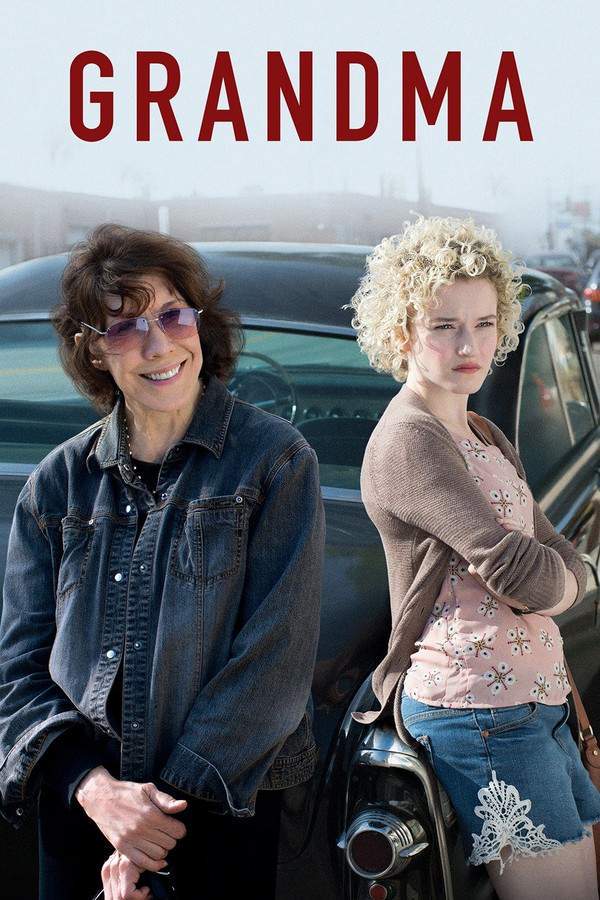
Grandma (2015) movie poster

Plot Summary

Grandma (2015) Plot Summary Explained

Release, runtime and language
2015 · 79 min · English
JustWatch #10,365 21
Directed by
Paul Weitz
Starring
Judy Greer, Lily Tomlin, Marcia Gay Harden, Laverne Cox, Nat Wolff, Julia Garner
Budget
$600K

A determined grandmother finds her life disrupted when her granddaughter seeks an urgent loan. To gather the money before nightfall, they embark on a chaotic and comical journey, uncovering surprising truths about Grandma Elle’s past along the way. Unexpected encounters and long-held secrets surface, leading to hilarious and poignant moments.

On this page (6)
  1. 1 Where to watch
  2. 2 What happens: full plot
  3. 3 Plot questions answered
  4. 4 Movie threads
  5. 5 Movies like Grandma
  6. 6 Every angle

Where to watch

Where to Watch Grandma (2015)

Where can you watch Grandma? Stream, rent or buy it in the US, including on fuboTV, Tubi TV and Amazon Video: current JustWatch availability with up-to-date prices.

Streaming availability powered by JustWatch

Full plot summary · contains spoilers

What Happens in Grandma: Full Plot Summary

The whole story of Grandma (2015) explained, from the opening scene to the final frame: every key event, every twist and what it all adds up to. Read it as a quick recap before the sequel, to check a scene you missed, or to finally understand what really happened.

Elle, a lesbian poet, is still processing the recent death of her long-time life partner, Violet, when she becomes entangled in a fragile web of improvisation and urgency. She ends a four‑month relationship with a younger admirer, Olivia, telling herself and the world that their romance meant nothing. The news is delivered in a way that feels blunt and defensive, a shield against the ache of loss and the fear of being alone. Not long after, Elle’s granddaughter Sage, who is eighteen, arrives with news that changes everything: Sage is pregnant and needs $630 for an abortion that is scheduled for that very afternoon. Sage’s mother is controlling and has already confiscated her credit card, leaving the two women with only their wits and whatever money they can scrape together. What follows is a tense, improvised road trip across Los Angeles, a city that mirrors their unsettled emotions and the precarious path they must navigate to secure a future Sage never anticipated.

The plan to raise money unfolds in fits and starts, each stop revealing a new layer of desperation and complexity. Elle confronts the father of Sage’s unborn child and forces him to cough up $50, a small fraction of what is needed, but it is something. She then tries to leverage another debt from Deathy, a tattoo artist who is also a friend—yet even Deathy’s help is limited. Deathy can offer only around $60 from the register, and in the process she gives Elle a fresh tattoo that looks like the letter “O.” Sage interprets this as Olivia’s initial, a memory that tugs at both of them, though Elle insists the mark is only a circle—a symbol more about possibility than ownership. As the clock ticks and the car hums along the freeway, Elle attempts to monetize her rare books by selling them to Carla, the café owner who seems practical and sharp. A confrontation erupts between Elle and Olivia at Carla’s café, exposing tensions that were simmering beneath the surface. Carla’s tech-savvy approach—checking prices on eBay—suggests the modern marketplace’s cold calculus, and the price she quotes feels insulting to Elle. The result is a volatile mix of embarrassment, anger, and stubborn pride on the sidewalk outside the cafe.

With options running thin, Elle and Sage turn to those who have been part of Elle’s life for years. They locate Elle’s ex-husband Karl, someone she hasn’t spoken to in decades, hoping he might lend a hand for rent and survival. He agrees to help only after he is drawn into a question about whether Elle’s need is really about a home or about the abortion itself. The conversation becomes charged with history: Elle admits she once terminated a pregnancy they share memories of, and she later explains that she wanted a child but not a husband. Karl’s reaction is a mix of anger and hurt, culminating in a firm stance that he will not finance the abortion, a moment that pushes Elle and Sage back toward the uncertain road ahead.

Finally, Sage and Elle face Sage’s mother, Judy, a busy single parent who is initially reluctant to part with money but eventually provides enough to ease the immediate crisis. With the clock still ticking, Elle drives Sage to the abortion clinic, and the act that follows becomes a quiet, intimate moment of release and relief, accompanied by a lingering complexity about what has been sacrificed and what remains.

After Sage’s procedure, Judy forgives her daughter and returns her to the care of home and family. The journey home is offset by a personal moment for Elle: she allows herself a small, almost carefree giggle, recalling memories of Violet and feeling a shimmer of joy in the midst of the ache. Before reaching their final destination, Elle makes a brief stop at Olivia’s house to offer a sincere apology for the earlier words that diminished their relationship, and the two share a tentative kiss—a brief reconnection that hints at the unresolved feelings still simmering between them. As the night closes in, Elle walks alone down the sidewalk, a slender thread of laughter tracing her steps, carrying both the ache of loss and the stubborn, stubborn spark of hope.

In this intimate drama, the characters collide with questions about love, responsibility, and the choices that shape a life. The film threads together moments of tenderness and stubbornness, showing how people reach for connection even when the path is thorny and the clock is running out. It is a story that refuses to sugarcoat hardship, yet it also refuses to surrender to despair, balancing grief with small, human acts of care and reconnection. The result is a narrative that feels lived-in and raw, anchored by a central figure whose artful, searching voice keeps guiding the viewer through a day that becomes a lifetime in the making.
Last updated: October 09, 2025 at 16:18

Was this helpful?

Plot questions answered

Grandma Plot Explained: Your Questions Answered

The questions people ask most about Grandma (2015): what happens in the confusing scenes, why the characters do what they do, the twists, hidden details and what the ending means. Each answer contains spoilers.

Q1

Why does Elle break up with Olivia so abruptly?

Elle ends her four-month relationship with Olivia immediately after Violet's death, claiming their romance meant nothing. This blunt dismissal is actually a defense mechanism, she uses defensiveness to mask her grief and fear of being alone, pushing away potential intimacy before she can be hurt again.

  • elle
  • olivia
  • breakup
  • grief
  • defense mechanism
Q2

Why does Sage need $630 by that afternoon?

Sage is pregnant and has scheduled an abortion for that same afternoon. Her mother Judy has confiscated her credit card, leaving Sage no way to pay for the procedure on her own. Elle agrees to help raise the money before the clinic closes.

  • sage
  • abortion
  • money
  • urgency
  • clinic
Q3

Why is Elle so determined to help Sage get the money?

Elle is driven to help Sage partly because she sees parallels between Sage's situation and her own past, she once had an abortion but wanted a child without a husband. Her determination also represents an attempt to process her grief through action and to reconnect with her family.

Foreshadowing: Earlier scenes establish Elle's own history with unintended pregnancy.

  • elle
  • sage
  • abortion
  • support
  • family
Q4

What does the 'O' tattoo on Elle's wrist represent?

Deathy gives Elle a tattoo that looks like the letter 'O' while lending her $60. Sage suspects it stands for Olivia, hinting at Elle's unresolved feelings. Elle insists it's just a circle, a symbol of possibility rather than ownership, though the ambiguity reflects her conflicted state about moving on.

Foreshadowing: Sage's observation suggests she picked up on Elle's emotional connection to Olivia earlier.

  • tattoo
  • O
  • olivia
  • circle
  • symbol
Q5

Why does Karl refuse to give Elle money after learning about the abortion?

Karl becomes furious when he discovers Elle previously aborted his child without telling him. Elle admits she wanted a child but not a husband, which was the reason behind their split. Feeling betrayed and hurt, Karl refuses to finance another abortion, leaving Elle and Sage desperate again.

Foreshadowing: Karl's reaction connects to earlier hints about Elle's complicated reproductive history.

  • karl
  • abortion
  • refusal
  • anger
  • history
Q6

Why does Judy agree to give Sage the money?

Despite being furious about the pregnancy, Judy ultimately provides the $630 needed for the abortion. This moment shows her choosing to support her daughter through a difficult decision rather than letting her face the consequences alone, though she initially resists.

Foreshadowing: Judy's controlling nature earlier (confiscating Sage's card) makes her eventual willingness more meaningful.

  • judy
  • money
  • forgiveness
  • support
  • mother
Q7

Why does Elle apologize to Olivia at the end of the movie?

Elle stops by Olivia's house to apologize for dismissing their relationship as meaningless earlier. This act represents her first step toward vulnerability and reconnection, acknowledging that she did care about Olivia and was simply using the breakup to shield herself from grief.

Foreshadowing: Her earlier defensive breakup set up this moment of reconciliation.

  • elle
  • olivia
  • apology
  • reconciliation
  • kiss
Q8

Why does Elle laugh to herself while walking home?

Elle giggles at memories of Violet while walking home, a moment showing she can feel joy even amid grief. This laugh represents a breakthrough, she's beginning to reconcile her loss with the possibility of moving forward, balancing sorrow with hope.

Foreshadowing: Throughout the film, Elle struggles with Violet's death as the emotional backdrop.

  • elle
  • violet
  • laugh
  • memory
  • grief
Q9

Why does Elle tell Karl about her past abortion?

Elle reveals she aborted Karl's child years ago when he asks why she left him. She explains she wanted a child but not a husband, justifying her choice but also exposing a deeply personal secret. This confession strains their already fractured relationship further.

Foreshadowing: Elle's history with Karl was established earlier in their conversation.

  • elle
  • karl
  • abortion
  • confession
  • history
Q10

Why is Violet's death important to the story?

Violet's recent death is the emotional catalyst for everything that unfolds. Elle's grief drives her to end things with Olivia defensively, and her desire to help Sage may stem from processing her own regrets about choices made and not made. The loss frames her entire character arc.

Foreshadowing: The film opens with Elle coping with Violet's death.

  • violet
  • death
  • grief
  • partner
  • loss
Q11

Why does Elle confront Sage's baby's father for money?

Elle tracks down the father of Sage's unborn child and forcefully demands he contribute to the abortion fund. She obtains $50 from him, demonstrating how far she's willing to go to help Sage, showing both her desperation and her willingness to make moral compromises under pressure.

  • father
  • money
  • extortion
  • desperation
  • confrontation

Movie threads

More Movies Like Grandma, by Mood & Story

Curated lists built around what makes Grandma tick: the same mood, the same kind of story or the same emotional payoff. Each list explains why these movies belong together.

Bittersweet comedy road trips like Grandma

Comedic road trips where laughter mixes with poignant personal revelations. If you enjoyed the chaotic journey and emotional discoveries in Grandma, you'll find similar movies here. These films blend comedic road trip antics with touching, bittersweet character moments, perfect for viewers seeking laughter intertwined with heartfelt introspection.

  • urgent
  • witty
  • introspective
  • regretful
  • hopeful
  • melancholic
  • Tone: bittersweet, wry
  • Pacing: fast, urgent
Why these movies?

The story pattern: The narrative pattern typically involves a high-stakes, time-sensitive quest that forces characters together. As they travel, the external chaos is punctuated by quiet, introspective conversations that reveal hidden layers of grief, regret, and complex relationship histories, leading to a resolution that is hopeful yet realistically tinged with sadness.

Why they belong together: These films are grouped by their unique tonal blend of witty, fast-paced comedy and genuine emotional weight. They share a structure where a physical journey mirrors an internal one, creating a cohesive experience of laughter, tears, and personal growth.

Urgent single-day character dramas like Grandma

Stories where a single day's crisis forces characters to confront their entire lives. Fans of Grandma's race-against-the-clock structure will appreciate these movies. They capture the intensity of a life-changing day where financial or personal desperation leads to chaotic, revealing encounters and profound self-realization.

  • urgent
  • improvised
  • regretful
  • desperate
  • introspective
  • cathartic
  • Tone: bittersweet, urgent
  • Pacing: fast, conversational
Why these movies?

The story pattern: The plot is driven by an immediate, often financial or moral, crisis that must be resolved within 24 hours. This tight structure creates natural tension and forces characters to seek help from estranged friends or family, leading to rapid-fire revelations about their past mistakes, current relationships, and true nature under pressure.

Why they belong together: They are united by their 'one day' narrative structure, which creates a unique pacing of fast-moving events punctuated by deep, slow-burning emotional conversations. This combination delivers a powerful, condensed arc of crisis, confrontation, and catharsis.

If you liked this

Movies Like Grandma

Similar movies to Grandma: the same genre, themes or kind of story. Each one comes with its own plot summary, timeline and ending explained.

Browse all movie summaries

Every angle

Grandma (2015) Explained: Plot, Timeline & Characters

Everything about Grandma in one place: what happens in the plot summary, the timeline in chronological order, the characters and meaning and a spoiler-free summary. What's After the Movie adds the cast, box office and post-credit scenes.

Coming soon on iOS and Android

The Plot Explained Movie Summary App

Plot summaries, endings explained and timelines on your phone. Catch up on any movie in minutes, save your favorites and never miss a twist again.

Be the first to know when we launch. Your email stays private, always.

Learn more about the app