Plot Explained Spoilers guaranteed!
Plot Explained

Browse by genre

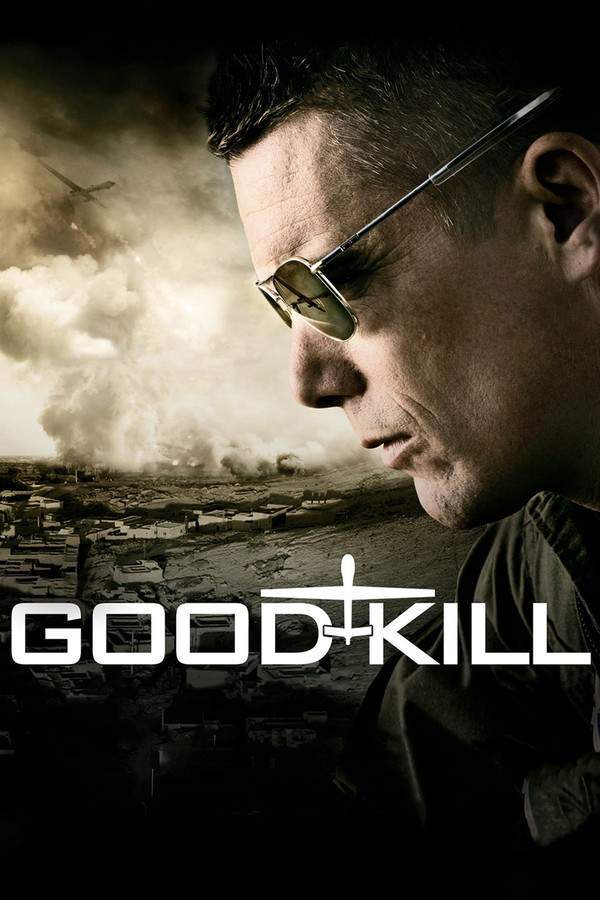
Good Kill (2015) movie poster

Plot Summary

Good Kill (2015) Plot Summary Explained

Release, runtime and language
2015 · 102 min · English
JustWatch #2,178
Directed by
Andrew Niccol
Starring
Zoë Kravitz, January Jones

As a veteran Air Force pilot, Tom Egan finds himself confronting the psychological and moral consequences of drone warfare. Operating from a remote base, he struggles with the detachment and precision of controlling combat missions, witnessing lives lost with unsettling clarity. The intense pressure and blurred lines between war and surveillance take a toll on his marriage to Jane and force him to question his own sense of humanity.

On this page (6)
  1. 1 Where to watch
  2. 2 What happens: full plot
  3. 3 Plot questions answered
  4. 4 Movie threads
  5. 5 Movies like Good Kill
  6. 6 Every angle

Where to watch

Where to Watch Good Kill (2015)

Where can you watch Good Kill? Stream, rent or buy it in the US, including on fuboTV, Paramount Plus Premium and Philo: current JustWatch availability with up-to-date prices.

Streaming availability powered by JustWatch

Full plot summary · contains spoilers

What Happens in Good Kill: Full Plot Summary

The whole story of Good Kill (2015) explained, from the opening scene to the final frame: every key event, every twist and what it all adds up to. Read it as a quick recap before the sequel, to check a scene you missed, or to finally understand what really happened.

Major Thomas Egan, portrayed by Zoë Kravitz, is an experienced officer stationed at an Air Force Base near Las Vegas, where he has settled into a seemingly serene suburban life with his wife and their two children. Once an adept F-16 Falcon pilot, he now handles the precision and responsibility of flying MQ-9 Reaper drones, conducting armed sorties in foreign territories as part of the U.S. War on Terror. His commanding officer and the support staff hold him in high regard, appreciating his calm demeanor, honed piloting skills, and flexibility—traits that have rightfully earned him a reputation as one of the squadron's most dependable and efficient pilots.

At first glance, Egan's new role appears to be a low-pressure position. He is responsible for targeting unequivocal terrorist cells, vehicles, and facilities in Afghanistan during daylight hours, enabling him to achieve a satisfying work-life balance. His daily routine includes cherished family moments, while he spends his nights either sleeping or relishing quiet off-duty moments. However, as the frequency of his missions escalates—targeting enemies almost each day—Egan starts to experience the mounting strain of constant pressure. His wife, played by January Jones, begins to notice his changes, and he responds to the stress by turning to alcohol.

Despite the growing tension, Egan's operational performance remains exemplary, leading to commendable ratings among his peers. Consequently, his commanding officer assigns him to more demanding missions, working closely with CIA controllers. These operations now extend beyond Afghanistan, reaching dangerous terrains like Yemen and Somalia—areas without a declared U.S. military presence. The moral ambiguity deepens as Egan receives orders that blur the lines: groups labeled as "terrorist cells" and public infrastructures described as "hiding places" for top terrorists, or factories associated with explosives manufacturing begin to surface as targets. Unfortunately, collateral damage becomes an all-too-common outcome. The order to strike civilian targets—women and children included—on several occasions is defended by the CIA on the grounds of them being used as human shields by terrorists.

As Egan grapples with these overwhelming circumstances, his reality begins to unravel, reflecting the catastrophic outcome of his growing addiction. Moments of near-disaster, including a tense experience with law enforcement for drunk driving, starkly illustrate the precariousness of his situation. Concerned about the impact of his actions on his family, he starts to isolate himself from home, frequently postponing commitments to shield his wife from the grave burden of his stress.

Ultimately, his attempts to evade the encroaching darkness lead him into a series of overwatch missions that deepen his inner conflict. A brief moment of calm gives way to heartbreak when he fails to protect U.S. troops from an improvised explosive device. The emotional toll of these harrowing events culminates in a furious outburst at home, pushing his wife to confront him about his job, which inevitably results in her departure.

In the wake of this personal catastrophe, Egan's CIA controller callously instructs him to strike a group of civilians who are responding to an explosion resulting from one of his prior strikes. Choosing to reject this ethically reprehensible order, Egan ingeniously manipulates the UAV control system to allow them to escape harm, which costs him his role in attack missions, relegating him to surveillance tasks instead.

As he maneuvers through this new phase of his life, Egan becomes increasingly obsessed with a man who previously committed unspeakable acts against a woman. Seeing a chance for redemption, he devises a plan to send his support staff on a break and takes matters into his own hands using the surveillance UAV to eliminate the rapist. Fueled by this act of retribution, Egan abandons his established protocols and drives away from Las Vegas, with an unknown destination ahead but a revitalized sense of purpose igniting his journey.
Last updated: November 21, 2024 at 13:18

Was this helpful?

Plot questions answered

Good Kill Plot Explained: Your Questions Answered

The questions people ask most about Good Kill (2015): what happens in the confusing scenes, why the characters do what they do, the twists, hidden details and what the ending means. Each answer contains spoilers.

Q1

Why does Tom Egan start drinking heavily?

Egan begins drinking as a coping mechanism to deal with the mounting psychological pressure of his drone missions. As the frequency of his sorties increases, targeting enemies almost daily, he experiences the toll of constant pressure. His wife starts noticing changes in his demeanor, and he turns to alcohol to numb the moral weight of his actions, including the collateral damage he witnesses.

Foreshadowing: Early in his transition to drones, Egan appears to handle the role well, but the summary notes his coping mechanism emerges as missions escalate.

  • tom egan alcohol
  • drone operator stress
  • coping mechanism
  • PTSD
Q2

Why does Egan's wife leave him?

Egan's wife leaves after a confrontation about the toll his job is taking on their family. As his addiction worsens and he isolates himself from family life, frequently postponing commitments and shielding his wife from the burden of his stress, the strain becomes unbearable. A violent outburst at home serves as the breaking point, leading her to depart.

Foreshadowing: The timeline shows Egan increasingly isolating himself from family and postponing commitments as his stress escalates.

  • egan marriage
  • wife january jones
  • family breakdown
  • drone pilot wife
Q3

What happens when Egan refuses the CIA's order to strike civilians?

When ordered to strike civilians responding to a previous explosion, Egan chooses to reject the ethically reprehensible order. He ingeniously manipulates the UAV control system to allow the civilians to escape harm. This act of moral defiance costs him his role in attack missions, and he is relegated to surveillance tasks instead.

Foreshadowing: Egan's growing moral conflict throughout the film builds to this moment of resistance against unethical orders.

  • refusing orders
  • cia controller
  • drone strike civilians
  • moral dilemma
Q4

How does Egan manipulate the drone to save civilians?

Egan uses his technical knowledge of the UAV control system to alter the targeting parameters, creating a delay or technical malfunction that prevents the strike from executing. This allows the civilians, responders to a previous explosion, to escape the area before the weapon can be deployed.

Foreshadowing: His reputation as one of the squadron's most dependable and efficient pilots demonstrates his deep understanding of the system.

  • uav control system
  • drone manipulation
  • technical workaround
  • civilians escape
Q5

Why does Tom Egan kill the rapist with a drone?

After being relegated to surveillance duties, Egan becomes obsessed with a man who committed unspeakable acts against a woman. Seeing an opportunity for redemption and justice, something he was denied in his official role, he manipulates his support staff's schedule, takes control of a surveillance UAV, and eliminates the rapist. This act of vigilante justice becomes his twisted sense of purpose.

Foreshadowing: Egan's fixation on this case develops during his surveillance-only phase, representing his desperate need for meaningful action after losing combat duties.

  • vigilante justice
  • drone murder
  • rapist killing
  • redemption
Q6

What causes Egan's psychological breakdown?

Egan's breakdown results from cumulative moral injury and trauma. The escalating missions with ambiguous targets, regular collateral damage including women and children, the psychological detachment of remote warfare, and the devastating failure to protect U.S. troops from an IED all compound. His alcohol addiction worsens the deterioration, culminating in violent outbursts and family destruction.

Foreshadowing: The timeline shows a clear progression from initial stress to near-disaster incidents, culminating in the IED failure that breaks him.

  • psychological breakdown
  • moral injury
  • PTSD
  • drone warfare trauma
Q7

Why do the CIA orders become more morally ambiguous?

As Egan's missions extend beyond Afghanistan to Yemen and Somalia, regions without declared U.S. military presence, the targets blur. The CIA begins ordering strikes on groups labeled as terrorist cells and public infrastructures described as hiding places, including factories associated with explosives. Collateral damage becomes common, defended by the CIA as terrorists using human shields.

Foreshadowing: Egan's commanding officer assigns him to more demanding CIA-controlled missions after his exemplary performance.

  • cia orders
  • yemen somalia
  • human shields
  • target ambiguity
Q8

What is the significance of Egan leaving Las Vegas at the end?

Egan's departure from Las Vegas represents both loss and twisted rebirth. He has destroyed his marriage, lost his combat role, and abandoned his family. Yet driving away with a renewed sense of purpose, however morally compromised, shows his defiance. The ambiguous ending suggests he will continue his vigilante operations, now unbound by military protocol or personal constraints.

Foreshadowing: This final act completes his transformation from disciplined pilot to isolated vigilante seeking personal justice.

  • ending explained
  • las vegas
  • vigilante
  • ambiguous ending
Q9

How does Egan's role change from combat pilot to surveillance?

After refusing to strike civilians, Egan loses his attack mission role. His CIA controller reassigns him to surveillance-only duties, monitoring targets without engaging. This demotion reflects both his act of defiance and the military's response to his moral disobedience, effectively grounding him from the combat operations that defined his identity.

Foreshadowing: His rejection of the civilian strike order is the direct cause of his reassignment to purely observational tasks.

  • surveillance drone
  • demotion
  • military career
  • combat role
Q10

Why does Egan become obsessed with the rapist case?

Egan becomes fixated on the rapist as a way to reclaim his sense of purpose and moral agency. After being stripped of combat duties and having failed to protect soldiers from an IED, he sees this case as an opportunity for meaningful intervention. The obsession represents his desperate need for redemption, doing something he believes is undeniably just, unlike his ambiguous drone strikes.

Foreshadowing: This obsession emerges during his surveillance-only phase, when he feels most powerless and removed from meaningful action.

  • redemption
  • obsession
  • vigilante justice
  • moral purpose

Movie threads

More Movies Like Good Kill, by Mood & Story

Curated lists built around what makes Good Kill tick: the same mood, the same kind of story or the same emotional payoff. Each list explains why these movies belong together.

Intense moral dilemma movies like Good Kill

Stories where intense pressure forces characters to confront their fundamental humanity. Find movies like Good Kill that explore intense ethical conflicts under high pressure. These dark, heavy dramas and thrillers feature characters whose principles are tested in extreme situations, leading to profound psychological consequences and ambiguous, thought-provoking endings.

  • morally conflicted
  • tense
  • oppressive
  • psychological
  • heavy
  • grim
  • Tone: dark, tense, morally conflicted
  • Pacing: steady, methodical build
Why these movies?

The story pattern: These narratives typically place a protagonist in a high-stakes role where their daily actions have severe moral consequences. The story unfolds as the pressure of their situation slowly erodes their psyche, leading to a crisis of conscience, personal breakdown, and an ambiguous resolution that questions the very nature of right and wrong.

Why they belong together: These films are grouped by their shared focus on intense ethical pressure, a dark and serious tone, and a heavy emotional impact. They feature protagonists undergoing psychological unraveling due to their involvement in morally complex systems.

Movies about psychological breakdown like Good Kill

Character studies of mental collapse within isolating, oppressive environments. If you liked the psychological unraveling in Good Kill, explore these movies about characters descending into mental and emotional crisis. These straightforward, character-driven dramas and thrillers depict a steady, isolated collapse often set in confined or remote spaces.

  • isolated
  • bleak
  • claustrophobic
  • psychological stress
  • unraveling
  • detached
  • Tone: bleak, oppressive, detached
  • Pacing: steady, deliberate
Why these movies?

The story pattern: The narrative pattern follows a linear character arc where a protagonist, often isolated physically or emotionally, faces a stressor that gradually breaks down their mental state. The confined setting—whether a remote base, a small room, or a singular mind—amplifies the tension, leading to a bleak ending where the character is fundamentally changed or broken.

Why they belong together: These films share a core focus on a straightforward character arc of psychological decline, a steady pacing that builds unease, and an oppressive, isolated mood. The experience is defined by watching a person come apart under strain.

If you liked this

Movies Like Good Kill

Similar movies to Good Kill: the same genre, themes or kind of story. Each one comes with its own plot summary, timeline and ending explained.

Browse all movie summaries

Every angle

Good Kill (2015) Explained: Plot, Timeline & Characters

Everything about Good Kill in one place: what happens in the plot summary, the timeline in chronological order, the characters and meaning and a spoiler-free summary. What's After the Movie adds the cast, box office and post-credit scenes.

Coming soon on iOS and Android

The Plot Explained Movie Summary App

Plot summaries, endings explained and timelines on your phone. Catch up on any movie in minutes, save your favorites and never miss a twist again.

Be the first to know when we launch. Your email stays private, always.

Learn more about the app