Khuraj Mukherjee as Bishwanath Majumdar, Saswata Chatterjee as Topshe, Sabyasachi Chakraborty as Feluda, Barun Chakraborty as Haren, Amar Gangopadhyay as Kalikinkar Majumdar, Nimai Ghosh as Gokul, Saroj Ray as Inspector Sarkar, and Ganesh Kar as Monilal star in a compelling story set in the rural outskirts of Palashi. This tale begins with the elderly Kalikinkar Majumdar, a man confined to his bed due to health issues, who reaches out to the renowned detective Feluda to assist him in solving a mysterious puzzle. The invitation, extended from his home in Ghurghutia village, sets the stage for a gripping investigation.
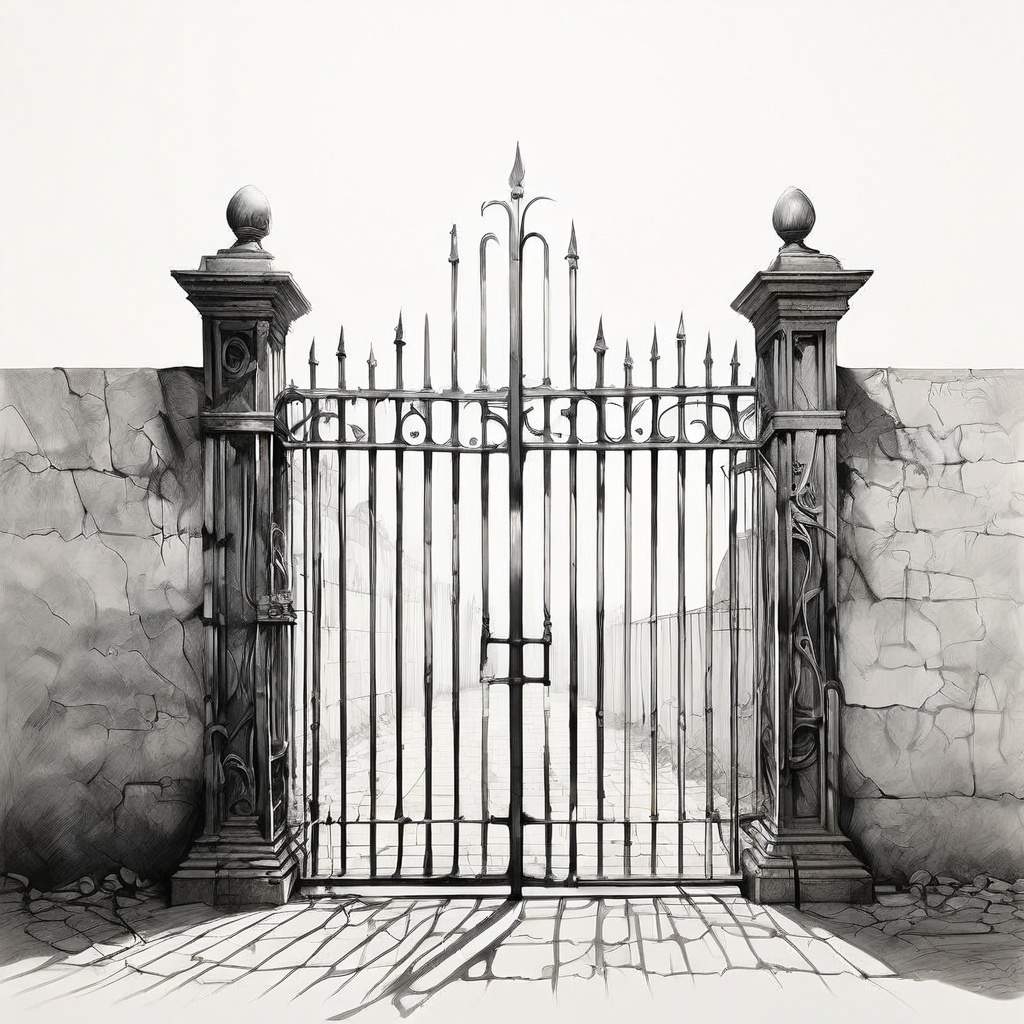
Upon accepting the challenge, Feluda and his cousin Topshe travel to Palashi and make their way to the secluded house in Ghurghutia. The residence is enveloped by a vast garden and is notably isolated, lacking electricity, which casts shadows in the lantern-lit darkness of the house. Inside, they're introduced to Kalikinkar, a frail man of seventy-three years, who seems somewhat fragile but sharp-minded. During their initial conversations, Kalikinkar summons his pet parrot, which surprisingly knows a riddling phrase:
> "Trinayan, hey Trinayan, take some rest."
Kalikinkar tasks Feluda with deciphering this riddle to unlock an iron chest containing his valuables. He promises a reward of four rare Émile Gaboriau books if Feluda succeeds. As part of the household, they also meet Rajenbabu, who oversees Kalikinkar's affairs but now mostly shops for books on his behalf because Kalikinkar’s health limits his movements.
Later, they are joined by Kalikinkar's son, Bishwanath Majumdar, who mentions he is visiting only temporarily due to the demands of his business. The evening passes with dinner, and once night falls, Feluda begins to analyze the parrot's words. He recognizes that the phrase, used by the British during the colonial era, hints at a coded message, represented numerically as 39-0-39 8-2-0. Utilizing his knowledge of old colonial ciphers, Feluda and Topshe deduce that the riddle's solution points to the sequence of numbers, which provides the key to the chest.
The following morning, after sharing tea and confirming their answer, Feluda and Topshe retrieve the four Gaboriau books and prepare to leave. However, a sense of suspicion grows as Feluda notices that Bishwanath had left earlier than expected. Acting on his intuition, Feluda quickly informs the police, and they return to Ghurghutia. Upon arrival, they observe a new car—definitely Bishwanath's—indicating he hadn't yet departed. The scene grows tense as they find Kalikinkar missing, the iron chest open and empty, and Gokul, the household servant, sobbing intensely.
Through interrogation, Feluda uncovers a shocking revelation: Kalikinkar, the elderly man they had believed to be alive, had actually been murdered. The evidence points to Bishwanath, who, during a heated argument, had killed his father and disposed of the body in the nearby lake with the help of Gokul. It is also revealed that Rajenbabu, an assistant in Kalikinkar’s dealings, had died two years earlier. Gokul, coerced into obeying their directives, played a part in the deception.
In the climax, Bishwanath is captured and reveals himself as a failed actor who had skillfully assumed the identities of Kalikinkar, Rajenbabu, and himself to cover his tracks. The large house, filled with shadows and lacking electricity, facilitated his deception. His plan was fueled by greed—he wanted the treasures stored in the iron chest but lacked the key since Kalikinkar had never disclosed the combination. Seeing an opportunity, Bishwanath used his acting talents to impersonate his father and others, aiming to extract the secret from Feluda himself.
Finally, Feluda explains how the riddle was uncovered and asserts that the true treasure was in Kalikinkar’s collection of rare books, which he chooses not to keep as a trophy of crime. As the story concludes, Topshe returns the Gaboriau books to Kalikinkar’s bookshelf, while the parrot continues to repeat the mysterious phrase, seemingly remembering its own part in this complex mystery:
> Trinayan, hey Trinayan, take some rest.
This tale exemplifies the detective’s brilliance and the way old colonial techniques, combined with keen observation, unravel even the most intricate deceptions.