






Plot Explained Spoilers guaranteed!
Plot Explained

Browse by genre

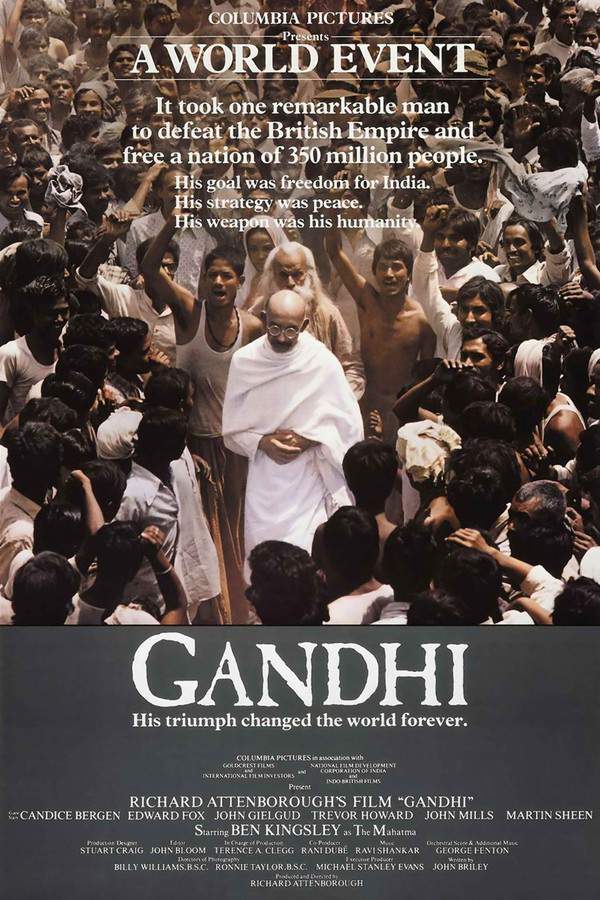
Gandhi (1983) movie poster

Characters & Themes

Gandhi (1983) Characters, Setting & Themes Explained

Release, runtime and language
1983 · 191 min · English
JustWatch #8,190 5
Directed by
Richard Attenborough
Starring
Candice Bergen, Martin Sheen, Ben Kingsley, John Gielgud, John Mills, Trevor Howard

This biographical drama portrays the remarkable life of Mohandas Gandhi and his unwavering commitment to nonviolent resistance against British colonial rule. Initially facing doubt and opposition from officials like Lord Irwin, Gandhi's persistent and courageous actions inspire a movement that captures global attention and propels India towards its independence. The film explores his philosophy and the significant impact he had on a nation's struggle for freedom.

On this page (8)
  1. 1 Where to watch
  2. 2 Characters explained (4)
  3. 3 Where & when it takes place
  4. 4 Themes & meaning (3)
  5. 5 Character & meaning questions
  6. 6 Movie threads
  7. 7 Movies like Gandhi
  8. 8 Every angle

Where to watch

Where to Watch Gandhi (1983)

Where can you watch Gandhi? Stream, rent or buy it in the US, including on Amazon Video, Apple TV Store and Fandango At Home: current JustWatch availability with up-to-date prices.

Streaming availability powered by JustWatch

4 main characters · contains spoilers

Gandhi Characters Explained: Who Is Who

The main characters of Gandhi (1983), heroes and villains: what drives them, how they change over the course of the story and what each of them reveals about the film's bigger ideas.

  • Mahatma Gandhi (Ben Kingsley)

    Gandhi is a pacifist leader who becomes a symbol of the Indian independence movement. His philosophy of non-violence and civil disobedience influences millions and shapes the course of India's struggle for freedom. Despite facing adversity and imprisonment, he remains steadfast in his beliefs, focusing on justice and unity.

    • 👤 Leader
    • 📜 Activist
  • Margaret Bourke-White (Candice Bergen)

    As a prominent photojournalist, Bourke-White captures the poignant moments of Gandhi's life and the Indian struggle for independence. Her interactions with Gandhi help bring international attention to the movement, highlighting the importance of media in societal change.

    • 📷 Journalist
    • 🌟 Influencer
  • Jawaharlal Nehru (Roshan Seth)

    Nehru is a key figure in the independence movement, serving as Gandhi's close associate and future Prime Minister of India. He plays an important role in galvanizing public support for independence and navigating the complex political landscape during and after British rule.

    • 🏛️ Politician
    • 🤝 Ally
  • Kasturba Gandhi (Rohini Hattangadi)

    Kasturba, Gandhi's devoted wife, represents the personal sacrifices made during the struggle for independence. She supports her husband but also faces challenges due to his relentless commitment to his ideals, demonstrating the impact of political activism on personal lives.

    • 👩‍❤️‍👨 Supporter
    • 📖 Advocate

Last updated: May 26, 2025 at 06:39

Was this helpful?

Setting

Where and When Does Gandhi Take Place?

The setting of Gandhi (1983): the year and time period, the places and locations, and how they shape the characters, the mood and the tension of the story.

Time period

1893, 1915-1948

The movie spans significant historical periods from the late 19th century to the mid-20th century. It begins in 1893, when Gandhi is exposed to racial injustice in South Africa, and follows through pivotal moments in India's fight for independence until Gandhi's assassination in 1948. This era includes both World Wars and the eventual partition of India, reflecting the turbulent socio-political climate of the time.

Location

South Africa, India, Amritsar, Dandi

The film primarily takes place in South Africa and India, with significant events occurring in notable locations like Amritsar and Dandi. South Africa is depicted as a country grappling with apartheid, where Gandhi first encounters systemic discrimination. India showcases a diverse landscape of struggle as it moves toward independence, with locations like Amritsar symbolizing the harsh realities faced during the freedom movement.

  • 🌍 Locations
  • 🎋 Historical Sites

Last updated: May 26, 2025 at 06:39

Was this helpful?

3 major themes

Gandhi Meaning: Themes & Message Explained

What is Gandhi (1983) really about? The emotional, social and philosophical themes the film keeps returning to, its symbolism and the message beneath the surface.

  • Non-Violence

    Non-violence is the central theme of the film, depicted through Gandhi's commitment to peaceful protests and civil disobedience. His belief in the power of non-violent resistance against oppression inspires millions and becomes a hallmark of his philosophy. This theme resonates through various movements depicted in the film, showcasing the struggles and sacrifices made for freedom.

  • Unity

    The theme of unity is evident as Gandhi encourages people from different backgrounds to come together for the common cause of Indian independence. His efforts aim to transcend social divisions and foster a sense of collective identity among Indians. The film highlights how unity is essential in the face of colonial oppression and internal strife.

  • Justice

    Justice reflects the struggles against injustice faced by the Indian population under British rule. The film portrays Gandhi's journey in fighting for the rights of Indians in both South Africa and India, emphasizing legal and social reforms needed to achieve equality. This quest for justice serves as a driving force for Gandhi’s activism and leadership.

Last updated: May 26, 2025 at 06:39

Was this helpful?

Character & theme questions

Gandhi Characters & Meaning: Your Questions Answered

The questions people ask about Gandhi (1983): who the characters really are, their relationships, what the symbols mean, where it takes place and what the movie is really about. Each answer contains spoilers.

Q1

Where does the movie take place?

The film is set primarily in South Africa and India. South Africa is depicted during the early days of apartheid, where Gandhi first experiences systemic discrimination. India serves as the main backdrop, with significant scenes in Amritsar and Dandi, representing the locations of key moments in the independence movement.

  • south africa
  • india
  • amritsar
  • dandi
  • setting
  • locations
Q2

What time period does the film cover?

The movie spans from 1893 to 1948, beginning with Gandhi's arrival in South Africa and ending with his assassination. This covers over five decades including his years in South Africa, his return to India in 1915, the independence movement through both World Wars, and the partition and immediate aftermath.

  • 1893
  • 1948
  • time period
  • historical era
  • decades
Q3

What does the film say about non-violence?

Non-violence is presented as Gandhi's core philosophy and the central theme of the film. His commitment to peaceful protest and civil disobedience becomes a powerful tool against colonial oppression. The movie demonstrates how this approach inspired millions and influenced independence movements worldwide.

  • non-violence
  • philosophy
  • civil disobedience
  • peaceful protest
  • ahimsa
Q4

How does the film portray unity among Indians?

The film emphasizes unity as essential to the independence struggle. Gandhi actively works to bring together people from different backgrounds, religions, and social classes for the common cause of freedom. This collective identity transcending divisions is shown as crucial in facing colonial oppression.

  • unity
  • collective action
  • indian unity
  • freedom movement
  • social cohesion
Q5

What role does justice play in the film?

Justice drives Gandhi's activism throughout the film, depicting his fight against the legal and social inequalities faced by Indians under British rule. The movie shows his efforts to secure rights for Indians in South Africa and later India, presenting the quest for justice as the foundation of his leadership.

  • justice
  • rights
  • colonial oppression
  • legal reform
  • equality
Q6

Who is Gandhi in the film?

Mahatma Gandhi is portrayed as the pacifist leader who becomes the symbol of India's independence movement. His philosophy of non-violent resistance defines his approach to fighting colonial rule. Despite repeated imprisonment and adversity, he remains steadfast in his beliefs, focusing on achieving justice and unity through peaceful means.

  • mahatma gandhi
  • leader
  • philosophy
  • pacifist
  • independence leader
Q7

Who is Kasturba Gandhi in the movie?

Kasturba Gandhi is depicted as Gandhi's devoted wife who supports his mission while facing the personal costs of his relentless activism. Her character represents the sacrifices made by families during the independence struggle, showing how political commitment affects personal relationships.

  • kasturba gandhi
  • wife
  • sacrifice
  • family
  • personal cost
Q8

What is Jawaharlal Nehru's role in the film?

Nehru is portrayed as Gandhi's close associate and a key figure in the independence movement who later becomes India's first Prime Minister. He works alongside Gandhi to galvanize public support for independence and navigates the complex political landscape during and after British rule.

  • jawaharlal nehru
  • politician
  • future prime minister
  • independence movement
Q9

What role does Margaret Bourke-White play?

Margaret Bourke-White is depicted as a prominent photojournalist who documents Gandhi's life and the Indian struggle for independence. Through her coverage, she helps bring international attention to the movement, highlighting the role of media in shaping global perception of historical events.

  • margaret bourke-white
  • photojournalist
  • media
  • international attention
  • documentary
Q10

What is the context of India's independence struggle shown in the film?

The film depicts India's decades-long fight against British colonial rule, showing the formation of mass movements, civil disobedience campaigns, and the eventual achievement of independence. It captures the turbulent socio-political climate including both World Wars and the painful partition of India.

  • india independence
  • british colonial rule
  • partition
  • freedom struggle
  • colonialism
Q11

Why does the film show Gandhi's time in South Africa?

The South Africa portion of the film depicts Gandhi's formative years where he first encountered racial injustice and systemic discrimination. This experience shapes his philosophy of non-violent resistance and establishes the foundation for his later leadership in India's independence movement.

  • south africa
  • apartheid
  • racial discrimination
  • early activism
  • formative years

Movie threads

More Movies Like Gandhi, by Mood & Story

Curated lists built around what makes Gandhi tick: the same mood, the same kind of story or the same emotional payoff. Each list explains why these movies belong together.

Epic Biographies of Historical Figures like Gandhi

Sweeping biographies that capture the profound impact and personal cost of monumental lives. If you were inspired by the story of Gandhi, explore other movies like this one that chronicle the monumental lives of figures who changed the world. These similar biographical dramas focus on political struggle, idealism, and the heavy personal cost of building a legacy through nonviolent resistance and profound courage.

  • inspiring
  • somber
  • reflective
  • historical
  • determined
  • tragic
  • Tone: hopeful, somber, reflective
  • Pacing: steady, epic
Why these movies?

The story pattern: These narratives typically follow a linear, steady progression through pivotal moments in a person's life, from early formative experiences to their ultimate triumphs and tragedies. The journey is defined by a central, powerful philosophy or goal that faces constant opposition, culminating in a legacy that reshapes society, often at a bittersweet personal cost.

Why they belong together: Movies are grouped here because they share a commitment to portraying historical truth with emotional depth, a hopeful yet somber tone, and a focus on the immense personal weight carried by those who lead great movements. They offer a similar mix of inspiring ideals and tragic sacrifice within a serious, historically-grounded framework.

Movies About Nonviolent Resistance and Moral Courage like Gandhi

Powerful narratives where moral courage and peaceful protest confront overwhelming injustice. For viewers who admired the theme of nonviolent resistance in Gandhi, this section highlights similar movies about political struggle built on moral courage. Discover other powerful dramas where characters use peaceful protest and idealism to fight colonialism, discrimination, and historical injustice, often with a bittersweet but hopeful conclusion.

  • determined
  • inspiring
  • tense
  • somber
  • thoughtful
  • hopeful
  • Tone: determined, hopeful, tense
  • Pacing: steady, deliberate
Why these movies?

The story pattern: The narrative pattern involves a protagonist or group embracing a philosophy of peace to challenge a powerful, unjust system. The story unfolds through acts of civil disobedience, facing brutal retaliation, which in turn mobilizes wider support. The conflict is a battle of wills and ideals, where perseverance and strategic nonviolence are the ultimate weapons, leading to hard-won but incomplete victories.

Why they belong together: These films are connected by their core thematic focus on nonviolence as a political strategy and a moral imperative. They share a high-stakes intensity, a determined yet somber mood, and an exploration of sacrifice for a greater cause, creating a coherent vibe of principled struggle that is both heartbreaking and uplifting.

If you liked this

Movies Like Gandhi

Similar movies to Gandhi: the same genre, themes or kind of story. Each one comes with its own plot summary, timeline and ending explained.

Browse all movie summaries

Every angle

Gandhi (1983) Explained: Plot, Timeline & Characters

Everything about Gandhi in one place: what happens in the plot summary, the timeline in chronological order, the characters and meaning and a spoiler-free summary. What's After the Movie adds the cast, box office and post-credit scenes.

Coming soon on iOS and Android

The Plot Explained Movie Summary App

Plot summaries, endings explained and timelines on your phone. Catch up on any movie in minutes, save your favorites and never miss a twist again.

Be the first to know when we launch. Your email stays private, always.

Learn more about the app