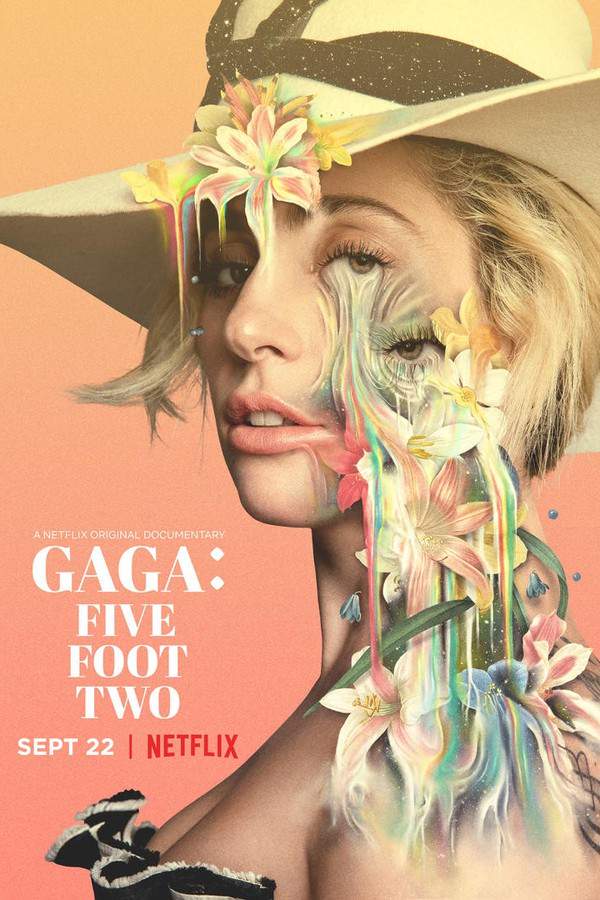
Gaga: Five Foot Two serves as an intimate and comprehensive documentary that provides a deep dive into a single year of the life of the American superstar Lady Gaga as she reaches the milestone age of 30. The narrative primarily centers around the intense creative process of recording, releasing, and promoting her fifth studio album, titled Joanne. Through a raw lens, the film offers a portrait of both her professional ambitions and her private vulnerabilities, capturing her interactions with her inner circle, including her dedicated employees, close friends, collaborators, and her devoted fanbase.
A poignant and recurring theme throughout the film is the singer's ongoing battle with chronic pain, which was later diagnosed as fibromyalgia. The documentary does not shy away from the harsh reality of this condition, illustrating how the pain severely disrupts her daily routines, her rigorous rehearsal schedules, her studio recording sessions, and her high-energy performances. Viewers witness her struggle to manage these physical limitations through various treatments and physical therapy. To provide a complete picture of her life, the film masterfully juxtaposes these high-pressure working environments with quiet, informal moments, such as Lady Gaga cooking at home, relaxing topless by a pool, and engaging in candid conversations regarding the pressures of her public image and her perspective on men.
The heart of the film is the journey of creating Joanne. The audience is given a front-row seat to her recording sessions, where she works alongside key collaborators such as Mark Ronson and BloodPop, and captures her artistic synergy with Florence Welch during the recording of their duet, "Hey Girl." The documentary meticulously tracks the album's rollout, including:
The desert shoot for the "Perfect Illusion" music video, where she openly questions if fans will feel disappointed by her decision to move away from the elaborate, avant-garde costumes* of her early career.
* The personal act of getting a "Joanne" tattoo.
* The stress of the album being leaked online.
* A grounded visit to a Walmart store to personally check the placement of her CDs on the shelves.
By intercutting scenes of her interacting with fans—such as Marlene Gerais—with archival footage of her most extravagant past appearances, the film highlights the stark contrast between her previous "larger-than-life" persona and the more stripped-back, authentic image she embraced for the Joanne era.
Emotional vulnerability is a cornerstone of the documentary. It touches upon the painful breakdown of her engagement to Taylor Kinney and the profound sense of loneliness she feels despite being one of the most recognized faces in the world. She reflects deeply on the intersection of fame, heartbreak, and womanhood, discussing how she utilized spectacle and performance as a tool to reclaim control over her own narrative. She specifically references her 2009 MTV Video Music Awards performance of "Paparazzi" as a pivotal moment of reclamation. Furthermore, she examines the historical scrutiny faced by women in the spotlight, citing icons like Marilyn Monroe and Anna Nicole Smith, while expressing her frustration with the disproportionate power held by male producers in the music industry.
Family plays a vital role in the story. The album Joanne is dedicated to her late aunt, and the film captures moving scenes where she plays the title track for her grandmother. We also see her relationship with her father, Joe Germanotta, and her mother, Cynthia Germanotta. More personal family milestones are shared, such as when she attends the baptism of Sistilia—the daughter of musician Brian Newman—for whom she serves as the godmother.
The film also weaves in various other career highlights and personal anecdotes, including:
* A soulful piano performance of "Bad Romance" during the 90th birthday celebration of her mentor and longtime collaborator Tony Bennett.
* A powerful rendition of "You and I" at a 2016 Democratic National Convention event in Camden, New Jersey.
* An intimate performance of "Angel Down" on the rooftop of the Bitter End in New York City.
A moment of visible distress while filming her guest role on American Horror Story: Roanoke*.
A celebratory moment receiving balloons from Bradley Cooper after A Star Is Born* was officially greenlit.
* Her honest reflections on Madonna, noting that while she maintains a deep admiration for her, she was hurt that Madonna chose to criticize her through the media rather than in a private, face-to-face conversation.
The overarching frame of the documentary is the preparation for the Super Bowl LI halftime show. The film follows this trajectory from the earliest planning meetings—where she describes the opportunity as a dream come true and expresses a fierce desire to defy what the public expects of her—to the actual day of the event. As she prepares to step onto the global stage, she reflects on the immense significance of the moment for her career, urging herself to simply enjoy the experience. The documentary concludes just as she is about to take the stage, with the end credits rolling over footage of her promoting the Joanne album.