










Plot Explained Spoilers guaranteed!
Plot Explained

Browse by genre

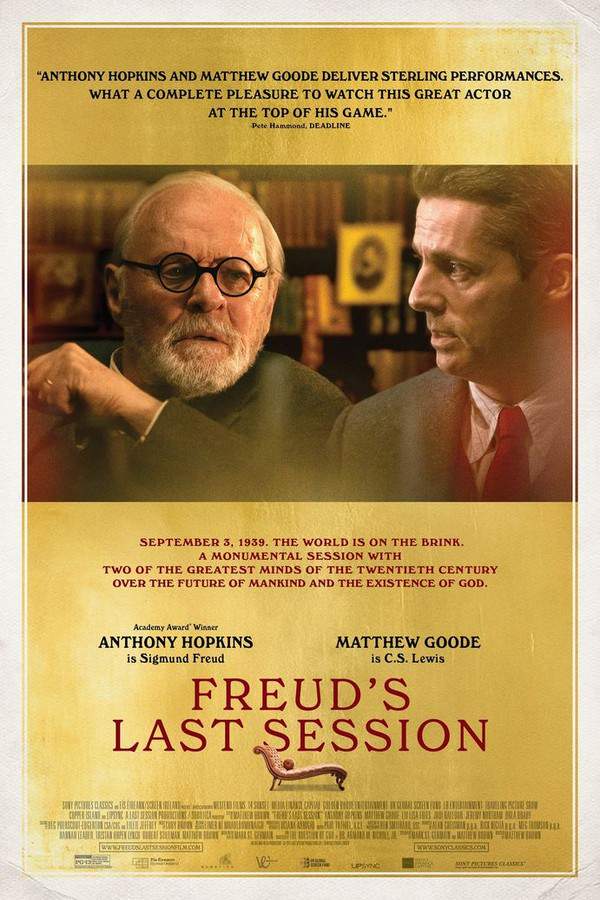
Freud's Last Session (2023) movie poster

Timeline

Freud's Last Session (2023) Timeline Explained – Every Event in Order

Release, runtime and language
2023 · 1 h 48 m · English
Echo score 40
JustWatch #8,511 19
Directed by
Matt Brown
Starring
Anthony Hopkins, Matthew Goode, Orla Brady, Liv Lisa Fries, Jodi Balfour, Stephen Campbell Moore
Budget
$10M

With war approaching, Sigmund Freud and C.S. Lewis find themselves in a compelling intellectual exchange concerning the existence of God. The drama explores their lives and beliefs, interweaving past and present with surreal elements, as they debate within Freud's study. The film is a thought-provoking examination of faith and reason.

On this page (6)
  1. 1 Where to watch
  2. 2 Events in order (14)
  3. 3 Timeline questions answered
  4. 4 Movie threads
  5. 5 Movies like Freud's Last Session
  6. 6 Every angle

Where to watch

Where to Watch Freud's Last Session (2023)

Where can you watch Freud's Last Session? Stream, rent or buy it in the US, including on fuboTV, FXNow and Hulu: current JustWatch availability with up-to-date prices.

Streaming availability powered by JustWatch

14 events in order · contains spoilers

Freud's Last Session Timeline: Events in Chronological Order

Every key event of Freud's Last Session (2023) in order, scene by scene, with when and where it takes place. Use it to untangle flashbacks, time jumps and parallel storylines, to refresh your memory before the sequel or to find the exact scene you are thinking of.

  1. World War II Begins

    The Second World War plunges Europe into chaos, with nations grappling with the vast devastation caused by the conflict. This historical backdrop sets the stage for a series of profound dialogues and personal transformations among key intellectual figures.

    When
    1939
    Where
    Europe
  2. C.S. Lewis Meets Sigmund Freud

    C.S. Lewis, affectionately known as 'Jack,' engages in a charged conversation with Sigmund Freud. The dialogue is marked by Freud's disdain for Lewis' recent conversion to Christianity, creating an intellectually and emotionally fraught atmosphere.

  3. Debate on Existence of God

    Lewis and Freud delve into a fierce discussion about the existence of God, a topic that has become central to their interactions. Their argumentative styles reflect their differing beliefs and provide insights into their respective philosophies.

  4. Lewis Reflects on War Experiences

    As a combat veteran of World War I, Lewis recalls his haunting memories from the trenches. These reflections highlight the deep scars left by war and the profound impact such experiences have on one's beliefs and outlook on life.

  5. The Inklings Gather

    The Inklings, a group of prominent writers and thinkers, are brought into the narrative, including the renowned J.R.R. Tolkien. Their mutual appreciation for literature provides a breath of fresh air amid the intense philosophical discussions between Lewis and Freud.

  6. Freud's Tumultuous Relationship with Anna

    The complex dynamics between Sigmund Freud and his daughter Anna are explored, highlighting her emotional dependence on him. This relationship is both painful and enriching, revealing the depths of family ties and personal struggles.

  7. Anna Brings Dorothy into Their Lives

    In an unexpected turn, Anna introduces her lover, Dorothy Burlingham, into the Freud household. This act brings a new sense of freedom and complexity to their relationships, merging love and familial bonds in surprising ways.

  8. Freud's Battle with Oral Cancer

    Freud faces a severe battle with oral cancer, which becomes an agonizing chapter in his life. The struggle underscores the frailty of existence and the inevitable approach of mortality, ultimately leading to his demise.

  9. Freud's Legacy

    Despite his passing, Freud leaves behind a monumental legacy that greatly influences the field of psychology. His contributions continue to echo through generations, shaping our understanding of the human psyche.

  10. Lewis Rises to Acclaim

    Following Freud's death, C.S. Lewis finds acclaim as a cherished author of Christian literature. His experiences during the war, including the children he takes in as evacuees, greatly inspire his writing, leading to the creation of the Narnia series.

  11. Anna Becomes a Trailblazer

    Anna Freud emerges as a pioneering figure in child psychology, gaining recognition for her innovative work. Her contributions signify a new understanding of the psychological needs of children amidst a recovering post-war society.

  12. Freud's Last Days

    In his final days, Freud has an enigmatic encounter with an unnamed Oxford don, reflecting on the transient nature of human interactions. This moment serves as a poignant reminder of the ever-evolving tide of intellectual thought.

  13. Love Between Anna and Dorothy

    The relationship between Anna and Dorothy flourishes, creating a life together that spans many years. Their bond reflects a unique blend of love and intellectual companionship that flourishes against historical turmoil.

  14. Enduring Influence of Ideas

    Even as time progresses, the impact of the fictional encounters between Lewis and Freud resonates throughout history. Their discussions underscore the enduring influence of ideas and the lasting legacies of these extraordinary figures.

Last updated: November 17, 2024 at 17:36

Was this helpful?

Timeline questions answered

Freud's Last Session Timeline Explained: Your Questions Answered

When does it happen, and why in that order? The questions people ask about the chronology of Freud's Last Session (2023): time jumps, flashbacks, cause and effect between scenes and the correct order of events, each answered with spoilers.

Q1

Why does Freud oppose Lewis' conversion to Christianity?

Freud views Lewis' recent conversion to Christianity with disdain because it represents everything he fundamentally rejects. As an atheist and founder of psychoanalysis, Freud sees religious belief as an illusion, a psychological crutch that people use to cope with life's harsh realities. His opposition is rooted in his deep-seated belief that faith is a form of self-deception, making the intellectual clash between them inevitable.

Foreshadowing: Freud's lifelong critique of religion as a collective neurosis sets the tone for his immediate hostility toward Lewis' faith.

  • freud
  • lewis
  • christianity
  • atheism
  • conversion
  • belief
Q2

Why does Lewis reflect on his World War I experiences during the debate?

Lewis draws on his haunting memories from the trenches as a combat veteran to challenge Freud's optimistic view of human nature. He argues that the brutality he witnessed fundamentally shaped his understanding of suffering, which in turn influenced his spiritual journey toward Christianity. The war trauma becomes a cornerstone of his philosophical argument about the need for hope beyond earthly existence.

Foreshadowing: Lewis' early experiences in the war trenches plant the seeds of his later theological reflections on pain and redemption.

  • lewis
  • world war 1
  • veteran
  • trench
  • trauma
  • faith
Q3

Why does Anna Freud bring Dorothy Burlingham into their lives?

Anna introduces Dorothy Burlingham, her lover, to the Freud household as a way to break free from her intense emotional dependence on her father. This act represents a pivotal moment of liberation for Anna, allowing her to forge an independent life while maintaining her complicated bond with Freud. Dorothy becomes a lasting partner, and their relationship flourishes for many years.

Foreshadowing: Anna's growing need for autonomy foreshadows her eventual departure from her father's shadow and her own pioneering career.

  • anna freud
  • dorothy burlingham
  • lover
  • relationship
  • independence
Q4

What happens to C.S. Lewis after Freud's death?

After Freud dies, Lewis rises to become a celebrated author of Christian literature. His experiences taking in evacuee children during World War II directly inspire the creation of his beloved Narnia series, transforming his intellectual arguments about faith into imaginative stories that would influence generations of readers.

Foreshadowing: Lewis' transition from academic debate to creative writing marks the fulfillment of his spiritual calling.

  • c s lewis
  • narnia
  • author
  • christian literature
  • evacuees
Q5

Is the meeting between Freud and Lewis based on a true story?

The meeting is entirely fictional. While both historical figures were real and lived during the same era, there is no documented evidence that they ever met. The film uses this imagined encounter to explore the fundamental clash between Freud's atheism and Lewis' Christian faith, creating a dramatic framework for their philosophical debate.

Foreshadowing: The film's title itself hints at this being a conceptual想象 rather than historical record.

  • historical fiction
  • fictional meeting
  • freud
  • lewis
  • biography
Q6

How does Sigmund Freud die in the film?

Freud dies from oral cancer, a disease that caused him excruciating pain in his final months. His battle with this illness serves as a poignant backdrop to the entire narrative, adding emotional weight to his intellectual discussions with Lewis. The film portrays his death as the end of an era in psychology while his ideas continue to influence future generations.

Foreshadowing: Freud's physical deterioration looms over the film, casting a shadow of mortality on every conversation.

  • freud
  • death
  • oral cancer
  • illness
  • mortality
Q7

What role do The Inklings play in the story?

The Inklings represent the intellectual community that sustained Lewis throughout his career. This group of writers, most notably J.R.R. Tolkien, provided Lewis with friendship and literary stimulation during a time of profound personal and philosophical upheaval. Their presence offers moments of levity and connection amid the heavy debates with Freud.

Foreshadowing: Lewis' belonging to The Inklings foreshadows his eventual success as a writer beyond his academic work.

  • inklings
  • tolkien
  • writers
  • community
  • oxford
Q8

Why does Anna Freud become a child psychologist?

Following her father's death, Anna Freud dedicates herself to pioneering the field of child psychology. Drawing on her father's work while carving her own path, she develops groundbreaking methods for understanding children's emotional needs. Her relationship with Dorothy Burlingham also provides her with the stability to build a revolutionary career.

Foreshadowing: Anna's intensive study of her father's work evolves into her own distinct contributions to psychology.

  • anna freud
  • child psychology
  • career
  • pioneer
  • freud
Q9

What does the debate between Freud and Lewis ultimately reveal about faith?

The debate presents faith as a deeply personal choice that emerges from one's life experiences, trauma, and philosophical worldview. Lewis finds faith through his search for meaning after war trauma, while Freud rejects it as psychological wish-fulfillment. The film suggests both positions represent legitimate responses to fundamental questions about human existence.

Foreshadowing: The ongoing relevance of their debate across decades suggests these questions remain unanswered.

  • faith
  • god
  • atheism
  • belief
  • debate
  • philosophy
Q10

Why is World War II used as the setting for their meeting?

The war serves as a powerful backdrop that amplifies the themes of mortality, meaning, and human nature. With Europe facing destruction, the characters are forced to confront ultimate questions about existence, hope, and what survives beyond death. The war's shadow makes Freud's terminal illness and Lewis' trauma feel even more poignant.

Foreshadowing: The global conflict mirrors the internal philosophical battle between faith and skepticism.

  • world war 2
  • setting
  • 1939
  • europe
  • historical context

Movie threads

More Movies Like Freud's Last Session, by Mood & Story

Curated lists built around what makes Freud's Last Session tick: the same mood, the same kind of story or the same emotional payoff. Each list explains why these movies belong together.

Movies about philosophical debates like Freud's Last Session

Where opposing worldviews collide in high-stakes dialogue. If you enjoyed the intellectual sparring in Freud's Last Session, explore movies like it centered on philosophical and ideological clashes. These films explore belief, reason, and existence through high-stakes conversations, featuring intense dialogues and opposing worldviews.

  • intellectual
  • conversational
  • thoughtful
  • claustrophobic
  • high-stakes
  • philosophical
  • Tone: melancholic, thoughtful
  • Pacing: slow, conversational
Why these movies?

The story pattern: Stories in this thread typically center on a contained, dialogue-driven conflict between two characters representing opposing philosophies. The plot unfolds through their verbal exchanges, using flashbacks or parallel storylines to provide context for their beliefs, leading to a resolution that often leaves both characters and the audience with lingering questions.

Why they belong together: Movies are grouped here for their shared focus on intellectual conflict as the primary source of drama. They prioritize dialogue over action, create tension through ideological opposition, and explore profound questions about life, faith, and human nature in a compelling, thought-provoking manner.


Melancholic dramas about legacy like Freud's Last Session

Profound dramas where characters confront mortality and their life's impact. For viewers who appreciated the reflective tone of Freud's Last Session, this section features similar movies about legacy, terminal illness, and intellectual influence. These dramas are often slow, heavy, and bittersweet, exploring how characters reconcile their life's work with their impending death.

  • somber
  • reflective
  • thoughtful
  • bittersweet
  • melancholic
  • poignant
  • Tone: bittersweet, somber
  • Pacing: slow, reflective
Why these movies?

The story pattern: The narrative pattern follows a prominent figure or an ordinary person reviewing their life's journey as they confront a terminal diagnosis or a final chapter. The story uses a non-linear structure, blending present-day reflections with key moments from the past to examine the character's impact on others and the world, culminating in an emotionally resonant, bittersweet conclusion.

Why they belong together: These films share a profoundly melancholic and reflective mood, a slow, deliberate pacing that allows for deep characterization, and a central theme of grappling with one's legacy in the face of death. They deliver a heavy emotional experience focused on existential questions and poignant personal revelations.

If you liked this

Movies Like Freud's Last Session

Similar movies to Freud's Last Session: the same genre, themes or kind of story. Each one comes with its own plot summary, timeline and ending explained.

Browse all movie summaries

Every angle

Freud's Last Session (2023) Explained: Plot, Ending, Timeline & Characters

Everything about Freud's Last Session in one place: what happens in the plot summary, the timeline in chronological order, the characters and meaning, the ending explained and a spoiler-free summary. What's After the Movie adds the cast, box office and post-credit scenes.

Coming soon on iOS and Android

The Plot Explained Movie Summary App

Plot summaries, endings explained and timelines on your phone. Catch up on any movie in minutes, save your favorites and never miss a twist again.

Be the first to know when we launch. Your email stays private, always.

Learn more about the app