Plot Explained Spoilers guaranteed!
Plot Explained

Browse by genre

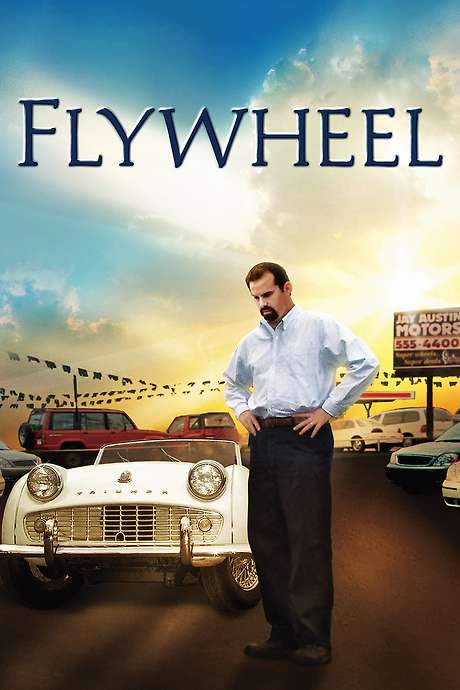
Flywheel (2003) movie poster

Plot Summary

Flywheel (2003) Plot Summary Explained

Release, runtime and language
2003 · 120 mins · English
Starring
John Spencer, Jim McBride, Alex Kendrick, Shannen Fields, Stephen Kendrick, Lisa Arnold

Jay Austin is a slick used‑car salesman whose charming smile and swift promises lure countless customers, only to betray them. As his deceitful tactics are gradually exposed, he is forced to confront the false personas he’s built. Reaching a turning point, he finally abandons the lies and moves forward without looking back.

On this page (6)
  1. 1 Where to watch
  2. 2 What happens: full plot
  3. 3 Plot questions answered
  4. 4 Movie threads
  5. 5 Movies like Flywheel
  6. 6 Every angle

Where to watch

Where to Watch Flywheel (2003)

Where can you watch Flywheel? Stream, rent or buy it in the US, including on Amazon Video, Apple TV Store and Fandango At Home: current JustWatch availability with up-to-date prices.

Streaming availability powered by JustWatch

Full plot summary · contains spoilers

What Happens in Flywheel: Full Plot Summary

The whole story of Flywheel (2003) explained, from the opening scene to the final frame: every key event, every twist and what it all adds up to. Read it as a quick recap before the sequel, to check a scene you missed, or to finally understand what really happened.

Jay [Alex Kendrick] Austin is a car salesman who consistently cheats his customers, even to the point of overcharging his own pastor. He trains his rotund salesmen, Bernie Meyers [Tracy Goode] and Vince Berkeley [Treavor Lokey], to do likewise. Jay attends church only because his wife Judy Austin [Janet Lee Dapper] wants him to go, and he even fakes giving a tithe donation. His relationships with Judy, who is pregnant, and his son Todd Austin [Richie Hunnewell], who disapproves of his dishonesty, begin to strain as foreclosure looms over his lot.

When conscience finally gnaws at him, Jay stumbles upon a broadcast of a pastor declaring that “you’re in the shape you’re in today because of the choices you’ve made.” The moment is spoken aloud on screen, and the message sticks. > you’re in the shape you’re in today because of the choices you’ve made. The simple, piercing line becomes a turning point: Jay is suddenly pulled toward a born-again Christian awakening and a dramatic shift in how he runs his business.

From that point on, Jay apologizes to Judy and to Todd and resolves to sell cars honestly from then on. He confronts his bank’s looming threat of foreclosure with a new resolve, choosing integrity over easy profit even as debt piles up and the threat of losing the dealership hangs over him. The family’s faith and hope become intertwined with his business decisions, and the change in strategy is blunt: honest sales, fair pricing, and a vow to treat customers with respect.

Yet the challenge intensifies when a fresh, seemingly innocent newcomer arrives: Kevin Cantrell [Daniel Titus] shows up to work for six weeks and asks pointed questions about the new, ethical approach. When pressed about not squeezing every last dime from a sale, Jay explains that they must “live with how [they] run the business,” and that if you treat people right, it’ll come back to you. The encounter leaves Kevin unimpressed at first, but it also foreshadows a deeper test of Jay’s faith and his resolve.

Even as the honest approach starts to draw customers, Kevin’s undercover presence reveals itself to be part of a larger investigative report. Jay’s dealership is portrayed as the only one that operates with integrity among the others caught in the broadcast probe. The public verdict has real consequences on the lot: suddenly, thirty people show up to buy cars in a single day, and Judy steps in to help close deals under the bright glare of local television scrutiny. The bank’s demands continue to hover, yet the surplus from these sales helps cover the bills and keep the finances afloat, at least for the moment.

As the truth about the prior dishonest practices emerges on TV, the story expands from the showroom into the home. Hillary Vale [Lisa Arnold], a WALB-TV reporter, covers the evolving situation, and her on-air updates capture the community’s shifting perception. On a follow-up broadcast, those who were overcharged begin to come forward with restitution, and Hillary’s audience hears more of the real impact behind the numbers. The reflection prompts Judy and Jay to lean further into their faith, reinforcing the film’s central message about mercy, restitution, and the power of choosing a better path.

Back at home, the emotional stakes rise: Judy’s contractions signal the arrival of a baby, and Jay rushes to the hospital with his wife. The couple welcomes a daughter named Faith, a living reminder of Jay’s renewed faith and the spiritual journey that redirected his life. This new chapter culminates in a quiet, symbolic moment: Jay drives away with his son in their beloved 1958 Triumph TR3, repaired by Max Kendall [Walter Burnett] with a newly installed flywheel, a small triumph that mirrors the larger transformation of Jay’s character and his business.

Throughout the arc, the film maintains a balancing act between humor and earnest moral reflection. Bernie Meyers and Vince Berkeley provide recurring comic relief that lightens the heavier moments, even as their presence underscores the moral shift taking place in the dealership. The tempo of the story ebbs and flows with moments of tension—foreclosure threats, undercover policework, and the pressure of live television—and moments of quiet conviction, prayer, and family devotion.

In the end, the narrative threads weave together into a portrait of redemption that remains grounded in everyday choices. Jay’s decision to treat customers with honesty does not erase his past mistakes, but it does redefine his future. The film invites viewers to consider how a single, heartfelt commitment to integrity can influence a business, a family, and a community. It is a story about accountability, second chances, and the unexpected ways grace can enter a life when someone chooses to change.

- Jay Austin [Alex Kendrick] remains the center of the story, a man whose conscience awakens and whose actions increasingly align with his evolving beliefs.

- Judy Austin [Janet Lee Dapper] stands as a steady partner whose faith and support help guide the family through financial and emotional trials.

- Bernie Meyers [Tracy Goode] and Vince Berkeley [Treavor Lokey] anchor much of the film’s humor while illustrating how attitudes about integrity ripple through a business.

- Kevin Cantrell [Daniel Titus] represents the external test of the new ethic, challenging Jay to justify the shift in strategy and the patience required for genuine change.

- Hillary Vale [Lisa Arnold] helps frame the public dimension of Jay’s transformation through journalism and community response.

- Max Kendall [Walter Burnett] and the Triumph TR3 provide a tangible symbol of repair and renewal, echoing the broader message of rebuilding trust and livelihoods.

This is a story about choosing honesty when it costs you something, about making restitution when you can, and about finding a new sense of purpose in the wake of past missteps. It invites viewers to reflect on their own choices and the faith that can sustain a family and a business through difficult times.

Last updated: October 09, 2025 at 15:22

Was this helpful?

Plot questions answered

Flywheel Plot Explained: Your Questions Answered

The questions people ask most about Flywheel (2003): what happens in the confusing scenes, why the characters do what they do, the twists, hidden details and what the ending means. Each answer contains spoilers.

Q1

What triggers Jay Austin's decision to stop cheating his customers?

Jay's transformation begins when he randomly hears a pastor on television declare, "You're in the shape you're in today because of the choices you've made." This message strikes a nerve because Jay is acutely aware of his own dishonesty, the film shows he has even overcharged his own pastor. The words echo his growing conscience and coincide with the looming foreclosure on his dealership, creating the perfect moment for him to confront the false personas he's built.

  • Jay Austin transformation
  • pastor sermon
  • conscience awakening
  • choosing honesty
Q2

Why is Jay Austin's dealership facing foreclosure?

The bank threatens foreclosure because Jay has accumulated significant debt running his business. While the exact financial details aren't specified, the summary indicates he is "thousands of dollars in debt" and the bank is pressing for payment. His dishonest sales practices, though profitable in the short term, have clearly not provided sufficient financial stability to ward off the bank's demands.

Foreshadowing: Earlier scenes show Jay living a lifestyle funded by deceptive sales, which foreshadows the unsustainable financial foundation of his business.

  • foreclosure
  • debt
  • Jay Austin Motors
  • bank pressure
  • financial crisis
Q3

Who is Kevin Cantrell and what role does he play in the story?

Kevin Cantrell is an undercover investigator who works at Jay's dealership for six weeks, probing Jay's sales methods with pointed questions about overpricing customers. When Kevin asks why Jay isn't squeezing every last dime from sales, Jay explains they must "live with how they run the business" and that treating people right will come back to them. Kevin's questioning challenges Jay's new ethical approach, testing whether his transformation is genuine or just a temporary shift.

Foreshadowing: Kevin's arrival foreshadows the television investigation that later reveals Jay's dealership as the only honest one in town.

  • Kevin Cantrell
  • undercover investigator
  • integrity test
  • car dealership investigation
Q4

Why does the TV news report feature Jay's dealership?

The news segment is an investigative report on dishonest car dealers. Kevin Cantrell's six-week undercover work was part of this larger probe. When the report airs, it exposes cheating by multiple dealerships but uniquely identifies Jay Austin Motors as the only honest one in the area. This creates a surprising twist: Jay, who spent years deceiving customers, is now publicly vindicated as the sole trustworthy dealer.

Foreshadowing: Kevin Cantrell's undercover work at the dealership directly leads to this news feature.

  • news investigation
  • WALB-TV
  • Hillary Vale
  • car dealer expose
  • honest business
Q5

What causes thirty people to suddenly come to Jay's dealership?

The thirty buyers arrive the day after the television investigation airs, showing Jay's dealership as the only honest dealer in town. The news coverage generates immediate community interest, with people drawn by word of mouth and the desire to support an honest business. Jay even calls Judy to help handle the sudden rush, and the sales exceed expectations, bringing in enough money to meet the bank's payment demands.

Foreshadowing: The positive news report directly precedes this customer surge, making the timing clearly connected.

  • customer rush
  • honest business rewarded
  • news coverage
  • community support
  • car sales
Q6

Why does Jay decide to pay back the customers he overcharged?

Encouraged by his wife Judy, Jay chooses to make restitution to all the customers he previously overcharged. This decision represents a key step in his moral transformation, he wants to not only change his future behavior but also make amends for past wrongs. The film notes that the total restitution amount matches exactly the profit Jay earned from his dishonest practices, turning the act of compensation into both a financial and spiritual milestone.

Foreshadowing: The earlier scenes showing Jay overcharging customers, including his own pastor, set up the need for this restitution.

  • restitution
  • making amends
  • forgiveness
  • repenting
  • customer compensation
Q7

What is the significance of Jay and Judy naming their daughter Faith?

Jay and Judy name their newborn daughter Faith as a direct symbol of Jay's spiritual journey. The baby is born just as the family is watching the news coverage of Jay's transformation unfold. The name reflects the film's central theme of renewed faith and the idea that Jay's choices have led to a new chapter in his life. It's a living reminder of the transformation that redirected his path from dishonesty to integrity.

  • baby Faith
  • name meaning
  • spiritual renewal
  • Christian faith
  • family
Q8

What does the repaired flywheel on the Triumph TR3 represent in the story?

The 1958 Triumph TR3 that Jay drives at the film's end has been repaired by Max Kendall with a newly installed flywheel. The flywheel is a mechanical part that helps an engine run smoothly, symbolizing how Jay's life has been similarly "rebuilt" and restored. The car, a beloved family possession, represents Jay's personal transformation: just as the flywheel enables the car to run properly, his new ethical approach allows his business and family to function healthily again.

  • flywheel
  • Triumph TR3
  • car repair
  • symbol
  • restoration
  • new beginning
Q9

Why does Bernie Meyers call Jay a cheater during the live TV interview?

During the live interview with WALB-TV reporter Hillary Vale, Bernie Meyers, the salesmen Jay trained to deceive customers, appears on camera and accuses Jay of being a cheater. This moment creates tension because it represents the past Jay is trying to leave behind. Rather than defending himself, Jay lets the truth speak for itself, and Hillary invites viewers to judge for themselves. The accusation highlights that changing one's business is only part of the battle, others' perceptions take time to shift.

Foreshadowing: Bernie's accusation connects to his earlier training by Jay in dishonest sales tactics.

  • Bernie Meyers
  • live TV interview
  • accusation
  • Hillary Vale
  • reputation
Q10

How does Jay's transformation impact his relationship with his son Todd?

Jay's decision to sell cars honestly directly improves his relationship with his son Todd, who had previously disapproved of his father's dishonesty. The summary indicates Jay apologizes to Todd for the hurt he's caused, and by the film's end, Todd is riding alongside his father in the restored Triumph TR3, a symbol of their repaired bond. The transformation allows Jay to become a father his son can respect and look up to again.

  • Todd Austin
  • father-son relationship
  • redemption
  • family healing
  • parental integrity

Movie threads

More Movies Like Flywheel, by Mood & Story

Curated lists built around what makes Flywheel tick: the same mood, the same kind of story or the same emotional payoff. Each list explains why these movies belong together.

Moral Redemption Stories like Flywheel

Character-driven journeys of flawed individuals finding integrity and making amends. Discover movies like Flywheel that center on a character's journey from dishonesty to integrity. If you enjoyed watching Jay Austin's transformation, you'll appreciate these similar dramas about personal redemption, making amends, and finding hope through faith and community.

  • redemptive
  • uplifting
  • moral
  • earnest
  • reassuring
  • faith-based
  • Tone: hopeful, earnest, reflective
  • Pacing: steady, character-driven
Why these movies?

The story pattern: These narratives typically follow a clear arc: a character's unethical lifestyle causes a crisis, leading to a moment of realization. The core of the story is their difficult but determined path toward honesty, often involving restitution and the positive impact of their change on their community and family.

Why they belong together: Movies in this thread are grouped by their shared focus on a specific, hopeful character arc. They balance real-world consequences with an uplifting, earnest tone, creating a reassuring and morally reflective viewing experience centered on the possibility of change.

Uplifting Faith-Based Dramas like Flywheel

Ground-level stories where faith guides characters through realistic personal trials. Find movies similar to Flywheel that blend faith and family drama in a hopeful, steady narrative. If you liked the film's integration of Christian values into a story of business ethics and transformation, you'll enjoy these other touching and reassuring faith-based stories.

  • faith-based
  • uplifting
  • reassuring
  • earnest
  • family-friendly
  • moral
  • Tone: hopeful, uplifting, reassuring
  • Pacing: steady, purposeful
Why these movies?

The story pattern: The plot often revolves around a protagonist facing a moral or financial crisis rooted in their own actions. Their journey involves a turning point where they choose to embrace their faith, leading to a steady, positive resolution that strengthens family bonds and community ties.

Why they belong together: These films share a specific mood and thematic core: they are earnest, uplifting, and use a steady pace to explore how faith informs everyday decisions and personal growth. The combination of medium emotional weight with a happy, hopeful ending creates a distinctively reassuring vibe.

If you liked this

Movies Like Flywheel

Similar movies to Flywheel: the same genre, themes or kind of story. Each one comes with its own plot summary, timeline and ending explained.

Browse all movie summaries

Every angle

Flywheel (2003) Explained: Plot, Timeline & Characters

Everything about Flywheel in one place: what happens in the plot summary, the timeline in chronological order, the characters and meaning and a spoiler-free summary. What's After the Movie adds the cast, box office and post-credit scenes.

Coming soon on iOS and Android

The Plot Explained Movie Summary App

Plot summaries, endings explained and timelines on your phone. Catch up on any movie in minutes, save your favorites and never miss a twist again.

Be the first to know when we launch. Your email stays private, always.

Learn more about the app