






Plot Explained Spoilers guaranteed!
Plot Explained

Browse by genre

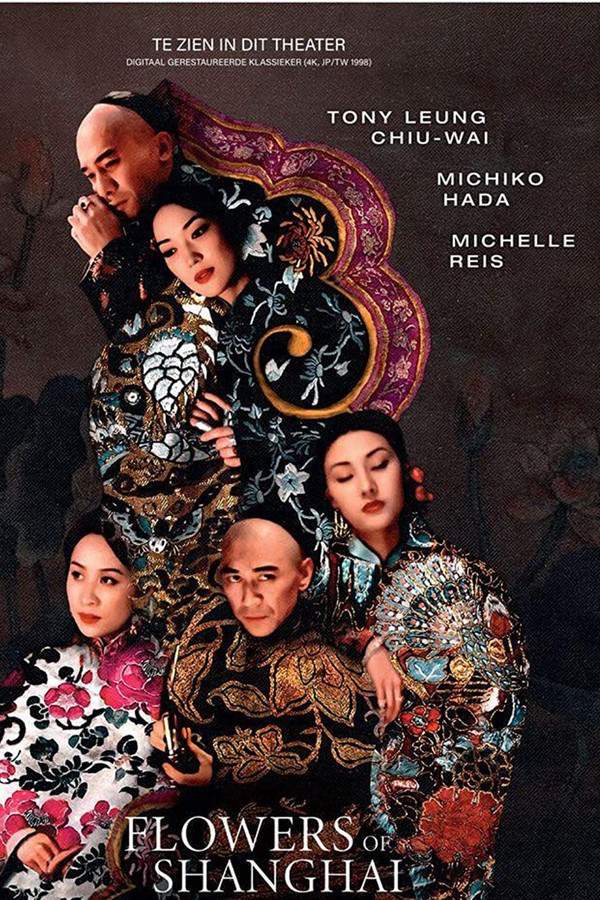
Flowers of Shanghai (1998) movie poster

Timeline

Flowers of Shanghai (1998) Timeline Explained – Every Event in Order

Release, runtime and language
1998 · 125 min · Shg
Directed by
Hsiao-hsien Hou

Set in 1880s Shanghai, this film explores the lives of courtesans within four opulent brothels. Elegant women navigate complex relationships and restrictive societal expectations amidst a backdrop of opium dens and gambling. The story follows a delicate balance of desires and deceptions, questioning whether Wang will choose Crimson or the captivating Jasmin. Emerald employs her intelligence to seek independence, while Pearl mentors Jade through the intricacies of love and obligation. The women's destinies intertwine, creating a precarious and captivating drama.

On this page (6)
  1. 1 Where to watch
  2. 2 Events in order (15)
  3. 3 Timeline questions answered
  4. 4 Movie threads
  5. 5 Movies like Flowers of Shanghai
  6. 6 Every angle

Where to watch

Where to Watch Flowers of Shanghai (1998)

Where can you watch Flowers of Shanghai? Stream, rent or buy it in the US, including on Amazon Video, Apple TV Store and Fandango At Home: current JustWatch availability with up-to-date prices.

Streaming availability powered by JustWatch

15 events in order · contains spoilers

Flowers of Shanghai Timeline: Events in Chronological Order

Every key event of Flowers of Shanghai (1998) in order, scene by scene, with when and where it takes place. Use it to untangle flashbacks, time jumps and parallel storylines, to refresh your memory before the sequel or to find the exact scene you are thinking of.

  1. Publication of the Novel

    The novel 'Hai Shang Hua Lei Chuang' was penned by Han Zi Yun, making its first appearance as a serialized story in 1892. Originally written in the Wu dialect, it received little attention until its future translations would spark renewed interest.

    When
    1892
  2. Translation to Mandarin

    In 1983, the novel was translated into Mandarin by Eileen Chang, which greatly enhanced its accessibility and reach. This translation played a crucial role in introducing the intricate story to a broader audience, allowing it to emerge from obscurity.

    When
    1983
  3. Film Adaptation Announcement

    Following the successful translation, the film adaptation 'Hai Shang Hua' was undertaken, retelling the story centered around the lives of courtesans in Shanghai. The film shifts focus to depict the complicated relationships and experiences within the so-called 'colleges'.

  4. Introduction of Pearl

    At the center of the narrative is Pearl, who serves as the senior teacher in her college. Her independence is largely attributed to her status as the daughter of the matriarch, setting her apart from her peers and establishing her as a key figure in the community.

    Where
    Pearl's College
  5. Dinner Party for Master Wang

    In a strategic effort to impress Master Wang, the college organizes a lavish dinner party showcasing their most talented courtesans. This setting serves as a critical point in the narrative, igniting Master Wang's infatuation with the captivating courtesan, Crimson.

    Where
    College of Shen
  6. Master Wang's Exclusive Patronage

    Despite receiving warnings about Crimson's reputation linked to her affair with a Chinese opera actor, Master Wang becomes her exclusive patron. The relationship intensifies as Scarlett captivates him, leading him to ignore his friends' concerns.

  7. Tensions Arise

    As the relationship progresses, Master Wang begins to learn about the dark aspects of Crimson's life. The rising tensions culminate in a painful realization for Wang, who must confront the consequences of his choices.

  8. Wang Chooses to Part Ways

    Ultimately, Master Wang decides to part ways with Crimson, despite lingering affections. He seeks solace in the more demure and less controversial courtesan, Jasmin, reflecting a shift in his desires for companionship.

  9. Jade's Passionate Affair

    The story deepens with the introduction of Jade, who is swept into a passionate love affair with Shuren. Their intense bond leads to desperation when Jade learns of Shuren's arranged marriage, threatening their happiness.

  10. Desperate Pact Between Jade and Shuren

    In a moment of despair, Jade attempts to coerce Shuren into taking opium to seal their tragic fate together. However, their act is interrupted by the timely intervention of Pearl and Master Hong, who stop the dire situation.

  11. Shuren's Redemption

    As a result of the intervention, Shuren pays a significant sum to free Jade from her obligations, allowing her the chance to seek a conventional marriage. This act underscores the themes of sacrifice and love within their tumultuous relationship.

  12. Emerald’s Ambitious Strategy

    Emerald, renowned for her beauty, cleverly evades the grasp of exclusive patrons while hoping for a way to buy out her contract. Her charm and tactics lead her to capture the attention of Master Luo, beginning a complicated negotiation.

    Where
    College of Huang
  13. Negotiation with Auntie Huang

    The negotiations to secure Emerald's freedom become a major plot point, with Auntie Huang representing both the challenges and the harsh realities of the courtesan life. The transaction becomes fraught with influences from past debts and manipulative tactics.

  14. Master Hong's Assistance

    In a pivotal moment, Master Hong steps in to facilitate a favorable agreement for Emerald. This act not only highlights his character but also showcases the interconnectedness of the characters within the society of courtesans.

  15. Emerald's Escape from College Life

    Ultimately, the negotiations bear fruit as Emerald successfully escapes her 'college life,' symbolizing a significant victory over the constraints placed upon her. Her departure resonates with the film's themes of autonomy and the search for a better existence.

Last updated: November 07, 2024 at 22:57

Was this helpful?

Timeline questions answered

Flowers of Shanghai Timeline Explained: Your Questions Answered

When does it happen, and why in that order? The questions people ask about the chronology of Flowers of Shanghai (1998): time jumps, flashbacks, cause and effect between scenes and the correct order of events, each answered with spoilers.

Q1

Why does Master Wang choose Jasmin over Crimson?

After experiencing tensions with Crimson due to her affair with the Chinese opera actor and the resulting warnings from his friends, Wang decides to end the relationship despite still having feelings for her. He gravitates toward Jasmin because she is more demure and less controversial, offering a simpler and more stable companionship without the drama and reputational concerns that Crimson brought. The College of Shen also declines due to Crimson's poor reputation and dwindling patronage, making Jasmin the practical choice.

Foreshadowing: Wang's friends warned him about Crimson early on, hinting at the eventual fallout.

  • master wang
  • crimson
  • jasmin
  • relationship choice
  • brothel
Q2

Why is Crimson's affair with the Chinese opera actor significant?

Crimson's secret affair with a Chinese opera actor is significant because it damages her reputation among the brothel community and drives away potential patrons. When Master Wang becomes her exclusive patron, he ignores warnings about this affair, but eventually discovers the truth, leading to escalating tensions between them. This dalliance ultimately contributes to Crimson's decline as the College of Shen loses patronage due to her tarnished reputation.

Foreshadowing: Master Wang receives warnings about Crimson before becoming her patron.

  • crimson
  • chinese opera actor
  • affair
  • reputation
Q3

Why does Jade coerce Shuren into taking opium?

Jade coerces Shuren into a desperate opium pact because she learns he is about to enter an arranged marriage, which would separate them permanently. As an apprentice teacher bound to the brothel, Jade has no power to leave or change her situation. In her desperation, she sees death together through opium as the only escape from the oppressive life and forced separation. This act demonstrates the extreme lengths these women resort to when trapped by the constraints of their social position.

Foreshadowing: The film establishes early that Jade is an apprentice teacher with no freedom to pursue her own happiness.

  • jade
  • shuren
  • opium
  • desperate pact
  • arranged marriage
Q4

How does Emerald manage to escape her contract?

Emerald uses her beauty and charm strategically to attract potential patrons while avoiding exclusive arrangements, holding out for someone willing to buy out her contract. Master Luo becomes infatuated with her and is willing to wait while she sees other clients. The negotiation with Auntie Huang, who wants to keep Emerald due to her debts and gambling problems, proves difficult and extends throughout the film. Master Hong eventually intervenes to help secure a favorable agreement, allowing Emerald to purchase her freedom from the College of Huang.

Foreshadowing: Emerald is introduced as deliberately avoiding exclusive patrons while searching for a way out.

  • emerald
  • contract freedom
  • auntie huang
  • master luo
  • negotiation
Q5

Why does Master Hong help Emerald gain her freedom?

Master Hong helps Emerald secure a favorable agreement because he is a patron with influence and connections within the brothel community. Throughout the narrative, Hong is portrayed as a相对 benevolent figure who intervenes in crises, such as when he and Pearl stop Jade and Shuren's opium pact. His assistance to Emerald demonstrates his willingness to use his position to help the courtesans, possibly because he values Pearl or simply acts out of sympathy for their situations. His intervention proves crucial in breaking the stalemate with Auntie Huang.

Foreshadowing: Hong previously helped intervene in Jade's crisis, showing his pattern of helping courtesans.

  • master hong
  • emerald
  • assistance
  • freedom
Q6

Why does Pearl have more independence than other courtesans?

Pearl enjoys greater independence because her mother is the matriarch of the college, giving her a special status within the hierarchy. This familial connection grants her a degree of autonomy uncommon among courtesans, allowing her to maintain a steady relationship with Master Hong without the same pressures faced by the other women. Her position as senior teacher also contributes to her elevated status in the brothel community.

Foreshadowing: Pearl is introduced as the senior teacher with explicit reference to her mother's position.

  • pearl
  • independence
  • matriarch
  • senior teacher
Q7

How are the four brothels connected in the story?

The film depicts four separate brothels, known as 'colleges,' which are interconnected through the patrons and relationships that span between them. Pearl's college hosts the dinner party for Master Wang from another establishment. Jade is an apprentice at Pearl's college, while Emerald operates at the College of Huang. Master Hong serves as a patron who moves between establishments and helps characters across different colleges. The intertwining narratives show how the courtesans' destinies are connected despite operating in separate establishments.

Foreshadowing: The dinner party scene explicitly brings together characters from different colleges.

  • four colleges
  • brothels
  • connection
  • intertwined narratives
Q8

How does Shuren pay for Jade's freedom?

After the opium pact is interrupted by Master Hong and Pearl, Shuren pays a significant sum of money to liberate Jade from her contract. This payment represents a substantial financial sacrifice and demonstrates his commitment to Jade. The money allows Jade to leave the brothel and pursue a conventional marriage, offering her a way out of the courtesan life that would otherwise be impossible for her.

Foreshadowing: The intervention by Hong and Pearl creates the opportunity for Shuren to act.

  • shuren
  • jade
  • contract
  • payment
  • freedom
Q9

What happens to each character at the end?

The film's ending offers mixed outcomes: Crimson's story ends in decline as her reputation worsens and the College of Shen loses patronage. Emerald achieves her freedom through the successful negotiation assisted by Master Hong. Jade receives a chance at conventional marriage after Shuren pays to free her. Meanwhile, Pearl continues her steady but uneventful relationship with Master Hong, essentially unchanged. This patchwork of endings reflects the film's melancholic tone, some women escape, while others remain trapped or decline.

Foreshadowing: The film's multiple storylines each build toward different conclusions from the beginning.

  • ending
  • outcomes
  • crimson
  • emerald
  • jade
  • pearl
Q10

What does 'college' mean in the context of this film?

In this film, 'college' is the colloquial term for the brothels where courtesans live and work. The women are referred to as 'teachers' in a satirical hierarchy that masks the reality of their exploitation. Senior courtesans are 'senior teachers,' while newcomers are 'apprentice teachers.' This language reflects the paradoxical social structure of these establishments, presenting them as educational institutions while they operate as houses of prostitution under the control of matriarchs and aunties.

Foreshadowing: Pearl is introduced as the 'senior teacher' establishing this terminology early.

  • college
  • brothel
  • courtesan system
  • terminology

Movie threads

More Movies Like Flowers of Shanghai, by Mood & Story

Curated lists built around what makes Flowers of Shanghai tick: the same mood, the same kind of story or the same emotional payoff. Each list explains why these movies belong together.

Movies about opulent gilded cages like Flowers of Shanghai

Stories of characters navigating beautifully oppressive worlds of high society. If you were captivated by the opulent yet restrictive world of Flowers of Shanghai, this collection features similar movies. Discover other historical dramas and period pieces where characters navigate beautiful but oppressive high-society settings, exploring themes of survival and emancipation amidst decadence.

  • opulent
  • claustrophobic
  • decadent
  • atmospheric
  • melancholic
  • precarious
  • Tone: melancholic, reflective, tense
  • Pacing: slow, atmospheric
Why these movies?

The story pattern: The narrative often unfolds within a closed, luxurious system—a brothel, a royal court, or an aristocratic household. The central conflict arises from the tension between outward appearance and internal reality, as characters use wit, charm, or subterfuge to secure their position or break free from societal confines.

Why they belong together: Movies are grouped here for their shared focus on a specific type of world: one that is visually sumptuous but emotionally and socially suffocating. They share a mood of claustrophobic beauty, where the stakes are personal survival and agency within a rigid, ornate structure.
Movies with quiet female survival stories like Flowers of Shanghai

Character-driven dramas about women's quiet, complex struggles within restrictive systems. For viewers who appreciated the complex female characters and emotional weight of Flowers of Shanghai, this section finds similar films. Explore character-driven dramas that focus on women's subtle struggles for autonomy, featuring melancholic tones, intricate relationships, and a heavy emotional core.

  • melancholic
  • reflective
  • precarious
  • emotional
  • complex
  • atmospheric
  • Tone: melancholic, heavy, bittersweet
  • Pacing: slow, character-driven
Why these movies?

The story pattern: The plot is driven by interpersonal dynamics and quiet power struggles rather than grand action. It follows multiple, often intertwining, character arcs where women mentor, rival, or depend on each other. The journey is internal and relational, focusing on moral compromises, delicate deceptions, and the high cost of small victories.

Why they belong together: These films are united by a shared mood of heavy, reflective melancholy and a specific character focus. They prioritize emotional depth and complex female perspectives, presented with a slow, deliberate pace that allows the weight of the characters' circumstances to fully resonate with the viewer.

If you liked this

Movies Like Flowers of Shanghai

Similar movies to Flowers of Shanghai: the same genre, themes or kind of story. Each one comes with its own plot summary, timeline and ending explained.

Browse all movie summaries

Every angle

Flowers of Shanghai (1998) Explained: Plot, Timeline & Characters

Everything about Flowers of Shanghai in one place: what happens in the plot summary, the timeline in chronological order, the characters and meaning and a spoiler-free summary. What's After the Movie adds the cast, box office and post-credit scenes.

Coming soon on iOS and Android

The Plot Explained Movie Summary App

Plot summaries, endings explained and timelines on your phone. Catch up on any movie in minutes, save your favorites and never miss a twist again.

Be the first to know when we launch. Your email stays private, always.

Learn more about the app