Plot Explained Spoilers guaranteed!
Plot Explained

Browse by genre

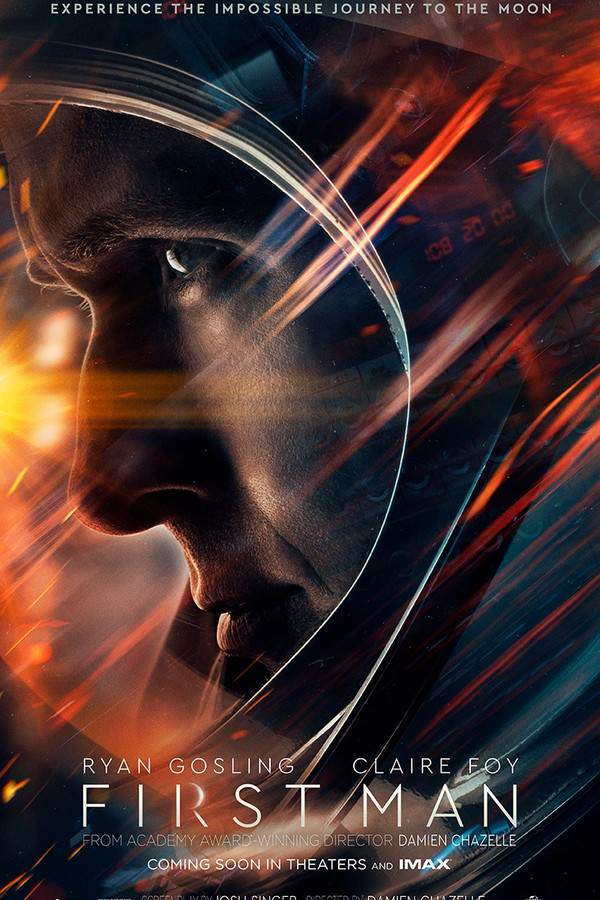
First Man (2018) movie poster

Ending Explained

First Man (2018) Ending Explained – Final Scene & Meaning

Release, runtime and language
2018 · 141 min · English
Echo score 80
Loading streaming availability…
Directed by
Damien Chazelle
Starring
Shea Whigham, Kyle Chandler, Corey Stoll, Perla Middleton, Ciarán Hinds, Christopher Abbott
Budget
$59M

In the lead-up to the 1969 moon landing, skilled test pilot Neil Armstrong dedicates himself to NASA's ambitious program. He endures rigorous training and perilous test flights, pushing the boundaries of human achievement. The film chronicles his journey and the sacrifices made as he prepares for the historic Apollo 11 mission alongside Buzz Aldrin and Michael Collins. On July 20, 1969, the world watches as Armstrong takes humanity's first steps on the lunar surface.

On this page (7)
  1. 1 Where to watch
  2. 2 What happens at the end
  3. 3 Final events in order
  4. 4 Ending questions answered
  5. 5 Movie threads
  6. 6 Movies like First Man
  7. 7 Every angle
Loading streaming availability…

Ending explained · contains spoilers

What Happens at the End of First Man?

How First Man (2018) ends, what the final scene means, which earlier moments set it up and how to read the ending if the film leaves it open. The full ending explained, with every spoiler.

The ending of First Man is deeply emotional and personal, shifting focus from the grandeur of the Moon landing to the inner life of Neil Armstrong. After successfully landing on the Moon, the film depicts Armstrong alone at Little West Crater, a moment of profound solitude. He lifts his visor and takes in the silence and stillness, symbolizing a rare moment of introspection and peace amidst the chaos of space exploration. It is here that he drops his late daughter Karen’s bracelet into the crater, a quiet gesture of mourning and letting go, signifying the personal weight he carries even as he steps into history. Back on Earth, Armstrong and Buzz Aldrin are quarantined due to fears of what they might bring back from the Moon, and the scene shifts to them watching a replay of JFK’s famous speech about going to the Moon—marked as humanity’s extraordinary achievement. The final moments are surprisingly understated; Neil reunites with his wife Janet in a silent, intimate moment, capturing the emotional distance and connection that have persisted through his grief and extraordinary journey. They hold hands behind a glass barrier, symbolizing both the physical and emotional distance but also the enduring love and the shared achievement.

The movie’s final scene and the absence of typical patriotic imagery, like the American flag, emphasize that the story isn’t about national pride but about what Neil Armstrong’s journey truly meant on a human level. It’s about overcoming personal grief and finding peace in a moment of monumental achievement. The film ends with Neil and Janet embracing quietly, signifying a cathartic release of long-held pain and the understanding that sometimes, the greatest victories are internal ones. Neil’s story continues afterward: he leaves NASA, becomes a teacher, and eventually passes away in 2012 from health complications. Meanwhile, Buzz Aldrin also leaves NASA, grappling with personal struggles but remaining a public figure in space exploration. The true significance of First Man is that it reframes Apollo 11 as a human story, centered on Neil’s inner journey rather than patriotic spectacle, making it a poetic testament to resilience, loss, and the quiet triumph of the human spirit.

Last updated: June 25, 2025 at 08:57

Was this helpful?

The last 4 events

How First Man Ends: The Final Events in Order

The last events of First Man (2018) in chronological order, the run-up to the ending explained above. The complete timeline has all 14 events, scene by scene.

Open the full timeline
  1. Family Tensions Before Launch

    As the Apollo 11 mission nears, tension grows in the Armstrong household. Janet expresses her concerns about the risks associated with the mission, leading to a fraught conversation before Neil says goodbye to their young sons.

  2. Launch of Apollo 11

    On launch day, Apollo 11 embarks on its momentous journey to the Moon, reaching its destination by the fourth day. Neil and Buzz Aldrin navigate the Lunar Module Eagle towards the lunar surface, encountering a field of boulders that necessitates quick thinking and manual control.

  3. Historic Moon Landing

    Neil Armstrong successfully lands the Lunar Module on the Moon, famously declaring, 'That's one small step for man, one giant leap for mankind' as he becomes the first human to set foot on the lunar surface. In a symbolic gesture, he leaves his daughter's bracelet in the Little West crater.

    Where
    Moon
  4. Returning Home and Reflection

    After completing their historic mission, Neil and the crew undergo quarantine, reflecting on their incredible journey. They watch the impactful footage of President John F. Kennedy's speech about going to the Moon, sharing a tender moment with Janet amidst the chaos of their triumphant return.

Ending questions answered

First Man Ending: Your Questions Answered

The questions people ask most about the ending of First Man (2018): what the final scene means, how the twist works, what happens to each character and how to read the ending. Each answer contains spoilers.

Q1

Why does Neil Armstrong drop his daughter's bracelet on the moon?

Neil drops his daughter Karen's bracelet into Little West Crater as a final act of mourning and letting go. Karen died from a brain tumor in 1962, and Neil carried that grief throughout his journey to the moon. The gesture symbolizes his attempt to find closure and peace, releasing his personal loss in the most remote and silent place on Earth.

Foreshadowing: Earlier scenes show Neil keeping Karen's bracelet hidden in his flight suit, hinting at his unresolved grief.

  • karen armstrong
  • bracelet
  • moon landing
  • loss
  • grief
Q2

What is the significance of Little West Crater in the ending?

Little West Crater is where Armstrong briefly walks alone after the lunar landing, marking the first human footprints on lunar soil beyond the immediate landing site. The film uses this isolated location to give Neil a private moment of reflection away from the historic significance, emphasizing the personal nature of his journey.

  • little west crater
  • lunar surface
  • moon walk
  • first steps
Q3

Why is there no American flag shown during the moon landing in the film?

The film deliberately avoids showing the American flag being planted, focusing instead on the human rather than patriotic aspect of the achievement. Director Damien Chazelle explained this was intentional, the story is about Neil Armstrong's personal journey and grief, not national pride. The absence of typical patriotic imagery reinforces that the movie reframes Apollo 11 as a deeply personal story.

  • american flag
  • patriotism
  • moon landing
  • national pride
Q4

What does the final scene with Neil and Janet behind glass mean?

Neil and Janet reunite separated by a glass barrier because they are in quarantine after returning from the moon. The glass represents both the physical and emotional distance that grew between them during Neil's obsessive pursuit of the mission. Yet they hold hands through the glass, symbolizing their enduring love despite years of strain and grief.

Foreshadowing: Earlier scenes show tension between them as Neil withdraws emotionally following Karen's death.

  • janet armstrong
  • reunion
  • quarantine
  • love
  • marriage
Q5

Why does Armstrong open his visor on the moon?

Armstrong opens his visor on the lunar surface to experience the moon's environment directly, the silence, the stillness, and the profound solitude. This moment breaks the protocol and symbolism of the mission, giving him a rare pause for personal reflection amid the historical achievement.

  • visor
  • moon surface
  • silence
  • reflection
  • lunar
Q6

Why is the ending so quiet and understated after the moon landing?

The understated ending reflects the film's central theme, that the greatest victory is internal rather than historic. Rather than celebrating with fanfare, the movie focuses on Neil's private grief and his slow journey toward peace. The quietness underscores that behind the monumental achievement lies a man processing loss and finding catharsis.

  • ending tone
  • bittersweet
  • emotional catharsis
  • personal journey
Q7

What happens to Neil Armstrong after Apollo 11 in the movie?

After Apollo 11, Neil leaves NASA and becomes a teacher, choosing a quiet life away from the spotlight. The film notes he passes away in 2012 from health complications. Buzz Aldrin also leaves NASA but continues as a public figure in space exploration, though he grapples with personal struggles.

  • buzz aldrin
  • nasa career
  • death 2012
  • after moon landing
Q8

Why do Armstrong and Aldrin watch JFK's speech in quarantine?

The scene shows Armstrong and Aldrin watching President Kennedy's famous 1962 speech about going to the moon while in quarantine after returning. This moment connects their achievement back to the promise that started it all, emphasizing the extraordinary accomplishment of fulfilling Kennedy's vision despite the personal costs.

  • jfk speech
  • quarantine
  • apollo 11
  • president kennedy
Q9

What is the main theme of First Man's ending?

The ending emphasizes that true triumph comes from overcoming personal grief and finding inner peace. The film reframes the moon landing not as a patriotic victory but as a story about resilience, loss, and the quiet strength required to keep moving forward despite tragedy. Neil's journey represents the cathartic release of long-held pain.

Foreshadowing: The entire film builds toward this moment by showing Neil's emotional withdrawal after Karen's death.

  • theme
  • sacrifice
  • grief
  • resilience
  • personal victory
  • catharsis
Q10

How does Karen's death connect to the moon landing mission?

Karen's death in 1962 is the driving emotional force behind Neil's relentless pursuit of the Apollo 11 mission. The film suggests his dedication to space exploration was partly an escape from his grief and a way to channel his energy toward something meaningful. His final act on the moon, releasing her bracelet, represents the closure he finally achieves.

Foreshadowing: Multiple scenes show Neil focusing intensely on work as a coping mechanism after Karen's death.

  • karen armstrong death
  • brain tumor
  • grief
  • daughter
  • emotional journey

Movie threads

More Movies Like First Man, by Mood & Story

Curated lists built around what makes First Man tick: the same mood, the same kind of story or the same emotional payoff. Each list explains why these movies belong together.

Movies about bittersweet achievements like First Man

Stories where grand achievements are shadowed by profound personal cost. If you liked the melancholic triumph of First Man, explore other movies where historic success or personal victories are tempered by heavy emotional sacrifice. These films, often based on true stories or intense character dramas, share a similar tone of somber reflection and bittersweet endings.

  • somber
  • poignant
  • reflective
  • determined
  • lonely
  • heavy
  • Tone: melancholic, bittersweet
  • Pacing: steady, deliberate
Why these movies?

The story pattern: These narratives typically follow a driven individual or team pursuing a seemingly impossible goal. The plot meticulously builds toward a climactic achievement, but the journey is punctuated by personal tragedies or moral compromises. The final victory is thus experienced not with pure joy, but with a heavy, reflective acknowledgement of the price paid.

Why they belong together: Movies in this thread are grouped by their shared emotional core: a deliberate, steady pacing that allows grief to simmer beneath ambition, a melancholic tone, and a bittersweet resolution. They prioritize the psychological weight on their characters over celebratory spectacle, creating a uniquely poignant viewing experience.

Intense realistic procedurals like First Man

Gripping films that meticulously document high-risk professions under extreme pressure. Fans of the methodical, high-tension realism in First Man will appreciate these similar movies. They depict professions where precision is paramount and failure is fatal, using a steady pace to build anxiety and create a deeply immersive, heavily atmospheric experience.

  • anxious
  • determined
  • tense
  • immersive
  • technical
  • gripping
  • Tone: tense, anxious, determined
  • Pacing: steady, methodical
Why these movies?

The story pattern: These stories unfold with a procedural, almost documentary-like structure. The plot is less about surprise twists and more about the cumulative tension of known historical risks or occupational hazards. Character development is woven into the mastery of complex skills, and the climax is often a meticulously recreated real-world event where skill meets chance.

Why they belong together: These films share a high-intensity, steady-pace vibe rooted in realism. They generate suspense through factual detail and unflinching portrayals of risk, creating a sense of anxious immersion. The emotional weight is heavy, driven by the constant presence of danger and the sobering reality of the profession.

If you liked this

Movies Like First Man

Similar movies to First Man: the same genre, themes or kind of story. Each one comes with its own plot summary, timeline and ending explained.

Browse all movie summaries

Every angle

First Man (2018) Explained: Plot, Ending, Timeline & Characters

Everything about First Man in one place: what happens in the plot summary, the timeline in chronological order, the characters and meaning, the ending explained and a spoiler-free summary. What's After the Movie adds the cast, box office and post-credit scenes.

Coming soon on iOS and Android

The Plot Explained Movie Summary App

Plot summaries, endings explained and timelines on your phone. Catch up on any movie in minutes, save your favorites and never miss a twist again.

Be the first to know when we launch. Your email stays private, always.

Learn more about the app