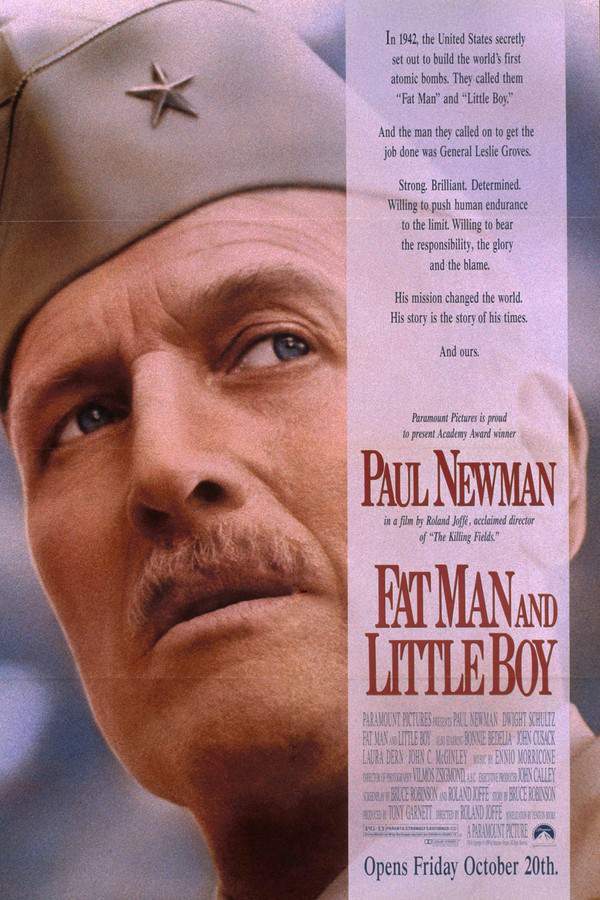
Fat Man and Little Boy
Year: 1989
Runtime: 127 min
Language: English
Director: Roland Joffé
During World War II, General Leslie Groves, a pragmatic military leader, recruits the brilliant but complex physicist Dr. J. Robert Oppenheimer to develop atomic weapons. The pair embark on a challenging collaboration, racing against time to create the powerful "Fat Man" and the streamlined "Little Boy" bombs. Their differing approaches and personalities create friction, testing their ability to succeed in this top-secret and crucial mission.
Where to Watch Fat Man and Little Boy?
Find where to stream, rent, or buy Fat Man and Little Boy (1989) in the US with current JustWatch availability, up-to-date pricing, and platform listings for subscription, rental, and digital purchase options.






Warning: spoilers below!
Haven’t seen Fat Man and Little Boy yet? This summary contains major spoilers. Bookmark the page, watch the movie, and come back for the full breakdown. If you're ready, scroll on and relive the story!
Fat Man and Little Boy (1989) – Full Plot Summary & Ending Explained
Read the complete plot breakdown of Fat Man and Little Boy (1989), including all key story events, major twists, and the ending explained in detail. Discover what really happened, and what it all means.
In September 1942, the ultra-secret Manhattan Project lands in the hands of Colonel Leslie Groves, a no-nonsense military man who has already earned a reputation for overseeing the construction of the Pentagon. His mission is to outpace Germany in the race to build an atomic weapon, a task that feels almost impossible given the scale and secrecy involved. Groves picks J. Robert Oppenheimer, a brilliant and somewhat enigmatic physicist, to lead the scientific effort. Oppenheimer is drawn to the stark, remote landscape of northern New Mexico, where his family once owned a cabin, and he envisions a research facility that sits atop a mesa near Los Alamos Canyon, northwest of Santa Fe.
From the start, the relationship between Groves and Oppenheimer is defined by clash and compromise. Groves brings order, discipline, and a ruthless focus on schedules, while Oppenheimer, surrounded by a diverse group of scientists, wrestles with the moral and philosophical implications of their work. The scientists debate whether their personal consciences should guide their science or if they must suppress emotion to fulfill a national goal. The project becomes a crucible where professional ambition, ethical concerns, and personal loyalties pull in different directions, and the strain of leadership is felt as much in the offices and laboratories as it is in the field.
Within this high-stakes pressure cooker, individuals grapple with dangerous breakthroughs and the human costs of progress. Nurse Kathleen Robinson and young physicist Michael Merriman become aware that their work may come with consequences that extend far beyond equations and experiments. An accident during a high-risk experiment—an event dubbed Tickling the Dragon’s Tail—leads to a catastrophic exposure for Merriman, who develops grotesque swelling and deformity before his death. The tragedy lays bare the risks of radiation, the fragility of the human body, and the emotional toll on those left behind in the hospital and laboratories.
As the project expands across multiple sites across the United States, security concerns take center stage. Investigations probe possible foreign espionage and internal sympathies, including connections to socialist organizations, heightening paranoia and tension. The scrutiny also touches Oppenheimer personally, revealing that he has had a complicated relationship with Jean Tatlock, who becomes a source of personal and political trouble. Groves orders Oppenheimer to end their relationship, but Oppenheimer’s need to protect secrecy prevents him from fully explaining the reasons, leaving Tatlock to confront heartbreak and a solitary fate.
With the operation sprawling and the clock ticking, the scientists explore two parallel designs to avert a single point of failure. One design targets a large, heavy plutonium bomb that would explode via implosion using shaped charges, known as the “Fat Man.” The other is a leaner, lighter uranium bomb that would be fired in a shotgun-style configuration, nicknamed “Little Boy.” The project moves through technical breakthroughs and stubborn setbacks, testing the limits of engineering, physics, and human resilience.
The narrative culminates at the Trinity Site in the Alamogordo Desert of south-central New Mexico, on a clear July day in 1945. At the moment of detonation, a mushroom cloud rises and the winds roar across the desert as observers feel the profound and humbling awe of witnessing the first atomic explosion. The successful tests of Fat Man and Little Boy propel humanity into a new era—the Atomic Age—while leaving behind a lasting legacy of scientific triumph shadowed by ethical questions, personal losses, and the enduring complexity of discovery under the weight of enormous responsibility.
Last updated: October 09, 2025 at 15:35
Fat Man and Little Boy (1989) Plot Questions Answered – Summary FAQ
Explore frequently asked questions about Fat Man and Little Boy (1989) with spoiler-rich answers covering the full plot summary, major story beats, character motivations, hidden details, and ending meaning. This movie summary FAQ helps explain confusing scenes, plot twists, and narrative decisions in clear, searchable detail.
Why was Oppenheimer chosen to lead the scientific team at Los Alamos?
Groves selected Oppenheimer because of his exceptional intellect, leadership ability, and charisma that could unite diverse scientists. Additionally, Oppenheimer had a personal connection to the New Mexico landscape, having owned a family cabin near Los Alamos, which made him uniquely suited to envision and establish the remote research facility.
What caused the friction between General Groves and Oppenheimer?
Groves brought military discipline, strict schedules, and a focus on results, while Oppenheimer and his team of scientists wrestled with moral and philosophical implications of their work. The conflict stemmed from Groves's demand for rapid progress versus the scientists' need to address their ethical concerns about creating a weapon of mass destruction.
The tension is established early when Groves pushes for order while Oppenheimer surrounds himself with scientists who debate whether conscience should guide their work.
What was the 'Tickling the Dragon's Tail' accident?
This was a dangerous experiment conducted at Los Alamos where a reactor component was accidentally dropped. When a physicist named Michael Merriman retrieved it by hand to prevent a disaster, he received a lethal dose of radiation. He died days later after suffering grotesque swelling and deformity, dramatically illustrating the deadly risks of radiation exposure.
Why did Oppenheimer have to end his relationship with Jean Tatlock?
Groves ordered Oppenheimer to end the relationship after security investigations revealed that Tatlock had connections to socialist organizations and posed potential espionage concerns. Oppenheimer was forbidden from explaining the full reasons due to project secrecy, leaving Tatlock confused and heartbroken.
The seeds of this conflict are planted early when security concerns begin to probe the personal lives of scientists.
What happened to Jean Tatlock after Oppenheimer ended their relationship?
Tatlock was unable to cope with the heartbreak and isolation caused by the project's secrecy. She was later found dead in San Francisco in an apparent suicide, adding a profound personal tragedy to the moral weight the scientists already carried.
The foreshadowing appears when Oppenheimer is forced to break off the affair without explanation, leaving Tatlock to face a solitary fate.
Why did the Manhattan Project develop two different bomb designs?
The scientists developed both Fat Man (a plutonium implosion bomb) and Little Boy (a uranium gun-type bomb) to avoid a single point of failure. If one design failed, the other might succeed. This parallel approach represented radically different engineering challenges and ensured the project had multiple paths to success.
What was the Trinity test and why did it matter?
The Trinity test was the first ever nuclear detonation, conducted on July 16, 1945 in the Alamogordo Desert. At 5:29:45 AM, the successful explosion created a massive mushroom cloud, confirming the weapon's viability and ushering humanity into the Atomic Age. It proved months of scientific work had succeeded.
What ethical concerns did the Manhattan Project scientists wrestle with?
The scientists constantly debated whether their personal consciences should guide their work or if they needed to suppress moral emotions to achieve the national goal of beating Germany. They struggled with the knowledge they were creating a weapon capable of mass destruction and the human costs that would follow.
These ethical debates surface repeatedly throughout the project as Groves pushes for speed while scientists question the morality of their work.
Who was Michael Merriman and what was the impact of his death?
Michael Merriman was a young physicist at Los Alamos who died from radiation exposure during the 'Tickling the Dragon's Tail' experiment. His tragic death, witnessed by nurse Kathleen Robinson, laid bare the lethal dangers of radiation and added to the emotional toll on everyone at the facility.
Why was the Los Alamos site chosen for the Manhattan Project?
Oppenheimer selected the remote mesa near Los Alamos Canyon in northern New Mexico because its isolation would protect sensitive work from external pressures and spy threats. The stark landscape also held personal significance for Oppenheimer, whose family once owned a cabin in the area.

Explore Movie Threads
Discover curated groups of movies connected by mood, themes, and story style. Browse collections built around emotion, atmosphere, and narrative focus to easily find films that match what you feel like watching right now.
Moral Dilemma Dramas Under Pressure like Fat Man and Little Boy
Intense dramas where brilliant minds face crushing ethical dilemmas.If you enjoyed the ethical tension in Fat Man and Little Boy, explore other movies like it. This list features similar high-stakes historical dramas and thought-provoking stories where characters grapple with the heavy moral weight of their world-changing actions.
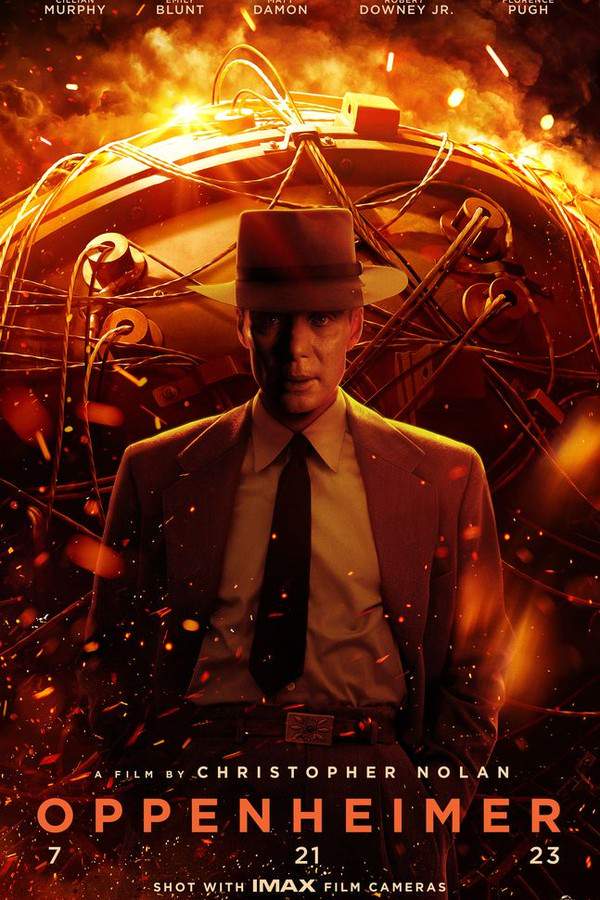
Oppenheimer
2023
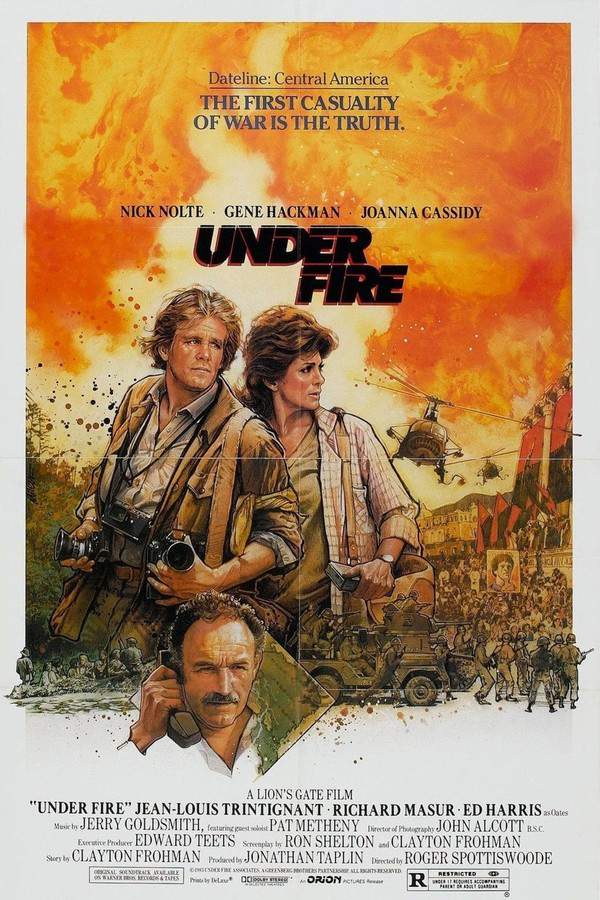
Under Fire
1983
Darkest Hour
2017

Life During Wartime
2010
Courage Under Fire
1996
Fat Man and Little Boy
1989
Time Limit
1957

Apothecary
2014

The Crossing
2000

The Crossing
2000

By Dawn’s Early Light
2001

Crisis Negotiators
2024

Good Night, and Good Luck
2025

Two Prosecutors
2025
An Officer and a Spy
2025
Narrative Summary
Narratives in this thread typically follow a linear, high-pressure mission where success is shadowed by ethical doubts. The central conflict is less about external enemies and more about the internal struggle of the creators, often leading to a somber or bittersweet conclusion that questions the price of 'progress'.
Why These Movies?
Movies are grouped here because they share a heavy emotional weight, a tense tone driven by moral conflict, and a steady pacing that builds gripping pressure. They focus on the psychological toll of creation and discovery, making them thematically and emotionally cohesive.
Movies About Uneasy Collaborations Like in Fat Man and Little Boy
Stories of pragmatic leaders and visionary creators forging uneasy alliances.Looking for more films like Fat Man and Little Boy? Discover stories featuring similar dynamic duos—pragmatic military or business leaders paired with complex visionary creators, racing against time in high-pressure historical or scientific settings.
The Current War: Director's Cut
2019
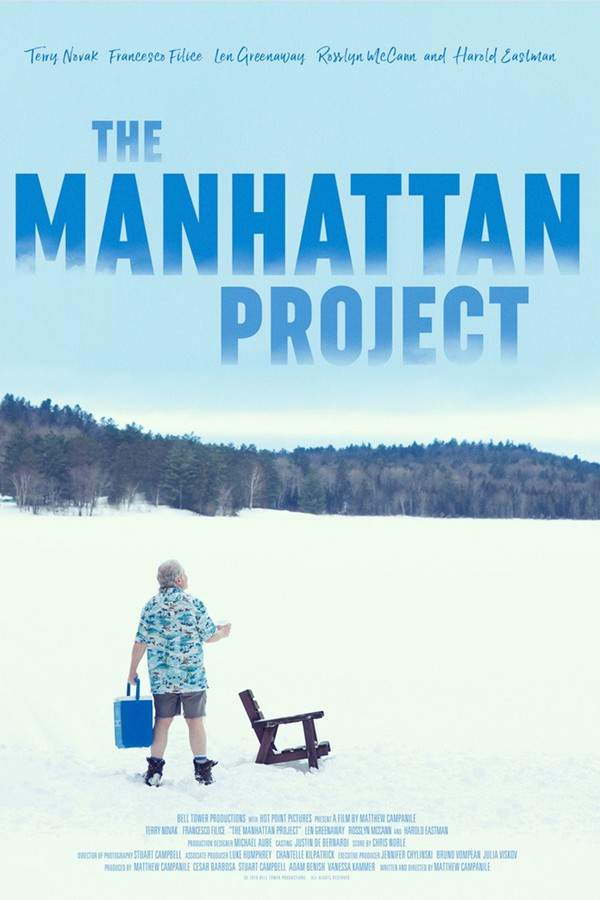
The Manhattan Project
1986

Deadline
2012
Time Limit
1957

Leader
2010

The Challenger Disaster
2013
Key
2011

The Challenger Disaster
2019

Time Renegades
2016

Running Against Time
1991

Project Gemini
2022
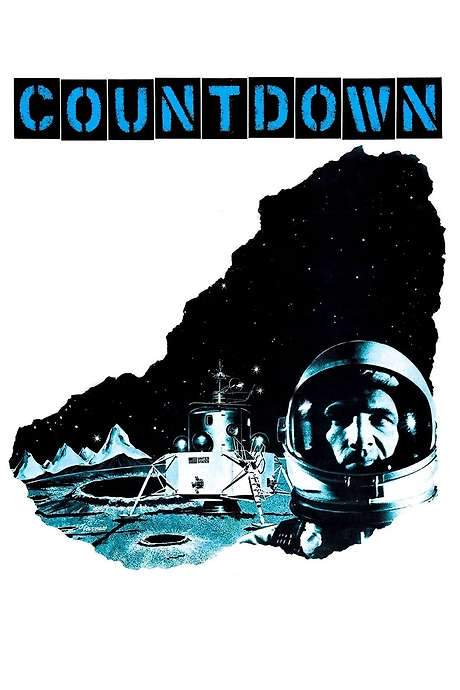
Countdown
1967

Pirates of Silicon Valley
1999

Mission Raniganj
2023
Crisis Negotiators
2024
Narrative Summary
The plot revolves around a high-stakes mission where success depends on two opposing personalities—one focused on logistics and deadlines, the other on innovation and perfection—finding a way to work together. The friction between their methods drives the narrative forward, testing their partnership to its limits.
Why These Movies?
These movies share a core narrative pattern of an unlikely duo, a steady pacing focused on a linear mission, and a tense tone generated by personality clashes. The experience is defined by watching a fragile collaboration bear immense weight.
Unlock the Full Story of Fat Man and Little Boy
Don't stop at just watching - explore Fat Man and Little Boy in full detail. From the complete plot summary and scene-by-scene timeline to character breakdowns, thematic analysis, and a deep dive into the ending - every page helps you truly understand what Fat Man and Little Boy is all about. Plus, discover what's next after the movie.
Fat Man and Little Boy Timeline
Track the full timeline of Fat Man and Little Boy with every major event arranged chronologically. Perfect for decoding non-linear storytelling, flashbacks, or parallel narratives with a clear scene-by-scene breakdown.

Characters, Settings & Themes in Fat Man and Little Boy
Discover the characters, locations, and core themes that shape Fat Man and Little Boy. Get insights into symbolic elements, setting significance, and deeper narrative meaning - ideal for thematic analysis and movie breakdowns.


