Plot Explained Spoilers guaranteed!
Plot Explained

Browse by genre

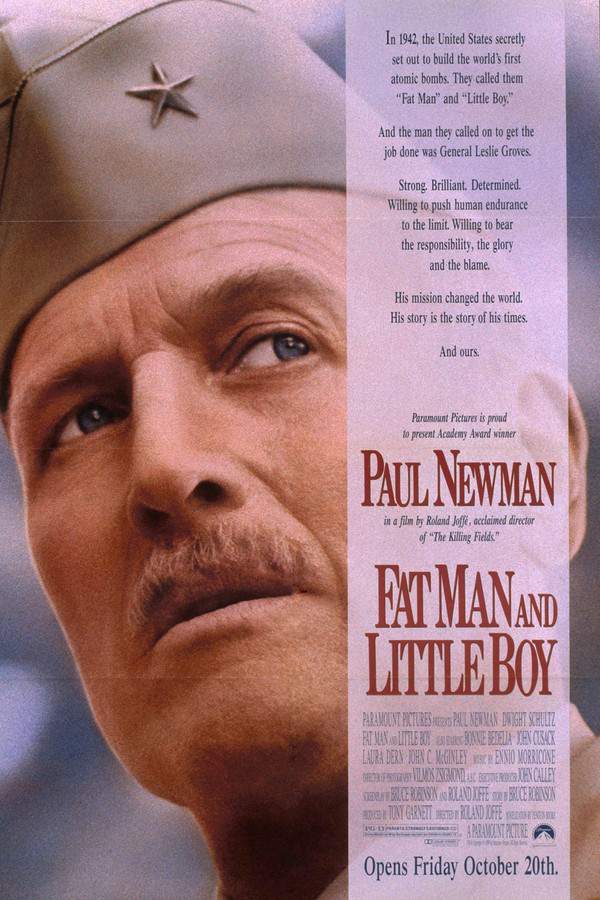
Fat Man and Little Boy (1989) movie poster

Timeline

Fat Man and Little Boy (1989) Timeline Explained – Every Event in Order

Release, runtime and language
1989 · 127 min · English
Loading streaming availability…
Directed by
Roland Joffé
Starring
Paul Newman, Laura Dern, John C. McGinley, Bonnie Bedelia, John Cusack, Natasha Richardson

During World War II, General Leslie Groves, a pragmatic military leader, recruits the brilliant but complex physicist Dr. J. Robert Oppenheimer to develop atomic weapons. The pair embark on a challenging collaboration, racing against time to create the powerful "Fat Man" and the streamlined "Little Boy" bombs. Their differing approaches and personalities create friction, testing their ability to succeed in this top-secret and crucial mission.

On this page (5)
  1. 1 Where to watch
  2. 2 Events in order (12)
  3. 3 Timeline questions answered
  4. 4 Movie threads
  5. 5 Every angle
Loading streaming availability…

12 events in order · contains spoilers

Fat Man and Little Boy Timeline: Events in Chronological Order

Every key event of Fat Man and Little Boy (1989) in order, scene by scene, with when and where it takes place. Use it to untangle flashbacks, time jumps and parallel storylines, to refresh your memory before the sequel or to find the exact scene you are thinking of.

  1. Groves is appointed to lead the Manhattan Project

    In September 1942, U.S. Army Corps of Engineers Colonel Leslie Groves is assigned to head the ultra-secret Manhattan Project, aiming to beat the German nuclear program. He brings military organization and discipline to a top-secret effort, previously focused on other national projects like the Pentagon. The assignment sets the stage for a massive, cross-country scientific undertaking.

    When
    September 1942
    Where
    Washington, D.C.
  2. Oppenheimer recruited to lead the scientific team

    Groves selects J. Robert Oppenheimer, a Berkeley physicist, to head the project team. Oppenheimer's charisma and intellect make him a natural leader for a diverse group of scientists. The recruitment marks a pivotal shift from military oversight to scientific leadership.

    When
    1942
    Where
    Berkeley, California
  3. Remote Los Alamos site chosen for the research facility

    Oppenheimer chooses a remote mesa near Los Alamos Canyon to house the new research facility, keeping the team insulated from external pressures. The secluded site is intended to protect sensitive work and foster focused collaboration. This setting would become the cradle of the Manhattan Project’s most famous work.

    When
    1943
    Where
    Los Alamos Canyon, New Mexico
  4. Tensions between Groves and the scientists over conscience

    As the project advances, military demands and scientific ideals clash. Groves pushes for rapid progress, while Oppenheimer and the team wrestle with whether personal ethics should influence their work. The result is ongoing friction as components move toward a critical, time-sensitive completion.

    When
    1943–1944
    Where
    Los Alamos, New Mexico
  5. Tickling the Dragon's Tail accident and radiation injury

    During a high-risk experiment nicknamed Tickling the Dragon's Tail, a reactor component is dropped and recovered by hand to prevent a disaster. The handler is exposed to a lethal dose of radiation and dies days later after a painful battle with swelling and deformation. Kathleen Robinson, a nurse, witnesses the tragedy in the base hospital.

    When
    1944
    Where
    Base hospital, Los Alamos, New Mexico
  6. Espionage investigations begin amid fears of foreign influence

    As the project expands, investigators scrutinize potential espionage and communist sympathizers within the broader scientific community. The scrutiny creates anxiety and distrust among staff, threatening the unity needed for a project of this scale. The atmosphere grows tenser as leaks or suspected leaks become a daily concern.

    When
    1944–1945
    Where
    United States – multiple sites
  7. Oppenheimer's relationship with Jean Tatlock is found and ordered to end

    Groves orders Oppenheimer to sever his relationship with Jean Tatlock after spying concerns surface about her. Oppenheimer breaks off the affair, unable to fully explain the reasons to her, and the personal tension bleeds into his professional life. The rift compounds the emotional strain surrounding the project’s secrecy.

    When
    1943–1944
    Where
    Berkeley, California / Los Alamos, New Mexico
  8. Tatlock's suicide follows the breakup

    Tatlock, unable to cope with the heartbreak and isolation caused by the project’s secrecy, is later found dead, apparently by suicide. The tragedy haunts Oppenheimer and underscores the collateral human costs of the project. The incident feeds the moral questions the scientists grapple with throughout development.

    When
    1944
    Where
    San Francisco, California
  9. Parallel bomb designs chosen to avoid single point of failure

    To mitigate the risk of a single point of failure, the project pursues two different bomb concepts: Fat Man, a plutonium implosion design, and Little Boy, a uranium gun-type design. The scientists and engineers work on simultaneous development across multiple sites to diversify the project’s prospects. The dual paths exemplify the tension between competing scientific approaches.

    When
    1943–1945
    Where
    United States (multiple sites)
  10. Fat Man and Little Boy design converge toward final solutions

    Across facilities, the two designs advance toward practical prototypes. The plutonium implosion method for Fat Man and the uranium gun-type method for Little Boy represent radically different engineering challenges. The project races toward a dramatic test and eventual deployment.

    When
    1944–1945
    Where
    Los Alamos, New Mexico
  11. Trinity test marks the first nuclear detonation

    The Trinity test, conducted at the Trinity Site in the Alamogordo Desert, detonates the first nuclear device in history. At 05:29:45 on July 16, 1945, a massive mushroom cloud rises as companions miles away feel the blast and the winds roar across the desert. The test confirms the weapon’s viability and accelerates the coming atomic age.

    When
    July 16, 1945 05:29:45
    Where
    Trinity Site, Alamogordo Desert, New Mexico
  12. Fat Man and Little Boy achieve success, ushering in atomic age

    Following the Trinity test, the Fat Man and Little Boy weapons are deemed successful, bringing the Atomic Age into reality. The successful demonstration and production enable deployment during World War II and reshape global power dynamics. The project ends its long arc, having achieved its strategic aims but at great human and moral cost.

    When
    1945
    Where
    United States

Last updated: October 09, 2025 at 15:35

Was this helpful?

Timeline questions answered

Fat Man and Little Boy Timeline Explained: Your Questions Answered

When does it happen, and why in that order? The questions people ask about the chronology of Fat Man and Little Boy (1989): time jumps, flashbacks, cause and effect between scenes and the correct order of events, each answered with spoilers.

Q1

Why was Oppenheimer chosen to lead the scientific team at Los Alamos?

Groves selected Oppenheimer because of his exceptional intellect, leadership ability, and charisma that could unite diverse scientists. Additionally, Oppenheimer had a personal connection to the New Mexico landscape, having owned a family cabin near Los Alamos, which made him uniquely suited to envision and establish the remote research facility.

  • oppenheimer
  • los alamos
  • scientific leader
  • manhattan project recruitment
  • groves
Q2

What caused the friction between General Groves and Oppenheimer?

Groves brought military discipline, strict schedules, and a focus on results, while Oppenheimer and his team of scientists wrestled with moral and philosophical implications of their work. The conflict stemmed from Groves's demand for rapid progress versus the scientists' need to address their ethical concerns about creating a weapon of mass destruction.

Foreshadowing: The tension is established early when Groves pushes for order while Oppenheimer surrounds himself with scientists who debate whether conscience should guide their work.

  • groves
  • oppenheimer
  • tension
  • conflict
  • scientists
  • military vs science
Q3

What was the 'Tickling the Dragon's Tail' accident?

This was a dangerous experiment conducted at Los Alamos where a reactor component was accidentally dropped. When a physicist named Michael Merriman retrieved it by hand to prevent a disaster, he received a lethal dose of radiation. He died days later after suffering grotesque swelling and deformity, dramatically illustrating the deadly risks of radiation exposure.

  • tickling the dragons tail
  • radiation accident
  • merriman
  • los alamos
  • death
Q4

Why did Oppenheimer have to end his relationship with Jean Tatlock?

Groves ordered Oppenheimer to end the relationship after security investigations revealed that Tatlock had connections to socialist organizations and posed potential espionage concerns. Oppenheimer was forbidden from explaining the full reasons due to project secrecy, leaving Tatlock confused and heartbroken.

Foreshadowing: The seeds of this conflict are planted early when security concerns begin to probe the personal lives of scientists.

  • jean tatlock
  • oppenheimer
  • relationship
  • security
  • espionage
  • groves order
Q5

What happened to Jean Tatlock after Oppenheimer ended their relationship?

Tatlock was unable to cope with the heartbreak and isolation caused by the project's secrecy. She was later found dead in San Francisco in an apparent suicide, adding a profound personal tragedy to the moral weight the scientists already carried.

Foreshadowing: The foreshadowing appears when Oppenheimer is forced to break off the affair without explanation, leaving Tatlock to face a solitary fate.

  • jean tatlock
  • suicide
  • death
  • oppenheimer
  • personal cost
Q6

Why did the Manhattan Project develop two different bomb designs?

The scientists developed both Fat Man (a plutonium implosion bomb) and Little Boy (a uranium gun-type bomb) to avoid a single point of failure. If one design failed, the other might succeed. This parallel approach represented radically different engineering challenges and ensured the project had multiple paths to success.

  • fat man
  • little boy
  • plutonium
  • uranium
  • bomb designs
  • duplicate development
Q7

What was the Trinity test and why did it matter?

The Trinity test was the first ever nuclear detonation, conducted on July 16, 1945 in the Alamogordo Desert. At 5:29:45 AM, the successful explosion created a massive mushroom cloud, confirming the weapon's viability and ushering humanity into the Atomic Age. It proved months of scientific work had succeeded.

  • trinity test
  • first atomic bomb
  • mushroom cloud
  • alamogordo
  • july 1945
Q8

What ethical concerns did the Manhattan Project scientists wrestle with?

The scientists constantly debated whether their personal consciences should guide their work or if they needed to suppress moral emotions to achieve the national goal of beating Germany. They struggled with the knowledge they were creating a weapon capable of mass destruction and the human costs that would follow.

Foreshadowing: These ethical debates surface repeatedly throughout the project as Groves pushes for speed while scientists question the morality of their work.

  • ethics
  • moral dilemma
  • scientists
  • conscience
  • atomic bomb
  • destruction
Q9

Who was Michael Merriman and what was the impact of his death?

Michael Merriman was a young physicist at Los Alamos who died from radiation exposure during the 'Tickling the Dragon's Tail' experiment. His tragic death, witnessed by nurse Kathleen Robinson, laid bare the lethal dangers of radiation and added to the emotional toll on everyone at the facility.

  • michael merriman
  • radiation death
  • physicist
  • kathleen robinson
  • los alamos
Q10

Why was the Los Alamos site chosen for the Manhattan Project?

Oppenheimer selected the remote mesa near Los Alamos Canyon in northern New Mexico because its isolation would protect sensitive work from external pressures and spy threats. The stark landscape also held personal significance for Oppenheimer, whose family once owned a cabin in the area.

  • los alamos
  • remote site
  • mesa
  • new mexico
  • oppenheimer selection
  • secrecy

Movie threads

More Movies Like Fat Man and Little Boy, by Mood & Story

Curated lists built around what makes Fat Man and Little Boy tick: the same mood, the same kind of story or the same emotional payoff. Each list explains why these movies belong together.

Moral Dilemma Dramas Under Pressure like Fat Man and Little Boy

Intense dramas where brilliant minds face crushing ethical dilemmas. If you enjoyed the ethical tension in Fat Man and Little Boy, explore other movies like it. This list features similar high-stakes historical dramas and thought-provoking stories where characters grapple with the heavy moral weight of their world-changing actions.

  • tense
  • somber
  • thought-provoking
  • gripping
  • anxious
  • solemn
  • Tone: tense, somber, thought-provoking
  • Pacing: steady, deliberate
Why these movies?

The story pattern: Narratives in this thread typically follow a linear, high-pressure mission where success is shadowed by ethical doubts. The central conflict is less about external enemies and more about the internal struggle of the creators, often leading to a somber or bittersweet conclusion that questions the price of 'progress'.

Why they belong together: Movies are grouped here because they share a heavy emotional weight, a tense tone driven by moral conflict, and a steady pacing that builds gripping pressure. They focus on the psychological toll of creation and discovery, making them thematically and emotionally cohesive.

Movies About Uneasy Collaborations Like in Fat Man and Little Boy

Stories of pragmatic leaders and visionary creators forging uneasy alliances. Looking for more films like Fat Man and Little Boy? Discover stories featuring similar dynamic duos—pragmatic military or business leaders paired with complex visionary creators, racing against time in high-pressure historical or scientific settings.

  • tense
  • gripping
  • anxious
  • dramatic
  • pressurized
  • solemn
  • Tone: tense, gripping, dramatic
  • Pacing: steady, mission-driven
Why these movies?

The story pattern: The plot revolves around a high-stakes mission where success depends on two opposing personalities—one focused on logistics and deadlines, the other on innovation and perfection—finding a way to work together. The friction between their methods drives the narrative forward, testing their partnership to its limits.

Why they belong together: These movies share a core narrative pattern of an unlikely duo, a steady pacing focused on a linear mission, and a tense tone generated by personality clashes. The experience is defined by watching a fragile collaboration bear immense weight.

Every angle

Fat Man and Little Boy (1989) Explained: Plot, Timeline & Characters

Everything about Fat Man and Little Boy in one place: what happens in the plot summary, the timeline in chronological order, the characters and meaning and a spoiler-free summary. What's After the Movie adds the cast, box office and post-credit scenes.

Coming soon on iOS and Android

The Plot Explained Movie Summary App

Plot summaries, endings explained and timelines on your phone. Catch up on any movie in minutes, save your favorites and never miss a twist again.

Be the first to know when we launch. Your email stays private, always.

Learn more about the app