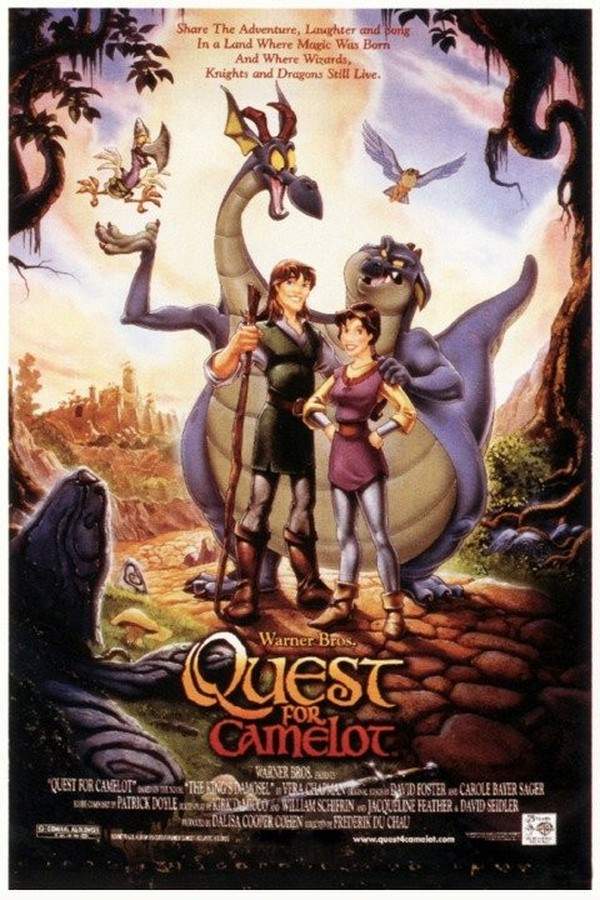
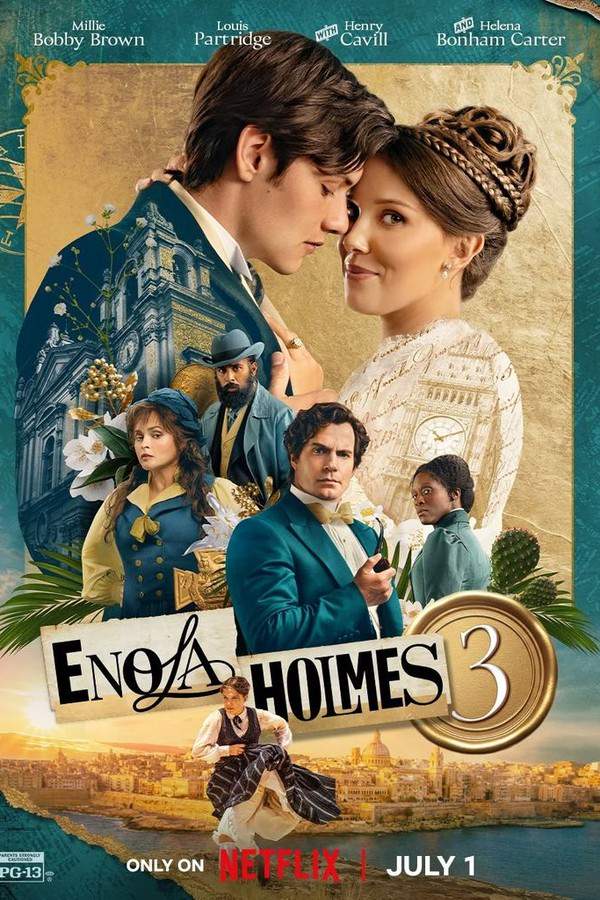
When a daring adventure pulls detective Enola Holmes (Millie Bobby Brown) to sun‑splashed Malta, her personal and professional aspirations intersect on a labyrinthine case that proves more perilous than anything she’s tackled. While navigating the mystery, Enola also confronts the evolving romance with Tewkesbury (Louis Partridge), making every clue feel like a fresh step in the game that’s truly afoot.
Find where to stream, rent, or buy Enola Holmes 3 (2026) in the US with current JustWatch availability, up-to-date pricing, and platform listings for subscription, rental, and digital purchase options.
Warning: spoilers below!
Haven’t seen Enola Holmes 3 yet? This summary contains major spoilers. Bookmark the page, watch the movie, and come back for the full breakdown. If you're ready, scroll on and relive the story!
Read the complete plot breakdown of Enola Holmes 3 (2026), including all key story events, major twists, and the ending explained in detail. Discover what really happened, and what it all means.
The film opens with Enola Holmes, Millie Bobby Brown, sprinting through a narrow alley as the local authorities close in, then directly addresses the audience to rewind to how she ended up in this perilous chase. Though she has carved out her own detective practice, the trail of her more famous brother remains a constant shadow, and her mother, [Helena Bonham Carter](/actor/helena-bonham-c Carter) Eudoria Holmes, stays on the run as well. Beside this personal tension, Tewkesbury, the reform-minded young nobleman, continues his quiet crusade for change in England, and Enola admits she would rather stay focused on leads than be pulled into romance, even as she quietly acknowledges the ache of missing him.
Enter Bessie and her foster sister Sarah Chapman’s plight, which draws Enola toward a harsh world she has long avoided. Bessie brings Enola to a match factory where orphan girls are exploited, and Enola soon encounters Mae, a tougher, acrid presence who resents Bessie’s involvement and warns of the factory’s danger. While hunting for clues in Sarah’s room, Enola discovers a torn page marked with a date, “12 March,” and hears that Sarah had quarrelled with the factory foreman, Mr. Crouch. The factory’s hidden underbelly begins to reveal itself: old matches with red tips and a lingering air of secrecy behind the operation’s respectable storefronts, hinting that the danger is far deeper than petty theft.
Desperate for more information, Enola goes undercover at the Paragon Theatre, where Mae moonlights as part of a troupe of female performers. A tense encounter in the dressing room nearly turns deadly, but Enola presses on by coaxing the stage manager to speak—Sarah had connections beyond the factory and a mysterious man at work behind the scenes. The manager hands Enola a coded poem that seems connected to Sarah’s world, and Enola later finds herself followed by a man in a cane, only to be rescued from danger by the unexpected return of her brother’s shadow—Henry Cavill—though the scene quickly circles back to the larger mystery gripping the city.
As morning comes, Sherlock Holmes confides in Enola, noting that her recent factory work left telltale residue under her nails and warning that she is now a target. A chance encounter in the park with Tewkesbury reminds Enola that old feelings still linger, and the poem is re-examined as a coded map pointing toward Whitechapel. Enola’s arrival at the indicated address uncovers signs of struggle and Mae’s death—Mae’s murder hardens the sense that someone powerful is orchestrating these crimes. Inspector Lestrade and Superintendent Grail appear, turning the investigation into a tense confrontation where Enola is accused of Mae’s murder, and the chase backfires on the authorities when Enola uses Sherlock’s insights to fight for her own release.
Seeking help, Enola turns to their mother and sister Edith, and Eloquence in their shared bond sparks a bold escape: the women stage a breakout from a women’s prison, aided by smoke bombs and a reimagined plan that merges family loyalty with a sharpened sense of justice. The group treads a dangerous path, pursued by Grail, and they manage to stall their pursuers long enough to press on with the case. Enola returns to Bessie’s world and, aided by observations about flower names in a clue-filled sheet music, discovers that “Sweet William” points to William Lyon, a member of the Lyon family connected to the factory’s schemes. A test of nerve ensues as Enola and Tewkesbury work together to navigate high-society crowds, where she must blend in at a ball to learn more about Sarah’s lover and the people who might be pulling strings.
Inside the ball, a pall of surveillance hangs over every conversation. Sherlock, piecing together a larger pattern, deciphers that a message reads “Good to meet you, Sherlock Holmes” and traces an account-number clue to a shadowy figure—Moriarty. Enola’s undercover work pays off when she is arrested for questioning at the ball, a spectacle that draws Sherlock into a tense confrontation with Grail, who seems to be more than just a lone cop. The siblings combine their wits, exposing a web of bribery and blackmail among power brokers who use the match factory tragedy to hide a far broader corruption.
With Enola in peril, the sisters—joined by Eudoria and Edith—help her escape by staging a dramatic breakout. The group’s escape leads them to a confrontation at the factory and a dramatic chase through streets and a theatre that culminates in a violent showdown. Enola’s quick thinking and resourcefulness pay off as she confronts Grail and uses a hook to bring him down, a decisive moment that reveals the true mastermind behind the operations: Mira, a.k.a. Moriarty, who has been pulling the strings to protect her own interests. Sheriff and law enforcement arrive as the conspiracy unravels, and the evidence implicates McIntyre, the reformist politician, in a scheme that would have bankrupted the factory’s workers and enriched the conspirators.
In the aftermath, the factory girls stage a decisive revolt, walking out and reclaiming their dignity as Enola, Sarah, and Bessie watch with a mix of relief and resolve. The case against McIntyre gathers momentum thanks to the leads from the Holmes siblings, who reconfirm the bond that has grown between Enola and Tewkesbury and decide to press forward with new evidence. Sherlock hints at a potential partnership, but Enola prefers to keep the door open for future collaborations on her own terms, agreeing to meet every Thursday at four, a promise that signals a continuing, if unconventional, alliance.
As the credits roll, a wry postscript hints at a new domestic arrangement in Sherlock’s life: a prospective flatmate enters the scene, and the man introduces himself with a confident “Doctor John Watson.” The suggestion of an expanding partnership between the Holmes siblings and the appearance of a new ally adds a glimmer of what might come next, while Enola steps back into the world she knows best—solving mysteries, defending the vulnerable, and steering her own fate with intelligence, courage, and the occasional spark of romance.
Last updated: July 09, 2026 at 10:33
Explore frequently asked questions about Enola Holmes 3 (2026) with spoiler-rich answers covering the full plot summary, major story beats, character motivations, hidden details, and ending meaning. This movie summary FAQ helps explain confusing scenes, plot twists, and narrative decisions in clear, searchable detail.
Enola is accused because she was discovered at the crime scene in Whitechapel where Mae was found dead. Superintendent Grail, who is secretly working with the conspiracy, deliberately frames her to stop her investigation. Enola uses Sherlock's insights to argue for her release, proving she was being set up.
Earlier, Mae had warned Enola about the factory's danger and confronted her with a knife, establishing the hostile relationship that made Enola a logical suspect.
Mira Troy is revealed to be the true mastermind behind the conspiracy, she is actually Moriarty, the criminal mastermind who has been pulling strings throughout the film. She orchestrated the match factory exploitation and bribery scheme to enrich herself and her associates, using her alias to operate in plain sight.
The coded poem and account-number clues Sherlock deciphers point to a shadowy figure working behind the scenes, and the mysterious man at the ball hints at someone with significant power.
The match factory is exploiting orphan girls by making them work with white phosphorus, which causes a condition called phossy jaw, a deadly disease that destroys jawbones. The red-tipped matches serve as a visual clue to this poisonous substance. McIntyre, William Lyon, and the Lyons family are using the factory to financially ruin the workers while enriching themselves through bribery and blackmail.
Enola notices old matches with red tips in Crouch's office, and Sarah had quarrelled with the foreman about something she may have stolen, likely evidence of the poisoning.
Superintendent Grail targets Enola because she is getting too close to exposing the conspiracy. Grail is secretly part of the bribery and blackmail network running the match factory scheme. By framing Enola for Mae's murder, Grail hopes to silence the one person who could unravel the entire operation.
Grail's aggressive pursuit of Enola seems disproportionate to a simple murder investigation, and his confrontation with Sherlock at the ball reveals his true allegiance.
"Sweet William" is a reference to William Lyon, a member of the Lyon family who is directly involved in the match factory conspiracy. Enola figures this out by analyzing flower names in a clue-filled sheet of music, "Sweet William" being the common name for the flower dianthus. This connects the Lyons family to the criminal operation.
During Enola's undercover work at the factory, she sees the Lyons family, their son William, plus McIntyre and Mira in a meeting, establishing their connection early.
Enola escapes with help from her mother Eudoria and sister Edith, who stage a breakout from the women's prison where Enola was held. They use smoke bombs and a coordinated plan that combines family loyalty with Enola's resourcefulness. The escape enables her to return to the factory and continue investigating.
Earlier, Enola turns to her mother and sister for help when Grail closes in, suggesting a family intervention was coming.
McIntyre is a reformist politician who is secretly working with the Lyons family and Mira/Moriarty. He uses his political position to facilitate the conspiracy, allowing the match factory tragedy to happen so the conspirators can profit from the workers' suffering through bribery and blackmail schemes. His involvement gives the operation political cover.
Enola sees McIntyre at the secret factory meeting, and his reformist public persona contrasts sharply with his criminal involvement.
Sarah Chapman is the missing foster sister that Bessie asks Enola to find. Throughout the investigation, Sarah is revealed to have been gathering evidence against the match factory's criminal operations. She had quarrelled with foreman Crouch about what she stole, likely proof of the poisoning scheme. Sarah ultimately helps expose the conspiracy and is reunited with Bessie at the factory revolt.
Bessie brings Enola to the factory because Sarah went missing after her quarrel with Crouch, hinting she discovered something dangerous.
Enola and Tewkesbury's relationship evolves throughout the film despite Enola's insistence she prefers staying focused on cases over romance. They work together at the Paragon ball, Enola with William Lyon, Tewkesbury with Cicely, to gather intelligence. Their partnership deepens through mutual respect and shared danger. At the end, they go on a date, confirming their budding romance while Enola maintains her independence.
Enola admits in the opening that she misses Tewkesbury, and their encounter in the park reminds her of lingering feelings.
Sherlock offers Enola a partnership because he recognizes her exceptional detective abilities, she solved the case largely on her own and proved her competence despite being younger. However, Enola declines, choosing instead to meet every Thursday at four for potential collaborations, maintaining her independence while keeping the door open for future teamwork.
Sherlock's earlier concern about Enola's safety and his admission that her factory work left telltale residue show his growing respect for her skills.
The coded poem given to Enola by the stage manager at the Paragon Theatre is actually a map with hidden directions. Enola deciphers it to discover it points toward Whitechapel, a location that leads her to find Mae's body and advance the investigation. The poem combines poetic language with a secret location signal.
Sarah had connections beyond the factory and a mysterious man, which the stage manager hints at when giving Enola the poem.
The man in the post-credits scene is Doctor John Watson, who arrives at Sherlock's office introducing himself as a potential flatmate. This is a direct nod to the classic Sherlock Holmes canon, where Watson becomes Sherlock's roommate and chronicler. The scene hints at a new chapter and the expanding Holmes universe.
Sherlock's mention of a prospective flatmate earlier in the film sets up this post-credits reveal.
Still wondering what the ending of Enola Holmes 3 (2026) really means? Here’s a spoiler-heavy breakdown of the final scene, major twists, and the deeper themes that shape the film’s conclusion.
Enola discovers that Professor Adeline Rathe, better known as Moriarty, engineered the entire affair to recover Afghan gold stolen during the Battle of Khost. Moriarty has abducted Sherlock and Lady Tewkesbury to force Enola to locate the treasure, which Tewkesbury's father helped steal before Maltese soldiers were blamed. Enola leads her into the cave dungeon, Lady Tewkesbury knocks Moriarty down, and Sherlock holds her at gunpoint until the police arrive. Tewkesbury then returns the gold to Afghanistan, authorizes the prosecution of Brigadier Sampson and the British governor, and gives up the title that the crime has disgraced.
With the conspiracy exposed, Enola and Tewkesbury marry in a simple ceremony on the cliffs, choosing a life together without the grandeur or compromised status attached to his inheritance. The newlyweds celebrate by swimming, but the last underwater image adds one final mystery: a sunken vessel marked The Wrath of Adeline 1863. The name links the wreck to Moriarty's alias and suggests that her history, influence, or another plan remains beneath the apparent resolution. The ending therefore closes Enola's romantic and moral journey while deliberately leaving her greatest criminal rival connected to an unexplored secret.
Last updated: August 25, 2026 at 14:20
Discover curated groups of movies connected by mood, themes, and story style. Browse collections built around emotion, atmosphere, and narrative focus to easily find films that match what you feel like watching right now.
Young, sharp-witted detectives solve complex cases with charm and intelligence. Discover more movies like Enola Holmes 3 featuring sharp, young female detectives solving complex mysteries with wit and charm. If you enjoyed Enola's clever investigations and fourth-wall breaks, you'll love these similar adventurous stories.
These narratives follow a bright, often young, female detective as she takes on a complex case that pushes her skills to the limit. The story balances the intellectual puzzle of the investigation with the protagonist's personal growth, frequently challenging authority figures and established systems. The tone remains light and accessible despite serious subject matter, achieved through humor, charisma, and a fast-paced, clue-driven plot.
Movies are grouped here for their shared focus on intelligent, charismatic young female detectives, their fast-paced investigative narratives, and their ability to balance serious mystery with a light, humorous tone. They all feature protagonists who are underestimated but ultimately triumph through wit rather than brute force.
Energetic adventures where young heroes take on powerful, corrupt systems for a better world. Find more uplifting movies like Enola Holmes 3 where young heroes fight systemic corruption and injustice. If you enjoyed Enola's crusade for worker rights and social reform, you'll love these similar stories of hopeful change against powerful odds.
The narrative follows a protagonist who discovers a deep-seated injustice or corruption within a powerful institution. They embark on a dangerous investigation to expose the truth, facing significant opposition but driven by a strong moral compass. The journey is fraught with peril but ultimately leads to a cathartic victory for justice, reform, and the common good, providing an uplifting and satisfying conclusion.
These films are grouped for their shared thematic focus on fighting corruption and injustice, their medium emotional weight balanced by a hopeful tone, and their fast-paced, adventurous structure. They all feature protagonists who serve as catalysts for positive change against powerful, entrenched systems.
Don't stop at just watching - explore Enola Holmes 3 in full detail. From the complete plot summary and scene-by-scene timeline to character breakdowns, thematic analysis, and a deep dive into the ending - every page helps you truly understand what Enola Holmes 3 is all about. Plus, discover what's next after the movie.
Track the full timeline of Enola Holmes 3 with every major event arranged chronologically. Perfect for decoding non-linear storytelling, flashbacks, or parallel narratives with a clear scene-by-scene breakdown.
Discover the characters, locations, and core themes that shape Enola Holmes 3. Get insights into symbolic elements, setting significance, and deeper narrative meaning - ideal for thematic analysis and movie breakdowns.
What really happened at the end of Enola Holmes 3? This detailed ending explained page breaks down final scenes, hidden clues, and alternate interpretations with expert analysis and viewer theories.