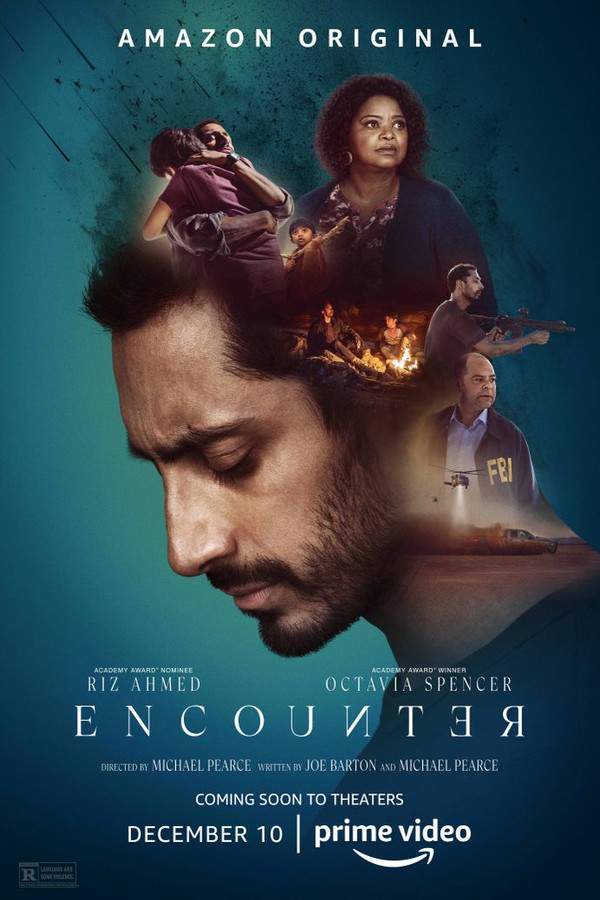
In a tense, closely observed road movie, a Marine father fights to keep his family safe as a crisis spirals beyond what any of them can fully control. U.S. Marine Malik Khan returns home to a scene that instantly unsettles him: his two young sons, Jay Khan and Bobby Khan, are living with their mother, Piya, and her new partner, Dylan. Piya has been feeling sick lately, something Dylan dismisses as “a bug.” The uneasy domestic atmosphere is the first ripple in a sequence of increasingly alarming events.
When Malik wakes his sons in the middle of the night and declares they’re going on a road trip, the impression is less one of adventure and more of urgent rescue. On the highway, Malik warns Jay and Bobby to crouch down as they pass a police car, a moment that hints at the danger he senses. The tension escalates hours later when a different police officer pulls Malik over. The encounter is jarringly hostile, and Malik senses something is deeply wrong. He fights to wrest control of the moment, disarming the officer and leaving him unconscious in the street. The danger feels both immediate and personal, as if a hidden threat is infecting the world around them.
Back on the road, Malik makes a harrowing confession to his sons: this is not a simple trip, but a rescue mission. He believes an alien parasite has overtaken a good portion of the population, including their mother, and that the parasite uses human bodies to reproduce. The stakes feel almost mythic in scale, yet the danger is palpably real to Malik, who insists they can survive by sticking to practical, if improvised, measures—like keeping bug spray on hand as a makeshift shield against unseen invaders. He paints a haunting picture of a world upended, where trust itself is a rare currency.
As the family meanders through the day, Jay starts to question Malik’s story. The boy’s skepticism grows when Malik’s account collides with the ordinary, such as a grocery store visit where everyday life insistently pushes back against the extraordinary. Malik’s credibility is tested further by a personal revelation: Piya is pregnant. The news compounds Malik’s worries and expands the scale of his protective instinct, heightening the sense that every decision could determine the fate of more than just his sons.
Meanwhile, Hattie Hayes, Malik’s parole officer, becomes a crucial link to the outside world. He has missed a psychiatric evaluation, and Hattie is drawn into a tense crossfire between a man who believes he’s fighting an invasion and a system that wants to see him under control. The investigation widens as federal agents become involved, attempting to track down Malik and recover the children. In parallel, a former Marine friend of Malik’s offers a chilling recollection of a past incident—the moment when Malik’s life and his sanity seemed to fracture during a brutal mission. He describes conditions that felt like they “were getting eaten alive by bugs,” and speaks of bodies found in the wreckage, a memory that illuminates why Malik’s head is tilting toward the edge of reality. This history helps the audience understand why Hattie suspects Malik may be suffering from a mental disorder.
As the story unfolds, Jay starts to test the boundaries of his father’s story against what he can observe. He notices inconsistencies, and the sense that the world may be more fragile than it appears grows stronger. The two are stranded after a flat tire, and Malik attempts to reclaim a stolen car, an act that ends in a brutal altercation with an elder man who owns the vehicle. Malik is gravely wounded, and during this vulnerable interlude, he teaches Jay how to drive—an uneasy but necessary skill in a world that seems to have turned against them. While Malik recuperates, Jay ventures to secure medicine and food, a quiet exercise in courage that underscores his growing responsibility for his father’s welfare.
Back at the abandoned house where they seek shelter, Jay overhears the radio news confirming that Malik is a wanted man for kidnapping his own children. The truth about Malik’s past—his two-year prison sentence and the structural cracks in his mental defenses—begins to surface with stark clarity. In a moment of painful honesty, Malik admits that his mental processes have been playing tricks on him and that his beliefs about an alien invasion may not be real. The confession reframes every action that has followed, coloring the mission with questions about responsibility and whether safety can ever be guaranteed in a world this unstable.
The film intensifies as outside antagonists close in. The men who attacked Malik’s earlier home track him down, seize Bobby, and attempt a citizen’s arrest. A violent confrontation ensues, and Malik manages to subdue both men without killing them, escaping with his two sons in tow. The chase is relentless, and Malik makes a decisive call to his ex-wife, providing an address to a diner where he plans to leave the boys and end the perilous escape—an act he believes will spare them both a return to prison and the danger of the chase.
As helicopters and police cars close in, the family’s fragile balance is stretched to breaking point. Malik insists that the authorities will weigh his mental health in determining his fate, but he remains unconvinced that mercy will prevail. In a final, heart-stopping turn, Jay makes a desperate decision: he steps from the car and points a gun at the pursuing police. Malik shifts his focus to protect his son, distracting the officers and urging Jay to run to him. The two share a tense, silent exchange that culminates in a desperate embrace as the officers lower their weapons, and the family clings to each other, choosing each other over fear or punishment.
The story wraps with a stark meditation on loyalty, parental love, and the pressure of living under pressure when reality itself seems unstable. Across its length, the film remains focused on the bond between Malik and his sons, a bond strained to the limit but ultimately reaffirmed in a moment of quiet, shared relief. What emerges is not just a tale of danger and survival, but a portrait of a family trying to weather a storm that tests every belief they hold about safety, truth, and what it means to belong to one another.